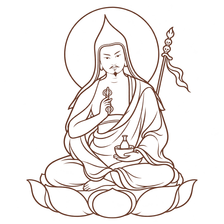
本次中文依据原英译本完成,为AI辅助中文新译,经过模型逐段自审,尚未人工定稿,未经完整藏文原典校勘。原作者、原藏英译者与本次中文译审角色分别署名。原书阅读、传承及出版说明按来源保留。
原PDF第207页(原书第171页)
[Printed page 171]
Thus, it is as taught.
原书第171页
教中如此说。
Whoever has been carelessly overpowered by passions in the past- if shown by a spiritual guide the path of what to accept and reject -will later become conscientious and majestic like the moon free from clouds. Take the examples of the desirous Ananda, the story of the youth Angulimala also known as Sor Mo'i Trengwa[a] who murdered one less than one-thousand individuals, the story of Ajatashatru otherwise known as Makyedra who killed his own father, the dharma king, and also Shankara who committed the heinous crime of killing his own mother. Each of them later developed strong faith toward the Buddha; and by perfectly accomplishing his teachings, they were able to be set free from the result of their afflictions.
过去曾放逸而被烦恼压倒者,若由善知识指示取舍之道,后来便会不放逸,如离云之月般庄严。试看贪欲深重的阿难;少年鸯掘摩罗,又名索莫称瓦[a],曾杀害差一人满一千的人数;阿阇世,又名玛杰札,曾杀害自己的父亲法王;还有杀母而犯无间罪的商羯罗。他们后来都对佛陀生起强烈信心,圆满实行佛的教导,得以从自身烦恼的结果中解脱。
Knowing this, it is crucial to carefully incorporate how to accept and reject the law of karmic cause and result. In the [root terma] commentary, it states:
知道这一点,谨慎实行对业因果之理的取舍,极为重要。〔根本伏藏〕注释说:
These unerring instructions are revealed through the upadesha of Sutra and Tantra concerning all aspects of accepting and rejecting the posi- tive and negative aspects of karmic causes and results. Hence, this is the great chariot that leads to the citadel of the state of liberation.
这些无误教诫,通过经续口诀,显示业因果善恶各方面的一切取舍。因此,这是导向解脱境界城堡的大车。
Thus, it is as taught.
教中如此说。
For the result of positive and negative karma, happiness and suffering matures without denial.
善恶业之果,苦乐成熟,决定无虚。
By applying what to accept and reject unerringly, such methods are the most sublime and beneficial for this and all future lifetimes.
无误实行取舍,这些方法,对今生与一切后世最为殊胜有益。
Thus, these are the verses that summarize the section.
以上是总结本节的偈颂。
3.2.1.1.3 Refuge and Bodhichitta This has two parts: I Refuge 2 Bodhichitta Third is going for refuge and generating bodhichitta. [a] Mi Düng War (mi gdung bar); Ancestor of the Humans; aka Sor Mo'i Trengwa (sor mo'i phreng ba); One with a Garland of Thumbs
原PDF第208页(原书第172页)
[Printed page 172]
3.2.1.1.3.1 Refuge This has two parts: I General commentary on common refuge 2 Uncommon explanation on how to maintain the visualization Among these two, refuge and bodhichitta, first [refuge] begins with:
原书第172页
3.2.1.1.3.1 皈依 3.2.1.1.3.1 Refuge
分为两部分:
- 共同皈依的总体注释
- 如何持续观想的不共说明
在皈依与菩提心这两者中,第一〔皈依〕,开端如下:
Phet![a] To the primordial ground pure from the beginning, free from direction, Samantabhadri; the intrinsic nature, pure within itself, Khachödma; and all-pervasive compassion evenly pervading as the käya of the Wrathful Mother, Tröma-I go for refuge to actualize the consummate expanse of this wisdom mind.
呸![a]本初之基,从始清净,离方所的普贤王如来母;自性自净的喀却玛;遍在悲心平等周遍,显为忿怒母、卓玛之身——我皈依,以现证此智慧心的圆满界。
The original ground abides as the triune wisdoms of the nature, intrin- sic nature, and compassion.
本初基安住为本性、自性与悲心三智。
Hence, "original ground" means the nature is empty, the intrinsic nature is lucid, and compassion is all-pervasive. Such is the nature itself of the triune wisdoms. This is also mentioned in the tantra Self-Arising Awareness:[c] The nature of this basic space is empty, the intrinsic nature is natu- ral luminosity, and compassion is that which abides as the essence of awareness. Such is the basis for the arising of all enlightened qualities.
因此,“本初基”,是指本性空、自性明、悲心周遍。这就是三智自身的本性。《觉性自现续》[c]也提到:
此本界之本性空,自性为自然光明,悲心安住为觉性的精髓。这是一切觉悟功德生起之基。
Thus, as taught, because the basic space of the ground free from all limitations of elaborations abides as the nature of emptiness, the nature is empty. That intrinsic nature is spontaneously present within the ground as the nature of kayas and wisdoms. Given this is intrinsically luminous and unceasing, that is the lucid wisdom of the intrinsic nature. All-pervasive compassion abides as the essence of this awareness- indivisible appearances and emptiness. Although not appear- ing outwardly, this is designated as the aspect of the basis for the arising of all enlightened qualities. These aspects are, therefore, referred to as the three kayas that abide within the ground as spontaneous presence. [a] phat; pronounced "pet" or "po?" [b] dra tal gyur (sgra thal 'gyur) [c] rigpa rang shar (rig pa rang shar)
原PDF第209页(原书第173页)
The self-awareness of the ground resembles crystal orb. The empty aspect of that is the intrinsic nature of the dharmakaya, self-radiant luminosity is the sambhogakaya, and the basis of arising as an unceas- ing gateway is the nirmänakäya. Hence, in the ground of basic space, the three kayas remain spontaneously present.
本基的自觉性犹如水晶球。其空分是法身之自性,自明光辉是报身,不灭的生起门这一发生之基是化身。因此,在本界之基中,三身恒常任运具足。
So, it is; and in the auto-commentary, it states:
如是,自释中说:
Empty awareness resembling a crystal is the dharmakäya, and the aspect of the five-colored light of lucid awareness is the sambhogakäya. The crystal's capacity to radiate externally but without doing so-remain- ing as the unceasing gateway for that arising-is the nirmanakäya. The three kayas of the ground represent a single nature that is illuminated here through analogy.
如水晶的空觉是法身;明觉的五色光这一面是报身。水晶具有向外放光的能力,却尚未放射,保持为显现不灭的生起门,这就是化身。本基三身代表同一本性,此处以比喻加以阐明。
In the All-Creating Monarch, it states:
《普作王续》说:
The trikaya essence of all the victorious ones is my intrinsic nature established as the uncontrived dharmakäya. My nature, uncreated, is the sambhogakäya; and my compassion is the manifest nirmanakäya- these three. This does not reveal a result that has been acquired elsewhere.
一切诸佛三身之精髓,是我自性成立为无造作法身;我的无生本性,是报身;我的悲心,是显现化身——即此三者。这不是显示从别处获得的果。
Thus, as taught, this is revealed through the term "creator" based on the aspect of being the basis for the origin of the entirety of samsara and enlightenment. The self-appearing teacher of Tantra who represents the perfectly pure nature of the awakened mind as self-originating, clear-light wisdom is the Vajradhara of con- ventional meaning. Given that this awakened mind is the genuine Vajradhara, knowing that and saying "my" (in the quote] are crucial vajra words.
如教所说,基于它是一切轮回与觉悟生起之基这一面,以“作者”一词揭示。自现的续部导师,代表觉悟心完全清净的本性,是自生明光智慧,是世俗义的金刚持。由于此觉悟心是真正的金刚持,了知这一点,并〔在引文中〕说“我”,是重要的金刚语。
Concerning this, the distinctions based on three, such as the nature being empty and so forth, are as follows. That the intrinsic nature is uncontrived is based on primordially abiding as emptiness. Likewise, this reveals in a threefold way that the nature is uncontrived and luminous, as well as being the basis for the arising of manifest compassion. In addition, this does not reveal a result that has been acquired elsewhere, nor does it indicate how this abides primordially with- out effort. Based on that, here "intrinsic nature" represents emptiness, whereas "nature" corresponds to lucidity. [a] ney lük rinpoche'i dzöd (gnas lugs rin po che' mdzod); Longchen Rabjam
原PDF第210页(原书第174页)
[Printed page 174]
174
Generally, it is taught that the term "intrinsic nature" refers to emptiness and the term "nature" refers to the aspect of appearances. Nevertheless, throughout the tantras of Mahäsandhi, "emptiness" refers to the nature, whereas "lucidity" refers to the intrinsic nature. These two presentations are not contradictory, for it states in the auto-commentary of the Precious Treasury of the Fundamen- tal Nature:
原书第174页
通常,教中说“自性”一词指空性,“本性”一词指显现这一面。不过,在大圆满诸续中,“空”指本性,“明”指自性。这两种表述并不矛盾,如《实相宝藏》自释说:
The intrinsic nature as emptiness and the nature of lucidity are distin- guished based upon the innate way of abiding and the essence of that. When the nature is empty and the intrinsic nature is lucid, that is dis- tinguished based upon basic space and the empty essence of basic space. Ultimately, emptiness is the dharmakäya, lucidity is the sambhogakäya, and the manner of their arising as nirmanakaya remains the same.
自性为空、本性为明,是依据本具安住方式及其精髓而区分。本性空、自性明,则依本界与本界的空之精髓而区分。究竟而言,空性是法身,明是报身,二者显为化身的方式仍然相同。
Thus, it is taught. When mentioning "essence", one must understand that that corresponds to what reveals the qualities of the aspect of appearances that abide in an obscured manner as inconspicuous resultant qualities. Hence, here that which is referred to as being innate and basic space have the same meaning since the qualities of the essence that are inseparable with this basic space are called "qualities," or basic space.
教中如此说。提到“精髓”时,必须理解,它对应于显现方面的功德;这些功德以隐蔽方式安住,是不明显的果功德。因此,这里所谓本具与本界,意义相同,因为与本界不可分的精髓功德,被称为“功德”,或本界。
Conversely, the appearances of that basic space are its essence, like ambrosia; for without these appearances, basic space alone would amount to skin that has no inner content. In that way, no qualities of the paths and results would ever be able to emerge. While arising from that ground, all pure and impure appearances still abide as the intrinsic nature of the trikaya. This is referred to as the trikäya's dynamic strength of the ground's presence. In the Precious Treasury of the Fun- damental Nature, it states:
反过来,本界的显现是其精髓,如甘露;若无这些显现,唯独本界便等于没有内含物的皮壳。如此,道与果的任何功德都无法生起。虽从该基生起,一切净与不净显现,仍安住为三身自性。这称为基现之三身力用。《实相宝藏》说:
Arising from that, even when the ground's presence emerges, the pure trikäyas are the self-appearing victors; and the impure appearances of the universe and inhabitants are empty by nature, lucid, and varied- these three. This is the manifestation of the dharmakäya, sambhoga- käya, and the nirmänakäya- -these three. The dynamic strength of this manifestation is the trikaya's appearance of the ground. Self-appearing spontaneous presence is not discovered elsewhere.
从中生起,即使基现出现,清净三身也是自现诸佛;不净的器情显现,则是本性空、明与多样——即此三者。这是法身、报身、化身三者的显现;这种显现的力用,是三身的基现。自现任运具足,并非从别处发现。
Hence, the pure trikäyas arising as the self-appearing wisdom of the victors them- selves are the dharmakaya, the five families of the sambhogakäya, and the various manifestations of the nirmanakäya. Even the impure are inseparable emptiness and appearances; and through root causes and contributing circumstances, the various manifestations arise. This is posited as the trikaya, such as the nature
[Printed page 175]
being empty and so forth. Since everything is the self-radiance of the triune wis- doms of the ground, this shows how -except for externally appearing-nothing exists otherwise. From the three aspects of the ground, such as the nature being empty, purity gradually emerges.
因此,清净三身以诸佛自身自现智慧而生起,即法身、报身五部,以及化身的种种显现。即使不净显现,也是空与显不可分;由根本因与助缘,各种显现生起。这被安立为三身,如本性
原书第175页
空等。由于一切都是本基三智的自光,这说明,除向外显现之外,并无其他存在。从本性空等本基三个方面,清净逐渐显露。
原PDF第211页(原书第175页)
The way of appearing as the three resultant kayas is as follows. Given that the intrinsic nature of the ground is pure by virtue of its original empty nature, free as well from all temporary stains, this appears as the perfectly pure dharmakäya. This ultimately abides as the evenness of the inseparable nature of emptiness and awareness. From the perspective of conceptual designations, to abide as innate empty basic space like the sky is the käya of the dharmatà or the kaya of the nature as it is. Inseparable with that, the wisdom aspect of this appearance is lucid and nonconceptual as wisdom dharmakäya. It states in the All-Illuminating:[a][115] In the space of inseparable dharmata and dharmakäya, the radiance of wisdom is self-arising, self-appearing, and naturally lucid-lucidity and so forth that unceasingly appear. This nonconceptual clarity is wis- dom dharmakäya.
Thus, as taught, the käya of the dharmatā is its own fundamental nature that transcends all distinctions based upon relative elaborations. Aside from being indivisible like the sky, this nature is not established otherwise. Self-arising, there is no dependence upon effort. Self-occurring, appearances are free from stain as the radiance of naturally lucid wisdom and sO forth. Hence, from this käya of the dharmata: although the nature seems to be differentiated, that is not the case. Abiding as self-radiance that is a mere unceasing lucidity, the nature of lucid wisdom is free from being nonconceptual and thereby referred to as "wisdom dharmakäya". From this lucid intrinsic nature, the sambhogakäya appears with the oceanic qualities of the major and minor marks in the following way. The quote continues:
如教所说,法性身是自身根本实相,超越一切基于相对戏论的区分。除如虚空般不可分外,此本性不以其他方式成立。自生,不依勤作;自现,诸显现离垢,是自然明了智慧的光辉等。因此,从此法性身而言,虽然本性看似被分开,实际并非如此。安住为仅是不灭明性的自光,明智之性“远离无分别”,因而称为“智慧法身”。〔译注:引号内依原英 free from being nonconceptual 保留,与上段“无分别的明”表面冲突,未擅自删改否定结构。〕从此明的自性,报身以大相、随好如海的功德显现,方式如下。引文继续说:
To itself, the primordial buddha self-appears as the sambhogakäya.
本初佛对自身,自现为报身。
Thus, as taught, through qualities that are intrinsically self-lucid and self- appearing, the natural radiance manifests as the sambhogakäya. Saying "the pri- mordial buddha" means that the basis for phenomena is intrinsic lucidity that exists primordially. From the wisdom of all-pervasive compassion, the various nirmänakäya manifestations emerge to tame in whatever ways are deemed nec- essary, as the quote continues:
如教所说,由自性自明、自现的功德,自然光辉显为报身。“本初佛”,是指诸法之基是本初存在的自明。从周遍悲心的智慧,生起种种化身显现,以所需的各种方式调伏众生。如引文继续说:
原PDF第212页(原书第176页)
[Printed page 176]
Thus, from the dynamic strength of compassion, the appearance of the nir- manakäya is free from the two limitations. This too is the inseparable nature of appearances and emptiness, so it is free from the two limitations of eternalism and nihilism, while not abiding in either of the two limitations of existence or quiescence. That is because, if the nirmänakäya does not enact the welfare of others, then the continuity of benefiting others would cease and that would not be different from falling to the limitation of quiescence.
原书第176页
因此,由悲心的力用,化身的显现远离二边。这也是显空不可分的本性,所以远离常与断二边,同时不住有与寂静任何一边。因为,若化身不行他利,利益他人的相续便会中断,与堕入寂静一边无异。
The All-Creating Monarch addresses this point:
《普作王续》论及这一点:
I, the All-Creating Monarch, am the nature of the three käyas, abiding within nonconceptual evenness; the nature of the unelaborate dharma- käya. Miraculous birth that emerges from this intrinsic nature is the sambhogakäya that fulfills all desires. Compassion that enacts the wel- fare of those to tame in whatever way necessary is the nature of the nirmänakäya.
我普作王,是三身之性,安住于无分别平等性,即离戏法身之性。从此自性生起的幻化之生,是满一切愿的报身。以所需的任何方式利益所化者的悲心,是化身之性。
So, it is taught. Saying 'I, the All-Creating Monarch, am the nature of the three kayas" means that, from the perspective of appearances, this is nonconceptual freedom from duality. From the perspective of emptiness, to abide as the intrin- sic nature of evenness is the nature of the unelaborate dharmakäya. This nature itself is the source for the emergence of the intrinsically lucid appearances of sambhogakaya that are ultimately unborn. Nevertheless, according to the rela- tive way of emergence, this appears as though magical. Hence, the pure lands of the five families of the tathägatas and all fully endowed qualities of the desirables, such as the teacher, retinue, and dharma, are the intrinsic nature that emerges as the sambhogakäya. Just as the compassionate nirmänakäya appears according to the perceptions of others, the limitless enactment of deeds for the welfare of those to be tamed is the nirmänakäya. That is how it is.
教中如此说。“我普作王,是三身之性”,是指从显现方面而言,这是无分别、离二取;从空性方面而言,安住于平等的自性,即离戏法身之性。此性本身,是自明报身显现的生起之源,究竟无生。然而,依相对的显现方式,它如幻化般出现。因此,如来五部净土,以及导师、眷属、正法等一切圆满欲妙功德,就是显为报身的自性。正如悲心化身依他者之感知而显现,为利益所化众生,无边行持事业,就是化身。其理如此。
In this way, the practice of refuge involves precisely realizing the intrinsic nature of the trikayas of the ground through prajna and resting in that even- ness with samadhi and single-pointed focus. Knowing the immediacy of self- awareness as the nature of the three kayas is the tradition of the uncommon great secret. The Treasury of Precious Qualities states:
如此,皈依修习,是以般若准确证悟本基三身的自性,并以三摩地和一心专注,安住于此平等性。
The immediacy of knowing the nature of one's mind is resultant refuge. That is the exceptional feature of the vajra vehicles.
直接了知自觉性为三身之性,是不共大秘密的传统。《功德宝藏》说:
直接了知自心本性,是果皈依;这是金刚诸乘的不共特点。
原PDF第213页(原书第177页)
Thus, this refers to this nature as well. Not only that, all aspects of impure appearances of the ground are this self-radiance as well; so this phenomenal existence must be known to be the manifestation of the spontaneously present, primordially pure trikäyas. In the Precious Treasury of the Fundamental Nature, it refers to this:
因此,这里同样指这一自性。不仅如此,基的一切不清净显现,也是这一自光;所以,应当了知整个器情有法,都是任运自成、本初清净之三身的显现。《实相宝藏论》中对此说:
The spontaneously present trikäyas of all phenomena of samsara and enlightenment are to be realized as the nature of the awakened mind [i.e., bodhichitta].
应当证悟,轮回与觉悟一切诸法任运自成之三身,就是觉悟心〔即菩提心〕的本性。
So, it is. This too arises as the play of enlightened body, speech, and mind as the Treasury of the Dharmadhätu tells us:
如是。这也显为觉身、觉语与觉意的游舞,正如《法界宝藏论》所说:
All physical forms of the outer world and inner beings that appear are the ornaments of basic space arising as the manifestation of käyas. All sounds that are heard, whatever they may be without exception, are the ornaments of basic space arising as the wheel of enlightened speech. Even inconceivable thought formations, movement, proliferationsas well as the nonconceptual -are ornaments of basic space arising as the wheel of enlightened mind.
外在世界与内在有情所显现的一切色身,都是法界的庄严,生起为诸身的显现。所闻的一切声音,无论何者,毫无例外,都是法界的庄严,生起为觉语之轮。甚至不可思议的念相、动转、增益,以及无分别,都是法界的庄严,生起为觉意之轮。
It states in the auto-commentary Treasury of Transmissions: [a; 116] All appearances within this awareness that involve the universe and inhabitants of phenomenal existence are dreamlike in their selfappearing and self-arising, like the nature of a water moon. All these reflections are the mandala, or manifestation, of the käyas of selfoccurring wisdom. All sounds are the mandala of enlightened speech, and all thoughts are merely arising as the great mandala of enlightened mind's manifest nonconceptual ocean of wisdom.
其自释《教传宝藏》〔脚注a;尾注116〕中说:
此觉性中,涉及器情有法的一切显现,在其自显、自生之中,如梦一般,如同水月之性。一切影像,都是自生智慧诸身的坛城或显现。一切声音,都是觉语坛城;一切念头,也不过是作为觉意所显、无分别智慧海的广大坛城而生起。
Thus, just as taught, from the intrinsic nature of the trikaya space of the ground, the aspect of appearances, sound, and awareness arises. Ultimately, since this is the thoroughly pure manifestation of enlightened body, speech, and mind, that is the ornament. For instance, when a rainbow appears in the sky, this becomes
an ornament [of the sky]. Even saying "wheel" means that this completely arises as that manifestation to the point of overcoming everything.
因此,正如所教,从基的三身之界的自性中,生起显现、声音与觉性这些方面。究竟而言,因这是觉身、觉语与觉意全然清净的显现,故称为庄严。例如,天空中出现彩虹时,它便成为——
——〔天空的〕庄严。甚至称其为“轮”,也意谓一切完全生起为这一显现,直至涵盖一切。
原OCR未保留可辨注号,按源页汇集。
lung gi ter dzöd (lung gi gter mdzod); Longchen Rabjam
脚注a:lung gi ter dzöd(lung gi gter mdzod);龙钦绕降著。
原PDF第214页(原书第178页)
Concerning this, there are many supportive quotations not included here that exist throughout the tantras, such as the All-Creating Monarch and others, including upadeshas such as master Garab Dorje's introduction to Encountering the Three Käyas.* Given that this meaning is such a profoundly secret key point, those details will not be included at this time. Through this key point about the perfection of the trikäya manifestations, all phenomena are known to be the pure play of enlightened body, speech, and mind.
关于这一点,在《普作续》等诸续之中,以及嘉拉多杰大师《会遇三身》直指教授〔脚注a〕等窍诀中,还有许多未在此引述的经证。由于此义是极其甚深秘密的关要,此时不详加阐述。由三身显现圆满这一关要,即能了知一切诸法都是觉身、觉语与觉意清净的游舞。
In the Treasury of the Dharmadhätu, it states:
《法界宝藏论》中说:
There are no phenomena that are not perfected as the ornament of the three kayas, so everything arises as the manifestation of enlightened body, speech, and mind.
没有任何一法,不圆满为三身之庄严;因此,一切都生起为觉身、觉语与觉意的显现。
So, it is as taught. If this key point is known, then -according to Mahäsandhi's own tradition- even during trekchö, phenomenal existence arises as pure; and during the generation stage, the practice of deity yoga is perfected.
如是所教。若了知这一关要,那么,依大圆满自身的传统,即使在彻却中,器情有法也显为清净;而在生起次第中,本尊瑜伽的修持便得圆满。
These verses of refuge taken from the terma text indirectly reveal the way of visualizing the field of refuge that will be mentioned later on. Concerning this, whatever appears as the play of enlightened body, speech, and mind- the three vajra states- -is pure self-radiance. This can only be ascertained through fervent regard while visualized in the aspect of the deities and field of refuge.
伏藏法本所引的这些皈依偈,间接揭示了后文将说的皈依境观想方法。关于这一点,无论何者显为觉身、觉语与觉意——三金刚境——的游舞,都是清净自光。唯有以热切敬信,将其观为本尊与皈依境的形相,才能对此获得定解。
Incapable of misleading others through the twisted words of jaded intellectuals, even though these designated sounds may not fill the mountains and valleys: By the arising of phenomenal existence as the play of purity, the children of the accomplished meditators of the Earlier School take great delight in this.
无力以疲厌学究的曲折言辞误导他人, 纵使这些安立的语声不能充满山谷: 器情有法生起为清净之游舞, 旧译派成就禅修者的子嗣,于此满怀欢喜。
My spiritual tradition is comparable with the meaning of phet. Pha indicates the meaning of the paramitas, and tra indicates the meaning of unsurpassed Secret Mantra. Phet is the combination of these two wrathful syllables; and by the mere recitation of the sound, lima
itless qualities will emerge. Reciting phet allows the ability to inwardly suppress the head of self-fixation and outwardly pacify all illness and demonic-force possession. My spiritual tradition of the Mahamudrã, this chöd, is outwardly the meaning of the paramitäs of Sütra and inwardly the tantras of unsurpassed Secret Mantra. To combine these two and practice is known as the Mahamudra. Hence, this is similar to the sound of the syllable phet.
我的法统,可以phet之义来比拟。Pha表示波罗蜜多之义,tra表示无上秘密真言之义。Phet是这两个忿怒音节的结合,仅仅念诵此声,便会生起无量——
——功德。念诵phet,能内在降伏我执之首,外在息灭一切疾病与魔扰。我的这一大手印法统,即断法,外为经部波罗蜜多之义,内为无上秘密真言诸续。将二者结合而修,名为大手印。因此,这与phet音节之声相似。
原OCR未保留可辨注号,按源页汇集。
ku süng tük tred (sku gsung thugs phrad); introduction by Garab Dorje
脚注a:ku süng tük tred(sku gsung thugs phrad);嘉拉多杰的直指教授。
原PDF第215页(原书第179页)
Not only that, pha is the nature of upaya, and tra is the nature of prajna; so this is the exceptional mantra that combines method and wisdom. Through secret mantras, awareness mantras, and retention mantras, there is nothing that does not reveal the meaning of upaya and prajna; yet the pith of secret mantra is synthesized in phet. The reason is as the tantra Vajra Pinnacle states:
不仅如此,pha是方便的自性,tra是般若的自性,所以,这是结合方便与智慧的殊胜咒。秘密咒、明咒与陀罗尼咒,无不显示方便与般若之义;然而,秘密真言的精髓,归摄于phet之中。其原因正如《金刚顶续》〔脚注a〕所说:
What is the meaning of the syllable phet? It is taught that this subjugates harmful entities and suffering and magnetizes exaltation. Phet indicates subjugation, such as towns and the like.
Phet音节的含义是什么?教说它能降伏损害者与痛苦,并摄召大乐。Phet表示降伏,例如城镇等。
Harm-inflicting entities and the suffering of existence are all subjugated [through phet]. All states of peaceful ecstasy without exception are magnetized, and this sound also destroys all negativity, such as the stains of obstruction and the like. Reference to "towns and the like" means to destroy all kinds of negativity, including the causes and conditions. It is taught that [the recitation of phet] involves many qualities like this. Given that this destroys all harmful entities, it mentions above that this is a wrathful syllable.
损害者与轮回之苦,都〔通过phet〕被降伏。一切寂静大乐之境,无一例外地被摄召;这一声音,也摧毁障垢等一切恶法。“城镇等”这一说法,意谓摧毁一切种类的恶法,包括其因与缘。教中说,〔念诵phet〕具有许多这样的功德。因为它摧毁一切损害者,上文才说这是忿怒音节。
In addition Machig has said:
此外,玛吉曾说:
When the sound of phet resonates, there are various ways to interpret it; yet it serves as a reminder for visualizations.
当phet之声响起时,虽有多种解释方式,它却是对观想的提醒。
So, it is. Given that this meaning is so vast and profound, variety of points are revealed since [phet] serves as the reminder for all visualizations. On this occasion, [phet] is recited in order to remind one about the visualization for the field of refuge and so forth.
如是。由于此义广大甚深,故揭示种种要点,因为〔phet〕是一切观想的提醒。在此处,念诵〔phet〕,是为了提醒自己观想皈依境等。
To expand upon that, at the time of the ground, these two syllables represent empty appearance; and at the time of the path, upäya and prajna. At the result, they indicate the two käyas. Even while visualizing the field of refuge and the like, this never departs from the intrinsic nature of empty appearances and SO pha indicates the method of appearances, in this case it forth. Especially since
indicates intrinsic clarity; tra indicates the prajñã of emptiness, so the nature is empty. When they are combined as phet, the dynamic strength of their indivisibility is shown to be all-pervasive compassion. This reveals the meaning of all refuge verses without a single exception.
进一步说,在基位,这两个音节代表显空;在道位,代表方便与般若;在果位,代表二身。即使观想皈依境等,也从不离显空等的自性。尤其,pha表示显现之方便,在此即——
——表示自性明;tra表示空性般若,因此其本性为空。二者结合为phet,显示二者无别的力用就是周遍大悲。这毫无遗漏地揭示了全部皈依偈之义。
原OCR未保留可辨注号,按源页汇集。
dorje tsemo (rdo rje rtse mo)
脚注a:dorje tsemo(rdo rje rtse mo)。
原PDF第216页(原书第180页)
The primordial original ground is the essence of the tathägatas free from all limitations of elaboration. Given that this intrinsic nature is unsullied by faults, stains or habits, and the like, it is pure from the beginning. This uncontrived, self-occurring fundamental nature is unbound by the restrictions of duality. Abiding in the manner of all-pervasive great emptiness, this is free from direction. This empty wisdom nature is precisely realized to be the dharmakäya itself as Samantabhadri. That self-radiance is itself the unobstructed aspect of the intrinsic nature of lucid appearances. Being unceasing, the confusion of appearances that is pure within itself is cleansed or purified within the intrinsic mode of being. This is the perfectly pure manifestation of the authentic rupakäya, the sambhogakäya Khachödma. [119] The wisdom of all-pervasive compassion is the basis for the arising of both samsara and enlightenment based on the distinctions of pure versus impure and awareness versus lack of awareness. Here, the dynamic strength of nonconceptual great compassion evenly pervading all beings to be tamed arises in the käya of the nirmänakäya Wrathful Mother, Tröma Nagmo. To wisdom dakinis such as this who embody the three käyas, one goes for refuge by generating heartfelt faith and devotion. Hence, this is the general way of taking refuge.
本初原始之基,是离于一切戏论边际的如来藏。由于这一本性不为过失、垢染、习气等所染,所以从初即净。这一无造作、自生的本然实相,不受二元分别的束缚。它以周遍大空的方式安住,离于方所。此空性智慧之本性,被准确证悟为法身自身,即普贤佛母。其自光,就是明朗显现之自性无碍的一面。由于它不息,本自清净的显现迷乱,便于其内在安住方式中得到洗净或清净。这是真实色身完全清净的显现,即报身卡确玛(Khachödma)。〔尾注119〕
依清净与不清净、觉与不觉的区别,周遍大悲之智,是轮回与觉悟二者生起的基础。这里,无分别大悲的力用,平等遍及一切所化众生,生起为化身忿怒佛母——黑忿怒母。对于这样体现三身的智慧空行母,生起由衷信心与虔敬而皈依。因此,这就是一般的皈依方式。
In the All-Creating Monarch, it states:
《普作续》中说:
All facets of phenomenal existence, whatever they may be, constitute the three uncontrived aspects of nature, intrinsic nature, and compassion. This reveals who I am, the nature as it is of the three käyas.
器情有法的一切方面,无论为何,皆由体性、自性与大悲这三种无造作方面构成。这揭示了我为何者,即三身如是之性。
Thus, it is as taught. The nature is empty, the intrinsic nature is lucid, and the intrinsic nature of all-pervasive compassion is the way of abiding in the absolute wisdom mind of the three kayas, or the nature as it is. All phenomena of the ground and the ground's presence are this consummate expanse without exception. Knowing this, then the fundamental nature can be actualized as discerning self-awareness. That is refuge in the genuine fundamental nature.
如是所教。体性为空,自性明朗,周遍大悲的自性,正是三身胜义智慧意的安住方式,亦即如是之性。基及基现的一切诸法,无一例外,皆是这一圆满广界。了知这一点,就能现证本然实相为明辨的自觉。这就是皈依真实本然实相。
In the Dynamic Strength of the Lion, it states:
《狮子力》续中说:
The consummate, even pervasion is the supreme meaning of the essence.
圆满而平等的周遍,即精髓的殊胜义。
So, it is taught. By actualizing the wisdom intent of the three kayas in this way: within the even pervasion of that nature, the consummate synthesis of everything is the essence of the meaning, or the very supreme. If explained as such,
it is appropriate to apply this understanding to the meaning of refuge on this occasion.
如是所教。以这种方式现证三身密意:在这一自性的平等周遍中,圆满摄集一切,便是意义的精髓,或最为殊胜者。若如此解释,——
——便适宜将此理解用于此处皈依的意义。
原PDF第217页(原书第181页)
In addition, the meaning of these verses can be applied to any teachings concerning the ground and the result. Our guide, the Great Tertön himself, Lord of Dharma, taught that this is the uncommon way to explain this. Through the teaching just mentioned, a mere direction of this tradition can be understood. If one wants further clarification, it is necessary to receive explanations for several crucial secret points concerning the philosophy of Mahäsandhi.
此外,这些偈颂之义,也可用于任何关于基与果的教法。我们的导师、法王大伏藏师本人,教示这是不共的解释方式。由刚才所说的教导,可以略知这一传统的方向。若想进一步明了,就必须领受关于大圆满宗义若干秘密关要的解释。
Now is not the time for such explanations because this teaching is intended to emphasize the preliminaries. The recipients of teachings on the preliminary practices are accustomed to [more basic] instructions such as this; and since they are mainly beginners, if I were to explain [Mahäsandhi tantras] at this time, it would not be suited to their mind streams. Not only that, there is the danger of inappropriately revealing secret teachings, so I have decided not to elaborate beyond what is described here. Those who teach this subject should also be cautious about the sacred seal involved with those categories of [Mahäsandhi] teachings. It is advisable to give explanations according to the general direction of the sutras.
现在并非作此解释之时,因为这一教导着重前行。前行教授的听受者,习惯于这类〔较为基础的〕指导;他们主要是初学者,若我此时解释〔大圆满诸续〕,便不适合他们的心相续。不仅如此,还可能不当地泄露密法,因此我决定不在此所述之外详加阐释。讲授这一主题的人,也应谨慎对待那些〔大圆满〕教法所涉及的神圣封印。宜依经教的一般方向作解释。
For this, there are two: a general commentary on common refuge and an uncommon explanation on how to maintain the visualization of this terma.
这里分为两部分:共同皈依的一般释论,以及如何维持此伏藏观想的不共解释。
3.2.1.1.3.1.1 General Commentary on Common Refuge For the first, there are five: the cause for refuge that relies upon an object; the object of refuge that is reliant upon that; the degree of the commitment involved with taking refuge; the way of taking refuge; and having done so, the stages of training.
3.2.1.1.3.1.1 共同皈依的一般释论 3.2.1.1.3.1.1 General Commentary on Common Refuge
第一部分有五项:依所缘境而有的皈依之因;所依的皈依境;皈依所涉及承诺的程度;皈依的方法;以及皈依之后的学处次第。
For the first, the great Tsongkhapa has said:
关于第一项,伟大的宗喀巴说:
Once dead, there is no guarantee that rebirth will not be taken in lower realms. However, it is certain that the Triple Gem will grant protection from that fear. Hence, refuge must be relied upon and the appropriate training maintained.
死后,不能保证不会投生恶趣。然而,可以确定三宝能保护我们免于这一怖畏。因此,应当依止皈依,并守护相应学处。
Since it is uncertain that one will not take rebirth in lower realms, protection comes from none other than the Triple Gem. By going for refuge with heartfelt devotion, one must then train in the disciplines of that system. Initially, for that, it is necessary to establish the cause for refuge. It is imperative that one feel a sense of repulsion and fear toward something, while believing that it is only the Triple Gem that has the potential to grant protection from that fear. This is mentioned in the Resting the Mind in Repose:
因为不能确定自己不会投生恶趣,能给予保护的,唯有三宝。以由衷虔敬而皈依之后,就必须修学这一体系的律仪。首先,必须建立皈依之因:对某种事物生起厌离与怖畏,并且相信唯有三宝,才有能力保护自己免于这一怖畏。这一点在《心性休息》中说:
原PDF第218页(原书第182页)
Those of lesser capacity have fear toward the lower realms. Those with middling capacity have fear toward existence; and the great ones, who see the suffering of samsära, including all of its aspects, cannot bear the fact that others must endure such suffering. They are basically afraid of resting in a peaceful state of complacency or quiescence without actively engaging in some way.
下等根器者怖畏恶趣;中等根器者怖畏三有;上等者见到轮回及其一切方面的痛苦,不能忍受其他众生必须承受这些苦。他们根本上所怖畏的,是安住寂静、自满或止息之境,却不积极有所作为。
So, it is like that.
如是。
Those of lesser faculty will feel fear toward the suffering of the three lower realms; the middling that belong to the class of the shrävakas and the pratyekas will see the suffering of the six classes in existence and feel trepidation. The great ones will be unable to bear the torment of samsara's suffering; and by especially witnessing the torment that others are enduring right now, they will be unable to bear that without acting. Hence, they are incapable of abandoning others and bringing only themselves out of samsara to the single direction of peaceful complacency.
下等根器者,对三恶趣之苦感到怖畏;中等者属于声闻、独觉之类,见到三有六道之苦,便生畏惧;上等者不能忍受轮回痛苦的逼恼,尤其亲见他人此刻所受的折磨时,便不能袖手旁观。因此,他们不能舍弃他人,只让自己出离轮回,独自趋向寂静自满的一边。
To expand on this, the lesser ones desire to personally attain the state of higher rebirth, such as that of a god or human being. The middling wish to personally attain the state of liberation, while the great ones take refuge based on the wish to attain fully perfected buddhahood for the welfare of others. Our refuge must be motivated like the great ones.
进一步说,下等者希望自己获得天、人等善趣之身;中等者希望自己获得解脱;上等者则为了他人的利益,希望成就圆满佛果,依此而皈依。我们的皈依,也必须以上等者的发心来推动。
In the Treasury of Precious Qualities, it states:
《功德宝藏论》中说:
With fear, faith, and compassion-these three- thinking of others' welfare is the intention of the great ones. Through that, by recalling the Triple Gem, one goes for refuge.
以怖畏、信心与悲心三者,思惟他人之利,是上等者的意乐。由此忆念三宝而皈依。
Hence, it is as taught.
如是所教。
Second, the objects of refuge are as stated in the Seventy Verses of Refuge:
第二,皈依境,正如《皈依七十颂》〔脚注a〕所说:
The buddha, dharma, and sangha are the protectors for all those wishing to be liberated.
佛、法、僧,是一切欲求解脱者的怙主。
Just as taught, undeceiving protection for those who wish to be liberated is found only with the Triple Gem. This reason is stated in the Treasury of Precious Qualities:
正如所教,对欲求解脱者,唯有三宝能给予不欺诳的保护。其理由在《功德宝藏论》中说:
The essence of the path and protection is the sacred dharma. The dharma originated from the Buddha, and those companions who prac
tice this or who are the support for the training are the sangha. These [three] are called the Triple Gem and are the objects of refuge.
道与保护的精髓,是正法。法由佛而来,而修习此法的同伴——
——或作为修学所依者,就是僧。这〔三者〕称为三宝,是皈依的对象。
原OCR未保留可辨注号,按源页汇集。
kyab dro dün chu pa (skyabs 'gro bun cu pa, trisharanasaptati); Chandrakirti
脚注a:kyab dro dün chu pa(skyabs ’gro bdun cu pa,trisharanasaptati);月称著。
原PDF第219页(原书第183页)
So, this is the path that leads to the state of liberation and omniscience. Due to that, its nature protects from the fear of existence and quiescence. Actual protection is based on the sacred dharma that was taught by the fully perfected Buddha Shakyamuni, the revealer of refuge. The companions who practice dharma are the followers of the Buddha, who train in the characteristics of the dharma or who bring into their mind stream the qualities of accomplishment. The sangha are those who take that as their support.
因此,这是通往解脱与一切智之境的道路。由此,其本性保护我们免于三有与寂灭的怖畏。真正的保护,依于皈依的开示者——圆满正觉释迦牟尼佛——所教的正法。修法的同伴,是佛的随学者:他们修学佛法的特征,或将成就的功德引入心相续。僧,就是以此为所依者。
The Triple Gem are, thereby, the supreme objects of refuge. For example, if one must pass through a dangerous, frightening environment in order to reach safety, ideally there must be an undeniable passageway as well as a guide who shows the way. Once one embarks, it is also crucial to be accompanied by reliable companion. Once these circumstances coincide, it will be possible to reach the destination, otherwise not. Therefore, our teacher has said:
因此,三宝是最殊胜的皈依境。例如,若必须穿过危险、可怖的环境才能到达安全之地,理想的条件,是确实可靠的道路,以及指路的向导。启程之后,有可靠的同伴相随,也至关重要。当这些条件具足,便能到达目的地,否则就不能。因此,我们的导师说:
I will show all of you the path that brings an end to this agonizing existence. The Tathägata is the teacher, but you yourselves must walk the path.
我将向你们所有人开示,结束这痛苦三有的道路。如来是导师,但你们必须亲自走上此道。
Since the sacred dharma is the actual path, Buddha said that path must be internalized. The reason that they [i.e., the Triple Gem] are worthy objects of refuge is that this Buddha freed himself from all states of fear and thereby became skilled in the means for delivering others from their fear. He possessed loving kindness toward everyone based on impartially engaging with great compassion. He is a worthy object of refuge because he enacted the welfare of everyone equally, regardless of consequence, and without expectation.
因为正法才是真正的道路,佛说必须将此道内化于心。三宝之所以是堪为皈依的对象,是因为佛已使自己从一切怖畏中解脱,由此善巧掌握令他人脱离怖畏的方法。他平等行持大悲,对一切人怀有慈爱。他不计回报、不怀期待,平等成办一切众生的利益,因此是堪为皈依的对象。
If there is no freedom from fear, then like a drowning person unable to save another, there will be no potential to protect others from that fear. Even though there may be the capacity to be set free from fear: without skillful means, there will be no benefit to the rest of us. This [refuge] is not like that. Even if there is always the skillful means to tame the objects to be tamed: if loving kindness is lacking, then the capacity to grant protection will remain uncertain. Since [the Buddha [120]] possesses great compassion for all living beings, like a mother loves her only child, protection is certain. If this [protection] depended upon deriving benefit from others, this would mean that we would be unable to derive benefit from Buddha; and it is possible that some beings would be exempt from protection because they had never been benefited before. This is not like that. Generally, whoever possesses these four exceptional qualities [121] is worthy of granting refuge to beings; yet it is only the Buddha who possesses [this potential]. Given that
non-Buddhist gods such as Maheshvara, Brahmä, and others lack this potential, the Buddha remains the sole permanent source of refuge. That is why the dharma that he taught and the sangha who practice this are also worthy objects of refuge.
若自己尚未脱离怖畏,就像溺水者不能救助另一个人一样,也不会有能力保护他人免于怖畏。即使有脱离怖畏的能力,若无善巧方便,也无法利益我们其余的人。此〔皈依境〕并非如此。即使总有调伏所化的善巧方便,若缺乏慈爱,能否给予保护,仍不确定。由于〔佛,尾注120〕对一切众生具有大悲,如母亲爱独子,保护便是确定的。若此〔保护〕依赖于先从他人获得利益,就意味着我们无法从佛那里得到利益,也可能有些众生因为从未曾使其获益,而被排除在保护之外。但事实并非如此。一般而言,凡具备这四种殊胜功德〔尾注121〕者,都堪能给予众生皈依;然而,唯有佛具备〔这一能力〕。由于——
——大自在天、梵天等非佛教天神不具这一能力,所以佛仍是唯一恒常的皈依处。因此,佛所教的法,以及修持此法的僧,也都是堪为皈依的对象。
原PDF第220页(原书第184页)
Outwardly, endowed with all divergent strengths, you are fully accomplished. Since we immature do not possess such inner strength, we shall continue to suffer.
外在一切差别力量,您已圆满成就;由于我们这些幼稚者不具这样的内在力量,我们仍将继续受苦。
So, as mentioned, since the objects of refuge are capable of protecting objects to be tamed and guiding them on the path, that is why both outer and inner divergent causes and strengths must be complete. The strengths, or the outer divergent causes of bringing disciples to the path, were fully accomplished [by Buddha] during the time of practicing for three incalculable eons to become a conqueror. Although [he] fully accomplished this, nevertheless, the inner strengths that are the divergent causes of faith, confidence, supplication, and the like remained incomplete. Hence, immature ordinary individuals like me and others, who have from beginningless time until now failed to achieve this state, are compelled to experience the suffering of samsara. The suffering experienced until now has not been the fault of the object of refuge but rather one's own. For oneself, it is only necessary to have single-pointed trust, generate faith, and follow the teacher; but even that has not been possible. That is why, to gain certainty with the qualities just mentioned, if one is able to single-pointedly trust, then it is impossible to not be protected- hence, the need for developing heartfelt determination.
因此,如上所述,皈依境能够保护所化、引导他们走上道路,故内外的各种因与力量都必须具足。引领弟子入道的力量,或外在各种因,〔佛〕在三无数劫修行而成为胜者的过程中,已全部成就。虽然〔佛〕已完全成就这些,然而,信心、信赖、祈请等各种内在因的力量,却仍未具足。因此,像我和其他人这样幼稚的凡夫,从无始至今未能成就此境,便不得不经历轮回之苦。直到现在所受的痛苦,不是皈依境的过失,而是自己的过失。就自身而言,只需一心信赖、生起信心并随学导师,然而连这一点也未能做到。因此,应对刚才所说的功德获得确定;若能一心信赖,便不可能不受保护——所以必须从内心生起坚定意愿。
Third, the degree of commitment involved with taking refuge is as Arya Asanga taught in his treatise that teaches on the four categories, namely, knowing the qualities, knowing the differences, promising, and not speaking with others. The first is to take refuge by recalling the qualities of the Triple Gem. The qualities of buddha involve enlightened body, speech, mind, and enlightened activities-these four. The qualities of enlightened body are as stated in Praise of the Minor Marks:b Your body adorned by the minor marks is beautiful like ambrosia for the eyes, resembling constellations that adorn a stainless autumn sky.
第三,皈依所涉及承诺的程度,依圣无著的论典,分为四类:了知功德、了知差别、立誓,以及不言有余。〔译注:末项英译作not speaking with others,字面为“不向他者说”;后文解释其义为唯皈依三宝,不皈依与之相违者。〕第一,是忆念三宝的功德而皈依。佛的功德,涉及觉身、觉语、觉意与觉悟事业四种。觉身的功德,正如《随好赞》〔脚注b〕所说:
您以随好庄严的身,美妙如眼之甘露,犹如无垢秋空中庄严的繁星。
So, it is as taught. The other points above are easy to comprehend, but the meaning of "ambrosia to the eyes" is that -upon seeing [this body of buddha]--the potential to cultivate joyful bliss develops. For example, even our teacher, the
supreme nirmänakäya, appeared in the enlightened body of a tathägata, pure like solid gold and radiant with dazzling light rays that exceeded the brilliance of billions of suns. His stainless face was even brighter than billions of moons; his body pervasive like the span of the king of trees, the Nyadrodha;* his hair coil clear like the pure light of : stainless jewel; eyes as brilliant as a lotus flower and the blue utpala; his crown aperture so magnificent that even Brahmä dare not gaze upon it. He was adorned with the thirty-two major and eighty excellent minor marks, so one could not gaze enough upon his body, which appeared in harmony with everything that encountered it. To merely see [the Buddha's body] would bring purpose and meaning.
如是所教。上文其他要点容易理解,而“眼之甘露”之义,是见到〔佛身〕时,便生起欢喜安乐的能力。例如,我们的导师——
——殊胜化身,也显现为如来觉身,清净如纯金,放射耀眼光芒,胜过数十亿太阳的灿烂;其无垢面容,比数十亿月亮更加明亮;身体周遍,犹如树王尼拘陀〔脚注a〕的展开幅度;发髻明澈,如无垢宝石的清净光芒;眼目灿然,如莲花与青色优钵罗;顶门殊妙,甚至梵天也不敢直视。具三十二相、八十随好,人们怎么瞻仰也看不够;其身随一切所遇而相应显现。仅仅见到〔佛身〕,便带来目的与意义。
原OCR未保留可辨注号,按源页汇集。
ngak ö ngak töd (bsngags 'os bsngags bstod) 'pe ched la töd pa (ape byad la bstod pa)
脚注a:ngak ö ngak töd(bsngags ’os bsngags bstod)。
脚注b:pe ched la töd pa(dpe byad la bstod pa)。
原PDF第221页(原书第185页)
Qualities such as this are exclusive to those who are buddha, for not even the bodhisattvas below the tenth level possess them. Thinking [of the qualities] in this way inspires faith and the longing to actually encounter this; and by knowing that to recall these qualities of the Buddha great merit is amassed, one must meditate upon this until rapturous joy wells forth.
这些功德唯独诸佛具有,甚至十地以下的菩萨也不具备。如此思惟〔诸功德〕,便会激发信心,渴望真实亲见;又了知忆念佛的这些功德,能积集广大福德,故应不断修习,直至极大欢喜涌现。
The qualities of enlightened speech are as stated in the Chapter on the One Truth: [b] If all sentient beings questioned you simultaneously, in a single instant you would know what they were saying; and through your melodious speech, you would answer each one individually with a single utterance. Hence, among guides in this world, you are the only one whose speech is as melodious as Brahma. In order to eliminate the suffering of gods and humans, you turned the wheel of dharma.
觉语的功德,正如《真实者品》〔脚注b〕所说:
若一切有情同时向您提问,一刹那间,您便了知他们所说;以妙音觉语,一次发声,便分别回答每一个人。因此,在世间导师之中,唯有您的言语如梵音悦耳。为消除天人之苦,您转动了法轮。
Thus, the qualities of these words of the Buddha are explained as follows. According to however many sentient beings there are in the realms of the world, all the questions they may have would be based on multiple reasons concerning their individual desires. If all of these questions were simultaneously posed to the Bhagavan, he would instantly know and have an answer to each one of them. Through the single flow of his melodious response, he would respond to each one of them; and each would understand this according to their own language. Based on that, understand that the Guide, the Bhagavan, possesses the melodious speech of Brahma that is unrivaled among objects to be tamed in this world. His speech as well will eliminate all suffering of living beings, including gods and humans. In these ways, the wheel of dharma was turned according to the capacities of each individual. Since the enlightened speech of Buddha possesses the sixty branches of melodious speech: although teaching dharma through the
Sanskrit language, each disciple could understand his speech according to their own language, needs, and capacities. One must recall these qualities, including the potential to fully dispel all doubts in an instant.
因此,佛语的这些功德,解释如下。世间界中有多少众生,他们可能提出的种种问题,都会出于各自愿望的不同缘由。若这一切问题同时向薄伽梵提出,他会当下了知,并对每一问题给出答案。他以妙音的一次流露,回答每一个人,而每个人都能依自己的语言理解。由此,应当了知,导师薄伽梵具有梵天般的妙音,在世间所化之中,无与伦比。他的言语,也能消除天、人等一切众生的痛苦。如此,依每个人的根器而转法轮。由于佛的觉语具有六十种妙音支分,虽然以——
——梵语说法,每位弟子也都能依自己的语言、需要与根器理解其言语。应忆念这些功德,包括刹那完全遣除一切疑惑的能力。
原OCR未保留可辨注号,按源页汇集。
nya grO dha; banyan, or Indian fig tree denpa chig pot le'u do (bden pa gig pot le'u mdo, satyakaparivarasütra)
脚注a:nya gro dha;榕树,或印度无花果树。
脚注b:denpa chig pö le’u do(bden pa gcig po’i le’u mdo,satyakaparivarasūtra)。〔经题为工作译名,保留原转写待核。〕
原PDF第222页(原书第186页)
Through your wisdom alone, all knowable things are pervaded. Except for you, others [only] assume that knowable things are exalted.
唯有您的智慧,遍及一切所知;除您之外,其他人〔只是〕认为所知境更为殊胜。
So, only through the wisdom of buddha that pervades all knowable things, the nature is directly and simultaneously seen. This subjective wisdom is more exalted than objective knowable things. Except for the buddhas, when all other trainees have direct realization, they will no longer see relative truth. When they see relative truth, they will no longer have direct realization. In this way, [the Buddha] taught that, among both the mind and knowable things, knowable things are surpassing. Since all knowable things are not obscure in [buddhas'] omniscience-like placing a fresh kyurura' herb in the hand [122]-the buddhas precisely see the faculties and intentions of the objects to be tamed and are thereby skilled in the means for taming them.
因此,唯有佛遍及一切所知的智慧,能直接且同时见到其本性。这一能知的智慧,比作为所知的境更为殊胜。除诸佛之外,其余一切有学,当直接现证时,便不再见世俗谛;当见世俗谛时,便不再直接现证。如此,〔佛〕教示,在心与所知境二者之中,所知境更为广大。由于一切所知,在〔诸佛的〕遍知中毫无隐蔽,如将新鲜余甘子〔脚注a〕置于掌中〔尾注122〕,诸佛能准确看见所化的根器与意乐,从而善巧调伏他们。
The qualities of loving kindness are as stated in the Praise called One-Hundred and Fifty Verses:5 All living beings are equally bound by their passions. In order to release them from those passions, you have been bound by compassion for a long time.
慈爱的功德,正如名为《一百五十颂赞》〔脚注b〕的赞颂所说:
一切有情同样为烦恼束缚;为了将他们从烦恼中解脱,您长久为大悲所系。
So, just as all living beings are helplessly bound by their passions, the Sage is likewise bound by great compassion. Thinking about the way of generating compassion, [the Buddha] is free from partiality, such as having no bias if someone on his right is massaging him with sandalwood oil while someone on his left is striking him with an axe. Thinking that it is only a buddha who would have developed the quality of loving compassion to this level, faith is generated.
如是,正如一切众生无助地为烦恼束缚,牟尼也同样为大悲所系。思惟〔佛〕生起慈悲的方式:他毫无偏私;即使右边有人用旃檀油为他按摩,左边有人用斧头砍击,他也毫无偏向。思惟唯有佛才将慈悲功德发展到这样的程度,便会生起信心。
For enlightened activities, it also states in the previous text:
关于觉悟事业,前述论典又说:
You taught that passions must be destroyed, and you revealed the deceptions of the maras. You told us about the inexhaustible nature of samsara and also revealed the direction of fearlessness. Compassionate One with the intent to benefit others, you have brought goodness to
all sentient beings. There is nothing to be found that you have not done for them.
您教导必须摧毁烦恼,并揭示诸魔的欺诳。您告诉我们轮回无尽的性质,也指出无畏的方向。以利他为意乐的大悲尊,您将善妙带给——
——一切有情。找不到任何您未曾为他们做过的事。
原OCR未保留可辨注号,按源页汇集。
skyu ru ra, Emblic myrobalan gya nga chu (brgya Inga bu, shatapañchäshatkanämastotra); Ashvaghosha
脚注a:skyu ru ra,Emblic myrobalan,余甘子。
脚注b:gya nga chu(brgya lnga bcu,shatapañchāshatkanāmastotra);马鸣著。
原PDF第223页(原书第187页)
So, having explained to disciples the cause of suffering being the need to annihilate the passions: by abandoning that, you also warned them about the way the maras of samsara use deception in order to trick. You spoke of the inexhaustible suffering and the characteristics of samsara. You also revealed the method for abandoning this to be the cause for the direction of fearlessness, namely, liberation.
因此,您向弟子解释了痛苦的原因,以及必须摧毁烦恼;通过舍弃它,也警示他们轮回诸魔如何以欺诳作骗。您讲说轮回无尽的痛苦及其特征,也揭示舍弃这些的方法,作为趋向无畏——即解脱——的因。
While engaged in this practice of acceptance and rejection, the compassionate Bhagavan intending to benefit others said that-if the time arrives to accomplish the welfare of sentient beings--then until that deed is done, you must do whatever it takes to accomplish that. Otherwise, what is the point?
在行持这种取舍修学时,以利他为意乐的大悲薄伽梵说:若成办有情利益的时机到来,那么,在这一事业完成之前,就应尽一切努力成办;否则又有何意义?
It is as stated in Praise for the Worthy:
正如《应赞》所说:
You have never failed to fulfill your commitment to liberate all beings. How can there be such fully endowed circumstances and opportunities existing in other worlds where you have never been?
您从未不能履行解脱一切众生的誓愿。若在您从未到过的其他世界,怎会有这样圆满具足的因缘与机会?
So, given that Buddha Shakyamuni does not exclude anyone who is suffering, anyone who is liberated from suffering is also affected by the strength of Buddha's blessings. For those who have not had the opportunity to have these fully endowed circumstances, whatever well-being comes their way is due to the strength of Buddha's blessings.
因此,释迦牟尼佛不舍弃任何受苦者,凡从痛苦中解脱的人,也都受到佛加持力的影响。对于尚无机会具足这些圆满因缘的人,凡其所得的安乐,也都来自佛的加持力。
When temporarily not afflicted by suffering such as illness, that, too, is the blessing of Buddha's strength. Furthermore, Buddha benefits others in ways that are permanently pervasive and effortlessly spontaneous. The timing for this will endure as long as samsära exists. The benefit will reach out to pervade all sentient beings; and when it does, there will be no need at all to apply any effort. This Buddha who has exhausted all faults and perfected all qualities has done so by internalizing dharma. Those who practice in the same way are the sangha who internalize sacred dharma so as to purify all faults and accomplish all qualities. The sangha are those who are not distracted from this practice and take refuge by precisely knowing the qualities of the Triple Gem.
暂时不受疾病等痛苦侵扰,也是佛力的加持。此外,佛利益他人的方式,是恒常、周遍、不费力而任运的。其时间将延续至轮回穷尽;其利益遍及一切有情,而当利益显现时,完全不需要任何造作努力。这位穷尽一切过失、圆满一切功德的佛,是通过将佛法内化而成就的。如是修持者,就是将正法内化,以清净一切过失、成就一切功德的僧。僧,是不散离这一修持,并通过准确了知三宝功德而皈依的人。
Second, understanding the differences involves knowing the difference between the Triple Gem to be that sangha are those who accomplish the path, dharma is that which is accomplished, and buddha is the result of the accomplishment. Third, the commitment is to take refuge by knowing that the Buddha is the teacher, the sacred dharma is the actual object of refuge, and the sangha are considered the companions for accomplishing refuge. Fourth, not speaking
about this to others means to know the acceptable and unacceptable aspects concerning Buddhist versus non-Buddhist teachers, their teaching, and their followers and to thereby only take refuge in the Triple Gem -not those who are in discord with this.
第二,了知差别,就是认识三宝之间的区别:僧是修成此道者,法是所修成者,佛是修成之果。第三,立誓,是了知佛为导师、正法为真正皈依境、僧为成办皈依的同伴,由此而皈依。第四,不向他者——
——宣说此事,意谓了知佛教与非佛教的导师、其教法及其随学者,何者可取、何者不可取,从而唯皈依三宝,不皈依与之相违者。〔译注:承前“不言有余”;此处英译字面为“不向他者说此事”,随后直接解释为唯皈依三宝。〕
原PDF第224页(原书第188页)
I go for refuge in the actual Triple Gem; the sugatas of the Three Roots; the enlightened mind as the intrinsic nature of the channels, winds, and bindus; and in the mandala of the nature, intrinsic nature, and compassion until supreme enlightenment is achieved. [123] Thus, the nature of the Triple Gem as the objects of refuge is that these are the sugatas of the Three Roots. The clear-light bodhichitta supported by the intrinsic nature of channels, winds, and bindus is the mandala of the nature, intrinsic nature, and compassion. [124] Hence, refuge is taken in that intrinsic nature. Based on that, the manner of taking refuge in the Triple Gem is also stated in the Treasury of Precious Qualities:
Refuge is taken in the Buddha as the teacher, the dharma as the path, and the sangha as the companions.
皈依佛为导师,皈依法为道路,皈依僧为同伴。
As taught, if applied to the oral instructions of the guru, then the fully perfected Buddha is the one who has revealed the path to us. One must think, "I must have confidence in the teachings on cause and effect that are the Buddha's speech; the sacred dharma is my actual path; and by relying upon the three trainings of the surpassing path, I will not oppose this by sullying it even with the subtlest of stains. The arya sangha are my friends who assist in the accomplishment of the path, so I must become inspired by training in their example of conduct and never separate from them." Thus, it is said that one must make this kind of firm commitment. It is especially vital to go for refuge by aspiring to blend these three objects with one's stream of mind.
如是所教。若将其应用于上师口传教授,圆满正觉佛,就是向我们揭示道路的人。应当思惟:“我必须信赖佛语所说的因果教导;正法是我真正的道路;依止殊胜道的三学,我不会以哪怕最细微的垢染来损害、违背它。圣僧是帮助我成办此道的友伴,因此,我必须受其鼓舞,随学其行为榜样,永不与之分离。”因此说,必须作出这样坚定的承诺。尤其重要的是,以愿将这三种皈依境融入自心相续的意乐而皈依。
In the Sütra Requested by Ugra:® By going for refuge in the Buddha, one hopes to attain the state of buddha. By going for refuge in the dharma, one aspires to realize the dharma; and by going for refuge in the sangha, there is the wish to
achieve the state of the arya sangha. Taking refuge in the Triple Gem as such is called "taking outer refuge".
《郁伽所问经》〔脚注a〕中说:
皈依佛,是希望成就佛果;皈依法,是希求证悟法;皈依僧,是希望——
——成就圣僧之境。如此皈依三宝,名为“外皈依”。
原OCR未保留可辨注号,按源页汇集。
drag shül chen gyi zhü pa'i do (drag shul can gyis zhus pa'"i mdo, ugrapariprcchasütra)
脚注a:drag shül chen gyi zhü pa’i do(drag shul can gyis zhus pa’i mdo,ugraparipṛcchāsūtra)。
原PDF第225页(原书第189页)
Jetsun Milarepa said:
至尊米拉日巴说:
The Buddha, dharma and sangha -these three-are the outer objects of refuge. I am fully satisfied and fulfilled to take refuge in them. Hence, you too must follow suit.
佛、法、僧三者,是外皈依境。我皈依他们,心中完全满足、充实。因此,你也应当随行。
So, as taught, given that this follows the tradition of the paramitãs, it is expressed in that way.
如是所教。由于这遵循波罗蜜多传统,所以作这样的表达。
Omniscient Jigmed Lingpa said:
遍知晋美林巴说:
According to the tradition of the common vehicles, Buddha is the teacher, the dharma the actual refuge, and the sangha are the companions through which to accomplish the path. Hence, refuge is taken with this in mind.
依共同乘的传统,佛是导师,法是真正的皈依,僧是藉以成办道路的同伴。因此,怀此思惟而皈依。
So, it is as taught.
如是所教。
The way of taking refuge in the Three Roots is to think that the guru who shows kindness in three ways is the embodiment of the Triple Gem, and that, likewise, the meditation deities and dakinis are inseparable with the guru. Then, taking refuge by practicing and reciting single-pointedly is known to be the inner mode of refuge. Milarepa said:
皈依三根本的方法,是思惟:以三种方式示现恩德的上师,是三宝的总集;同样,修持本尊与空行母,也和上师不可分离。然后,一心修持、念诵而皈依,就称为内皈依方式。米拉日巴说:
The guru, deities, and dakinis are the three inner sources of refuge.
上师、本尊与空行母,是三种内皈依处。
So, it is as taught. To expand upon this, since this is the way of taking refuge according to the general tradition of inner Secret Mantra Vajrayana, it iS as the Omniscient Jigmed Lingpa said:
如是所教。进一步说,这是依内秘密真言金刚乘的一般传统而皈依,正如遍知晋美林巴所说:
The general tradition of the uncommon vehicle is to offer the three doors to one's guru, to rely upon the meditation deity, and to take the dakinis as companions while going for refuge.
不共乘的一般传统,是将三门供养上师,依止修持本尊,以空行母为同伴而皈依。
Thus, that is what he taught concerning how to go for refuge. Saying "offer to the guru" is an exceptional key point concerning the way to rely upon the guru. Saying "rely upon the meditation deity" is to think that one's three doors and the enlightened body, speech, and mind of the yidam are inseparable. Saying "take the dakinis as the companions" means to take companions that generate wisdom exaltation.
这是他关于如何皈依的教导。“供养上师”,是依止上师方式的殊胜关要;“依止修持本尊”,是思惟自己的三门与本尊的觉身、觉语、觉意不可分离;“以空行母为同伴”,意谓以能生起智慧大乐者为同伴。
原PDF第226页(原书第190页)
The way of taking refuge in the channels, winds, and bindus is to go for refuge in the pure channels, wisdom winds, and awakened mind-these three. The reason is that, by relying upon the channels, winds, and fluids, the great connate wisdom of bliss and emptiness will be precisely cultivated within the mind stream. This is also called "the secret mode of refuge". Jetsun Milarepa said:
皈依脉、风、明点的方法,是皈依清净脉、智慧风与觉悟心三者。原因是,依靠脉、风与精华液,能在心相续中准确培养俱生乐空大智。这也称为“秘密皈依方式”。至尊米拉日巴说:
The channels, winds, and bindus-these three-are the secret objects of refuge.
脉、风、明点三者,是秘密皈依境。
Thus, it is as taught. Given that this is the tradition of taking refuge according to the secret, unsurpassed vajra essence, it is as he has taught. Omniscient Jigmed Lingpa said:
如是所教。由于这是依秘密无上金刚精髓而皈依的传统,所以如他所教。遍知晋美林巴说:
According to the exceptional tradition of the supreme vajra essence vehicle, the channels support the nirmänakäya, the winds cleanse the sambhogakäya, and the bindus are pure as the dharmakäya. Such is the swift path for taking refuge.
依最上金刚精髓乘的特殊传统,脉支持化身,风净化报身,明点清净为法身。这就是皈依的迅速之道。
So, it is as taught.
如是所教。
In addition, in one's vajra body, there are the abiding channels, mobile winds, and array of the bodhichitta fluids -these three. Through their function while impure, they manifest as three doors; and at the time of purity, as the accomplishment of three kayas. There are the coarse channels, winds, and bindus and the nature of them, or the innate clear-light channels, winds, and bindus--these three. The pure nature of the innate channels is the nirmänakaya, the pure winds are the sambhogakäya, and the pure bindus mature as the wisdom of exaltation -the swift path of method for accomplishing the dharmakaya. This is how the mind stream will rely upon these constituents.
此外,在自己的金刚身中,有住脉、动风与菩提心精华液的列布三者。它们在不清净时的作用,显为三门;清净时,则成就三身。有粗分的脉、风、明点,也有它们的本性,即俱生明光脉、风、明点三者。俱生脉的清净本性是化身,清净风是报身,清净明点成熟为大乐智慧——这是成就法身的迅速方便道。心相续即如此依靠这些要素。
The way of taking refuge in the nature, intrinsic nature, and compassion is refuge according to the tradition of the quintessential Mahäsandhi. This refuge is as explained previously; and as Omniscient Jigmed Lingpa said:
皈依体性、自性与大悲,是依精髓大圆满传统而皈依。这一皈依如前所述,正如遍知晋美林巴说:
This is absolute, undeceiving, fundamental vajra refuge. The wisdom that abides in the enlightened mind stream of all objects of refuge is empty by nature, intrinsically lucid, and all-pervasively compassionate--these three -and determined as the inseparability to be accomplished in the mind stream.
这是胜义、不欺、根本的金刚皈依。安住于一切皈依境觉悟心相续中的智慧,体性空、自性明、大悲周遍三者,确定为不可分离,并应在心相续中成就。
So, it is taught. Saying "determined" means to decide, or to abide without wavering from that. If one trains in the inner and secret modes of this, then that is actual refuge according to the Vajrayana teaching. Based on that, to take refuge
in the Buddha as the teacher, the vidyadharas as the sangha, and the gathering of dakas and dakinis as the companions, the general key points are complete.
如是所教。“确定”,意谓作出决断,或安住其中而不动摇。若修习其中的内与密皈依方式,便是金刚乘教法中的真正皈依。依此,皈依——
——佛为导师、持明为僧、勇父空行众为同伴,一般关要便全部具足。
原PDF第227页(原书第191页)
3.2.1.1.3.1.2 Uncommon Explanation on How to Maintain the Visualization Then for the actual practice, it is necessary to visualize the field of refuge. Although many variations found in the different chöd liturgies exist, the visualization that is in harmony with one's aspirations is the one to practice.
3.2.1.1.3.1.2 如何维持观想的不共解释 3.2.1.1.3.1.2 Uncommon Explanation on How to Maintain the Visualization
接下来,在实际修持中,必须观想皈依境。虽然不同断法仪轨中有多种变化,但与自己意愿相应的观想,就是应当修持的。
Generally, in the space in front appears the great dharmakäya mother surrounded by a host of buddhas and bodhisattvas in the ten directions. Like massing clouds, it is sufficient to consider that they fill the upper regions of space. It is best if these objects of refuge can be perfectly visualized since this is connected to the tradition of Secret Mantra. Even if the visualization is unclear, that is not problematic for as it states in the Heap of Jewels Sûtra:' For whoever believes in the victors and in their presence, they [i.e., the victors] will abide to always confer blessings and liberate them from all negativities.
一般而言,前方虚空中显现法身大母,由十方诸佛菩萨众围绕。只需观想他们如云团汇聚,充满上方虚空即可。由于这与秘密真言传统有关,若能圆满观想这些皈依境,最为殊胜。即使观想不清,也不成问题,因为《宝积经》〔脚注a〕说:
凡信赖诸佛、信赖诸佛临在者,〔诸佛〕将安住于其前,恒常赐予加持,并令其从一切恶法中解脱。
So, since it is as taught, by thinking that the victors and their heirs are undoubtedly residing in the space in front, they will surely be present there. All of the buddhas have unobstructed omniscience as though all knowable things were witnessed as clearly as viewing a kyurura sprig in the palm of the hand. With the power of the qualities of perfect omniscience, they will unobstructedly know when they are being supplicated to through devotion.
如是所教,因此,只要思惟诸佛及其法子无疑安住于前方虚空,他们必定会在那里。一切诸佛皆具无碍遍知,一切所知清晰可见,如观掌中一枝余甘子。凭借圆满遍知的功德力,他们无碍了知何时有人以虔敬祈请自己。
With qualities of great compassion for all sentient beings like mother for her only child, they will never knowingly forsake anyone. Although this omniscient compassion is there: if there were no potential to arrive before us without impediment, then they would not do so. However, for as long as it takes a champion to stretch out his arm or a single mental instant, they will arrive wherever necessary since their miraculous abilities are unobstructed. Hence, there is the potential to instantly arrive anywhere. Since enlightened activities are never postponed, there is no possibility for arriving in a timely manner sometimes and other times too late.
他们对一切有情具有大悲,如母亲对待独子,因此绝不会明知而舍弃任何人。虽然有这一遍知大悲,若没有无碍来到我们面前的能力,便无法来到。然而,因为其神通无碍,只需勇士屈伸手臂的时间,或心的一刹那,就会来到任何需要之处。因此,他们有能力当下到达任何地方。由于觉悟事业从不延误,不可能有时应时而来、有时却来迟。
It is not the case that they will arrive before those who are important but not those who are lesser since there is no partiality toward any sentient beings based on attachment and aversion. All beings are seen as equal. Even if one were to think that they appear to those with karmic fortune but not to someone like
oneself who is overwhelmed by passions and an abundance of negativities and faults, [that is incorrect]. For example, one may wonder, "If a mother has many children and one of them falls ill, is her compassion for the sick one greater or less?" Like that, the victors and their heirs have surpassing compassion for beings whose negativities, obstructions, and faults are greater.
也并非他们只来到重要者面前,而不来到卑微者面前;因为对于任何有情,他们都没有基于贪嗔的偏私,而将所有众生视为平等。即使有人认为,他们显现于具业缘者面前,却不会显现于像——
——自己这样被烦恼以及众多恶业、过失所压倒的人面前,〔这种想法是不正确的〕。例如,可以想一想:“母亲有许多孩子,其中一个生病了,她对患病孩子的慈悲,是更多还是更少?”同样,诸佛及其法子,对于恶业、障碍与过失更重的众生,具有更为深切的慈悲。
原OCR未保留可辨注号,按源页汇集。
* kon chog tsek pa (dkon mchog brisegs pa, ratnakütasütra)
脚注a:kon chog tsek pa(dkon mchog brtsegs pa,ratnakūṭasūtra)。
原PDF第228页(原书第192页)
If one imagines that at this moment there are many others who are supplicating so it is possible that the victors will come to them and not to oneself and even if countless beings were supplicating simultaneously, countless emanations would surely arrive to remain before each supplicant. This is also mentioned in the Uttaratantra:
若想此刻有许多人正在祈请,诸佛可能来到他们面前,却不来到自己面前,那么,即使有无数众生同时祈请,无数化身也必定到来,安住于每一位祈请者之前。《宝性论》中也说:
The elements of the disciples and the methods through which to tame them are activities that tame based upon their faculties. Departing for wherever they abide and at any time, the buddhas will always be spontaneously engaged.
弟子的种性,以及调伏他们的方法,都是依其根器而调伏的事业。无论他们住在何处、在任何时候,诸佛都会前往,恒常任运而行。
So, as taught, the buddhas directly see the various aspirations and elements of those objects to be tamed. They also see the appropriate ways through which to tame them. According to the faculties of the objects to be tamed, the buddhas have the potential to lead them to higher states of happiness and liberation. [The buddhas] will depart for and arrive wherever the objects abide and without postponing the timing. The fully enlightened buddhas will always spontaneously engage since all effort-based actions have been pacified.
如是所教。诸佛直接见到所化的种种愿望与种性,也见到适合调伏他们的方法。依所化的根器,诸佛有能力引领他们趋向增上安乐与解脱。〔诸佛〕会出发、到达所化住处,毫不延误。圆满觉悟的诸佛,恒常任运而行,因为一切依造作努力的行为已息。
Not only that, this is mentioned in the Prayer for Excellent Conduct:
不仅如此,《普贤行愿》中说:
Upon a single particle, all buddhas abide- as numberless as there are particles-in the midst of the bodhisattvas, who are their heirs.
于一微尘上,住有如微尘数无量诸佛,安住其法子菩萨众中。
Thus, as taught, however many fully enlightened buddhas may exist-because their kayas are free from being coarse or concrete and are the nature of wisdom-wherever enlightened mind pervades, enlightened body and speech also pervade. So upon a single particle, one must believe that countless buddhas and bodhisattvas abide as numberless as there are particles.
如是所教。无论有多少圆满觉悟的佛,由于其身远离粗重与实质性,以智慧为本性,所以,觉意遍及之处,觉身与觉语也遍及。因此,应当相信,在一微尘上,住有如微尘数般无量诸佛菩萨。
Initially, when all buddhas cultivate the bodhichitta, they do so for all of us sentient beings; and in the interim by accumulating merit over three countless eons, this is also done for the welfare of beings. Finally, upon awakening and gaining spontaneously present enlightened deeds, this too is revealed for the welfare of others. Since there is no other goal besides benefiting sentient beings, we must feel assured that the buddhas and bodhisattvas are In present before us. short, among all buddhas, there is not a single one who does not look upon us without compassion or is unable to protect us. Hence, with such potential,
it is impossible for them to abandon us. That is why, if we have doubt and are lacking faith, any shortcomings are our own. All buddhas' power to protect us is certain, so one must believe in this from the depth of the heart.
最初,一切诸佛发菩提心,是为了我们所有有情;中间,三无数劫积集福德,也为了有情利益;最后,觉悟并获得任运觉悟事业,所作的示现也为他人利益。除利益有情之外,别无其他目标,因此,我们必须确信诸佛菩萨就在面前。总之,一切诸佛之中,没有任何一位不以慈悲垂顾我们,或没有能力保护我们。因此,具足这样的能力,——
——他们不可能舍弃我们。所以,若我们怀疑、缺乏信心,过失就在自己。一切诸佛保护我们的力量,是确定的,应从内心深处相信这一点。
原PDF第229页(原书第193页)
Then, imagine an assembly surrounding oneself that includes one's parents, enemies, and gods-mãras, with all sentient beings as well. Consider they are all single-pointedly going for refuge with faith and devotion. To expand upon this, according to the tradition of chöd, the principal objects to go for refuge and to cultivate bodhichitta toward are eight groups of sentient beings. They include enemies with aversion toward oneself, harm-doing obstructing forces, circumstances that are brought on by obstacle creators, karmic demonic forces, bodily demonic forces, and obstructing demonic forces of the fear-invoking placestotaling six types of demonic forces. The remaining two are one's parents. [For the first,] those who beat and strike oneself, steal possessions, threaten, slander, and the like, who have bad intentions, such as humans, are the enemies who harbor aversion toward oneself. [Second,] those who display magical feats, such as causing one to see visions and unusual phenomena, who stir up fear and terror causing one's hair to stand on end are the formless gods-maras included here as taught. Those demonic forces that bring illness and negativity to one's body and mind and steal one's life force and wealth, bringing torment and despair, are harm-doing demonic forces.
随后,观想围绕自己的一切众会,包括父母、仇敌、神魔,以及所有有情。观想他们都以信心与虔敬,一心皈依。进一步说,依断法传统,皈依与发菩提心时,主要所缘是八类有情:憎恨自己的仇敌、作害的障碍力量、制造障碍者所引发的境缘、业魔、身魔,以及怖畏处的障魔,共六类魔;其余二者为父与母。
〔第一类〕是殴打、攻击自己,偷窃财物,威胁、毁谤等怀有恶意者,例如人类;这些就是憎恨自己的仇敌。〔第二类〕是示现幻变,例如使人看到异象与奇异现象,挑起恐惧与惊慌,使毛发直竖者;此处所教,包括这样的无形神魔。那些令身心生起疾病与恶事、夺取命力与财富、带来逼恼与绝望的魔众,就是作害之魔。
Concerning one's body, life essence, authentic presence, reputation, merit, ability to accomplish liberation, and so forth-both temporarily and ultimately-no matter what activities are engaged in, whether great or small, all those who attempt to thwart this and create obstacles are the circumstances brought about by obstacle creators. Connate dimmed awareness or self-fixation on the so-called "me", or whatever name is applied, grants no opportunity for liberation and is the root of all negativity. From that, confused habits emerge; and due to the strength and solidification of that, the classes of demonic forces who have been engaged only in the negative deeds of distracting one's mind from beginningless lifetimes until now have originated. That is called "the mara that accompanies oneself" referred to here as the karmic demonic force. Once one's bardo consciousness called a 'gandharva"" enters the mother's womb, until the entire body develops, and while the flesh, bones, and skin self-mutate at death: during this entire process, one thinks, "I am the owner of this corporeal form made of flesh and blood." This unruly nonhuman entity is the demonic force of the body.
对于自己的身体、命精、真实威望、声誉、福德、成就解脱的能力等,无论暂时还是究竟,也无论所行之事大小,凡试图阻挠、制造障碍者,就是障碍制造者带来的境缘。对所谓“我”,或任意所安立的名称,俱生无明或我执不给解脱任何机会,是一切恶法的根本。由此生起迷乱习气;凭其力量与固化,那些从无始多生直到现在,一味从事散乱自心之恶行的魔类,便由此而起。这称为“与自己相随之魔”,此处称为业魔。当自己的中阴识——称为“乾闼婆”〔脚注a〕——入母胎,直到整个身体发育完成,乃至死亡时血肉、骨骼与皮肤自行变坏,在这整个过程中,心想:“我是这具血肉色身的主人。”这一难调非人,就是身魔。
The outer appearances of the universe are the combination of the five elements comprising the array of realms in this world, such as the four continents and Mt. Meru. Each individual country, their mountains, valleys, forests,
charnel grounds, rivers, oceans, and temples, stüpas, including dwelling places, and generally those who abide there who bring both well-being and harm and specifically the keepers of those lands- the gods-maras-are all referred to as the demonic forces of the place. The three inner demonic forces, along with the outer, total six. Those who have given this life's body and who have shown great kindness are one's parents, totaling eight. Those are the principal ones, and all living beings equal to space are included with them. With no source of hope or refuge aside from the Triple Gem, one prays, "You are all-knowing! Whether happy, sad, high, or low, no matter what circumstance, obstacle, or demonic force may hinder us, Triple Gem, know and look upon us!" Think like that; and without mouthing words, but from the bottom of the heart, generate intense longing and devotion.
外在器世间的显现,是五大结合而成的世间诸界列布,例如四洲与须弥山。各个国家及其山岳、谷地、森林、——
——尸林、河流、海洋,以及寺院、佛塔和住所;一般而言,住在这些地方,带来利益或损害者,特别是这些土地的守护者——神魔——都称为处所之魔。三种内魔连同外魔,共为六类。给予此生身体、示以大恩的父母,合计为八。这些是主要所缘;如虚空一切众生,也都包括在内。除三宝以外,别无希求与皈依之处,便祈请:“您是一切智!无论快乐、悲伤、兴盛、衰落,无论何种境缘、障碍或魔众妨害我们,三宝啊,请知晓并垂顾我们!”如此思惟,不仅口头念说,而应从内心深处生起强烈渴望与虔敬。
原OCR未保留可辨注号,按源页汇集。
driza (dri za); smell eater
脚注a:driza(dri za);食香者。
原PDF第230页(原书第194页)
Imagine that oneself, one's patrons, gods, märas, harm-doers, parents, and the beings of the six classes are placed under the protection of the Triple Gem, and that all of them are filled with respect. They bring their palms together in prayer and recite the refuge verses in unison. The six harmful ones, such as the enemies with hatred toward oneself, this life's parents, and all beings [recite], "From today onward, we take refuge in the guru, refuge in the buddha, refuge in the dharma, sangha, assembly of meditation deities, and the gathering of dakinis and dharmapalas. Please grant us great blessings!" Recite these verses some onehundred and one times or at least twenty-one times to accomplish this.
观想自己、施主、天神、魔众、作害者、父母,以及六道众生,都被置于三宝的保护之下,皆充满恭敬。他们双手合掌祈请,齐声念诵皈依偈。憎恨自己的仇敌等六类作害者、此生父母及一切众生〔念诵〕:“从今日起,我们皈依上师,皈依佛,皈依法、僧、本尊众,以及空行母与护法众。请赐予我们广大加持!”念诵这些偈文一百零一遍,或至少二十一遍,来完成此修。
Then, think that the Triple Gem speak to you, saying, "Child of the Family! Having abandoned all negative karmic accumulations through constant faith and devotion, we shall protect and assist you." Then multitudes of light rays emerge from their enlightened bodies, speech, and minds to penetrate the three doors of self and all others. All negativities and obstructions accumulated through the three doors are purified, and one's body becomes clear like crystal. Within that state, the objects of refuge, oneself, and the gods-maras-these three-as well as the nature of refuge, become nonconceptual emptiness; and one rests in evenness. The objects of refuge, the ones taking refuge, and the nature of refuge- these three-are the nonconceptual dharmakäya nature of mind, unborn absolute truth. Phet phet phet! [125] Thus, visualize accordingly.
然后,观想三宝对自己说:“善男子!以恒常信心与虔敬,舍弃一切恶业积集,我们将保护、帮助你。”继而,他们的觉身、觉语、觉意放出无量光芒,穿透自他一切众生的三门。通过三门所积的一切恶业与障碍,都得净除,自身变得水晶般明澈。在此状态中,皈依境、自己与神魔三者,以及皈依的本性,都成为无分别空性,自己安住平等。皈依境、皈依者与皈依的本性三者,都是心的无分别法身本性、无生胜义谛。Phet phet phet!〔尾注125〕应当如此观想。
Fifth, the vows are twofold: the training for taking uncommon refuge in the Triple Gem and the uncommon advice for all three. First, it states in the Certainty of the Three Vows:* The three common and uncommon refuge vows are to cultivate respect for the individual categories of not searching for another source of refuge, harming any sentient being, or accompanying heretics. a dom süm nam ngey (sdom gsum rnam nges); Ngari Panchen Pema Wangyal
第五,誓戒有二:不共皈依三宝的学处,以及关于三者的不共教诫。第一,正如《三戒决定论》〔脚注a〕所说:
三种共同与不共皈依誓戒,是分别于不寻求其他皈依处、不损害任何有情、不与邪见者相伴这些类别,培养恭敬。
脚注a:dom süm nam ngey(sdom gsum rnam nges);阿里班钦白玛旺嘉著。
原PDF第231页(原书第195页)
Concerning this, there are the two categories of what to accept and reject. The vows concerning what to reject are that, by taking refuge in the buddha, dharma, and sangha, the individual trainings are described in that order. One must not take refuge by having expectation toward another object of refuge, such as a worldly god. One must abandon harming sentient beings and not accompany heretics. It states in the Sutra of Final Nirvana:
One who takes refuge in the Triple Gem is a perfectly pure upasaka. They must never take refuge in another god. Having taken refuge in the sacred dharma, they must be free from harmful thoughts toward others. Having gone for refuge to the sangha, they must not accompany any heretics.
皈依三宝者,是完全清净的优婆塞。他们永不可皈依其他天神。既已皈依正法,就必须远离损害他人的想法;既已皈依僧,就不可与任何邪见者相伴。
So, it is.
如是。
The vows to accept are as follows. Concerning the supports of Buddha's käya, this includes even a broken image; the supports of dharma include a single syllable; and for the sangha, even someone who dresses like the ordained, including wearing a mere patch of saffron-colored clothing, must all be recognized as the actual Triple Gem and appropriate respect rendered. Also, [it states]:
应取的誓戒如下。关于佛身的所依,乃至残破佛像;法的所依,乃至一个字;僧,乃至穿着出家衣相的人,包括仅有一块藏红色衣布,皆须认作真实三宝,给予相应恭敬。又〔说〕:
Even at the cost of one's life or for any other reason, the Triple Gem must never be abandoned; no matter how important the purpose, never search for a method other than this; do not break the continuity of the timely requirements; go for refuge for oneself as well as others while paying homage to the buddhas in whatever direction one goes.
即使付出生命,或出于任何其他理由,都永不可舍弃三宝;无论目的多么重大,都不寻求除此之外的方法;不间断应时而行的要求;为自他而皈依,并无论前往何方,都顶礼彼方诸佛。
Thus, and the five are that by saying "at the cost of one's life or for any other reason" means in order to receive a large gift, high position of authority, and the like, to not abandon the Triple Gem for any such reasons. No matter how important the reason may be, aside from trusting the Triple Gem, do not search for another worldly method. By always recalling their qualities, never miss any timely requirements. Recognizing these benefits, when one goes for refuge, others will be brought to the path. One must pay homage to the images of the buddha in whatever direction one goes.
如是。其中五项,所谓“付出生命,或出于任何其他理由”,是指即便为了获得重礼、高位权势等,也不因任何此类理由舍弃三宝。无论理由多么重大,除信赖三宝之外,不寻求另一世间方法。恒常忆念三宝功德,不错过任何应时要求。认识这些利益,在自己皈依时,也将他人带入道中。无论前往何方,都应顶礼彼方佛像。
Secondly, the stages of visualization from the terma itself are as follows. Imagin that this array of self-appearances instantly transforms into the self-arising pure land of the Khachöd Dewachen. 5 The luminous ground is the color of lapis lazuli, vast and open. Pervading like limitless space itself, it is smooth and free
from any coarseness and even like the surface of a mirror. Beautiful to behold like the soft palm of a youth, at the moment of contact bliss ensues.
其次,此伏藏自身的观想次第如下。观想这列布的自显,刹那转变为自生的空行大乐净土(Khachöd Dewachen,脚注b)。光明大地呈琉璃色,广大开阔,周遍如无量虚空,光滑、没有——
——任何粗糙,平整如镜面。美丽悦目,如少年柔软的手掌,一经接触便生安乐。
原OCR未保留可辨注号,按源页汇集。
a nyang dey kyi do (myang 'das kyi mdo, aryamahäparinirvänasütra) b mkha® spyod be ba chen; Space Activity of Exaltation
脚注a:nyang dey kyi do(myang ’das kyi mdo,āryamahāparinirvāṇasūtra)。
脚注b:mkha’ spyod bde ba chen;大乐空行。
原PDF第232页(原书第196页)
The lovely ornaments of the sky include billowing, colorful rainbow canopies filled with light molecules and silken parasols, as well as victorious banners and pennants. The ornaments of intermittent space include many dakas and dakinis dancing and offering clouds of various substances, while showers of flowers rain down. The ornaments of the earth include being completely covered by many lotus flowers of different colors that, when pressed upon the ground, bounce back. Meadows and hills abound with medicinal flowers wafting with sweet fragrances that permeate like mist. Whatever is desired can be fulfilled in this place that is abundant with wish-granting trees, cleansing water springs, great oceans of ambrosia, golden sand, turquoise ponds with jewels piled upon the riverbanks, and so forth. All of the arrangements that make up a pure land are perfectly complete without exception.
天空的美妙庄严,包括翻卷的彩色虹幕,充满光明分子,以及丝绸宝伞、胜幢与飘旗。中间虚空的庄严,包括众多勇父空行母,舞蹈并献上各种物品的供云,同时降下花雨。大地的庄严,包括遍布不同颜色的莲花,按压于地,便会回弹。草地与山丘上,药花繁盛,甜美芳香如雾般弥漫。此处具足如意树、清净水泉、广大甘露海、金沙、青绿池塘,以及岸边堆积的珍宝等,所愿皆能满足。一切构成净土的陈设,无一例外,圆满具足。
In the center of this, in the space in front of where self and all sentient beings abide, upon a lotus, sun, moon, and corpse seat, inseparable with the root guru, appears the nirmänakäya sole mother, Tröma Nagmo. She holds a curved vajra blade in her right hand and a skull filled with blood in the left. Her two legs are in the dancing posture upon a corpse seat; her mouth is gaping, tongue rolling, and fangs bared. Her three eyes are bulging. Her orange hair stands on end to touch the peak of existence, while a squealing black pig's head juts from her crown. Her breasts are voluptuous and lotus mature. On her forehead, there is a piled smear of charnel-ground ash, on her cheeks a smear of menstrual blood, and on her chin a smear of fat. Those are the three smears. Her upper body is adorned with a fresh elephant skin, the lower a leopard-skin skirt, her waist wrapped by a freshly flayed human skin. These are the three types of clothing that she wears. Her crown is adorned with dry skulls, and she wears a long necklace made from fifty fresh skulls. Her ankles and wrists have skull ornaments, and she sports necklace of whitish-colored serpents of the kingly caste. Her earrings are made of snakes from the royal caste, while her diadem is composed of Bhramin-caste serpents. The bracelets adorning her arms and legs are made of common-caste green serpents, and her belt is made of black serpents from the untouchable caste. These are the ornaments composed of the five castes of serpents. Hence together, these are the two types of ornaments that are worn [i.e., skull and serpent], comprising the eight charnel-ground ornaments.
在其中央,自身与一切有情所在之前方虚空中,于莲花、日轮、月轮与尸身座上,与根本上师无二的化身唯一佛母黑忿怒母显现。右手持金刚钺刀,左手持盛满鲜血的颅器;双足于尸座上呈舞姿;口张、舌卷、利齿显露;三目圆睁。橙色头发竖立,触及有顶,顶上突出一颗鸣叫的黑猪头。双乳丰满,莲花成熟。额头涂有一团尸林灰,双颊涂经血,下颏涂脂肪,是为三涂。上身披新鲜象皮,下身穿豹皮裙,腰围新剥人皮,是为所穿三种衣。顶以干骷髅庄严,身佩由五十颗新鲜骷髅串成的长鬘;腕与踝有骷髅饰,并佩白色王族蛇制成的项链。耳环由王族蛇制成,头冠由婆罗门种姓蛇构成;臂与腿上的镯饰,由平民种姓的绿色蛇制成;腰带则由不可接触种姓的黑蛇制成。这些是五种姓蛇组成的庄严。因此合起来,这是所佩两种饰物〔即骷髅与蛇〕,共同构成八种尸林庄严。〔译注:英文在蛇的前两类分别用kingly caste与royal caste,均有王族之意;此处保留其分别叙述,不据其他仪轨擅改种姓配置。〕
Standing in an expanse of wisdom fire and shimmering orbs of light, above her crown is the embodiment of all sambhogakäya gurus as red Vajravarahi. She holds a curved vajra blade and a skull, while she playfully delights in the dancing posture and rests amid an expanse of blazing wisdom fire. Above her crown appears the nature of the entire mandala of all dharmakäya gurus appearing as the blue-black Samantabhadri. She is naked and seated in the
full-lotus posture upon a lotus and moon seat. Her two hands are united in the mudrã of empty evenness, parallel to her heart. Envision that she abides within a radiant expanse of blue-black light molecules.
她安立于智慧火焰与闪耀光球之界中,顶上是全部报身上师的总集,红色金刚亥母。她持钺刀与颅器,以游戏舞姿欢悦,安住于炽燃智慧火之界。其顶上,显现全部法身上师坛城的本性,形为蓝黑色普贤佛母。她身形赤裸,安坐于——
——莲花与月轮座上,结全跏趺坐。双手于心前相对,合成空性平等之印。观想她安住于蓝黑色光明分子灿然的广界中。
原PDF第233页(原书第197页)
Imagine that surrounding them are the sublime masters of all nine lineages, such as the wisdom-mind lineage and the rest. They are facing self and others and gazing with great loving kindness and compassion. Think, "They are the epitome of the objects of refuge." By reciting the verses yeshe ka dag and so forth mentioned before as much as possible, recall the meaning and go for refuge. As previously mentioned, trust this from one's heart.
观想周围,是智慧心传承等九种传承的一切殊胜上师。他们面向自他,以广大慈爱与悲心凝视。心想:“他们是一切皈依境的精髓。”尽力念诵前述“yeshe ka dag”等偈,忆念其义而皈依。如前所说,应从内心信赖。
From the [terma] commentary:
〔伏藏〕释论中说:
From this moment onward, until the heart of enlightenment is realized, I take refuge in you, supplicate you, bow down to you, rely upon you, place all hope in you, and offer my three doors. In all situations whether high, low, happy, sad, good, or bad, you are all-knowing. Grant blessings that my three doors may become the three vajras.
从此刻起,直至证悟菩提心要,我皈依您、祈请您、顶礼您、依止您,将一切希望寄托于您,并供养我的三门。无论兴衰、苦乐、好坏,一切境遇之中,您悉知晓。祈请加持我的三门成为三金刚。
Thus, it is taught. By thinking in this way, completely offer oneself.
如是所教。如此思惟,将自身完全供养。
Then, from all objects of refuge, rays of light radiate as mentioned before. Finally, all objects of refuge melt into light and dissolve into oneself. One's three doors and the enlightened bodies, speech, and minds of the objects of refuge become inseparable. Self and others, including phenomenal existence, are purified within the clear-light nature of emptiness.
然后,一切皈依境如前所述放射光芒。最终,一切皈依境化光,融入自身。自己的三门,与皈依境的觉身、觉语、觉意,成为不可分离。自他以及器情有法,都清净于空性的明光本性中。
Once again, like a rainbow arising in the sky, self-nature arises as the embodiment of the three-kaya dakinis. By training in whatever appears as only pure, one delights in all food and drink as wisdom substances. Hence, train in the yoga of conduct as the path.
再次,如彩虹现于天空,自身本性生起为三身空行母的总集。修习无论何种显现,唯是清净,将一切饮食作为智慧物而享用。因此,将行为瑜伽作为道来修学。
Although not the actual oral-instruction lineage-given that this is the uncommon refuge of the Vajrayana tradition--if practiced accordingly, this becomes identical to the tradition of general Secret Mantra, the exceptional way of taking resultant refuge as the path. Therefore, I find this to be an important key point. Generally, while practicing chöd, refuge is extremely crucial for daily practice, for dispelling obstacles, and for enhancing realization. The unrivaled master Gyaltangpa [a; 126] has said:
虽然这并非实际的口传教授传承,但由于它是金刚乘传统的不共皈依,若依此修持,便与一般秘密真言传统相同,即将果皈依作为道的殊胜方式。因此,我认为这是重要关要。一般而言,修持断法时,皈依对于日常修持、遣除障碍,以及增进证悟,极为关键。无与伦比的上师嘉塘巴(Gyaltangpa,脚注a;尾注126)曾说:
Some say that during chöd practice, refuge need not be taken. Why would that be the case? They answer, if there is refuge, then upheavals
LINGPA'S CHÖD will not occur. For myself, I departed for the cave of Drog Pon® to practice chöd and abstained from taking refuge. During that time, I did not have a single upheaval. Then by generating faith and devotion in the Triple Gem, I took refuge; following which boundless upheavals occurred, and I was able to sever all of them in their own place.
有人说,修持断法时,不必皈依。为何如此?他们回答:若有皈依,那么激发的违缘——
——就不会出现。就我自己而言,曾前往卓蓬(Drog Pon,脚注a)山洞修持断法,刻意不作皈依。那段时间,我连一次激发的违缘也没有遇到。后来,对三宝生起信心与虔敬,作了皈依,随后便出现无量违缘,而我能在它们本处将其全部斩断。
原OCR未保留可辨注号,按源页汇集。
rgyal thang pa
脚注a:rgyal thang pa。