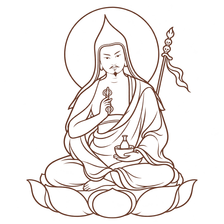
本次中文依据原英译本完成,为AI辅助中文新译,经过模型逐段自审,尚未人工定稿,未经完整藏文原典校勘。原作者、原藏英译者与本次中文译审角色分别署名。原书阅读、传承及出版说明按来源保留。
原PDF第311页(原书第275页)
Then from the heart of Vajravarähi, light rays radiate and strike all sentient beings that became Tröma. Visualizing oneself as Tröma, when the light rays strike, one becomes a white bindu of light that dissolves into the heart of Vajra- varahi. Within the expanse of that käya of pristine basic space as Tröma, now everyone becomes only the käya of Varahi, appearing like stars on the surface of the vast ocean, 151 Next, according to the text's description for visualization and recitation, remain practicing while reciting each of the three dakinis' mantras as much as required. Then, go to sleep. At midnight, again begin and practice just like before, and repeat this again at predawn. Once returning home, it is not nec- essary to practice the visualization for the subsequent suppression. This is the activity for accomplishing the welfare of beings through the gods-maras.
然后,金刚亥母心间放光,照触一切已成为黑忿怒母的有情。自观黑忿怒母,光芒触及时,自己成为白光明点,融入金刚亥母心间。在这作为黑忿怒母的本净法界身之广界中,如今一切都唯成为亥母之身,显现如浩瀚海面上的星辰。〔尾注151〕
接着,依仪轨所述观想与念诵,持续修持,按所需数量念诵三位空行母各自真言。随后入睡。午夜,再如前开始修持,黎明前再次重复。回到家后,无须作后行镇伏观想。这是通过神魔成办众生利益的事业。
Although ultimately transcending an object to accomplish and the process of doing so, from the relative perspective, these instructions are infallible key points for practice. This supreme method for attaining the ground of the three kayas is the exceptional quintessence of the profound doctrine of the great secret.
虽然究竟超越所成办的对象与成办过程,从世俗角度,这些教授是修持无误的关键。 这获得三身地的最上方法,是大秘密甚深教法的殊胜精髓。
Thus, these are the verses that summarize the section.
以上是总结本节的偈颂。
3.2.1.2.2 Meditation upon Guru Yoga This has two parts: 1 General meaning 2 Actual meditation Second, for the meditation on guru yoga, there are two: the general meaning and the actual meditation taken from the terma involving the manner of engaging in the daily practice.
3.2.1.2.2 上师瑜伽禅修 3.2.1.2.2 Meditation upon Guru Yoga
分二:
- 总义。
- 实际禅修。
第二,上师瑜伽禅修有二:总义,以及取自伏藏、涉及日常修持方式的实际禅修。
原PDF第312页(原书第276页)
3.2.1.2.2.1 General Meaning This has five parts: 1 Characteristics of a qualified guru 2 How to rely on a qualified guru 3 Benefits of relying on a qualified guru 4 Faults of developing wrong view 5 Training in pure view First, it states in the Gathering of Precious Qualities:
3.2.1.2.2.1 总义 3.2.1.2.2.1 General Meaning
分五:
- 具格上师的特征。
- 如何依止具格上师。
- 依止具格上师的利益。
- 生起邪见的过患。
- 清净观的训练。
第一,《宝德藏》说:
A bodhisattva abiding on the ground of a beginner will, through pure intention, enter the path of the buddhas and bodhisattvas. All such excellent students with respect for their masters must always rely upon learned gurus. If one were to ask why, it is because all knowledge comes from this source. It is said that, by relying upon spiritual guides such as those teachers who reveal the prajnapäramita and who possess the supreme qualities of the victorious ones, the truth of the Buddha will become apparent.
住于初学地的菩萨,将依清净意乐进入诸佛菩萨之道。一切这样的善妙弟子,恭敬师长,必须恒常依止博学上师。若问为何,因为一切知识皆从此源而来。据说,依止开示般若波罗蜜多、具胜者殊胜功德的导师等善知识,佛陀之真实便会显明。
Thus, bodhisattvas abiding on the ground of a beginner, whoever they may be, will with pure intentions resolve to perfectly awaken for the welfare of others. All excellent students who enter the path that brings supreme awakening and who have respect toward their masters must rely upon gurus with excellent view and conduct, who are able to reveal the wisdom intent of the must always show such learned Mahayana. They masters great respect through their three doors. Why? All learned qualities concerning the mode of the great vehicle's path and result come from reliance upon the virtuous spiritual guide. Therefore, they are the guides who will reveal the path of the Mahayana, the päramitä of prajna. Saying "the truth of the Buddha" refers to qualities, the development of which also depends upon spiritual guides. Hence, this is the speech proclaimed by all fully perfected victors possessing supreme qualities.
因此,凡住于初学地的菩萨,都将以清净意乐,决意为利他而圆满觉悟。一切进入通往殊胜觉悟之道、恭敬师长的善妙弟子,必须依止见行殊胜、能开示大乘密意的上师。他们必须恒常以三门,向如此博学的师长表达极大恭敬。为什么?关于大乘道果方式的一切通达功德,都来自依止善知识。因此,他们是开示大乘道、智慧波罗蜜多的向导。“佛陀之真实”,指功德;这些功德的生起,也依靠善知识。因此,这是具殊胜功德的一切圆满胜者所宣说的话。
Whatever was mentioned as the characteristics of the students and their spir- itual guides, the way of relying upon one another and the benefits of doing so were revealed in the quote. Now that quote continues:
引文已经揭示弟子与善知识的特征、彼此依止之法及其利益。现在,引文续说:
Generosity, discipline, and likewise patience, diligence, concentration, and prajñã as well are fully dedicated to the state of awakening. Those who are beginners must be cautioned to avoid attachment or of superiority concerning progress on the path of awakening. feeling
布施、持戒,以及安忍、精进、禅定、智慧,都完全回向觉悟。对初学者,应告诫避免因觉悟道上的进展,而产生贪著或优越感。
原PDF第313页(原书第277页)
Thus, through these words, the way of leading students on the path is clearly revealed. How so? By training in the practice of the six paramitas such as gen- erosity and by directing students to dedicate those efforts toward attaining the state of perfect awakening, advice is given based on method.
Concerning the state of awakening that is the so-called ultimate goal to accomplish: directing students to not fixate upon the goal as con- crete, such as having form or holding to that as true or superior, means that one must understand that the phenomena subsumed in the state of awakening have no true, inherent existence. This advice is based on prajñã. That is why one is directed to reveal this teaching to beginning students who show interest toward the path of awakening.
对于所谓究竟所成办目标的觉悟之境,指导弟子不要将目标执为具体之物,例如有形,或执其为实有、为优越,意味着必须理解:摄于觉悟之境的诸法,没有真实自性存在。这是基于智慧的教诫。因此,指示应将这一教导,开示给对觉悟道有兴趣的初学弟子。
Thus, it is taught. When these points are applied to the practice of chöd, they enhance the key points for internalizing practice. Based on previous explana- tions, this can be understood in more detail.
如是所说。这些要点运用于断法修持时,会增强将修法内化的关键。根据前面的解释,可以进一步理解。
To give a more informed explanation about how to rely upon the guru, there are five parts, namely, the characteristics of a qualified guru to rely upon, how to rely, the benefits of doing so, the faults that occur by serving incorrectly, and the way to train in pure vision by seeing the guru an actual enlightened being. as
为了更充分说明如何依止上师,分为五项:所依具格上师的特征、依止之法、依止利益、不正确承事而产生的过失,以及将上师视为真实觉悟者而训练清净观的方法。
3.2.1.2.2.1.1 Characteristics of a Qualified Guru First, the general characteristics of a Mahayana guru are as the Ornament of the Classes of Sûtra* tells us:
3.2.1.2.2.1.1 具格上师的特征
第一,大乘上师的一般特征,如《大乘经庄严论》*所说:
Rely upon a teacher who is peaceful, tame, and tranquil, has surpassing qualities and diligence, is rich with transmissions, has fully realized the nature of truth, as well as being skillful through teachings, has loving kindness, and has eliminated all weariness.
依止寂静、调伏、近寂,功德超胜、精进、教传丰富,完全证悟真实本性,善巧说法,具慈爱,已除一切厌倦的导师。
Thus, these ten qualities must be possessed. It is taught that, without taming one's mind, there is no way to tame the minds of others; so first teachers must control their own mind streams.
因此,必须具足这十种功德。教言说,若未调伏自心,就不能调伏他人之心,因此,导师必须先控制自己的心相续。
The best method to tame the mind is most certainly through the three pre- cious trainings. By training in discipline, one is able to tame the mind by severing the tendency to pursue misleading objective appearances. By relying upon mind- fulness and conscientiousness concerning what to accept and reject in terms of
good and bad, "peaceful" means to be introspective through the training of samadhi that peacefully abides. By relying upon peaceful abiding that renders the mind functional, being "tranquil" means to possess the training of prajñã that comes about through the determination of the correct meaning. Through the exceptional training of prajna, the nature of the selflessness of phenomena is then realized.
调伏心的最佳方法,无疑是珍贵三学。通过戒学,断除追逐误导性所显对境的倾向,便能调心。依正念与谨慎,了知善恶——
——取舍,“寂静”,是通过寂止等持之学而内观。依令心堪能的寂止,“近寂”,是具足由抉择正确意义而来的慧学。通过殊胜慧学,便证悟法无我的本性。
原OCR未保留可辨注号,按源页汇集。
do de gyen (mdo sde rgyan, mahäyänasütralamkärakärikä); Maitreya
- do de gyen(mdo sde rgyan,mahāyānasūtrālaṃkārakārikā);弥勒著。
原PDF第314页(原书第278页)
Just possessing the qualities and realizations that come about through these three trainings alone is still not enough. The qualities of scriptural transmission must be possessed, such as having extensively studied the Tripitaka and so forth. Although possessing the qualities of scriptural transmission and realization, it is unacceptable to still be less qualified or equal to one's students; hence, qual- ities must be surpassing. These six qualities belong to the category of personal attainment.
仅仅具足由三学而来的功德与证悟,仍不够;还必须具足教传功德,如广学三藏等。虽然具足教与证的功德,若比弟子资质低,或与弟子相等,仍不合宜,因此,功德必须超胜。这六种功德,属于自身成就的类别。
The remaining ones are qualities involving the care of disciples. For that, among the four, "being skilled in teaching" means to be expert in knowing how to guide disciples gradually and deliver comprehension of meaning to the disciples' minds. "Loving kindness" means to have the pure intention to teach dharma, not dependent upon gaining respect or monetary gain and so forth, but out of total concern, love, and compassion. "Diligence" means to take delight in benefiting others. "Having abandoned weariness" means to never feel tired to teach repeatedly and to possess patience concerning the effort it takes to do so.
其余是摄受弟子的功德。其中四种,“善巧说法”,是精通如何渐次引导弟子,将意义的理解传入弟子心中;“慈爱”,是具足清净说法意乐,不依求恭敬、钱财等,而完全出于关切、慈悲;“精进”,是欢喜利益他人;“舍弃厌倦”,是反复教导从不疲厌,对所需努力具足安忍。
The characteristics of the guru of Secret Mantra are also mentioned exten- sively throughout the Vajrayana teachings. To summarize, it states in Resting the Mind in Repose:
秘密真言上师的特征,也在金刚乘教法中广泛提及。归纳而言,《心性休息》说:
Rely upon a teacher who has empowerment, pure vows, and samaya; has traversed the ocean of tantric meanings and upadesha instructions; has become expert in the approach, accomplishment, and activity sections of practice; has through view, conduct, meditation, and result attained the heat of realization; has great compassion and skillful means; can place disciples on the stage of resultant liberation; and has not lost the cloudlike blessings of the lineage. Rely upon a glorious guru learned and accomplished in these ways.
依止已得灌顶、戒律与三昧耶清净,通达续义与口诀大海,精通修法的近修、成就与事业,依见行修果获得证悟暖相,具大悲与善巧方便,能将弟子安置于果位解脱,且未失传承云般加持的导师。依止如此博学成就的吉祥上师。
Thus, it is taught. If this quotation were to be explained as the aforementioned was, then it is as follows. The qualities of realization involve having the personal qualities of empowerment, pure vows, and samaya and the attainment of the extent of heat indicated through realization of the meaning of the nature as it is, including the view, meditation, conduct, and the result.
如是所说。若像前面一样解释这段引文,则如下:证悟功德,包括自身具灌顶、净戒与三昧耶,以及通过证悟如实本性之义,包括见、修、行、果,而获得相应暖相的程度。
The qualities of scriptural realization include having transcendental knowl- edge of the oceanic meanings of the tantras and upadesha instructions. Surpass-
ing qualities involve qualities that surpass the students in terms of mastery over enlightened deeds, such as the approach, accomplishment, and activity phases of deity yoga. Through great loving kindness, joy is taken in benefiting others; and by having abandoned any weariness, skill is involved in leading disciples on the path. Due to that, by granting empowerments to disciples, their minds are brought to maturity; and by engaging in the yogas of the generation and com- pletion stages, there is the potential to bring students all the way to the state of liberation. Those are the qualities of caring for others.
教法通达的功德,包括对续部与口诀如海之义具有超越性知识。超胜——
——功德,是在掌握本尊瑜伽近修、成就与事业等佛行事业上,功德超越弟子。依大慈,欢喜利他;舍弃一切厌倦,善巧引导弟子入道。由此,为弟子灌顶,使心成熟;令其行持生圆次第瑜伽,就有可能将弟子一直带到解脱之境。这些是摄受他人的功德。
原PDF第315页(原书第279页)
That which is indispensable for accomplishing the purpose of both self and others is to never allow the cloudlike lineage blessings to vanish. In these ways, one must rely upon gurus who possess these qualities of learning and accom- plishment. It is also stated in the commentary called The Great Chariot where the author quotes from the auto-commentary composed by Master Vimala called the Mirrorlike Magical Matrix* the following:
成办自他利益不可或缺者,是绝不让云般传承加持消失。因此,应依止具足这些博学与成就功德的上师。《大车》注释也引毗摩罗阿阇黎所作《如镜幻网》*自释,如下:
The guru must have perfectly received the outer and inner empower- ments of the mandala; have pure vows and samaya; be learned with the individual meanings of the tantras; be well trained in the approach, accomplishment, and enlightened activities practices; not be deluded concerning the realization of the view; have experience that has merged with meditation; be fully and consistently capable of interlinking vari- ous activities with spiritual conduct; and be able to guide disciples with compassion. These are the eight qualities to possess.
上师必须圆满受过坛城外内灌顶,具清净戒律与三昧耶,通达各别续义,善习近修、成就与佛行事业修法,见之证悟不迷乱,经验与禅修相融,完全且持续地能将各种活动与法行相结合,并能以悲心引导弟子。必须具足这八种功德。
Thus, it is taught. My guru taught that, along with these eight, it was also neces- sary to hold the stainless lineages and possess cloudbanks full of blessings, mak- ing nine qualities. Mention of these qualities is solely according to the upadesha tradition of the great regent Maitreya.
如是所说。我的上师教导,除了八种之外,还必须持有无垢传承,具足云聚般加持,合为九种。提及这些功德,完全依大补处弥勒的口诀传统。
In particular, for this tradition of chöd, the guru must have experience in wandering to the one-hundred and eight terrifying charnel grounds, confidence in the view and meditation of fearless conduct, skill in teaching severance, and at least some experience with upadesha instructions. Nevertheless, it states in Approaching the Ultimate:
尤其此断法传统,上师必须有游行一百零八处可怖尸林的经验,对无畏行之见与修有信心,善巧教授断法,至少对口诀教授有所体验。然而,《趋近胜义》†说:
Due to the power of the degenerate times, gurus have a mixture of both qualities and faults. They are not always devoid of negativity. So through astute examination of whoever does have any surpassing *
由于浊世之力,上师兼有功德与过失,并非总无恶行。因此,应敏锐观察;凡具有某些超胜——
gyutrül drawa melong (sgyu 'phrul drva ba me long); Vimalämitra don dam nyen pa (don dam bsnyen pa)
- gyutrül drawa melong(sgyu 'phrul drva ba me long);毗摩罗密多。
† don dam nyen pa(don dam bsnyen pa)。[编辑注:以上中文书名依本页题名作工作译名。]
原PDF第316页(原书第280页)
qualities, then that is a guru that you, Children of the Lineage, may then rely upon.
——功德者,族姓子,你们便可以依止为上师。
Having now arrived in the degenerate times, one can no longer find a master who is completely flawless. Given that both faults and qualities are mingled: through careful analysis if some surpassing qualities are discovered, then it is said to be acceptable to rely upon such a master.
如今已到浊世,再难找到完全无瑕的导师。由于过失与功德混杂,经细心分析,若发现某些超胜功德,据说就可依止这样的导师。
3.2.1.2.2.1.2 How to Rely on a Qualified Guru Second, the manner of reliance has two parts: the characteristics of the disciple who is relying and the manner in which to do so. First, it states in the Four- Hundred Stanzas:
3.2.1.2.2.1.2 如何依止具格上师
第二,依止方式有二:依止弟子的特征,以及依止的方法。第一,《四百论》说:
To be straightforward and intelligent are said to be the characteristics of the listener.
正直与聪慧,据说是听法者的特征。
Thus, as taught, "being straightforward" means to not have attachment toward one spiritual tradition or aversion toward those of others. If that were not the case, then due to the lack of open-minded knowledge, qualities would not be seen and the purpose of the sublime explanations would remain undiscovered. It is not enough to only be sincere since a student must also have the intelligence to determine the difference between a perfectly correct noble path and incorrect ignoble paths. Even with both of these [i.e., sincerity and intelligence]- -if inter- est is lacking, then the disciple will still remain an unsuitable vessel for dharma. That is why great diligence must be applied in order to pursue their goal. Along with these three, in the commentary [for that text], it states that having respect toward the dharma and teachers, as well as mental focus, are two further qualities to apply to the rest- making five.
如所教导,“正直”,指不贪著某一法系,也不厌憎他人的法系。若非如此,由于缺乏开放的知见,便看不到功德,不能发现殊胜解释的意义。仅仅真诚还不够,弟子还必须具有智慧,辨别完全正确的圣道与错误的非圣道。即使两者[真诚与聪慧]都有,若缺乏兴趣,弟子仍不是合宜法器。因此,必须以大精进追求其目标。除了这三种,该论注释还说,对佛法与导师恭敬,以及专注之心,是另外两种应具功德,合为五种。
In particular it is as stated in the tantra Garland of Pearls:
尤其,如《珍珠鬘续》*所说:
While identifying an individual as a suitable support, look for someone who recalls impermanence and death, can let go of this life's phenom- ena, has faith in the master, practices dharma from their heart, has great courage and commitment, is able to remain in frightening places, can take on adverse circumstances, and who thinks only of dharma. Such a fortunate person as this must be shown the profound essence of the meaning.
辨认某人为合宜所依时,应寻找忆念无常与死亡,能够放下今生诸法,信任导师,由衷修法,具大勇气与承诺,能住怖畏处,能承担逆境,唯念佛法的人。这样的有缘者,必须为其开示甚深义之精髓。
mu tig treng wa (mu tig phreng ba)
- mu tig treng wa(mu tig phreng ba)。
原PDF第317页(原书第281页)
Thus, that is a description of a suitable student for these dharma instructions. The quote continues:
以上描述了适合这些佛法教授的弟子。引文续说:
Someone who believes things are permanent and fixates, sees and iden- tifies the master's faults, is self-fixated and takes keen interest in the eight worldly concerns, lacks courage and defames the master, cannot stay in retreat or frightening places, is unable to take on the adversity of upheavals, has many nonspiritual concepts, does not regard the dharma, disparages the sangha, is attached to his or her homeland and loved ones, has an unruly mind filled with passionate attachment and aversion, pretends to love dharma and receive teachings only when convenient, pretends that the master does not exist and takes credit for oneself, and does not practice due to sloth are signs of an unfortunate person from whom the profound doctrine of chöd must be completely concealed.
相信事物恒常而执著,看见并指认导师过失,自我执著、热衷八种世间关切,缺乏勇气且诋毁导师,不能住闭关或怖畏处,不能承担扰动逆境,有许多非法分别,不重视佛法,轻毁僧伽,贪恋故乡与亲爱者,心不调柔、充满烦恼贪嗔,假装爱法、只在方便时求教,假装导师不存在、功劳归己,以及因懈怠不修者,都是无缘者的征相;对这样的人,必须完全隐藏甚深断法。
Thus, this reveals what an unsuitable vessel means. In this way, both suitable and unsuitable vessels are described in the Gathering of Precious Qualities:
因此,这揭示了不合宜法器的含义。《宝德藏》如此描述合宜与不合宜的法器:
A noble disciple who respects the master and so forth ...
恭敬导师等的贤善弟子……
The quote continues: someone who accompanies negative companions and is easily per- suaded by others, like an unfired clay pot that will crack when water is poured into it.
引文续说:
……与恶伴相随、易为他人左右的人,如未烧制的泥罐,一注水便破裂。
Thus, as taught, the first [reference to the noble disciple] was previously explained. The last two lines refer to someone influenced by negative companions and who takes delight in activities other than dharma. Even if there is a slight inclination toward dharma, they will still be influenced by others; so that means they are unstable and pursue external influences, for example, like an unfired clay pot that shatters once water is poured in. This reveals what an unsuitable vessel for dharma means.
如所教导,第一处[贤善弟子]前已解释。最后两行,指受恶伴影响、欢喜非法活动者。即使稍有向法之意,也仍会受他人影响,意味着他们不稳定、追随外在影响,就如未烧泥罐一注水便碎。这揭示了不合宜法器的含义。
Second, the actual teachings on how to rely are as the Gathering of Precious Qualities continues:
第二,关于如何依止的实际教导,《宝德藏》续说:
To expand upon that, the learned who have a stable commitment and search for the sacred ground of awakening must initially subdue their pride. Like how a patient must rely upon a doctor when curing an ill- ness, a spiritual guide must be relied upon without wavering.
进一步说,承诺稳固、寻求神圣觉悟地的智者,最初必须降伏傲慢。如病人为治病必须依靠医生,应坚定依止善知识。
原PDF第318页(原书第282页)
Thus, as taught, for the purpose of others from the perspective of intensely wish- ing to attain or discover the ground of fully perfected buddhahood free from delusion concerning what to accept and reject and with intelligence that cer- tainly determines the master's qualities, pride must be subdued. With faith and devotion, the master's kindness is recalled. For example, just as in order to cure an illness one must rely upon a good doctor, one must comply with whatever the master requires. By serving respectfully without wavering from the three doors, it is necessary to rely on the master by even offering material benefit and more.
如所教导,为利他而强烈希望获得、发现圆满佛果之地,于取舍无迷惑,以智慧确定导师功德,必须降伏傲慢。以信心与虔敬,忆念导师恩德。例如,为治病必须依靠良医,同样必须遵从导师的一切要求。三门不动摇,恭敬承事,乃至供养财物利益等,依止导师。
This way of practicing is mentioned in the Bodhicharyavatära as follows:
这种修法,如《入菩萨行论》所说:
Train in how to rely upon the guru, as described in the Biography of Paljung.' Thus, it is as taught. In Arranged as a Stalk, it states:
依《吉祥生传》*所述,学习如何依止上师。
如是所说。《入法界品》说:
In the biography of the child Paljung, it mentions to rely upon a master using nine attitudes. They are [first] an attitude like a wise child, namely, skillfully doing whatever the father requires. Like that here, whatever activity is engaged, always consider the intent of the master and act accordingly. An attitude like a vajra is, by having rejected any unsta- ble tendencies, to be unaffected by negative companions or demonic forces. An attitude like earth means to not feel burdened when carrying out any responsibilities for the master. An attitude like a mountain is to not back down in the face of whatever suffering may be endured. An attitude like a servant is to accept and adopt whatever the master says, without becoming discouraged. An attitude like a slave is to abandon pride and place oneself lower than the master. An attitude like a rope is to serve with joy no matter how heavy the master's command may be. An attitude like a dog is to not get angry even though the master may insult you. For example, even though an owner may beat his dog, rather than running away, the dog will remain loyal to the master. An attitude like a ship means to continue to forge on no matter how demanding the process of serving the master may be.
在童子吉祥生的传记中,提到以九种心态依止导师。[第一,]如贤子心,善巧做到父亲的一切要求;同样,在这里,无论从事何种活动,都恒常考虑导师的意愿,依此行事。如金刚心,舍弃一切不稳定倾向,不受恶伴或魔力影响。如大地心,承担导师的一切责任而不觉负担。如山心,面对任何须忍受的痛苦,都不退缩。如仆役心,不气馁地接受、奉行导师的一切话语。如奴仆心,舍弃傲慢,将自己置于导师之下。如绳索心,不论导师命令多么沉重,都欢喜承事。如犬心,即使导师辱骂也不生气;例如主人打狗,狗不逃离,仍忠于主人。如船心,不论承事过程多么艰难,都持续前进。
In the Ornament of the Classes of Sutra, it states:
《大乘经庄严论》说:
Rely upon the master by respecting, making offerings, serving, and practicing.
以恭敬、供养、承事与修行,依止导师。
* pal jung wa yi nam tar (dpal 'byung ba yi rnam thar); biography of Shri Sambhava
- pal jung wa yi nam tar(dpal 'byung ba yi rnam thar);Śrī Sambhava 的传记。
原PDF第319页(原书第283页)
The quote continues:
引文续说:
One who accomplishes the supporting bodhichitta according to what is taught will fully please the mind [of the guru].
依所教导,成办作为支撑的菩提心者,将完全令[上师]心欢喜。
So, respect is shown by setting out his or her cushion, standing up, offering mate- rial things such as food and drink, serving such as massaging, cleaning, and SO forth. From the point of view of practicing dharma correctly, it is necessary to rely upon a support; and that is the master. The supporting bodhichitta must be accomplished along with whatever teachings have been given. Just as it is taught, through these methods, it is necessary to completely please the master's mind.
因此,以铺设座垫、起身、供养饮食等财物、按摩、清洁等承事,表达恭敬。从正确修法的角度,必须依靠所依,这就是导师。必须依所授一切教法,同时成办作为支撑的菩提心。正如所教导,必须通过这些方法,完全令导师心欢喜。
The quote continues:
引文续说:
To gain qualities, one partakes in the opportunity to receive dharma instruction rather than relying upon the master to gain something such as material benefit.
为获得功德,应把握接受佛法教授的机会,而非依靠导师获得财物利益等。
Thus, one who utilizes the opportunity to rely upon the guru does so in order to develop qualities, not to gain material benefit such as wealth.
因此,利用依止上师机会的人,是为了生起功德,而非获得财富等物质利益。
Furthermore, it states in Resting the Mind in Repose:
此外,《心性休息》说:
Always recall the qualities of the master; and even if faults are noticed, notice them as qualities. Think with heartfelt conviction that any such faults are self-appearing and certainly not from the master, so confess, restore, and apply the antidote. Abandon anything that displeases the master, and try one's best to please in whatever way necessary. Never break the command of the master; and even if the attendants are igno- ble, respect them like the master. Do not take the master's attendants and family members as students. Ask [the master] first before giving any dharma instruction, empowerment, and the like.
恒常忆念导师功德;即使发现过失,也应视为功德。由衷确信,任何这样的过失都是自显,绝非来自导师,因此应忏悔、修复并运用对治。舍弃任何令导师不悦之事,尽力以一切必要方式使其欢喜。绝不违背导师命令;侍者即使不高尚,也应如导师般尊重。不要收导师侍者与家人为弟子;传授任何佛法、灌顶等之前,应先询问[导师]。
While in the presence of the master, control one's body, speech, and mind, do not stretch out the legs, sit in asana, or show one's back. Do not show an angry, disgruntled face. Do not utter silly, inappropriate words, speak falsely, slander, bring up the other's faults, speak unkind or harsh words, or engage in meaningless conversation. Do not covet the master's wealth or harbor ill will. Control every aspect of the ill- intended mind toward even those who live in the master's vicinity.
在导师面前,应约束身语意,不伸腿、不结跏趺坐、不背对导师;不显露愤怒不满的脸色。不说愚蠢不当之语,不说谎、不诽谤、不谈他人过失、不说恶语粗语、不作无意义交谈。不觊觎导师财富,不怀恶意;乃至对住在导师附近的人,也应约束恶意之心的各个方面。
'The deeds of the guru involve myriad miraculous manifestations, so do not judge any contradictions as though they were ordinary. Think that it is unacceptable [to analyze], for those are the enlightened deeds.
上师行迹包含无数神变化现,因此,不要像判断普通人那样,评判任何矛盾。应想,[如此分析]是不合宜的,因为那些是觉悟事业。
原PDF第320页(原书第284页)
If there are any slight contradictions or faults, discard them as wrong view. Even if the master becomes upset, think it is one's own fault and immediately confess. Meditate that [the master] is upon one's crown and fervently supplicate. By pleasing the master in this way, siddhis will be swiftly attained. When seeing the master, stand up and offer prostra- tions; when sitting, offer cushions and other necessities. Praising with melodious speech, bring palms together; and when departing, stand and respectfully follow the master out. Always be mindful and careful with veneration and a sense of shy trepidation.
若有任何轻微矛盾或过失,应将其作为邪见舍弃。即使导师不悦,也应想是自己的过错,立即忏悔。观想[导师]在自己头顶,热切祈请。如此令导师欢喜,将迅速获得悉地。见导师时,起身顶礼;坐时,奉上座垫及其他所需;以悦耳言语赞颂、合掌;离去时,起立,恭敬随送。恒常以尊崇与羞怯敬畏,保持正念谨慎。
Like a newlywed, stay in the master's presence with the three doors tran- quil. Avoid day-dreaming or acting carelessly. Have no bias, pride, or wish for personal gain. Do nothing that is deceptive, based on pretext, artificial, or motivated by attachment to loved ones or aversion toward enemies. If there is abundance, offer this to the guru. Serve through body and speech with heartfelt devotion. Please the master by giving over this life to practice. Even if others speak negatively about one's mas- ter, object to that; and if there is no potential to change their attitude, then bring the master's qualities into one's mind. Close off one's ears and just try to benefit that person through compassion, while not befriend- ing or speaking with that person in a welcoming manner any further.
如新婚者,在导师面前三门寂静,不作白日梦,不轻率行事。无偏见、傲慢或私利之求,不作任何欺骗、借口、虚饰,或由贪亲嗔敌驱动之事。若有资财,供养上师;以由衷虔敬,通过身语承事;将此生交付修行,使导师欢喜。即使他人恶评自己的导师,也应反驳;若无法改变其态度,就在自心忆念导师功德,闭耳不听,只以悲心努力利益此人,不再与之亲近往来或亲切交谈。
Thus, this was a compilation of teachings on the manner of relying upon the mas- ter taken from the tantras, the Fifty Verses of Guru Devotion, and other sources. 152 These verses are easy to comprehend except for the following passages.
以上汇集了依止导师方式的教导,取自诸续、《事师五十颂》及其他来源。〔尾注152〕这些偈颂容易理解,以下几段除外。
The text states that in the presence of the master, if one thinks to confer empowerment upon others, then one must request permission to do so from the teacher. If permission is not granted, then one must not continue. Reference to "not displaying a disgruntled face" means to not show an aggressive expression. Taking the vow to "not harbor harmful thoughts toward the master's family, retinue, sponsors, and general field of devotees" means either intending to harm them or actually doing so. Due to an important reason if the master demonstrates extreme behavior that is peaceful, wrathful, or seemingly worldly, one should not think the master's speech and actions are conflicted by thinking, "This is unacceptable." One must not judge this behavior as confused, deluded, or faulty and never even harbor such thoughts. When the master does something that one may disagree with, to then think, "This is completely wrong" or feel sur- prised that the master would dare to do or say contradictory things and reach the conclusion that the master has faults amounts to wrong view that must be discarded. If the master gives loving attention to another and shows aggression toward yourself, that too should not be seen as the master's fault. What should
be discerned? One must think all of this amounts to one's own abundance of shortcomings and carefully examine them while confessing and purifying.
文中说,在导师面前,若想为他人灌顶,必须向导师请求许可。若不获准,就不得继续。“不显露不满脸色”,指不露出敌意表情。誓言“不对导师家人、眷属、施主与一般信众怀害心”,包括意图伤害或实际伤害。若导师出于重要缘故,示现寂静、忿怒或看似世俗的极端行为,不应想“这不合宜”,而认为导师言行相悖;不应判定这种行为混乱、迷惑或有过失,乃至不应怀有这样的念头。导师做了自己可能不同意的事,便想“这完全错误”,或惊讶导师竟敢做、说矛盾之事,进而认定导师有过失,就属于应舍弃的邪见。若导师慈爱关怀他人,却对自己严厉,也不应视为导师的过失。应当——
——如何辨察?应想,这一切都归于自身众多缺点,并在忏悔净除的同时,细心检视。
原PDF第321页(原书第285页)
If others point out the faults of the master, one should call them on that, let them know such speech is inappropriate, and try to correct them. If that is not possible, then one should disparage those words as false and focus on the mas- ter's qualities. Without listening to such speech, the ears can be covered, while at the same time the person speaking should not be forsaken from one's heart. Consider with compassion how one might be able to benefit them and show them kindness through body and speech while no longer engaging with them in a casual, friendly manner. If not, then being involved with them any further may cause a personal root downfall.
若他人指出导师过失,应当责其不当,让他们知道这种言语不合宜,并设法纠正。若无法做到,就应否定这些话为虚妄,专注导师功德。不听这些话,可以掩耳,同时不可从心中舍弃说话的人。应以悲心思惟如何利益他们,通过身语表达善意,却不再以随便亲密的方式往来。否则,进一步交往,可能导致自己根本堕罪。
In brief, it states in the Fifty Verses of Guru Devotion:
简言之,《事师五十颂》说:
It is not necessary to mention many things here. Whatever pleases the master must be done. By rejecting anything that is displeasing, try hard to maintain that. Knowing that the vajra holder has said that siddhis depend upon the master, one must completely please the guru through whatever means are required.
此处不必多说。凡令导师欢喜者,都应做到;舍弃一切令其不悦者,努力保持。了知金刚持说悉地依赖导师,必须以一切所需方法,完全令上师欢喜。
Thus, it is not necessary to mention many things; but to synthesize the key point, one must identify whatever pleases the enlightened mind of the master and accomplish that, while rejecting whatever may bring displeasure. By doing so, since all siddhis depend upon and are received through pleasing the master, to know this is to know the speech of the vajra holder himself. With the three doors and all material things, trying one's best to please the vajra master is the meaning of what was quoted.
因此,不必多说;若摄其要点,必须辨认何者令导师觉悟心欢喜并予成办,舍弃何者可能引起不悦。如此,一切悉地都依赖、来自令导师欢喜;了知此义,就是了知金刚持自身的教言。以三门与一切财物,尽力令金刚上师欢喜,就是所引文句之义。
3.2.1.2.2.1.3 Benefits of Relying on a Qualified Guru Third, the benefits of relying are as follows. It states in Resting the Mind in Repose:
3.2.1.2.2.1.3 依止具格上师的利益
第三,依止的利益如下。《心性休息》说:
The victors' and their heirs' of the three times, including all shrävakas and pratyekas, attainment of the three levels of awakening comes about through connecting with a spiritual guide. In existence, the happiness of higher rebirth is also due to having relied upon a precious master. Hence, one must rely upon a sublime individual.
三时诸胜者及其法子,包括一切声闻、独觉,获得三种觉悟,都由结缘善知识而来。有中善趣之乐,也由于依止珍贵导师。因此,必须依止殊胜者。
So, the attainment of the excellent state of the three times for victors and their heirs and, in existence, the attainment of the higher and lower states of resultant happiness as gods and human beings all come about by having relied upon a sublime spiritual guide.
因此,三时胜者及其法子获得殊胜境界,以及有中获得天人高低不同的安乐果报,都来自依止殊胜善知识。
原PDF第322页(原书第286页)
In the Sütra Requested by Maitreya, it states:
《弥勒请问经》说:
It must be known that whoever is shravaka, pratyeka, or an unsur- passed buddha-those who are fully liberated and see with wisdom awareness -are all the result of having fully relied upon a virtuous spir- itual guide. O Maitreya! Not only that, all benefit others have shown and whatever happiness has occurred are entirely due to the root of your virtue. That, too, came from having relied upon a virtuous spir- itual master.
应知,凡声闻、独觉或无上佛陀——完全解脱、以智慧觉性照见者——都是完全依止善知识的结果。弥勒!不仅如此,他人给予的一切利益,以及所发生的任何快乐,完全源于自己的善根;这也来自依止善知识。
Thus, it is taught and in Arranged as a Stalk, it states:
如是所说。《入法界品》说:
Child of the Family! It is certain that all bodhisattvas who have been fully sustained by virtuous spiritual guides will not fall into the abyss of the lower realms.
善男子!凡为善知识完全摄受的菩萨,必定不会堕入恶趣深渊。
Thus, saying "having been sustained by a virtuous guide and not falling into lower realms" means that all karma that is to be experienced as the great suffering of the lower realms will instead ripen in this very lifetime. In terms of that, there will be the actual experience of degrees of suffering endured by the body and mind, as well as experiences in the dream state. Nevertheless, the purification of that karma will occur, and negative karma will be swiftly exhausted. In fact, the benefits are so great that they cannot even compare with the root of virtue accumulated by making offerings to countless buddhas over many eons of time.
因此,“为善知识摄受而不堕恶趣”,意味着一切本应体验为恶趣剧苦的业,反而在此生即成熟。就此而言,会实际经历不同程度的身心痛苦,也会在梦境中经历。然而,这些业会得到净除,恶业迅速穷尽。事实上,利益如此广大,乃至长劫供养无数佛所积善根,也不能与之相比。
In the Sutra of Kshitigarbha, it states:
《地藏经》*说:
By relying upon a master-even if one has previously accumulated karma to wander in the lower realms for boundless eons of time-in that life, calamities that harm the body and mind, such as contagious disease, famine, and the like, will be experienced; and through that, all negative karma will be cleansed. At least, even being reproached or insulted® [by the master], including nightmares, will cleanse that karma. The root of all virtue accumulated by making offerings, expressing gen- erosity, maintaining vows, and the like in the presence of boundless buddhas cannot compare to one morning's virtue of serving the mas- ter. That is why the qualities derived through respecting the master are truly inconceivable.
依止导师,即使过去积业,本应无量劫流转恶趣,在那一生中,也将通过经历伤害身心的灾难,如传染病、饥荒等,净除一切恶业。至少,乃至[被导师]责备或辱骂†,包括噩梦,也会净除那种业。在无边诸佛前供养、布施、持戒等所积一切善根,不能与一上午承事导师的善根相比。因此,恭敬导师所得功德,实在不可思议。
sa yi nyingpot do (sa yi snying poi mdo) gyed kag (brgyad bkag)
- sa yi nyingpo'i do(sa yi snying po'i mdo)。
† gyed kag(brgyad bkag)。
原PDF第323页(原书第287页)
Thus, it is as taught. Saying "reproached or insulted" is an ancient term used here that has many interpretations. Here, it is acceptable to consider that this also includes being scolded or insulted by anyone, not just only the master.
如是所说。“责备或辱骂”,是这里使用的古语,有多种解释。此处可以认为,它也包括被任何人斥责辱骂,而不仅仅是导师。
Furthermore, that all virtuous dharma will be brought to mind is also referred to in the Inconceivable Secret Sutra:
此外,一切善法将引入心中,《不可思议秘密经》*也提到:
O Sons and Daughters of the Family! All of you must show respect and rely upon masters with great devotion. If you do, then having heard the dharma, your thoughts will turn to virtue and, from that, your actions will too.
善男子、善女人!你们都必须以极大虔敬,恭敬依止导师。若如此,听闻佛法之后,你们的思想将转向善,继而行为也转向善。
Thus, and the quote continues:
如是,引文续说:
When a bodhisattva relies upon a master, all accumulated qualities will be perfected.
菩萨依止导师时,一切所积功德都将圆满。
So, it is as taught. Hence, it also states in the Jataka Tales:
如是所说。因此,《本生故事》中也说:
There is no one who should distance themselves from a sublime mas- ter. In the manner of humility, rely according to virtue. If close to the master, then even the particles of the master's qualities will affect such a disciple without even trying.
没有人应远离殊胜导师。应以谦卑方式,如善法而依止。若亲近导师,即使不刻意努力,导师功德的微尘,也会影响这样的弟子。
Thus, whoever is intelligent will decide not to distance themselves from sublime ones who are virtuous spiritual guides. Rather they will, through respectful humility, rely in a virtuous manner.
因此,凡具智慧者,会决定不远离作为善知识的殊胜者,而以恭敬谦卑,如善法而依止。
Thus, it is. The reason is that, if one is close to a sublime master, then-even without trying- the particles of the master's qualities will be naturally received.
如是。因为若亲近殊胜导师,即使不努力,也会自然领受导师功德的微尘。
My own master, Venerable Do Ngak Chökyi Gyatso," a name so venerated it is hard to say without reason, has said:
我的导师、尊贵的多昂确吉嘉措†——此名极可尊崇,无缘故难以直呼——曾说:
The root of goodness in this and the future life depends on devotedly relying upon protective, virtuous spiritual guide and then having the ability to recall their kindness. O Heart Sons, you must please them.
今生来世一切善妙的根本,依赖虔诚依止怙护善知识,并能忆念其恩德。心子们,你们必须令其欢喜。
Thus, he gave this loving advice.
他如此给予慈爱教诫。
sang wa sam gyi mi khyab pa'"i do (gsang ba bsam gyis mi khyab pa'i mdo, tathägatächintya- guhyanirdeshasütra) mdo sngaks chos keyi rgy mtsho
- sang wa sam gyi mi khyab pa'i do(gsang ba bsam gyis mi khyab pa'i mdo,tathāgatācintyaguhyanirdeśasūtra)。
† mdo sngags chos kyi rgya mtsho。[编辑注:本页英译人名为 Do Ngak Chökyi Gyatso,依此保留;未与前文 Gyaltsen 名号擅自统一。]
原PDF第324页(原书第288页)
3.2.1.2.2.1.4 Faults of Developing Wrong View Fourth, the faults of developing wrong view are as follows. The faults of disre- specting or insulting the master are inconceivable. It states in Vajrapani's Empow- erment Conferral Tantra:
3.2.1.2.2.1.4 生起邪见的过患
第四,生起邪见的过患如下。不敬或侮辱导师的过患不可思议。《金刚手授灌顶续》说:
O Bhagavan! What is the karma of those who show disrespect to their master? The Bhagavan responded, "Do not even mention that, as it frightens the entire world, including the gods. O Vajrapani, I will give you a brief idea of what will happen. Great Hero, carefully pay heed. I have previously described the boundless suffering and so forth, includ- ing the inexhaustible hell realms. Those are the places where such per- petrators will have to abide and remain for limitless eons of time. That is why one must never show disrespect to the masters." Thus, speaking to Vajrapani and mentioning that even the idea of showing disrespect will frighten the realms of the world, [the Bhagavan asks] that this not even be spoken of. Hence, he says he will not give a full explanation, but will say something in order to answer the question being posed. He calls out to Vajrapäni asking him to listen carefully. Suffering that is boundless and without any respite must be experienced, such as in the frightening inexhaustible hell realms of Avichi and so forth as described by the Bhagavan himself. Those are the places where students who disrespect their masters must dwell, and it is said that is where they will take rebirth in their future life.
薄伽梵!对导师不敬者,有何业果?薄伽梵答:“甚至不要提起,因为这使包括诸天在内的整个世界恐惧。金刚手,我将略示其后果。大勇士,仔细听!我以前描述过无边痛苦等,包括无尽地狱;这类造作者将住在那里,无量劫停留。因此,绝不应对导师不敬。”
因此,对金刚手说,乃至想到不敬,就会使世界诸界恐惧,[薄伽梵要求]甚至不要谈论此事。所以,他说不作完整解释,但为回答问题,仍略说一些,并唤金刚手仔细听。必须经历无边、无休止的痛苦,例如薄伽梵自己所述,无间等可怖无尽地狱中的痛苦。那是不敬导师的弟子必须居住的地方,据说他们来世将投生那里。
Well then, just how long will they remain there? The answer is that they must remain for limitless eons of time. That is why disrespecting the master must never happen under any circumstances. These teachings are also stated in the Fifty Verses of Guru Devotion:
那么,他们将住多久?答案是无量劫。因此,任何情况下,都不应对导师不敬。《事师五十颂》也宣说这些教导:
If a disciple intentionally disrespects their master, that disparages all of the buddhas as well and will bring permanent suffering. Those who disparage the master will die from disease, leprosy, and demonic-force possession, contagious illness, poisoning, and the like. They will be killed by rulers, fire, poisonous reptiles, floods, dakinis, robbers, and misguided maras and will fall to the hells. Hence, never disturb the minds of the masters. If one becomes overwhelmed by such delusion, then it is certain the fires of hell will burn beneath one. Frightened by the terror of Avichi and the rest, it is clearly stated that is where these perpetrators will go.
弟子若故意不敬导师,也就轻毁一切诸佛,将招致恒常痛苦。轻毁导师者,将因疾病、麻风、魔力附体、传染病、中毒等而死;将被君王、火、毒爬虫、洪水、空行母、盗贼与邪魔杀害,堕入地狱。因此,绝不应扰恼导师之心。若被这种迷惑压倒,地狱之火必在脚下燃烧。无间等地狱可怖,文中明确说,这类造作者将前往那里。
原PDF第325页(原书第289页)
Thus, the first four lines offer a brief explanation. If described extensively, then there are the two aspects of obvious results that can be seen in this life and invis- ible results that ripen in the future. The verses subsequent to the first refer to the rulers, and reference to being killed by the misguided ones reveals the obvious results in this life. Invisible results are referred to by reference to falling to the hells and So forth. The rest is easy to understand aside from reference to the dakinis, who are sent to inflict epidemics and contagious diseases. The fevers they inflict bring death in one or two days and are considered incurable.
因此,前四行是略说。若广述,有今生可见的明显果报,以及未来成熟的不可见果报两方面。最初偈句之后,提到君王,以及被邪者杀害,是揭示今生明显果报;提到堕地狱等,则是不可见果报。其余容易理解,空行母一处除外:她们被派去施加疫病与传染病,所降高热使人一两日内死亡,被认为无法治愈。
Other illnesses are also included here, and further detail is given in Resting the Mind in Repose:
这里也包括其他疾病。《心性休息》进一步说明:
Some initially engage in a careless fashion, speaking about secret quali- ties, and later disparaging. Some pretend to be devoted while privately deceptive. Along with that, they disturb the master's retinue. All of them will experience the result of rebirth in Avichi.
有些人最初轻率投入,谈论秘密功德,后来又轻毁;有些假装虔敬,暗中欺骗;此外,还扰乱导师眷属。他们全都会经历投生无间地狱的果报。
Thus, prior to relying upon the master, it is necessary to carefully examine his or her qualities. Most people fail to do so initially; they are like starving dogs encountering a piece of meat. 153 They carelessly enter the relationship while receiving teachings and other activities. At that time, due to being shallow, they excitingly blurt out about the master's qualities and act as though they are highly devoted. Later, if they see a single flaw, they will quickly find fault and become disillusioned in private. Some will be two-faced: praising when face-to-face with contrived devotion and, since they actually lack devotion, secretly disparaging become fed up with the master's and deceiving as best they can. They will even retinue. Since all of this indicates our present-day conduct, all of us must be extremely mindful.
因此,依止导师之前,必须仔细观察其功德。多数人最初未这样做,像饿狗遇见一块肉。〔尾注153〕他们轻率进入这种关系,接受教法、参与其他活动。当时,由于浅薄,兴奋地脱口宣扬导师功德,表现得十分虔敬。后来,若见一个缺点,就迅速挑错,暗自失望。有些人两面三刀,当面以造作虔敬赞扬,实际上却没有虔敬,暗中极力轻毁欺骗,甚至厌烦导师眷属。由于这一切正描绘我们当下的行为,我们都必须极其谨慎。
The great scholar and accomplished master Shantipa' composed a treatise called Crucial Commentary on the Black Enemy,® where it states:
大班智达、成就上师善帝巴*,著有《黑敌难释》†,其中说:
Once one listens to even a single verse from a teacher, if thereafter that teacher is not esteemed as such, then that individual will be born as a dog one-hundred times over. After that, they will be born as a butcher.
从导师处听闻哪怕一偈之后,若不再以导师相尊重此人,那人将百次生为狗;此后,将生为屠夫。
So, this applies not only to the master from whom one has received empow- erment conferral and oral instructions, but also to those whom one has taken an interest in and studied under if even just a single verse of dharma. If they, too, are not esteemed appropriately, then that disciple will be born one-hundred
LINGPA'S CHÖD successive times as a dog, after which they will arrive in the negative family line of butchers. Furthermore, qualities not previously developed will never mature, and whatever was developed will diminish. It states in the sutra The Present Bud- dhas' Actual Samadhi:
因此,这不仅适用于授予灌顶与口诀的导师,也适用于自己曾有兴趣、随学哪怕一偈佛法者。若不予应有尊重,该弟子将连续一百——
——次生为狗,此后进入屠夫的恶业家系。此外,尚未生起的功德永不成熟,已经生起的也会减损。《现前诸佛现住三昧经》*说:
原OCR未保留可辨注号,按源页汇集。
a slob dpon shan ti pa b dra nag gi ka drel (dgra nag gi dka' 'grel); Shantipa
- slob dpon shan ti pa。
† dra nag gi ka drel(dgra nag gi dka' 'grel);善帝巴著。[编辑注:中文书名依本页题名作工作译名。]
原PDF第326页(原书第290页)
If there is the intention to torment the teacher or if there is aggression, it will be impossible to attain any qualities. Even if that person is not recognized as a teacher, the result will be the same.
若有折磨导师的意图,或怀敌意,将不可能获得任何功德。即使不承认此人为导师,结果也相同。
To expand upon this, if one does not recognize the practitioners of the three vehicles or respect a bhikshu who teaches the dharma or the guru, then it is impossible to imagine that the opportunity to receive dharma not previously received will ever occur. Due to lack of devotion, the dharma will diminish.
进一步说,若不认可三乘修行者,不尊重说法比丘或上师,就无法想象还会有机会领受过去未曾领受的佛法。由于缺乏虔敬,佛法将减损。
Thus, a disciple who has received the dharma but harbors ill intent toward their teacher or holds a strong grudge against him or her for no good reason will not attain any qualities. Even though there may be no dharma connection toward a person who practices the three vehicles or bhikshu who teaches others the dharma: if some degree of devotion toward them is not cultivated, faults will emerge to become significant.
因此,已经受法的弟子,若对导师怀恶意,或无正当缘由地怀有强烈怨恨,就不会获得任何功德。即使与修三乘者或为人说法的比丘,没有法缘,若不对他们培养某种程度的虔敬,也会生起重大过失。
In the root Kalachakra Tantra,5 it states:
《时轮根本续》†说:
In the instant that one feels hatred toward the master, the virtue accu- mulated throughout an eon will be destroyed. The number of eons that virtue was accumulated will indicate the time tremendous suffering in the hell realms will be endured.
对导师生嗔的刹那,一劫所积善根将被摧毁;曾积善多少劫,就将经历多少劫地狱剧苦。
Thus, the root of virtue is destroyed. The Vajra Tent tells us:
因此,善根被毁。《金刚帐》说:
Whoever completely disparages the master-even if they had accom- plished the supreme among tantras and had abandoned sleep and social distractions in order to practice dharma for one-thousand eons-will still only fall to the hell realms and worse.
凡彻底轻毁导师者,即使已成就诸续中最上者,舍弃睡眠与社交散乱,修法一千劫,也仍只会堕入地狱等恶处。
Thus, even though they would have practiced the supreme methods found in all tantras for attaining siddhi, without accomplishing the tutelary deity, qualities will not develop. a
因此,即使修过一切续中获得悉地的最上方法,也不能成就本尊,功德不会生起。
da tar gyi sangye ngon süm du zhük pa'i ting ngen dzin gyi do (da ltar gyi sangs rgyes mngon sum du bzhugs pa'i ting nge 'dzin gyi mdo) b dü keyi khorlo gyü (dus kyi khor lo rgyud, shrikalachakranämatantraraja); Wheel of Time
- da tar gyi sangye ngon süm du zhük pa'i ting ngen dzin gyi do(da ltar gyi sangs rgyas mngon sum du bzhugs pa'i ting nge 'dzin gyi mdo)。[编辑注:中文经名依本页英译作工作译名。]
† dü kyi khorlo gyü(dus kyi khor lo rgyud,śrīkālacakranāmatantrarāja);时间之轮。
原PDF第327页(原书第291页)
In the root tantra Guhyasamaja, it states:
《密集根本续》说:
Even sentient beings that have accrued great sin, such as heinous crimes and the like, can still enter the oceanic vajra vehicle and accomplish this supreme vehicle. Yet, if the master is disparaged from one's heart: even if one tries, accomplishments will never occur.
即使积集无间罪等重罪的有情,也仍能进入如海金刚乘,成就此最上乘;然而,若从心中轻毁导师,即使努力,也永无成就。
Thus, as taught, the commentary on this explains that concerning the heinous crimes, giving up the dharma, and disparaging the master, the latter is heavier than the former.
如所教导,此注释解释:无间罪、舍法与轻毁导师,后者重于前者。
The Fifty Verses of Guru Devotion states:
《事师五十颂》说:
Like destroying a stüpa, if the negativity is so weighty that one should thereafter avoid that person's shadow, [it is] needless to mention their shoes, cushion, mount, and the rest.
如毁佛塔,若罪业如此深重,应避免跨越那人的影子,[更]不必说其鞋、座垫、坐骑等。
Thus, destroying a stupa is said to be a close heinous crime. 154 Crossing over the master's shadow is similar to that. By feeling trepidation toward that, for sure one will take care not to cross over the [master's] shadow and, needless to say, would also be careful about the master's shoes and so forth.
因此,毁坏佛塔,据说是近无间罪。〔尾注154〕跨越导师影子,与之相似。对此心生敬畏,当然就会谨慎,不跨越[导师]影子,更不必说,也会谨慎对待导师的鞋等。
In the Magical Manifestation Matrix Tantra during the first stage of discern- ment, it states:
《幻化网续》在第一辨别阶段说:
Do not cross over the shadow of the master because it is said that is equal to destroying a stúpa.
不要跨越导师的影子,因为据说这等同毁坏佛塔。
Thus, the negativity is equal, and likewise the faults of crossing over the master's cushion and so forth are mentioned in many tantras. The Magical Manifestation Matrix Tantra states:
因此,罪业相等;同样,跨越导师座垫等的过失,也见于许多续部。《幻化网续》说:
Those who disparage the vajra master should not be encountered, even in dreams.
轻毁金刚上师者,即使梦中也不应遇见。
Thus, those who disparage their masters from their heart should not be befriended or even met in the dream state. It is also taught that to enjoy their company by socializing together means that siddhis will not be attained. If one does disrespect the master in the dream state, that too must be immediately con- fessed upon awakening.
因此,从心中轻毁导师者,不应与之交友,乃至梦中也不应相见。教言也说,喜欢与他们社交作伴,就不能获得悉地。若梦中不敬导师,醒后也必须立即忏悔。
In the Manifestation of the Consummate Retinue, it states:
《圆满眷属显现》*说:
khor chüb rolpa (*hor chub rol pa)
- khor chüb rolpa('khor chub rol pa)。[编辑注:中文书名依英译作工作译名。]
原PDF第328页(原书第292页)
If one sees the master's faults during a dream, this must be confessed upon awakening. If not [confessed], this too will be cause for falling to Avichi.
若梦中见到导师过失,醒后必须忏悔;若不[忏悔],这也将成为堕无间地狱之因。
Thus, it is taught. In Gathering of the Wisdom Intent,' it states:
如是所说。《密意总集》*说:
Compared to the one-thousand buddhas of the eon, know that the master is precious. Why? All buddhas throughout the eons without exception have relied upon masters. Before there were masters, even the name of the Buddha did not exist.
与一劫千佛相比,应知导师珍贵。为何?一切劫中诸佛,无一例外,都曾依止导师;导师出现之前,连佛之名也不存在。
Thus, the master is a precious individual, as it states in the tantras:
因此,导师是珍贵者,如续中所说:
Having a master means being able to see their qualities, never their faults. If qualities are seen, then siddhis will be attained. If faults are seen, then siddhis will not occur.
有导师,就意味着能见其功德,绝不见其过失。若见功德,将获悉地;若见过失,悉地不生。
Thus, as taught, by specifically recalling the qualities, keep them in mind. If a fault is noticed, think that it is one's own impure perception and never inten- tionally hold to that.
如所教导,应特别忆念功德,将其持于心中。若发现过失,应想是自己的不净知见,绝不故意执持。
To expand upon this- given that a true master mostly possesses qualities- if through analysis a subtle fault is noticed, that will create a significant obstacle toward realizing siddhis. Even if the master does have an abundance of faults, one must not see it that way; and if faith can be cultivated from the perspective of their qualities, then that will be the cause for the attainment of siddhis.
进一步说,真正导师大多具足功德,若通过分析发现细微过失,将给证得悉地造成重大障碍。即使导师确有许多过失,也不应如此看待;若能从其功德的角度培养信心,就会成为获得悉地之因。
3.2.1.2.2.1.5 Training in Pure View Fifth, training in pure view is as follows: It states in the Vajrapäni's Empowerment Conferral Tantra:
3.2.1.2.2.1.5 清净观的训练
第五,训练清净观如下。《金刚手授灌顶续》说:
O Vajrapani, Lord of Secrets, how must disciples view their masters? Just as they see the Buddha himself. Hence, the mind of that person will always be virtuous, and they will awaken as a buddha to benefit all beings throughout the worlds.
金刚手、秘密主!弟子应如何看待导师?如同见佛自身。因此,那人的心将恒常善净,并将觉悟成佛,利益一切世界的众生。
Thus, this reveals the need for disciples to see their master as buddha. In doing so, the mind of the student will dwell in virtue. Hence, the many benefits are revealed. •
因此,这揭示弟子须视导师为佛。如此,弟子之心将安住于善;由此揭示许多利益。
gong dü (dgongs 'dus)
- gong dü(dgongs 'dus)。
原PDF第329页(原书第293页)
The glorious Guhyasamaja states:
吉祥《密集续》说:
Bhagavan, how do the buddhas and bodhisattvas see the master who confers the empowerment gathering of secret vajra enlightened body, speech, and mind of all tathagatas?
薄伽梵!诸佛菩萨如何看待授予一切如来秘密金刚身语意灌顶总集的导师?
Child of the Family, all tathägatas and bodhisattvas will see the vajra nature. Why? The master is the same as the bodhichitta, and his aspect is inseparable as such.
善男子!一切如来与菩萨,将见其金刚本性。为何?导师与菩提心相同,其相亦如此不可分离。
Thus, the consummation of all tathägatas' three secrets as the master who confers the glorious Guhyasamaja empowerment is seen not only by disciples but also by the tathägatas and all bodhisattvas as the awakened mind called "the vajra". This is among the names of Vajradhara, and it is taught that they must see the master just like that.
因此,作为一切如来三密圆满、授予吉祥密集灌顶的导师,不仅弟子,乃至诸如来与一切菩萨,都视其为称作“金刚”的觉悟心。这是金刚持的名号之一,教言说,必须如此看待导师。
This also applies to empowerment conferrals for other tantras. What was said here about this empowerment also applies to other masters who are teachers of the tantras.
这也适用于其他续部的灌顶。这里关于此灌顶所说,也适用于其他教授续部的导师。
The Fifty Verses of Guru Devotion reiterates this:
《事师五十颂》重申:
The master and the vajra holder should not be seen as different. Thus, the nature of both master and the vajra holder should not be seen as different. Rather, one must see their nature as inseparable.
导师与金刚持,不应视为有别。因此,导师与金刚持二者的本性,不应视为不同,而必须见其本性无别。
So, it is said.
如是所说。
In the Cloud of Jewels Sutra, it states:
《宝云经》*说:
Know that, by relying upon a master, virtue will increase and nonvir- tue will decrease -whether learned or not, wise or not, pure in ethics or not. Whatever the case, the master must be esteemed as a teacher. Just as one has faith and love for the Buddha, likewise one should feel the same toward the spiritual teacher. Depending upon cultivating respect and service toward all masters, all levels of bodhichitta not yet accumulated will be perfected and passion not yet purified will be cleansed. Thinking in this way, one will feel joy and gratitude with an attitude to happily engage in dharma. Interest in nonvirtuous behav- ior will wane. a
应知,依止导师,善将增长,不善将减少——无论导师博学与否、智慧与否、戒律清净与否。无论如何,必须以导师相尊重他。正如对佛具信与爱,对善知识也应同样如此。依培养对一切导师的恭敬与承事,尚未积集的各层次菩提心,将得圆满;未净烦恼,将得清除。如此思惟,将生起欢喜感恩,乐于行持佛法;对不善行为的兴趣,将会衰减。
do de kon chog trin (mo sde dkon mchog sprin, ratnameghasütra)
- do de kon chog trin(mdo sde dkon mchog sprin,ratnameghasūtra)。
原PDF第330页(原书第294页)
Thus, whether the abbot possesses qualities or faults, he or she must be seen as the teacher. In that case, through them, all incomplete accumulations of bodhi- chitta will be perfected; and by embracing virtue, nonvirtue is no longer an option. It is said that this is the source of attaining qualities.
因此,无论亲教师具功德或过失,都必须视为导师。如此,通过他们,一切尚未圆满的菩提心积集将得圆满;摄持善法,不善不再成为选择。据说,这是获得功德之源。
Concerning this, one should think that the teacher is an actual buddha and not just being imagined as such. Given that the teacher is an actual emanation of all buddhas, it states this in the Salty River Sütra:* In the time of the five-hundred dregs, I will appear in the form of a mas- ter. At that time, by trusting that is me, show due respect.
对此,应认为导师是真实佛陀,而非仅仅想象为佛。由于导师是一切诸佛的真实化现,《咸河经》*说:
在五百浊世,我将显现为导师。那时,信其为我,给予应有恭敬。
Thus, and in the Sutra of the Great Drum:b O Ananda, do not be sad! Ananda, do not lament! In my future life- time, will manifest as the spiritual guide and will benefit both you and many others.
如是。《大鼓经》†说:
阿难,不要悲伤!阿难,不要哀叹!我未来生中,将显为善知识,利益你与许多其他人。
Thus, and in the Sacred Samadhi Sutra, it states:
如是。《圣三昧经》‡说:
Child of the Family, in future lifetimes, I will manifest as spiritual guides who show the path of these samädhis. Hence, spiritual guides are your teachers. Until you attain the heart of awakening, rely upon them and render them respect and service.
善男子!未来生中,我将显为开示这些等持之道的善知识。因此,善知识就是你们的导师。直到获得觉悟心要,应依止他们,给予恭敬承事。
So, the fully perfected Buddha himself proclaimed that he would manifest as a spiritual guide to benefit the objects to be tamed. It is said that, even at the time of the path of training, he purified the fault of false speech and that is why he had such a long and slender tongue. It was impossible for the Buddha to have told a lie; and even if one were to think this feasible, that would have to involve a so-called buddha who was not completely faultless.
所以,圆满佛陀自己宣说,将显为善知识,利益所化众生。据说,乃至在修学道上,他已净除妄语过失,因此舌如此修长。佛陀不可能说谎;即使认为有此可能,那也只能涉及一个并未完全无过的所谓佛陀。
Well then, although never lying, did he not teach the various explanations concerning conventional and definitive meanings? In general, that is true; however, this cannot be established only according to the conventional. This is because the main subject cannot be faulted and can be proven through quota- tions and reasoning. If one claims this subject is faulted, then consider the fact that the Buddha has exhausted all shortcomings and perfected all qualities. Still
one may think the spiritual guide is not the same. Establishing the logic that the master is not the same as a buddha is from an individual's perspective like ourselves, such as assuming that the masters always appear to have shortcomings. Such reasoning cannot be accepted as correct. If whatever our confused minds see is held to as true, then the selflessness of phenomena will also be held as truly existing. The impure will be held as pure, the impermanent as impermanent; and fixation upon the true existence of cyclic existence from beginningless time until now would have to be the way things actually are.
那么,虽然从不说谎,他不也曾教导关于方便义与了义的种种解释吗?一般而言,确实如此;然而,此处不能仅立为方便说,因为其主要主题无可破斥,且可由教证与理证成立。若声称此主题有过,应考虑佛陀已穷尽一切缺点、圆满一切功德。然而——
——仍可能想,善知识并不相同。建立“导师不同于佛”的理据,是从我们这样的个人角度出发,例如假定导师总显得有缺点。这样的理据不能接受为正确。若将迷乱心所见的一切执为真实,那么,法无我也会被执为实有;不净会被执为清净,无常会被执为无常;无始至今对轮回实有的执著,也就必须是真实情况。[编辑注:英文原文此处重复 impermanent,暂照录“无常/无常”,未自行改为“常”。]
原OCR未保留可辨注号,按源页汇集。
a chu lung wa tswa chen gyi do (chu klung ba tshwa can gyi mdo) nga wo che do. (rnga bo che mo, mahäbheriharakasütra) ting ngen dzin dam pa'i do (ting nge 'dzin dam pa's mdo)
- chu lung wa tswa chen gyi do(chu klung ba tshwa can gyi mdo)。
† nga wo che do(rnga bo che mdo,mahābherihārakasūtra)。
‡ ting ngen dzin dam pa'i do(ting nge 'dzin dam pa'i mdo)。[编辑注:本页中文经名依英译题名作工作译名。]
原PDF第331页(原书第295页)
It is not just only us. Even Arya Asanga who practiced to accomplish Maitreya for twelve years at Riwo Cha Kang155 initially saw only a rotting female dog instead of seeing Maitreya. The novice® Tsembupa® saw Vajravarahi as a leper, and Master Buddhajñana' saw Arya Manjushrimitra as a householder wearing a turban made of his dharma robe, plowing the fields, and boiling creatures alive in a pot. Naropä saw Tilopä boiling fish alive and consuming them, and the two novices from Liyul saw King Songtsen Gampo/ killing many people and severing their extremities. Zhonnu Norzang saw his teacher as a king torturing others by removing their eyes, vital organs, and limbs as punishment. Metripa saw Shavar- ipa* killing sows. Our teacher [Shäkyamuni] was seen by Devadatta and the six heretical teachers as completely faulted. Needless to mention, whatever we see is not authentic.
From one perspective, I think I must have achieved some degree of karmic a purification since-more than seeing my master as rotten female dog-at least when I see my teacher from any direction, including enlightened body and speech, he clearly surpasses the rest of us. Not only that, to find faults with a nirmänakäya buddha who has actually emanated here among us would be a sign that my own karma is extremely negative and difficult to tame.
从一个角度,我想自己必定已有某种程度的净业,因为相较于将导师看作腐烂母狗,至少从任何方面,包括觉身、觉语来看,我的导师都明显超越我们其余人。不仅如此,若挑剔一位真实化现于我们之中的化身佛,便显示我自身业力极其恶劣、难以调伏。
The tamer of our faults can be proven to be buddha whose compassion sur- passes any other. When in the past, among the one-thousand buddhas of the for- tunate eon, our teacher generated the bodhichitta, he promised to tame disciples who lived during the time of strife with life expectancies reaching one-hundred years. Then, the Buddha's heirs of the ten directions proclaimed, "You are like a white lotus flower, whereas other bodhisattvas are mere flowers." Praising him,
they gave him the title Bodhisattva Nying Tob Chenpo.* More than the other guides, he was honored for his enlightened deeds and great compassion.
可以证明,调伏我们过失者,是悲心超越其他人的佛。过去,贤劫千佛中,我们的导师发菩提心时,承诺调伏斗诤时期、寿命达百岁的弟子。于是,十方佛子宣说:“您如白莲,其他菩萨只是普通花朵。”他们赞叹——
——并授予他“大勇力菩萨”*之名。比其他导师,他因觉悟事业与大悲而受到更大尊崇。
'ri bo bya rkang, kukkutapada parvata, giri; Chicken Foot Peak getsul (dge tsul) tshem bu pa * Lopon Sangye Yeshe (slob dpon sangs rgyas ye shes) Pakpa Jampal Shenyen ('phags pa 'jam dpal bshen gnyen) srong btsan sgam po 3 gzhon nu nor bzang * me tri pa and sha ba ri pa
原PDF第332页(原书第296页)
Even in the world, any army capable of conquering the most highly trained enemies must be extremely powerful, and likewise an antidote for a deadly disease must be extremely potent. If disciples have extremely pure perception, then their master will be seen as a sambhogakäya possessing the five certainties. For those who are below that capacity yet have attained the samadhi continuity of the path of accumulation, the master will be seen as a supreme nirmänakäya in the pure realms. If that is not the case, when karmic appearances are extremely impure, the teacher will be seen according to our own conduct, for there is no other way through which to tame us. Even when our teacher abides in the Akanishtha, he or she is residing as the great sambhogakäya buddha. Lacking the fortune to see them in that way, sometimes the master is seen as sick, other times like the story of Devadatta's catapult, 156 or as a body that bleeds when pricked by a sandalwood thorn. Other times, [the Buddha] was seen as someone who passed away at the age of eighty-one and so forth. Hence, he was required to reveal the aspect of a body that suited the capacity of ordinary individuals perceiving it.
即使世间,能征服训练最精良敌军的军队,必定极强大;同样,致命疾病的对治,必定极有力。若弟子的知见极清净,就会见导师为具五决定的报身。低于此能力、却已获得资粮道等持相续者,会见导师为净土中的殊胜化身。若非如此,当业相极不净时,就会依我们自身的行为而见导师,因为没有其他调伏我们的方式。即使导师住于阿迦腻吒,他也住为大报身佛。没有福缘如此见到,有时会见导师生病,有时如提婆达多投石的故事〔尾注156〕,或见其身体被旃檀刺扎而流血。另有时,[佛陀]被见为八十一岁去世者等。因此,他必须示现适合感知他的普通人能力之身相。
Even these days, countless buddhas dwell among us, so it is not the case that a buddha is no longer present. Nevertheless, we are unable to see even the light rays from their käyas. Furthermore, concerning the many käyas that are supreme as well as ordinary, the capacity to tame others through various activities is the nature of all buddhas and this distinguishes their remarkable enlightened deeds. In the Meeting of the Father and Son Sütra,' it states:
即使如今,无数佛住在我们之中,并非佛已不在。然而,我们甚至看不到他们身上的光芒。此外,关于许多殊胜与普通身,能够通过各种活动调伏他人,是一切诸佛的本性,也标示其非凡觉悟事业。《父子相会经》†说:
Some appear in the aspect of Indra and Brahma, some as maras, in order to fulfill the purpose of all beings. Ordinary ones will be unable to com- prehend this. Some behave and appear like females, some as an animal rebirth; and although having no desire, they will appear as though they do. Having no fear but appearing as though fearful, through these and many magical aspects, all beings will be tamed.
有些显为帝释与梵天,有些显为魔,为圆满一切众生利益;凡夫无法理解。有些举止显现如女性,有些投生旁生;虽无欲,却显为有欲;虽无怖畏,却显为怖畏。通过这些与许多神变形相,将调伏一切众生。
Thus, it is as taught. Hence, it is possible to prove the master is a buddha.
如是所说。因此,可以证明导师是佛。
Until now, I have given many quotes from the scriptures to prove this. Now, to prove this through reasoning, the master is an actual buddha because he or she reveals enlightened deeds from the perspective of showing us the dharma, which is a deed of an enlightened being. In that way, we are led upon the path of complete omniscience and liberation and set free from the fear of samsara and the lower realms. Even if we were to actually meet the Buddha, there is no better way to benefit beings than showing them the dharma.
至此,我已经引用许多经典来证明。现在,从理证证明:导师是真实佛陀,因为他从为我们开示佛法的角度,显现觉悟事业,而这就是觉悟者的行为。如此,我们被引上圆满遍知与解脱之道,脱离轮回与恶趣的恐惧。即使实际见到佛陀,也没有比开示佛法更好的利益众生之法。
snying stobs chen po; Great Courage • yab sey jal wa'r do (yab sras mjal ba' mdo, pitäputrasamagamanasütra)
- snying stobs chen po;大勇气。
† yab sey jal wa'i do(yab sras mjal ba'i mdo,pitāputrasamāgamanasūtra)。
原PDF第333页(原书第297页)
In the Chapter on Impermanence, it states:
《无常品》说:
For the sages, negativity cannot be washed by water; their hands can- not dispel the suffering of beings; and their realization cannot be trans- ferred to others. But when it comes to revealing the tranquility of the dharmata, others will be brought to liberation.
诸能仁不能以水洗罪,不能以手遣除众生痛苦,不能将自身证悟转移给他人;但开示寂静法性时,他人将被引向解脱。
Since it is as taught, the disciples to be tamed by the actual sambhogakäya bud- dhas were exclusively taught the Mahäyana doctrine. Previously, our teacher as well turned the dharma wheel of the great secret doctrine for King Indrabhüti.* In order to tame others, he taught only the Vinaya and the common Mahayana Sutra doctrines. For some common disciples, he did not even show the Mahayana sutras. On the contrary, our masters give us everything, beginning with refuge as the gateway to the doctrine, all the way up to empowerment conferral, transmis- sions, and upadesha instructions. This dharma rainfall of whatever is desired that includes the entire teachings of Sutra and Mantra surpasses even what Buddha has taught in terms of enlightened deeds.
如所教导,真实报身佛所调伏的弟子,专受大乘教法。过去,我们的导师也曾为因陀罗菩提王*转大秘密教法之轮。为调伏其他人,他只教律与共同大乘经法;对于某些普通弟子,他甚至不示大乘经典。相反,我们的导师给予一切,从入教之门皈依,直到灌顶、传承与口诀教授。这随所欲而降、包含一切经咒教法的法雨,就觉悟事业而言,甚至超越佛陀所授。
Furthermore, when all buddhas initially cultivated the bodhichitta, we were held as the objects for that cultivation. In particular, during this excellent Eon of Light, in the field of this Sahalokadhätu' to be tamed by Buddha Shäkyamuni our teacher, he actually revealed the twelve enlightened deeds157 in the excep- tional field of Jambudvipa. More than that, during the time of the five dregs, it is this land of Tibet that was predicted to be a country where the dharma would flourish. Many of us have taken rebirth here, met the dharma, and are disciples of the Buddha. Having attained a unique form through which to practice dharma, possessing faith in dharma, and feeling inspired to accomplish it, the time has now come to tame even the likes of us. Since all of this is true, it is impossible to consider that the buddhas would abandon their own disciples.
此外,一切诸佛最初发菩提心时,都将我们作为发心对象。尤其,在此殊胜光明劫,我们导师释迦牟尼佛所调伏的娑婆世界†中,他在殊胜赡部洲实际示现十二佛行事业。〔尾注157〕更进一步,五浊时期,西藏这片土地,被授记为佛法兴盛之国。我们许多人投生此处,遇见佛法,成为佛陀弟子。已获得修法的特殊身形,具足对法的信心,受到启发愿予成办,如今连我们这样的人,也到了应被调伏的时候。既然这一切真实,就不可能认为诸佛会舍弃自己的弟子。
The sútras tell us:
经中告诉我们:
It is possible that the ocean's sea monsters and their waves could miss their timing; however, it is impossible for the buddhas to miss their timing when it comes to taming disciples.
海中巨兽及波浪,可能错失其时;然而,诸佛调伏弟子,绝不可能错失时机。
Thus, it is as taught. There exists no one besides the master who can be said to be an emanation of the buddhas who tames disciples. Hence, one must determine that the master is the actual buddha.
如是所说。除了导师,没有其他人可说是调伏弟子的佛陀化现。因此,必须确定导师就是真实佛陀。
Omniscient Longchenpa has said: ^
遍知龙钦巴说:
rgyal po indra bhu ti • Mijed Kyi Jigten (mi mjed kyi 'jig rten); our world system
- rgyal po indra bhu ti。
† Mijed Kyi Jigten(mi mjed kyi 'jig rten);我们的世界体系。
原PDF第334页(原书第298页)
LINGPA'S'CHÖD This [i.e., the master] is the emanation of the victors, who guides beings to liberation. In the degenerate times, the master appears in this way.
这[即导师]是诸胜者的化现,引导众生解脱。浊世之中,导师如此显现。
Thus, it is as taught. The master is an actual buddha because buddha abides within his mind stream. For example, it is like how the protector Vajrasädhu* enters the body of an oracle.158 That, too, is the presence of the protector. That they [i.e., masters] abide in this way is also stated in the Oral Transmission of Manjushri:5 I abide in that body. I accept offerings from other practitioners; and by pleasing me, the karmic obscurations in their mind streams are purified.
如是所说。导师是真实佛陀,因为佛住于其心相续。例如,犹如护法金刚善*进入神谕者的身体,〔尾注158〕那也是护法的临在。[导师]如此安住,《文殊口授》†也说:
我住于那身体,接受其他修行者供养;通过令我欢喜,他们心相续中的业障得以净除。
Thus, and in the sútras:
如是,经中说:
It is said that whoever utters any positive word that serves as an antidote for the passions will be someone who mentally abides with the wisdom of the buddhas of the three times. Like that, by attaining the higher stage of the path of accumulation and when revealing the dharma as a supreme nirmänakäya, that teacher has many exalted qualities, such as samadhi, omniscience, and clairvoyance. Once attaining the first ground called Rab Ga® and while revealing the dharma as a sambhoga- käya, the face of one-hundred buddhas will be seen in a single instant. There will be the potential to traverse hundreds of realms of the world, to open the doorway to hundreds of dharma categories, and to bring hundreds of beings to fruition. Hence, the qualities are inconceivable. Once attaining the second ground, all of that is increased by ten. [For: bodhisattva] who then reveals the dharma, that resembles giving food and clothing to those who are already completely endowed with abun- dance. Compared to that, when the master teaches us, it is like giving food and clothing to those who are extremely poverty stricken and helpless; so the benefits derived are exceedingly significant. Based on that, buddhas appear to those who are the worthy objects to be tamed, not otherwise. Conversely, the masters appear to everyone, so they are exalted. a
凡说出任何能对治烦恼的善语者,据说其心就与三时诸佛智慧同住。同样,获得资粮道上阶、以殊胜化身开示佛法时,该导师具许多崇高功德,如等持、遍知与神通。一旦获得名为极喜‡的初地,以报身开示佛法时,一刹那可见百佛面容,能游百世界,开百法门,成熟百众生。因此,功德不可思议。获得二地后,这一切增为十倍。此时[菩萨]开示佛法,就如给已完全富足者饮食衣服。相比之下,导师为我们说法,就如给极贫困、无依无靠者饮食衣服,因此所得利益极其重大。据此,诸佛显现于堪受调伏的对象,而不显于其他人;导师却显于所有人,因此殊胜。
Damchen Dorje Lekpa (dam can rdo rje legs pa) ° jampal zhal lung ('jam dpal zhal lung, mañjushrimukhagama); Buddhashrijnana rab da'; Extreme Joy
- Damchen Dorje Lekpa(dam can rdo rje legs pa)。
† jampal zhal lung('jam dpal zhal lung,mañjuśrīmukhāgama);佛吉祥智著。
‡ rab dga';极喜。
原PDF第335页(原书第299页)
O Ananda, all tathägatas appear to sentient beings with pure karma. The virtuous spiritual guides appear to everyone, teach the dharma, and plant seeds for liberation. Hence, one must cherish the spiritual guides even more than the tathägatas.
阿难!一切如来显现于业清净的有情;善知识却显于所有人,说法并种下解脱种子。因此,应比珍爱如来更加珍爱善知识。
Thus, it is as taught.
如是所说。
For each verse of dharma that our teacher spoke, he underwent hardships, such as having one-thousand iron nails pierced through his body, one-thousand candle wicks burning on his body, giving up his kingdom, wealth, and so forth. Similarly, the bodhisattvas Norzang, Näropa, Mila, Atisha, and others under- went many hardships for the sake of dharma. For us, although it is not necessary [for our masters] to undergo hardships, nevertheless- like a mother instructing her child- without concealing anything, to joyfully give all sacred instructions is an expression of great kindness.
我们的导师为每一偈佛法,曾经历身体被千根铁钉穿刺、身上燃烧千灯芯、舍弃王国财富等艰难。同样,善财、那若巴、米拉日巴、阿底峡等菩萨,也为佛法经历许多艰难。对我们而言,虽然[导师]不必经历这些艰难,但他们如母亲教导孩子,毫无隐藏、欢喜给予一切圣教,是极大恩德的表现。
If perhaps [the masters] did not compassionately care for us, still the other buddhas would not be met; and even the sound of the Triple Gem would not come to our ears. Unable to know anything about virtue and nonvirtue, just how would we be set free from the fears of samsara and the lower realms? Now, as long as we don't lose our mental capacity and are not afraid to try, there is no shortage of methods for awakening in a single lifetime. How amazing is that! From the depth of one's heart, devotion should be cultivated.
假使[导师]不悲心照顾我们,我们仍见不到其他佛,甚至耳中听不到三宝之名。对善与不善一无所知,又如何从轮回与恶趣怖畏中解脱?如今,只要不失心力、不畏尝试,一生成佛的方法并不缺少,何等惊奇!应从内心深处培养虔敬。
The master's kindness surpasses that of the Buddha's deeds, so it is the greatest expression of kindness. Yet due to our delusion and ignorance, we fail to see the qualities of the master, while digging around for faults. By thinking there is no limit to one's heartless endeavors, one brings shame upon oneself by thinking in these ways. By training in pure vision repeatedly like this, one will eventually see the master as buddha; and according to that capacity, blessings similar to that will enter the mind. However many blessings enter the mind stream indicates how deeply the master is seen as buddha. However, strong devotion and faith will ensure that all positive, excellent qualities without exception will unite with one's mind.
导师的恩德超越佛陀事业,因此是最大的恩德。然而,由于迷惑无知,我们看不到导师功德,却四处寻找过失。思惟自己无情的作为没有止境,便应由此生起惭愧。如此反复训练清净观,最终将见导师为佛;依此能力,相应加持将进入心中。心相续获得多少加持,显示见导师为佛有多深。强烈的虔敬与信心,将确保一切善妙功德无一遗漏地与心相融。
The teacher Tonpa® requested Lord Atisha, "Although in Tibet there are prac- titioners of dharma, there are no exceptional qualities being attained. Why is that?" Atisha replied, "All qualities derived on the path of the Mahayana come the master. Nevertheless, you Tibetans are unable to see the mas- by relying upon ters as anything other than ordinary, so how can qualities arise?" Just as he said,
LINGPA'S CHÖD since it is extremely crucial to see the master as a buddha, I have taken the time to emphasize this point.
敦巴†曾问阿底峡尊者:“西藏虽然有修法者,却没有获得殊胜功德,这是为何?”阿底峡答:“大乘道所得一切功德,都由依止导师而来。然而,你们藏人只能将导师视为普通人,功德如何生起?”如他所说——
——视导师为佛极其关键,因此,我专门花时间强调此点。
原OCR未保留可辨注号,按源页汇集。
a nam kha drima med paï do (nam mkha' dri ma med pa'i mdo) b ston pa
- nam kha drima med pa'i do(nam mkha' dri ma med pa'i mdo)。[编辑注:中文经名依英译作工作译名。]
† ston pa。
原PDF第336页(原书第300页)
In the Doha on the Realization of Seven Excellent Points by Drigung Kyobpa Rinpoche, it states:
直贡觉巴仁波切《证悟七善道歌》*说:
If the sun of devotion does not shine upon the mountain of the mas- ter's four kayas, then the waterfall of blessings will not descend. Hence, endeavor to cultivate the mind of devotion.
若虔敬之日不照导师四身之山,加持瀑布便不降下。因此,应努力培养虔敬心。
Thus, as taught, one is encouraged to strive in the cultivation of devotion. If the faults of the master are still noticed, then confession and restoration must occur. The way of meditating upon the master above the crown and supplicating is as taken from the speech of omniscient Longchenpa as it states:
如所教导,劝励努力培养虔敬。若仍发现导师过失,必须忏悔、修复。观想导师于头顶并祈请的方法,取自遍知龙钦巴的教言,如下:
Alas, precious guru, I have no hope other than you! Please look upon me with your eyes of compassion. Suppressed by the confusion of ignorance, whatever negativity I have accumulated through the three doors I fully confess. Having gone against the three vows, my mind is stained by these shortcomings. Through your compassion, may this be instantly cleansed. Through the power of my ignorance, I have accu- mulated nonvirtue; and failing to acknowledge this, have wandered in samsara from time immemorial. Because of you, Kind Master, now I pray that all nonvirtue be dispelled in an instant.
呜呼,珍贵上师,除您之外,我别无希望!请以悲眼垂视我。被无明迷乱压伏,我以三门积集的一切恶业,全部忏悔。违犯三戒,我心被这些过失染污;愿依您的悲心,当下清净。由于无知之力,我积集不善,却不承认,无始以来流转轮回。大恩导师,因您之故,我如今祈愿一切不善刹那遣除。
When you see this ignorant child's faults, if your compassion doesn't well forth now even more than ever, then when will it? Regarding the faults this child has accrued--like a mother caring for and protect- ing her child- -when you first cultivated the bodhichitta on behalf of myself and all beings in the six realms, you promised to benefit us. If that is the case, then why do you not care for me right now? By seeing myself and all confused sentient beings, if you do not hold us with your compassion, then how do you think your miraculous activities to tame disciples will actually bring them benefit?
当您见这无知孩子的过失,若此时悲心不比以往更涌现,还待何时?对于这孩子所积过失,如母亲照料保护孩子,您最初为我及六道一切众生发菩提心时,曾承诺利益我们。既然如此,为何此刻不照顾我?见我与一切迷乱有情,若不以悲心摄持,您又怎能认为,调伏弟子的神变事业会真正带来利益?
Although the previous victors are numberless, they abandoned us and departed for liberation. Now the victors of the ten directions have implored you to help us by manifesting as a guru. How can you aban- don us now? That would be like deceiving escorts who accompany someone to a place of great terror. Do you really want to deceive us now? When supplicating a precious wish-fulfilling jewel, it fulfills all
过去胜者虽然无数,却舍我们而解脱离去。如今十方胜者,已请您显为上师来帮助我们;您现在怎能舍弃?那就像欺骗的向导,将人带往大怖畏处。您真要现在欺骗我们吗?祈求珍贵如意宝时,它满足一切——
lek dün tok pa' gur (legs bun togs pa'i mgur); Drigung Kyobpa Rinpoche
- lek dün tok pa'i gur(legs bdun rtogs pa'i mgur);直贡觉巴仁波切著。[编辑注:中文道歌名依英译作工作译名。]