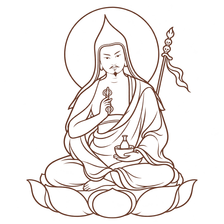
本次中文依据原英译本完成,为AI辅助中文新译,经过模型逐段自审,尚未人工定稿,未经完整藏文原典校勘。原作者、原藏英译者与本次中文译审角色分别署名。原书阅读、传承及出版说明按来源保留。
注释 NOTES
- Dudjom Lingpa is also known as Garwang Dudjom Pawo.
- 敦珠林巴亦名噶旺敦珠巴沃〔Garwang Dudjom Pawo〕。
- This refers to mind treasure, pure vision, and material-substance termas.
- 此指意伏藏、净相与物质伏藏。
- This is a predecessor of Dudjom Lingpa known as Drumgyi Karnagpa (grum gyi mkhar nag pa).
- 此为敦珠林巴的前身,名珠吉卡那巴〔Drumgyi Karnagpa;grum gyi mkhar nag pa〕。
- The eight great vidyādharas are Vimalamitra, Hūṃkara. Mañjushrīmitra, Nāgārjuna, Padmasambhava, Dhanasaṃskṛta, Rambuguhya-Devachandra, and Shāntigarbha.
- 八大持明为无垢友〔Vimalamitra〕、吽迦罗〔Hūṃkara〕、文殊友〔Mañjushrīmitra〕、龙树〔Nāgārjuna〕、莲花生〔Padmasambhava〕、达那桑斯克达〔Dhanasaṃskṛta〕、兰布古雅—德瓦旃陀罗〔Rambuguhya-Devachandra〕与香底嘎巴〔Shāntigarbha〕。
- This is reference to the small mirrors used for Vajrayāna rituals.
- 此指金刚乘仪式使用的小镜。
- The five certainties are within the context of the sambhogakāya pure land through which the doctrine of Secret Mantra is perpetually transmitted through the wisdom-mind and symbolic-indication lineages. Since this is a static, certain event, the five circumstances of this context—namely, the place, teacher, doctrine, retinue, and time—are certain, as well as sublime.
- 五决定,是在报身净土的语境中,秘密真言教法经智慧心传承与表示传承,恒常传授。由于这是稳固、决定之事,此情境的五项条件——处所、导师、教法、眷属、时间——皆决定且殊胜。
- These are the twofold states of omniscient wisdom knowledge possessed by those who are fully awakened as buddha. All enlightened ones possess the wisdom knowledge of knowing the nature of phenomena and the wisdom knowledge of knowing precisely how and why that nature appears in all of its magical diversity.
- 这是完全觉醒成佛者具备的二种遍知智慧。一切觉悟者都具有了知法性本性的智慧,以及精确了知此本性如何、为何显为种种幻化多样性的智慧。
- Heruka Dudjom Lingpa is referred to as “the Vidyādhara Dorje Trolod” because it was well known that this deity was his principal meditation deity. Since he was indivisible with the deity, he was also known by the deity’s name.
- 黑鲁嘎敦珠林巴被称为“持明多杰卓洛”,因为众所周知,该本尊是他的主要修持本尊。由于与本尊不可分,也以本尊之名称呼他。
- The four remedial powers are the power of the support, namely, the visualization of Vajrasattva above the crown of one’s head; the power of remorse concerning one’s shortcomings and negative habits; the power of the purification which is the recitation and visualization of the one-hundred-syllable mantra; and the power of the promise to no longer engage in negative deeds through body, speech, or mind.
- 四对治力是:所依力,即观想金刚萨埵在自己头顶;对于自身缺失、恶习的追悔力;净化力,即百字明的念诵与观想;以及承诺不再由身语意作恶的誓愿力。
- The Tripiṭaka are the three baskets, or collections, of Buddha Shākyamuni’s teachings: the Vinaya, the Sūtra, and the Abhidharma.
- 三藏,是释迦牟尼佛教法的三个篮筐或集成:律藏、经藏、阿毗达磨藏。
- This is the first of the four joys that will each be experienced as the four empowerments are received.
- 这是四喜的第一种,领受四灌顶时,将分别体验四喜。
- The four immeasurable qualities that are cultivated once entering the Mahāyāna path are equanimity, compassion, love, and joy.
- 入大乘道之后培育的四无量功德,是舍、悲、慈、喜。
- These seven are described later in the tögal commentary.
- 这七项将在后面的顿超释论中说明。
- The third category mentioned here is the upadesha for purifying death.
- 这里提到的第三类,是净化死亡的窍诀。
- This reference to “the first day” means the first day of the six-month tögal retreat. One continues these supplementary visualizations by rotating as described in this section.
- 此处“第一日”,指六个月顿超闭关的第一天。应按本节所述轮换,持续修这些补充观想。
- There are many histories concerning this king, who was peaceful and benevolent, so he is used as an example here. As the king of geese, he was an incarnate bodhisattva.
- 关于此王有许多传记;他寂静仁慈,故于此用作范例。作为雁王,他是一位化身菩萨。
- “Indications” refers to the prophecies of the ḍākinīs, and the “counsel” indicates the terma revelations. All terma revelations come through symbolic indication from the ḍākinīs.
- “表示”指空行母的授记,“教诫”指伏藏显露。一切伏藏显露,都经空行母的象征表示而来。
- The duration of Lord Buddha Shākyamuni’s doctrine in this world is five-thousand years. Those five-thousand years are divided into ten five-hundred-year periods. The “five-hundred-year decline” referred to in the text is the final five-hundred-year period of the five-thousand years, a period when the doctrine will have declined to such an extent that it is merely a fading external presence.
- 世尊释迦牟尼佛的教法在此世间住世五千年。这五千年分为十个五百年阶段。正文所谓“五百年衰败”,指五千年的最后五百年;彼时教法衰落到只剩逐渐消褪的外在形迹。
- The five degeneracies include the increasing degeneracy of time, sentient beings, life expectancy, passions, and view.
- 五浊包括时代、众生、寿命、烦恼、见解的日益衰浊。
- The eight causal vehicles—or yānas—are the Shrāvaka, Pratyeka, Bodhisattva, Kriyā, Upa, Yoga, Mahā, and Anu vehicles.
- 八因乘,即声闻、独觉、菩萨、事、行、瑜伽、玛哈、阿努诸乘。
- The single resultant Ati vehicle is the ninth vehicle.
- 唯一果阿底乘,是第九乘。
- The outer space of the azure sky appears as though it is equal to the size of your [i.e., the observer’s] face or as if it were covering your face. In the center of this, bindus of light appear to be about the size of a bean or a thimble [i.e., the covering an archer uses to protect his thumb].
- 蔚蓝天空的外在空间,看起来仿佛与〔观察者的〕脸同大,或像覆盖着脸。其中,光明点看起来约为豆或顶针大小〔此处所指为射手保护拇指的套具〕。
- The term here is <bse phub>, which indicates the shape and color of the light bindus. This has nothing to do with the function of a shield (phub), which is to provide protection from weapons. The term -bse- refers to a sap extracted from a particular tree that, when applied to another substance, turns that substance reddish-orange. In short, light molecules appear to have the color of reddish-orange and the shape of a shield.
- 这里的词为bse phub,表示光明点的形与色,与盾〔phub〕保护人免受武器伤害的功能无关。bse指从某种树提取的树液,涂到其他物质上,会使它变成橘红色。简言之,光微粒看起来为橘红色、盾形。
- Once contracting the disease, one is exempt from exposure again. This is analogous of how, once a practitioner reaches the third vision of tögal—the extent of awareness—it is impossible for them to revert back to the habits of existence. During the first two visions, this reversal of experience is still a possibility.
- 一旦患过此病,就免于再次感染。这比喻修行者一旦到达顿超第三见——觉性如量——便不可能退回三有习气;在前两见中,觉受仍可能退转。
- In the Tibetan art of weaving wool, the strands of wool are stretched very long and taut, creating the image of a long blanket. The streams of light resemble this image.
- 藏地织毛工艺中,羊毛线拉得很长、绷紧,形成长毯的形象。光流与此相似。
- At the time of the dissolution of all phenomena: when the corporeal form of the practitioner vanishes into space, the space is like a matrix of fight. In that expanse, the shape of the light resembles the five fingers on the practitioner’s hand spread apart. Finally, this dissolves into itself.
- 一切法消融时,修行者的物质形体消失于虚空,虚空如光的网状结构。在此广界,光形类似修行者手上五指张开,最后自融于自身。
- The three indestructible supports are representations of enlightened body, speech, and mind.
- 三不坏所依,是觉悟身、语、意的表征。
音译/原文
Na maḥ samanta buddhānāṃ, acintya bhūta rūpināṃ, oṃ tāre svāhā
As stated in the Root Mañjushrī Tantra, the presence of this twenty-six syllable maṇḍala ensures that negative karma is not accumulated if this text is disrespected, such as walking over it.
如《文殊根本续》所说,此二十六字坛城在场,即能确保:若对此书有不敬行为,例如跨越其上,也不积恶业。