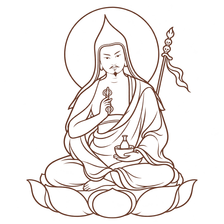
蒋扬钦哲旺波传 The Life of Jamyang Khyentse Wangpo
by Orgyen Tobgyal Rinpoche
乌金督佳仁波切讲述
背景 Background
The teachings that were transmitted from India to Tibet from the seventh century reign of the Dharma King Songtsen Gampo[4] until around the ninth or tenth century came to be known as the Ancient Teachings of the Early Translations (Ngagyur Nyingma). This name ‘Nyingma’ or ‘Ancient Ones’ was not something the Nyingmapas came up with themselves; it was first used by the schools of the ‘New Tradition’, or ‘Sarma,’ because they saw the Nyingma as an ancient tradition in comparison with their own. The period of transition between old and new schools is usually given as the era of the great translator Rinchen Zangpo (958–1055). Whatever translations appeared before his time are called ‘Ancient’, whereas his own translations and those that came later are called ‘New’ or ‘Modern.’ This is how the scholars of the past explained the difference.
从七世纪法王松赞干布[4]在位时期,直到约九、十世纪,从印度传到西藏的教法,后来被称为「前译旧派教法」(Ngagyur Nyingma)。「宁玛」,也就是「旧派」这个名称,并非宁玛派自己取的;最先使用这个名称的是「新派」,即「萨玛」各派,因为与自己的传统相比,他们认为宁玛是一种古老的传统。新旧各派的分界,一般定在大译师仁钦桑波(958—1055)的时代。在他以前出现的译典称为「旧译」,而他的译典及其后的译典则称为「新译」或「新派」。过去的学者就是这样解释这一差别的。
Generally speaking, it seems to me that whenever something new comes along, at first it is not very well known, and in order to bring it to people’s attention, it needs to be promoted enthusiastically, usually by making repeated claims about how good it is. That is generally how things work. In Tibet, the New Schools applied the term Nyingma in order to dissociate themselves from the older traditions. In effect, they were saying, “That is the old tradition. We represent something different. We are the new schools.”
一般来说,在我看来,每当新事物出现,起初总不太为人所知。为了引起人们的注意,就需要热情宣扬,通常要反复说它有多好。事情大致都是如此。在西藏,新派使用「宁玛」这一名称,是为了表明自己与较早的传统不同。实际上,他们是在说:「那是旧传统,我们代表的是另一种传统。我们是新派。」
In fact, it is only in their names that these schools differ. In reality, all the major traditions followed in Tibet come from just a single source: the Buddha. Not only that, they are all alike in that they offer instructions on how to follow the path leading to liberation and omniscience within a single lifetime.
事实上,各派只有名称不同。西藏所奉行的一切主要传统,其实都出于同一个源头:佛陀。不仅如此,它们都同样教导如何循道而行,在一生之中获得解脱与一切智。
Even so, as the times degenerate and grow from bad to worse, the Dharma tradition also declines, and so there came to be a division into the Nyingma and the Sarma, and even within the Sarma many different schools arose. In the Kagyü alone, there are four major sub-schools and eight minor ones. In the Sakya School, there is the division into the three main branches of Sakya, Ngorpa and Tsarpa. In the Kadam School, there is a division between the old and new Kadampas. All the traditions have divided and become more and more fragmented over time, and unfortunately this has meant that the relationships between different branches have not always been harmonious.
尽管如此,随着时代衰微、每况愈下,佛法传统也随之衰落,于是出现宁玛与萨玛的划分;甚至在萨玛内部,又产生许多不同宗派。仅噶举一派,就有四大支派与八小支派。萨迦派则分为萨迦、俄尔、擦尔三大支派。噶当派又有新旧噶当之分。各个传统随着时间不断分支,愈发零散;遗憾的是,各支派之间的关系也因而不总是和睦。
You might disagree with what I am saying here. I need to back it up; otherwise it could seem as if I am just expressing an opinion. Let’s take the Kadampa tradition first of all. The Precious Lord Tsongkhapa, who was Mañjuśrī in person, composed some eighteen volumes of writing which still exist today. But of those, there are some which are widely studied and practised and highly treasured within the Gelukpa School, and there are also some sections of his writings which are not valued so highly. His commentary on the Prajñāpāramitā known as the Golden Rosary of Fine Explanations (lek shé ser treng), for example, and certain other writings are considered to be closer to the old Kadampa tradition and the ancient schools, and so they are no longer held in very high regard by Gelukpa scholars.
你们可能不同意我在这里说的话。我需要拿出依据,否则听起来可能只是我个人的意见。先以噶当派为例。文殊菩萨亲自化现的至尊宗喀巴大师,撰写了约十八函著作,至今犹存。其中有些在格鲁派广泛研习、修持,极受珍视;另一些部分却不那么受重视。比如,他的《般若波罗蜜多》注疏《善说金鬘》(lek shé ser treng)及某些其他著作,被认为较接近旧噶当派与古老各派,因此格鲁派学者已不再那么推重。
Then, if we consider the Sakya school, its real origins are within the Nyingma school, but amongst the three main branches, we find that the Ngor branch no longer practise the so-called ’ancestral teachings’ (yab chö) of the Sakya school, such as the practices of Yangdak Heruka and Vajrakiīaya.
再看萨迦派,它真正的根源在宁玛派;然而,在它的三大支派之中,我们发现俄尔支派已经不再修持萨迦派所谓的「祖传法」(yab chö),例如扬达嘿噜嘎与金刚橛的修法。
In the Nyingma too, although there has not been any decline in the compassion and blessing of Guru Rinpoche, there have been many tertöns who have appeared through the centuries, each revealing their own particular terma cycles. Over time, the followers of particular terma traditions have emphasized their own lineage to the neglect of others. By now, after so many tertöns and so many terma cycles, there is almost nothing left that you could point to as being common to the whole Nyingma School.
宁玛派也一样。虽然莲花生大师的慈悲与加持丝毫未减,数百年来却出现了许多伏藏师,各自取出特定的伏藏法系。久而久之,某一伏藏传统的追随者着重自己的传承,而忽略其他传承。到了今天,经过如此多位伏藏师、如此多套伏藏法系之后,几乎已找不到什么可以说是整个宁玛派共同具有的了。
This was the state of the Buddha’s teachings in Tibet—fragmented and threatened by sectarianism—when there appeared the two great emanations of Mañjuśrī, Jamyang Khyentse Wangpo and Jamgön Kongtrul Lodrö Taye.
就在西藏佛教呈现这种四分五裂、受到宗派偏见威胁的状况时,出现了文殊菩萨的两位伟大化身:蒋扬钦哲旺波与蒋贡康楚·罗卓泰耶。
前世化身 Previous Incarnations
You might wonder who Jamyang Khyentse Wangpo really was. The simple answer is that he was Mañjuśrī in person. To talk about Mañjuśrī, and explain who he is, would be difficult even for a great bodhisattva who has attained the bhūmis. Such a bodhisattva could speak with his vajra tongue for an entire aeon, and still he would not finish recounting Mañjuśrī’s enlightened deeds and listing his qualities.
你们也许会问,蒋扬钦哲旺波究竟是谁?简单地说,他就是文殊菩萨。要讲述文殊菩萨、说明他是谁,即使对一位已登地的大菩萨来说,也很困难。这样一位菩萨纵然以金刚舌讲说整整一劫,也说不尽文殊菩萨的觉悟事业,列不完他的功德。
Nevertheless, confining ourselves to the limited perspective of ordinary beings, we can say a little about the earlier emanations of Jamyang Khyentse Wangpo. In the noble land of India, during the time of Buddha Śākyamuni, he was Śāriputra, the most gifted of the Buddha’s disciples in terms of wisdom. And among the eight great vidyādharas, he was Mañjuśrīmitra, the one who received the transmission of Yamāntaka. He was also the mahāsiddha Vajra Ghaṇṭipa, the great yogi who attained realization through the one-pointed practice of Cakrasamvara, and who could travel to celestial realms without leaving his ordinary body behind, united with his consort, and taking along his children in the form of a vajra and bell. He was also the crown ornament of the five hundred learned paṇḍitas, the great Vimalamitra, who made the teachings of the Great Perfection shine like the sun throughout the whole of Tibet.
不过,限于我们凡夫的狭小视野,还是可以略说蒋扬钦哲旺波早先的一些化身。在印度圣地,释迦牟尼佛住世时,他是舍利弗,即佛陀弟子中智慧第一者。在八大持明之中,他是领受大威德传承的文殊友(Mañjuśrīmitra)。他也曾是大成就者金刚铃巴(Vajra Ghaṇṭipa):这位大瑜伽士专一修持胜乐金刚而证悟,能够不舍凡常肉身,与明妃相合,带着化为金刚杵与铃的子女,前往天界。他又曾是五百博学班智达的顶严——伟大的无垢友(Vimalamitra),使大圆满教法如太阳般照耀整个西藏。
Later he was also the paṇḍita Pratiharanandamati,[7] and here there is a story I wish to tell. Often the incarnations of Jamyang Khyentse have problems with their intestines quite soon after birth, and no matter how much medicine they take, it doesn’t seem to help. You might wonder why this is. When viewed with the eyes of wisdom, this problem, it seems, can be traced back to Jamyang Khyentse’s life as the paṇḍita Pratiharanandamati. On one occasion, while Pratiharanandamati was meditating one-pointedly in his hermitage on a deserted mountainside, a ḍākinī appeared to him and predicted that even staying there alone and practising one-pointedly, he would meet a great enemy of the buddhist teachings. “When this enemy comes,” she explained, “you must liberate him. If you do not, it will prove a great obstacle to the teachings.”
后来,他也是班智达帕底诃罗难陀摩底(Pratiharanandamati)[7],这里有一个故事我想讲一讲。蒋扬钦哲的转世往往出生不久就有肠道问题,无论服用多少药,似乎都没有用。你们可能想知道为什么。据说,以智慧眼观察,这个问题可以追溯到蒋扬钦哲作为帕底诃罗难陀摩底班智达的那一世。有一次,帕底诃罗难陀摩底正在荒无人烟的山坡上、自己的茅蓬中专一禅修,一位空行母显现并授记说,即使他独自住在那里专心修行,也会遇到一名佛教的大敌。她说:「当这个敌人到来时,你必须将他诛度。若不如此,他就会成为教法的巨大障碍。」
As he sat there, he tried to discover who this enemy of the teachings might be. He soon discovered that the king of the land, who was a follower of the tirthikas, was on an excursion nearby in the forest, together with all his ministers. He could see that they were eating a meal and talking together. “Today,” one of them was saying, “we are in a fine place and it is an auspicious time. While we are all gathered together, the king and all his ministers, we should decide upon some great plan for the future, a project for the good of the kingdom that we could put all our energy into.”
他坐在那里,试着查明这个佛法之敌究竟是谁。不久,他发现信奉外道的国王正与所有大臣在附近的森林里游玩。他看见他们一边用餐,一边交谈。其中一人说道:「今天,我们身处佳地,时机也很吉祥。趁国王和所有大臣都聚集于此,我们应该为未来决定一项宏伟计划,一项有益于国家、能让我们全力投入的事业。」
Several of the ministers put forward ideas for ways they could trade and make money. Others disagreed and suggested they should sponsor a religious project instead. Finally, one cunning minister stood up and explained that what prevented their own religion from becoming dominant throughout the kingdom was Buddhism, and so he proposed they ransack and destroy all the buddhist monasteries in the region.
几位大臣提出各种经商赚钱的想法。另一些人不同意,建议他们改为资助一项宗教事业。最后,一位狡猾的大臣站起来,说阻碍他们所信奉的宗教在全国占据主导地位的是佛教,因此提议劫掠并摧毁境内所有佛教寺院。
As soon as the paṇḍita heard this and saw what would result, he instantly performed the practice of Yamāntaka and manifested in the form of a huge and terrifying ox with long, piercing horns. He ran towards the king and his ministers and liberated them all by running his horns through their stomachs, piercing their intestines. The intestinal problems experienced by the Khyentse incarnations are the karmic result of this event.
班智达一听到这番话,看到由此将导致的后果,便立即修持大威德法,化现为一头巨大而可怕的公牛,长着锐利的长角。他冲向国王与大臣,以双角刺穿他们的腹部、贯穿肠道,将他们全都诛度。钦哲诸转世所遭遇的肠道问题,就是这件事的业果。
Although I will not mention them all here, he also appeared as many other learned paṇḍitas and accomplished yogins in the land of India. Then in Tibet, he appeared as the great Dharma-king Tri Songdetsen, and immediately afterwards, in his very next incarnation, he was the heir of the teaching cycle known as The Ocean of Dharma that Gathers all the Teachings (Kadü Chökyi Gyatso),[8] Gyalse Lharje Chokdrup Gyalpo.
此外,他在印度也曾化现为许多其他博学班智达与成就瑜伽士,这里就不一一列举了。后来在西藏,他化现为伟大的法王赤松德赞;紧接着的下一世,则是《总集教法之法海》(Kadü Chökyi Gyatso)[8]法系的传承继承者嘉色拉杰·秋珠嘉波(Gyalse Lharje Chokdrup Gyalpo)。
In all, there were five great tertöns who were combined emanations of both King Tri Songdetsen and Gyalse Lharje:
总共有五位大伏藏师,是赤松德赞王与嘉色拉杰共同的化身:
- Their body manifestation was Ngadak Nyang Rinpoche.
- Their speech manifestation was Guru Chökyi Wangchuk.
- Their mind manifestation was Changdak Tashi Tobgyal.
- Their quality manifestation was Ngari Pandita, Pema Wangi Gyalpo
- Their activity manifestation was the Fifth Dalai Lama, Ngawang Lobsang Gyatso.
- 身化身是阿达娘仁波切(Ngadak Nyang Rinpoche)。
- 语化身是古如确吉旺秋(Guru Chökyi Wangchuk)。
- 意化身是绛达扎西督佳(Changdak Tashi Tobgyal)。
- 功德化身是阿里班智达·贝玛旺吉嘉波(Ngari Pandita, Pema Wangi Gyalpo)。
- 事业化身是第五世达赖喇嘛·阿旺罗桑嘉措。
From the time of the very first tertön, Sangye Lama, up until his incarnation as Jamyang Khyentse Wangpo, Gyalse Lharje appeared as thirteen tertöns. There were other emanations too, but these were just the ones who were tertöns.
从最早的伏藏师桑吉喇嘛(Sangye Lama)开始,直到转世为蒋扬钦哲旺波,嘉色拉杰共化现为十三位伏藏师。此外还有其他化身,这里只计算了身为伏藏师的那些化身。
In addition to these, Jamyang Khyentse was also Dakpo Lharje, or Gampopa. He was Nesarwa Jamyang Khyentse Wangchuk, and Sakya Pandita. In fact, if you really look into the list of his previous lives, it seems as though there was hardly any great learned or accomplished master who was not one of Jamyang Khyentse’s former incarnations.
除此之外,蒋扬钦哲也曾是达波拉杰,即冈波巴;也曾是内萨瓦·蒋扬钦哲旺秋(Nesarwa Jamyang Khyentse Wangchuk)以及萨迦班智达。事实上,如果仔细查看他的前世名录,似乎几乎找不到哪位伟大的博学或成就上师不曾是蒋扬钦哲的前世化身。
Jamyang Khyentse Wangpo himself stated that he was the body incarnation of Tri Songdetsen, the speech incarnation of Guru Rinpoche, the mind incarnation of Namkhai Nyingpo, the quality incarnation of Gyalse Lharje, and the activity incarnation of Langdro Lotsāwa.
蒋扬钦哲旺波自己曾说,他是赤松德赞的身化身、莲花生大师的语化身、南喀宁波的意化身、嘉色拉杰的功德化身,以及朗卓译师的事业化身。
诞生与童年 Birth and Childhood
As indicated in the ancient prophecies, his place of birth was in Kham, in the district of Derge, in a place called Terlung. Just as mentioned in the prophecies, the earth there is in the shape of a snake, and there is a rock in the shape of a garuḍa. The line in the prophecy stating ‘In the family line of Nyö’[9] means that the family of his birth, which was the Dilgo family, was in the line of Nyö, the same family line as that of the great Terdak Lingpa. The name Nyö, which means ‘crazy’, dates back to the time when a god came down from the heavens to this human world. It is said that he became tainted through mixing with impure human beings, and this human contact made him crazy.
如古老授记所示,他出生在康区德格境内一个名为德隆(Terlung)的地方。正如授记中所说,当地地形如蛇,还有一块形如大鹏金翅鸟的岩石。授记中「于纽氏族系中」[9]这一句,是说他出生的顶果家族属于纽氏,与伟大的德达林巴同属一个族系。「纽」(Nyö)意为「疯狂」,这个名字可以追溯到一位天神从天界降临人间之时。据说,他与不清净的人类混杂,受到染污,与人的接触使他发了狂。
Some time before Jamyang Khyentse was born, the great Khenpo of Ngor, Thartse Jampa Namkha Chime was staying in Derge and had become very ill. At that time, the king of Derge requested him not to pass into parinirvāṇa but to remain longer in this world. He added that if this was not possible, and he could not extend his life any further, he should definitely return to instruct beings in another incarnation. The king made this request again and again. Thartse Jampa Namkha Chime did not say anything to the king directly, but to those around him he said that it was very difficult for someone in the bardos to choose their place of birth. However, if someone did have the choice, he said, then to be born as a son of Trungyik Rinchen Wangyal would ensure a very good basis for leading a positive life and benefitting the teachings.
蒋扬钦哲出生前一段时间,俄尔派的大堪布塔策·强巴南喀奇美(Thartse Jampa Namkha Chime)住在德格,病得很重。当时德格王祈请他不要入般涅槃,能在世间再多住一些时候。国王又说,若此事实在无法做到,寿命确实不能再延长,他也一定要以另一次转世回来教导众生。国王反复这样祈请。塔策·强巴南喀奇美没有直接回答国王,却对身边的人说,中阴中的人很难选择投生之处。不过,他说,若有人确实能够选择,那么投生为仲益仁钦旺嘉(Trungyik Rinchen Wangyal)的儿子,就能获得十分良好的基础,度过有益的一生,并利益教法。
Before Jamyang Khyentse Wangpo’s birth there were many extraordinary signs and miracles that foretold his coming. When he was born, the placenta was wrapped around his body in the shape of a monastic robe, and his hair was already long enough to reach his ears. Within a few months of his birth, he received the blessing of Mañjuśrīmitra and Guru Rinpoche. And it is said that Ekajaṭī, the Protectress of the secret mantra, cared for him as if he was her very own child.
蒋扬钦哲旺波出生之前,出现许多非凡征兆与神异现象,预示他的到来。他出生时,胎衣像僧袍一样裹着身体,头发已经长到耳边。出生后几个月内,他就得到文殊友与莲花生大师的加持。据说,密咒护法一髻佛母(Ekajaṭī)照顾他,如同照顾自己的孩子。
When Jamyang Khyentse was very young, and the family was living in a big tent in the Terlung area, every morning when he left the tent he would see a big image of Guru Rinpoche in the rock. Later on, when he thought about this, he realized that there must have been a kutsab image of Guru Rinpoche hidden there as a terma.
蒋扬钦哲很小时,全家住在德隆地区的一顶大帐篷中。每天早晨走出帐篷,他都会在岩石中见到一尊巨大的莲花生大师像。后来回想这件事,他明白那里一定藏着一尊作为伏藏的莲师身替像(kutsab)。
At the age of eight, when he was in an isolated place, and was about to fall asleep, he suddenly heard an extraordinary sound of ‘Dhīḥ!’—which is the seed-syllable of Mañjuśrī—and at that moment his ordinary mind ceased completely and he was brought into the presence of the great masters Mañjuśrīimitra and Guru Rinpoche, who gave him empowerments and teachings. From that moment on, his wisdom became fully developed, and he could remember the details of many thousands of former lifetimes.
八岁时,有一次他身处僻静之地,将要入睡,忽然听见非同寻常的一声「Dhīḥ!」——这是文殊菩萨的种子字。就在那一刻,他的凡常心完全止息,被带到文殊友与莲花生大师两位大上师面前,领受了灌顶与教法。从那时起,他的智慧充分开展,能够忆起成千上万前世的细节。
Instead of playing ordinary games, as a child, he would make elaborate mandalas out of mud and dung, and play with phurbas he had shaped out of wood. On one such occasion, he said he was performing a drupchen of Kadü Chökyi Gyatso, and recited many sections of the practice aloud. Even at this age, all the deities of the mandala appeared clearly and vividly to his mind. Unfortunately, the family employed a rather inept servant who was completely unaware of what was going on, and thought that Khyentse Rinpoche was simply making a big mess. He destroyed all the mandalas and cleared them away with his feet, and then scolded the young Khyentse Rinpoche, but in doing so, he incurred the wrath of the ḍākinīs and died the very same night.
小时候,他不玩普通游戏,而是用泥土和粪便制作精细的坛城,把木头削成金刚橛来玩。有一次,他说自己正在修《总集教法之法海》的大修法会(drupchen),并高声念诵其中许多段仪轨。即使在那样的年纪,坛城中的一切本尊也都清晰鲜明地显现在他心中。遗憾的是,家里雇用了一名颇为愚钝的仆人,完全不知道发生了什么,只以为钦哲仁波切把地方弄得一团糟。他把所有坛城毁掉,用脚扫开,又责骂了年幼的钦哲仁波切;这样做却触怒了空行母,他当晚就死去了。
With only the slightest tutoring from his father in reading, writing and reciting, Jamyang Khyentse Wangpo became extremely proficient.
在阅读、书写与念诵方面,蒋扬钦哲旺波只得到父亲极少的指点,便已极为精通。
On one occasion, Yeshe Tsogyal appeared to him in the form of an ordinary lady and gave him the prophetic guide for the discovery of a terma.
有一次,益西措嘉化现为一位普通女子来到他面前,将取出某一伏藏的授记指南交给了他。
The family had been followers of the Ngorpa tradition of the Sakya School for many generations. In fact, the great Ngorpa khenpo Jampa Kunga Tendzin was to become Jamyang Khyentse Wangpo’s root master. When he was travelling through Derge, Jampa Kunga Tendzin gave some money to Jamyang Khyentse’s father and said, “Your son is the incarnation of Jampa Namkha Chime. You must give him to Thartse Labrang.” In reply, the father said, “I will not give my son away in exchange for money, but if it will be of some benefit to the Dharma, then I will gladly have him become a monk.” Following this, Jamyang Khyentse went to live in the monastery of Dzongsar Tashi Lhatse.
他的家族世代信奉萨迦派的俄尔传统。事实上,俄尔派的大堪布强巴贡嘎丹增(Jampa Kunga Tendzin)后来成为蒋扬钦哲旺波的根本上师。强巴贡嘎丹增途经德格时,给了蒋扬钦哲的父亲一些钱,并说:「你的儿子是强巴南喀奇美的转世,你必须把他交给塔策拉章。」父亲回答:「我不会拿儿子去换钱;但若能利益佛法,我很乐意让他出家。」此后,蒋扬钦哲便到宗萨扎西拉孜寺居住。
At around this time, he entered into retreat in a cave called Sachen Puk, and performed a sādhana of Mañjuśrī based on the Gang gi Lodrö prayer. Early one morning, Mañjuśrī appeared very clearly in the centre of the mandala and let a blue utpala flower fall from his heart. When the flower touched Jamyang Khyentse’s own heart centre, all the darkness of ignorance completely cleared away and the light of his wisdom became fully developed.
大约在这个时期,他在一处名叫萨钦普(Sachen Puk)的山洞中闭关,依《文殊赞》(Gang gi Lodrö)修持文殊菩萨仪轨。一天清晨,文殊菩萨非常清晰地显现在坛城中央,从心间落下一朵蓝色乌巴拉花。当花触到蒋扬钦哲自己的心间时,一切无明黑暗彻底消散,智慧之光充分开展。
At the age of fourteen, he was not able to discover a particular terma and this created an obstacle. The obstacle manifested when he was invited to the Gönna Labrang[10] and served some rotten meat, which made him so severely ill that for seven days it seemed as if he were barely alive. Except for his faint breathing, all signs of life disappeared. When he eventually recovered, he had lost his memory, and was only able to recognize his mother. He had to re-learn everything all over again, and he later said that after this his wisdom was only a quarter of what it had been before.
十四岁时,他未能取出某一伏藏,由此产生了障碍。障碍显现为:他受邀前往贡纳拉章(Gönna Labrang)[10],吃了那里供上的腐肉,病得十分严重,一连七天都像是奄奄一息。除微弱呼吸外,一切生命迹象都消失了。最终苏醒时,他已失去记忆,只能认出母亲。所有东西都必须从头学起。他后来曾说,此后他的智慧只剩从前的四分之一。
In his own pure experience, during this period he had travelled to the Glorious Copper-Coloured Mountain and been received by Guru Rinpoche, who told him, “The auspicious circumstances for your present lifetime are not of the best kind. They may not even be of the intermediate level, but they will be of the lowest kind. You should now return.” And with that, Jamyang Khyentse Wangpo regained consciousness.
在他自身的清净体验中,这段期间,他到了吉祥铜色山,受到莲花生大师接见。莲师对他说:「你这一生的吉祥缘起,不能成为上等,恐怕连中等也达不到,只能是下等。你现在应当回去。」随后,蒋扬钦哲旺波便恢复了知觉。
Following this experience, he made great efforts to master all the rituals and practices of the Ngorpa tradition.
经历此事后,他为掌握俄尔传统的一切仪轨与修法,付出了很大努力。
Generally speaking, whenever you recount the life and liberation of a great master, there are three main topics: the master’s outer life, his inner life and his secret or innermost life. The traditional accounts are mainly concerned with a master’s enlightened qualities; they are not like modern biographies of famous people, which have a lot to say about what the person ate for breakfast, what they drank, where they stayed and all the things they did there and so on.
一般而言,每当讲述一位大上师的生平与解脱事迹时,主要有三个方面:上师的外传、内传,以及密传或最内密传。传统传记主要关注上师的觉悟功德,并不像现代名人传记那样,大量讲述这个人早餐吃了什么、喝了什么、住在哪里,以及在那里做了些什么等等。
求学 His Studies
If we now consider the outer life and liberation of Jamyang Khyentse, he twice went to Central Tibet, travelling throughout both Ü and Tsang. In total, he spent thirteen years studying day and night with masters from all traditions, receiving empowerments, transmissions and instructions.
现在来看蒋扬钦哲的外在生平与解脱事迹。他两度前往西藏中部,遍游卫藏各地。他总共用了十三年,日夜随学各个传统的上师,领受灌顶、传承与教言。
Jamyang Khyentse himself said that he had four main root masters. Of these, the most important was the great Ngorpa Thartse khenpo, Jampa Kunga Tendzin. Then there was Thartse Pönlop Naljor Jampal Zangpo. Another of his root teachers was Shalu Losal Tengkyong. And the other main root lama was Jamgön Kongtrul Lodrö Taye. These were the main four, but altogether he had more than 150 teachers. Amongst these, there were many who were also tertöns, such as the great Chokgyur Dechen Lingpa. Amongst his Sakya teachers, several were from the ruling Sakya families. In the Nyingma tradition, his teachers included the Mindroling throne-holders Gyurme Pema Wangyal[11] and Gyurme Sangye Kunga,[12] as well as Mindroling Jetsünma Trinle Chödrön,[13] who were all from the family line of Terdak Lingpa, and the fourth Dzogchen Rinpoche Mingyur Namkhe Dorje. More than seventy of his teachers were lamas belonging to the old and new Kadampa traditions. He also had a few Bönpo teachers.
蒋扬钦哲自己说,他有四位主要的根本上师。其中最重要的是俄尔派的大堪布塔策·强巴贡嘎丹增,其次是塔策本洛·南觉蒋巴桑波(Thartse Pönlop Naljor Jampal Zangpo)。另一位根本上师是夏鲁·洛萨丹迥(Shalu Losal Tengkyong),还有一位主要根本上师是蒋贡康楚·罗卓泰耶。这是最主要的四位,但他一共有一百五十多位老师。其中许多也身为伏藏师,例如伟大的秋吉林巴(Chokgyur Dechen Lingpa)。在他的萨迦派上师中,有数位出自萨迦执政家族。在宁玛派,他的上师包括敏珠林的法座持有者久美贝玛旺嘉(Gyurme Pema Wangyal)[11]和久美桑吉贡嘎(Gyurme Sangye Kunga)[12],以及敏珠林杰尊玛·赤列确准(Trinle Chödrön)[13],他们都出自德达林巴的家系;另有第四世佐钦仁波切·明就南喀多杰。他的上师中,有七十多位属于新旧噶当派,也有几位苯教老师。
If we consider all the teachings he received during these thirteen years, whilst he was studying with these masters in central Tibet and Kham, they include the teachings of the Nyingma School from the kama and terma, as well as all the teachings of the Sarma. There were teachings from the ten great pillars of the study lineage and transmissions from the eight great chariots of the practice lineage. He also received the transmissions for all the Words of the Buddha included in the Kangyur and the commentaries of the Indian masters contained in the Tengyur. In all, if we were to add together all the teachings he studied and for which he received the transmission, they would amount to more than 700 volumes.
在这十三年中,他在西藏中部与康区向这些上师所学的一切教法,包括宁玛派的教传与伏藏教法,以及萨玛各派的一切教法;既有闻思传承十大柱石的教法,也有实修传承八大车轨的传承。他还领受了《甘珠尔》中一切佛语以及《丹珠尔》中印度论师注疏的传承。总而言之,若把他研习并领受传承的一切教法汇总,便有七百多函。
He himself said that he did not simply receive these teachings; he studied them and came to know their meaning. He also said that there was perhaps nobody more learned than him at that time, because of all the study he had done. If anyone ever asked him which tradition he belonged to, he would reply simply that he was a buddhist.
他自己说,他不只是领受这些教法,还研习并通达了其中的义理。他又说,由于进行了如此多的学习,那个时代也许没有比他更博学的人了。如果有人问他属于哪一个传统,他只会回答自己是一名佛教徒。
身、语、意所依 Representations of Body, Speech and Mind
In order to house the representations of enlightened body, speech and mind, over the course of his life he established thirteen temples. He commissioned more than two thousand gold and copper statues, and three thousand more crafted from clay or stone.
为了安置觉悟身、语、意的所依,他一生建立了十三座殿堂。他造办了两千多尊金铜像,另有三千尊泥塑或石雕像。
When we consider his contribution in producing representations of enlightened speech, it is said that he copied almost every volume of teaching that he received. In those days there was no other way to copy a text besides writing it out by hand. In addition, he was responsible for printing many texts from woodblocks. According to his biography, written by Jamgön Kongtrul, he published a total of more than ten thousand volumes.
至于他制作觉悟语所依的贡献,据说他领受的教法几乎每一函都曾抄写。当时,除了手抄,没有别的复制经书的方法。此外,他还主持木刻印制了许多经籍。根据蒋贡康楚撰写的传记,他总共刊印了一万多函。
If you ever have the chance to see one of these volumes published by the Khyentse Labrang, you will be amazed by the quality of the printing and the materials that were used. On each one it clearly says the date on which it was first commissioned and the date when it was completed, and it shows how much gold and silver was given to cover the cost. Dilgo Khyentse Rinpoche could just pick up a volume and tell immediately whether it was from the Khyentse Labrang or not, just by feeling its weight and checking the quality of the paper. He didn’t even need to look at the label.
如果有机会见到钦哲拉章出版的一函典籍,你会为其印刷与用料的品质而惊叹。每函都清楚写明最初委托制作与完工的日期,并列出为支付费用所供养的金银数目。顶果钦哲仁波切只须拿起一函,掂掂重量、看看纸张品质,立即就知道是不是出自钦哲拉章,甚至不用看标签。
In terms of representations of the Buddhas’ mind, he oversaw the building of many great stupas, including the ‘Single Ornament of the World’ stupa at the Derge Gönchen monastery and also the serdung at Dzongsar. In total, he had more than two hundred stupas made out of gold and copper, and over two thousand made from wood or clay and other materials.
至于诸佛意所依,他督造了许多大佛塔,包括德格更庆寺的「世间唯一庄严」塔,以及宗萨的金质灵塔。他总共造办了两百多座金铜塔,以及两千多座木、泥等材质的佛塔。
弘法与修行 Teaching and Practice
It is well known that the main activities needed to ensure the preservation of the Dharma are teaching and practice. In this regard, there was a hardly any teaching that Jamyang Khyentse received which he did not then pass on to others. The great collections of teachings and practices which we see today, such as The Precious Treasury of Termas (Rinchen Terdzö), The Treasury of Kagyü Mantras (Kagyü Ngak Dzö), The Treasury of Essential Instructions (Damngak Dzö), The Treasury of Knowledge (Sheja Kunkhyab Dzö), The Compendium of Tantras (Gyüde Kuntü), The Compendium of Sādhanas (Druptap Kuntü) and so on, were all compiled solely through the kindness of Jamyang Khyentse.
众所周知,确保佛法长存所必需的主要事业,是讲授与修持。在这方面,蒋扬钦哲所领受的教法,几乎没有不再传给他人的。我们今天所见的大型教法与修持汇编,例如《大宝伏藏》(Rinchen Terdzö)、《噶举密咒藏》(Kagyü Ngak Dzö)、《口诀藏》(Damngak Dzö)、《所知遍摄藏》(Sheja Kunkhyab Dzö)、《续部总集》(Gyüde Kuntü)、《成就法总集》(Druptap Kuntü)等等,都是全凭蒋扬钦哲的恩德才得以编成。
You might object to this and say that The Compendium of Tantras and The Compendium of Sādhanas were put together by Jamyang Loter Wangpo, and the Five Treasures were the work of Jamgön Kongtrul. You might wonder what Jamyang Khyentse Wangpo had to do with all this. In fact, the one who really searched everywhere for all the empowerments and transmissions contained in these collections such as The Compendium of Tantras and The Compendium of Sādhanas was Jamyang Khyentse Wangpo. Of course, at that time he was not able to receive them all from just one person. He had to search for thirteen years going from one master to the next. Then finally, after all those years of effort, he transmitted all that he had received to Loter Wangpo and instructed him to arrange them into proper collections with a clear structure. He told Loter Wangpo to do this.
你们也许会提出异议,说《续部总集》与《成就法总集》是蒋扬洛德旺波编纂的,「五大宝藏」则是蒋贡康楚的作品。你们可能会问,这些与蒋扬钦哲旺波有什么关系?实际上,真正四处寻求《续部总集》《成就法总集》等汇编中所有灌顶与传承的人,正是蒋扬钦哲旺波。当然,当时他不可能只从一个人那里领受全部教法。他必须用十三年四处寻访,从一位上师到另一位上师。经过那么多年的努力,最后,他把所领受的一切传给洛德旺波,指示他按清楚的结构编成妥善的汇集。是他嘱咐洛德旺波这样做的。
In a similar way, it was Jamyang Khyentse who first received all the terma cycles of the 108 major tertöns, together with those of many of the minor tertöns. He then transmitted them to Jamgön Kongtrul, who arranged them into The Precious Treasury of Termas.
同样,也是蒋扬钦哲先领受了一百零八位主要伏藏师的全部伏藏法系,以及许多较次要伏藏师的法系,之后再传给蒋贡康楚,由后者编为《大宝伏藏》。
The copper pumba (vase), which Jamyang Khyentse used when giving empowerments, and which Jamyang Khyentse Chökyi Lodrö later inherited, had to be mended twice because it wore out through so much use. For that to happen was simply unheard of before Jamyang Khyentse’s time.
蒋扬钦哲用于灌顶、后来由蒋扬钦哲确吉罗卓继承的那只铜宝瓶(pumba),因为使用过多而磨损,曾修补过两次。在蒋扬钦哲以前,这种事简直闻所未闻。
This should give some idea how much he did to spread the teachings.
由此,应当可以略知他为弘扬教法做了多少事。
If we think about his contribution to the lineage of practice, then it is well known that from the age of forty-five until the age of seventy-three, he never once left his residence, which was known as the ‘Joyful Grove of Immortal Accomplishment’, in Dzongsar Tashi Lhatse. It would be impossible for anyone to say how many mantras he recited during that time, or how many practices he accomplished. Nevertheless, the ultimate fruition of the practices of approach and accomplishment can be measured in terms of experience and realization, and we can say something about his level of realization, because Jamgön Kongtrul Rinpoche tells us about it.
再看他对实修传承的贡献。众所周知,从四十五岁到七十三岁,他一次也没有离开位于宗萨扎西拉孜寺、名为「无死成就欢喜园」的住处。无人能说清他在这段时间念了多少咒、成就了多少修法。然而,念修的究竟果实可以从觉受与证悟来衡量;而他的证悟境界,我们是可以略说一二的,因为蒋贡康楚仁波切告诉了我们。
On one occasion, Jamgön Kongtrul visited Dzongsar when Jamyang Khyentse was around seventy years of age, and while they were talking together, Jamyang Khyentse said to Jamgön Kongtrul, “I have studied with more than 150 teachers. Among those, I have had four main teachers, and of those you are the only one who is still alive. I feel I should now offer you my realization[14] from all the practice I have done throughout my life.” When he described his realization and attainments from all the practices—from the development and completion phases, up to the ultimate fruition he had experienced through the practice of Dzogchen—Jamgön Kongtrul was completely lost for words. He says he felt humbled and wondered how he could ever begin to evaluate such an incredible depth of realization. Nevertheless, he knew that if one were to look into the instruction texts of the Sarma and the Nyingma traditions, then according to the Mahāmudrā tradition, Jamyang Khyentse’s realization would be described as the state of ‘non-meditation’, in which all phenomena are realized to be of a single taste. Whereas according to the Dzogchen teachings, Jamyang Khyentse had reached the state of the exhaustion of all phenomena within the expanse of reality. Kongtrul Rinpoche said he was left in no doubt that Khyentse Rinpoche’s wisdom mind was no different from that of the great Paṇḍita Vimalamitra or Guru Rinpoche himself. In turn, when Jamgön Kongtrul offered his realization, Jamyang Khyentse said that he had reached the level of awareness reaching full maturity corresponding to the practice of trekchö.
有一次,蒋贡康楚到宗萨拜访,当时蒋扬钦哲约七十岁。交谈时,蒋扬钦哲对蒋贡康楚说:「我曾随学一百五十多位上师。其中有四位主要上师,如今只有你还在世。我觉得,现在应当把我一生修行所得的证悟向你呈供。[14]」当他叙述自己一切修行的证悟与成就——从生起、圆满次第,直到修持大圆满所亲证的究竟果位——蒋贡康楚完全说不出话来。他说自己深感谦卑,不知如何才能开始衡量如此不可思议的证悟深度。不过,他知道,若查阅萨玛与宁玛的教言典籍,依大手印传统,蒋扬钦哲的证悟应称为「无修」境界,即证得一切法为一味;而依大圆满教法,蒋扬钦哲已经达到一切法于法性界中穷尽的境界。康楚仁波切说,他毫无疑问地确信,钦哲仁波切的智慧心与大班智达无垢友、莲花生大师的智慧心毫无差别。反过来,当蒋贡康楚呈供自己的证悟时,蒋扬钦哲说,他已达到与彻却修行相应的、觉性臻于完全成熟的层次。
To put it simply, throughout his entire life, Jamyang Khyentse continuously held aloft the victory banner of spiritual practice.
简单地说,蒋扬钦哲一生始终高举修行的胜幢。
As for his style of teaching, whenever a follower of the Gelukpa came to see him, he would put on a yellow hat and teach according to the tantras and pith instructions of the old and new Kadampa schools, giving instructions on practices like Lojong, so that a Gelukpa practitioner would think he was the great Je Tsongkhapa in person. In fact, the great and learned Geshe Jampa Puntsok of Lithang, who was without rival as a scholar throughout the whole Gelukpa School, was also a disciple of Jamyang Khyentse Wangpo.
至于他的教学方式,每当有格鲁派行者来见他,他就戴上黄帽,依新旧噶当派的续典与口诀讲授,教导修心等法门,使格鲁派行者觉得他就是至尊宗喀巴大师。事实上,理塘那位博学的大格西强巴彭措——在整个格鲁派学界无人能与之匹敌——也是蒋扬钦哲旺波的弟子。
Whenever a student from the Kagyü School came to request teachings, he would put on the hat of Gampopa and teach Mahāmudrā from the preliminaries, such as the Four Dharmas of Gampopa, onwards, and people would feel as if no Kagyüpa meditator even came close to his level of realization. Many Kagyü masters actually wrote in their histories that they felt as if he was Milarepa in monks’ robes. Other Kagyü disciples saw him as Gampopa in person. Included among his students were the fourteenth and fifteenth Karmapas, as well as the Situ Rinpoches, Pema Kunzang and Pema Wangchok Gyalpo.
每当有噶举派弟子前来求法,他便戴上冈波巴的帽子,从「冈波巴四法」等前行开始讲授大手印,使人觉得没有哪一位噶举派禅修者的证悟能够接近他。许多噶举派上师确实在自己的史传中写道,他们觉得他就是身披僧衣的米拉日巴。另一些噶举派弟子则视他为冈波巴本人。他的弟子包括第十四世和第十五世噶玛巴,以及司徒仁波切贝玛贡桑、贝玛旺秋嘉波。
For Nyingma students, he was the actual representative of Guru Rinpoche, who had been given the name Ösel Trulpe Dorje by Vimalamitra and the name Pema Ösel Dongak Lingpa by Guru Rinpoche. He was simply the king of all tertöns.
对于宁玛派弟子,他是莲花生大师真正的代表;无垢友赐名他为「沃色珠贝多杰」(Ösel Trulpe Dorje),莲花生大师赐名他为「贝玛沃色东阿林巴」(Pema Ösel Dongak Lingpa)。他无疑是一切伏藏师之王。
The Sakyapas themselves will say that the current strength of their lineages—of the Sakya, Ngor and Tsar traditions—and the fact that they have remained unbroken to this day, is largely due to the kindness and dedication of Jamyang Khyentse Wangpo.
萨迦派自己也会说,他们萨迦、俄尔、擦尔各传承今天之所以仍然强盛,并且至今未曾中断,很大程度上要归功于蒋扬钦哲旺波的恩德与付出。
Whichever tradition he was teaching upon or whatever empowerment he was giving, everything—even down to the way he held the vajra and bell and the style of his chanting—would be done precisely according to the tradition of that particular lineage. He would never combine bits and pieces from different traditions so as to mix things up like tsampa in a begging bowl.
无论他讲授哪个传统的教法,或传授哪一种灌顶,一切细节——甚至如何持铃杵、采用什么唱诵方式——都严格依照那个传承的传统。他绝不会把各个传统的片段拼凑起来,像把乞钵中的糌粑混成一团那样。
弟子 His Students
Generally it is said that for a master to be called exceptionally great, he must produce exceptionally great students. If we think about the students of Jamyang Khyentse, then there were about one hundred who were such great masters in their own right that they each had thousands of followers and left behind huge collections of writing, amounting in some cases to as many as forty or fifty volumes.
一般说来,一位上师若要被称为格外伟大,就必须培养出格外伟大的弟子。说到蒋扬钦哲的弟子,其中约有一百位,本身就是如此伟大的上师:每人都有成千上万的追随者,并留下大量著作,有的多达四五十函。
The great Mipham Rinpoche Jampal Gyepe Dorje, who was one such student, said in his writings that Jamyang Khyentse was, “The great master of all the Buddha’s teachings in the Land of Snows, the ultimate Vajradhara.” Mipham Rinpoche said that when you consider the learning and accomplishment of Jamyang Khyentse Wangpo, there was simply no other master in Tibetan history with whom he might be compared, and that it is unlikely that there will be anyone of his calibre again in the future.
伟大的米滂仁波切·蒋巴杰贝多杰就是其中一位弟子。他在著作中说,蒋扬钦哲是「雪域佛陀一切教法的大主宰,究竟金刚持」。米滂仁波切说,若论蒋扬钦哲旺波的学识与成就,西藏历史上没有任何其他上师可以与之相比,未来恐怕也不会再有这样的人物。
There were five disciples of Jamyang Khyentse Wangpo who were great tertöns: Chokgyur Dechen Lingpa, Lerab Lingpa, Bönter Tsewang Drakpa, Khamtrul Rinpoche Tenpe Nyima, and the old king of Ling, Lingtsang Gyalgen.
蒋扬钦哲旺波有五位弟子是大伏藏师:秋吉林巴、列绕林巴、苯教伏藏师次旺扎巴(Bönter Tsewang Drakpa)、康楚仁波切·丹贝尼玛(Khamtrul Rinpoche Tenpe Nyima),以及岭地的老国王岭仓嘉根(Lingtsang Gyalgen)。
These were some of the disciples who spread his teachings, and who helped to promote the tradition we know as Rimé. Rimé was not a new tradition created by mixing all the old traditions together. ‘Rimé’ means to have faith and pure perception for all the teachings of the Buddha, in the recognition that they are all equally valid means for bringing about liberation and omniscience, and, with this in mind, to practise the various methods of approach and accomplishment, having received the appropriate empowerments, transmissions and oral instructions.
以上只是他的一部分弟子,他们传播他的教法,并协助弘扬我们所称的「利美」传统。利美并不是把所有旧传统混在一起而创造出的新传统。「利美」的意思是:认识到佛陀的一切教法都是同样有效的解脱与一切智之道,因此对一切教法都具信心与清净观;怀着这样的认识,在领受相应灌顶、传承和口传教言后,修持各种念修法门。
One master who upheld this tradition and whom many of us had the great good fortune to meet was Dilgo Khyentse Rinpoche. He was someone who had the greatest respect for all the lineages of the Buddha’s teachings. Someone like him, who is a genuine follower of the great Rime tradition, will only have the greatest respect for all the teachings of the Buddha, and never look upon them with wrong view or disparage them in any way. It was Jonang Jetsün Tāranātha who said that there is not much point killing one parent in order to save the other, and by the same token, it will never be acceptable to further one tradition by destroying another.
顶果钦哲仁波切,就是一位持守这一传统、而我们许多人都有大福缘亲见的上师。他对佛陀教法的一切传承都怀有最深的敬意。像他这样真正追随伟大利美传统的人,对一切佛法只会怀有最深的敬意,绝不会生起邪见,或以任何方式贬损。觉囊杰尊多罗那他曾说,为了救父母中的一人,却杀死另一人,并没有多大意义;同理,为了兴盛一个传统而摧毁另一个传统,也永远不可取。
般涅槃 His Parinirvāṇa
If I were to talk in detail about the life of this learned and accomplished master, it would take much longer than we have available now, and I am afraid that in any case I do not have the knowledge. As I mentioned earlier, the auspiciousness during his life was not of the greatest or medium level, but only of the lowest level, and so it was that at the age of 73 his wisdom mind was absorbed into the heart of Vimalamitra.
若要详细讲述这位博学成就上师的一生,所需时间会远远超过我们现在拥有的时间,而且恐怕无论如何,我也没有那样的学识。正如先前所说,他一生的吉祥缘起既非上等,也非中等,而只是下等,因此在七十三岁时,他的智慧心融入了无垢友的心间。
On the 24th day of the twelfth Tibetan month, one month prior to his passing away, he had all his old papers burned, and then on the 25th he offered a tsok feast. Then, almost a month later, on the 21st day of the first lunar month, he scattered flowers and recited verses of auspiciousness, and then washed and put on a clean robe. He sat facing in the direction of Vimalamitra, and, entering into one-pointed samādhi, he merged his wisdom mind with the wisdom mind of Vimalamitra.
圆寂前约一个月,藏历十二月二十四日,他命人把所有旧文稿焚烧,二十五日举行了荟供。又过了近一个月,在藏历正月二十一日,他散花、念诵吉祥偈,随后洗浴,换上干净的僧衣。他面向无垢友所在的方向而坐,入于专一三摩地,将自己的智慧心与无垢友的智慧心融为一体。
Some time later, and in exact accordance with the prophecies found in the terma texts, he returned to benefit the teachings and beings of Tibet in five further emanations of his enlightened body, speech, mind, qualities and activity.
后来,他完全依照伏藏典籍中的授记,以觉悟身、语、意、功德与事业的五种化身再次归来,利益西藏的教法与众生。
依据 Sources
This outer life story of Jamyang Khyentse Wangpo that I have recounted is not something I made up. It is based on the writings of his actual disciples, who wrote what they saw and heard from the master himself. Of all the biographies of Jamyang Khyentse Wangpo, the main one is the one he himself composed in verse form (shyal sungma). Since this was something he wrote himself, it does not exaggerate his qualities or his achievements, and if anything it downplays them. Unfortunately, I do not have time to say more, and anyway I do not have the knowledge, but I want to stress that although I have certainly missed out many details, I have not added anything that is not found in the original accounts.
我所讲述的蒋扬钦哲旺波外传,并非自己编造,而是依据他亲近弟子的著作。他们记下了亲眼所见,以及亲耳听上师所说的事。在所有蒋扬钦哲旺波传记中,最主要的是他自己以偈颂写成的那一部(shyal sungma)。由于是他亲笔所写,既不夸大自己的功德,也不夸大自己的成就;若说有所偏向,反而是有所淡化。遗憾的是,我没有时间再多说,而且也没有那样的学识。但我想强调,虽然我确实遗漏了许多细节,却没有添加任何原始记述中不存在的东西。
内传与密传 His Inner and Secret Life and Liberation
Having spoken about the outer life and liberation of Jamyang Khyentse Wangpo, I will now say a little about his inner biography.
讲过蒋扬钦哲旺波的外在生平与解脱事迹后,现在我将略说他的内传。
The outstanding feature of his life was his non-sectarian attitude and respect for all the lineages of the Buddha’s teachings, which caused him to travel and receive the transmissions for the eight great chariots and other lineages from more than 150 teachers. These transmissions were are all part of what we call the long or indirect transmission (ring gyü), but he also received the shorter, more direct transmissions (nyé gyü) for each lineage. For example, when he was in Reting he received the short transmission of the Jowo Kadampas after meeting Dromtönpa Gyalwe Jungne and glorious Atiśa in a vision. It was the same for the Nyingma, Sakya, Kagyü, Jonang and the others. The story of how he received these shorter, more direct transmissions from the main teachers in each of the eight great chariots of the practice lineage is what comprises his inner biography.
他一生最突出的特点,是不分教派的态度,以及对佛陀教法一切传承的尊重。正因如此,他四处求访,从一百五十多位上师领受八大车轨和其他传承。这些传承都属于我们所说的远传或间接传承(ring gyü);但他也领受了各传承更短、更直接的近传(nyé gyü)。例如,在热振时,他于净相中见到仲敦巴·嘉瓦炯内与吉祥阿底峡,随后领受了觉沃噶当派的近传。宁玛、萨迦、噶举、觉囊及其他各派也是如此。他如何从实修八大车轨各自的主要上师领受这些更短、更直接的传承,便构成了他的内传。
I will not go into details now about how he received the transmissions for the eight great chariots from these famous teachers and deities during pure vision experiences because if I stop here then it might create the auspicious conditions for recounting them in future.
至于他如何在清净显现中,从这些著名上师与本尊处领受八大车轨的传承,我现在就不细说了;因为停在这里,或许能为将来讲述这些事创造吉祥缘起。
As for the secret biography of Jamyang Khyentse Wangpo, we could say very briefly that he was one of the five great sovereign terma revealers.[15] He was in fact the greatest of the five, the one empowered with what are called the ‘seven great authoritative transmissions’ (ka bab dün[16])—a term that could not have been applied to anyone before him and which was simply unknown before his lifetime.
From talks given in Lerab Ling, France between August 18 and 23, 1996
选自1996年8月18日至23日在法国列绕林所作的开示。
| Translated by Adam Pearcey, 2005.
英译:Adam Pearcey,2005年。
Version: 2.3–20250303Tangtong
版本:2.3–20250303Tangtong
原注 Notes
1
Thönmi Sambhota, Bairotsana, Kawa Peltsek, Chokru Lu’i Gyaltsen, Shyang Yeshe De, Dromtön Gyalwa Jungne, Rinchen Zangpo, Ngok Lotsāwa Loden Sherab, Sakya Paṇḍita and Gö Khukpa Lhetse.
吞弥桑布扎、毗卢遮那、噶瓦贝则、觉若鲁益坚赞、香益西德、仲敦巴·嘉瓦炯内、仁钦桑波、俄译师洛丹喜饶、萨迦班智达,以及桂库巴拉孜(Gö Khukpa Lhetse)。
2
Nyingma, Kadam, Lamdre, Marpa Kagyü, Shangpa Kagyü, Kālacakra, Shyije and Chö, Orgyenpa.
宁玛、噶当、道果、玛尔巴噶举、香巴噶举、时轮、希解与施身,以及邬金巴。
3
Pagor Vairochana, Dromtön, Khyungpo Naljor, Drokmi Lotsāwa, Marpa Lotsāwa, Padampa Sangye, Kyijo Lotsāwa and Orgyenpa.
巴果毗卢遮那、仲敦巴、琼波南觉、卓弥译师、玛尔巴译师、帕当巴桑吉、吉觉译师(Kyijo Lotsāwa)以及邬金巴。
4
The dates for Songtsen Gampo are often given as 609–698 CE.
松赞干布的生卒年通常被记为公元609—698年。
5
Founded by the translator Jampa Pal (1173–1225).
由译师强巴贝(Jampa Pal,1173—1225)创立。
6
Founded by Bodong Chokle Namgyal (1375–1450) who authored over 100 volumes, making him the most prolific writer in Tibetan history.
由博东·确勒南嘉(Bodong Chokle Namgyal,1375—1450)创立。他撰写了一百多函著作,是西藏历史上著述最丰的作者。
7
Orgyen Tobgyal says Vanaratna (Tib. nags kyi rin chen; 1384–1468), who was another of Jamyang Khyentse predecessors and an important master in the Kālacakra lineage. But the story which follows relates to Pratiharanandamati (sgo mtha’ yas pa’i blo gros), as is clear from the biography of Jamyang Khyentse composed by Jamgön Kongtrul.
乌金督佳仁波切口述的是瓦那惹纳(Vanaratna,藏文nags kyi rin chen;1384—1468),他是蒋扬钦哲的另一位前世,也是时轮传承的重要上师。但下文故事所讲的是帕底诃罗难陀摩底(Pratiharanandamati,sgo mtha’ yas pa’i blo gros);从蒋贡康楚所撰的蒋扬钦哲传记中,可以明确看出这一点。
8
A rediscovered terma (yang ter) of Jamyang Khyentse Wangpo originally revealed by Orgyen Lingpa.
这是蒋扬钦哲旺波再次取出的伏藏(yang ter,重掘伏藏),最初由邬金林巴取出。
9
This is found in the terma prophecy of Tangtong Gyalpo, which is given in Dudjom Rinpoche’s history of the Nyingma School, although the translators appear to have mistaken rigs ’dzin (holder of the family line) for rig ’dzin (vidyādhara).
此句见于唐东嘉波的伏藏授记,敦珠仁波切的宁玛派史书中引用了这段授记。不过,译者似乎把rigs ’dzin(族系的持有者)误作rig ’dzin(vidyādhara,持明)。
10
Part of Dzongsar Monastery.
宗萨寺的一部分。
11
The sixth great throne-holder of Mindrolling (or Minling Trichen).
敏珠林的第六位大法座持有者(即敏林赤钦)。
12
The seventh Minling Trichen.
第七世敏林赤钦。
13
The daughter of Gyurme Trinle Namgyal, the fifth Minling Trichen.
第五世敏林赤钦久美赤列南嘉之女。
14
It is customary for students to make an offering of their realization to their teachers. It is known as tokbul (rtogs ’bul).
弟子向上师呈供自己的证悟,是一项传统,称为tokbul(rtogs ’bul,呈供证悟)。
15
The five sovereign tertöns were Nyangrel Nyima Özer, Guru Chökyi Wangchuk, Dorje Lingpa, Pema Lingpa and Jamyang Khyentse Wangpo.
五大伏藏王是娘热尼玛沃色、古如确吉旺秋、多杰林巴、贝玛林巴与蒋扬钦哲旺波。
16
bka’ babs bdun. These seven are kama (the continuous transmission of sūtra and tantra), sa ter (earth treasures), yang ter (rediscovered treasures), gong ter (mind treasures), nyen gyü (oral transmission), dak nang (visionary revelations), and je dren (revelations from memory).
藏文bka’ babs bdun。这七种是kama(教传,经续的不间断传承)、sa ter(地伏藏)、yang ter(重掘伏藏)、gong ter(意伏藏)、nyen gyü(口耳传承)、dak nang(净相显现的启示),以及je dren(由忆念显现的启示)。
来源与许可
讲述:乌金督佳仁波切(Orgyen Tobgyal Rinpoche)。Adam Pearcey 英译,2005年。讲授于1996年8月18—23日,法国列绕林。
底本:Lotsawa House 原刊,版本 2.3–20250303Tangtong;对应 ALL-OTR 条目 AOTR-0194。本页依据 Lotsawa House 原刊全文及原注译编。文中「如今」等时间表述沿用1996年开示时的叙述。
原刊文字采用 Creative Commons 署名—非商业性使用 4.0 国际许可(CC BY-NC 4.0);原刊使用条款。本站新增简体中文翻译、双语排版及注释回链;本站中译亦依 CC BY-NC 4.0 共享。原作者、英译者与原刊版本均保留署名。