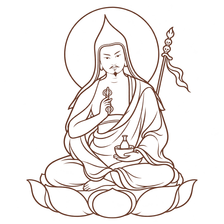
曼荼罗 Mandala
(Please Note: This is Chapter Three in the book Journey without Goal.) Body of talk: 42 min. Questions: 16 min. Overall: 60 min. Date: July 19, 1974
(请注意:本讲对应《无目标之旅》第三章。)讲座正文:42 分钟。提问:16 分钟。总时长:60 分钟。日期:1974 年 7 月 19 日
The talk begins with a discussion of the importance of relating with this material seriously. The Vidyadhara talks about how tantra is both precious and dangerous. Frivolousness kills the sense of true freedom in relating to the material. Tantra is also rangsang or self-secret. If the student is taken over by frivolity, they can’t hear or see the reality of the tantric teachings. This warning and reminder are necessary for us to hear.
讲座开头讨论了认真对待这些材料的重要性。持明上师谈到,密续既珍贵又危险。轻浮会扼杀我们与这些材料建立联系时真正的自由感。密续也是 rangsang,即自密。如果学员被轻浮所支配,就听不到、也看不到密续教导的真实。我们有必要听到这一警告和提醒。
导言 Introduction
This talk concerns the three world or tantric mandalas: the outer mandala of sense perceptions and outer relationships; the inner mandala of the relationship with our body; and the secret mandala, which is having a sacred relationship to our emotions.
本讲涉及世界或密续的三种曼荼罗:感官知觉和外在关系的外曼荼罗;与我们身体的关系构成的内曼荼罗;以及秘密曼荼罗,即与我们的情绪建立神圣的关系。
基 Ground
Outer Mandala.
外曼荼罗。
- By mandala we mean interlocking relationships, rather than a magical circle. Our perceptions—seeing, hearing, smelling, tasting, feeling, and thinking—are constantly being coordinated into a mandala.
- 我们所说的曼荼罗,指的是环环相扣的关系,而不是一个有魔力的圆圈。我们的知觉——看、听、嗅、尝、感受和思考——不断地被协调成为一个曼荼罗。
- Mandala is the coordination of one point with another. It’s like having to edit both the visual material and the sound and coordinating them together when you make a movie. We experience that sense of relationship or coordination constantly. We step into a restaurant and experience all the sights and sounds and we have a feeling about the place from that. That is mandala. It is an actual relationship and a personal feeling.
- 曼荼罗是一个点与另一个点之间的协调。这就像制作电影时,必须同时剪辑画面素材和声音,并将两者协调起来。我们不断体验着这种关系或协调的感觉。我们走进一家餐馆,体验那里的种种景象与声音,并由此对这个地方产生某种感受。这就是曼荼罗。它是一种实际的关系和亲身的感受。
- The outer mandala principle is relating cohesively to the situation. Mandalas are the general patterns, pleasant or unpleasant, that link us to the world. It’s a sense of circulation, rapport, relationship.
- 外曼荼罗的原则,是以连贯一致的方式与情境建立关系。曼荼罗是将我们与世界联系起来的总体模式,无论令人愉快还是不快。它是一种流通、融洽、关联的感觉。
- What we perceive in the world is not poisonous, but if we don’t relate properly to it, how we perceive can become confused and create problems. We have to recognize that phenomena are ours and relate properly to them.
- 我们在世界上所感知的事物并没有毒,但如果我们不恰当地与之相处,我们的感知方式就可能变得混乱,并制造问题。我们必须认识到,现象属于我们,并与它们恰当地相处。
- Fighting with our phenomena doesn’t help. The idea of leading a tantric revolution is misguided. The world could evolve itself according to our enlightenment.
- 与我们的现象争斗无济于事。发动一场密续革命的想法是误入歧途。世界可以随着我们的觉悟而自行演变。
- In the nontheistic approach, the world is a totality in itself, rather than being divided into God and the Devil.
- 在非有神论的方式中,世界本身是一个整体,而不是分为上帝和魔鬼。
- Mandala is a totality; it has a universal quality. It is made out of both good and bad, but the totality is not a grey compromise.
- 曼荼罗是一个整体,具有普遍性。它由好与坏共同构成,但这个整体并不是一种灰色的折中。
道 Path
Inner Mandala.
内曼荼罗。
- The inner mandala is connected with how we handle our bodies in terms of awareness or our sense of reality. We have never regarded our bodies as sacred property; we don’t have art in our everyday lives.
- 内曼荼罗关乎我们如何以觉知或对真实的感受来对待自己的身体。我们从未将身体视为神圣的财产;我们的日常生活中没有艺术。
- This is more than learning good table manners, which can still come along with fundamental crudeness. Relying on what we have been told rather than how we feel is a big problem. We may be perfect actors but there is still a lack of real feeling or connection.
- 这不仅仅是学习良好的餐桌礼仪,因为它仍可能伴随着根本上的粗俗。依赖别人告诉我们的东西,而不是自身的感受,是一个大问题。我们可能是完美的演员,却仍然缺乏真实的感受或联系。
- The real tantric approach to body is very personal and real. We relate to life with intention, deliberateness and confidence. We just do it.
- 密续真正对待身体的方式,是非常切身而真实的。我们以意向、审慎和信心来与生活相处。我们就这样去做。
- Deliberateness is necessary, but the heart of that deliberateness is freedom.
- 审慎是必要的,但审慎的核心是自由。
果 Fruition
Secret Mandala.
秘密曼荼罗。
- This is the mandala of the sacred realm. It consists of simplifying our psychological behavior, our meditative behavior, into a sense of awareness and openness that has no hesitation in dealing with emotions.
- 这是神圣领域的曼荼罗。它在于将我们的心理行为、禅修行为简化为一种觉知与开放感,在面对情绪时毫不犹豫。
- In the secret mandala, all the emotions are interwoven. There is a continuous web. No one emotion is a big deal, but all emotions are a big deal. They all contain the seed of both enlightenment and imprisonment.
- 在秘密曼荼罗中,所有情绪都交织在一起,构成一张连续的网。没有哪一种情绪单独算得上大事,但所有情绪都是大事。它们全都包含觉悟与囚禁这两者的种子。
- We need to relate with all the hidden corners and little areas of irritation, which are actually important.
- 我们需要面对所有隐藏的角落和那些小小的烦扰之处,它们其实十分重要。
- If we get outraged and are about to strangle someone, we manifest all the emotions at once and we manifest the secret mandala at once. There is no “how to do it.” We did it already.
- 如果我们勃然大怒,正要掐死某人,我们就在同一时刻显现出所有情绪,也在同一时刻显现出秘密曼荼罗。没有什么“如何去做”。我们已经做到了。
- (From the questions) However, exploding on the spot is not the point. We have to recognize the emotions as sacred and real and relate with them properly.
- (出自提问部分)然而,要点并不是当场爆发。我们必须认识到情绪是神圣而真实的,并恰当地与之相处。
结语 Conclusion
In our experience and on the path of tantra, we can’t separate the three mandalas out. They occur simultaneously in our experience. They are reality and they express our contact with reality, through sense perceptions, the body and our emotions—which are the three mandalas.
在我们的体验中,在密续之道上,我们无法将这三种曼荼罗分开。它们同时发生在我们的体验之中。它们就是真实,并通过感官知觉、身体和情绪——也就是这三种曼荼罗——表达我们与真实的接触。
听众提出的问题 Questions asked by the audience
1) How do we know the difference between doing something with confidence and not doing something right?
1) 我们如何分辨满怀信心地做一件事,与没有把事情做对之间的差别?
2) How does one relate to the world when it’s hostile? What’s the practice?
2) 当世界充满敌意时,一个人该如何与它相处?修行的方法是什么?
3) If the mandala is a series of concentric circles, what’s in the center?
3) 如果曼荼罗是一系列同心圆,中心是什么?
4) Could you explain the second mandala further?
4) 您能否进一步解释第二种曼荼罗?
5) I’m trying to understand the relationship between my emotions and me. Could you say more?
5) 我正试图理解我的情绪与我之间的关系。您能否多讲一些?
6) What is mandala on the Hinayana and Mahayana levels?
6) 在小乘和大乘层面,曼荼罗是什么?