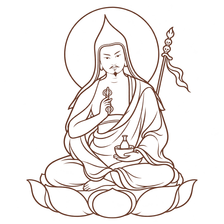
大圆满 Maha Ati
(Please note: This is Chapter Fifteen in the book Journey Without Goal.) Body of talk: 39 min. Questions: 25 min. Overall: 73 min. including closing remarks. Date: August 16, 1974
(请注意:本讲对应《无目标之旅》第十五章。)讲座正文:39 分钟。提问:25 分钟。总时长:73 分钟,包括结束语。日期:1974 年 8 月 16 日
导言 Introduction
In the last talk of the seminar, the Vidyadhara talks about two main topics, maha ati and crazy wisdom. He also makes closing remarks on people’s practice and on accomplishing the first summer of Naropa Institute.
在本研讨课程的最后一讲中,持明上师谈到两个主要主题:大圆满与疯智。他还就大家的修行,以及那洛巴学院第一个夏季课程的完成,作了结束语。
大圆满 Maha Ati
基 Ground
The Buddhist journey is like walking on a winding mountain path. Maha Ati is looking down from the summit and seeing all the terrain that has been covered. It is panoramic awareness. Ati is associated with enormous space and total openness.
佛教的旅程就像沿着蜿蜒的山路行走。大圆满则是从山顶向下俯瞰,看见已经走过的所有地形。它是全景式的觉知。阿底瑜伽与巨大的空间和全然开放相联系。
- In ati, we are not talking about space as opposed to a boundary but total spaciousness, total openness.
- 在阿底瑜伽中,我们谈的并不是与边界相对的空间,而是全然的宽广、全然的开放。
- Ati yana is regarded as the imperial yana. The Tibetan for this is long gyur thap kyi thekpa. It is imperial rather than regal, because a king still has other countries he could conquer, whereas the emperor rules over all the territory.
- 阿底乘被视为皇帝之乘。其藏语是 long gyur thap kyi thekpa。它是皇帝之乘,而非国王之乘,因为国王仍有其他国家可以征服,而皇帝则统治着全部领土。
- Everything discussed in this seminar has been from the point of view of the spaciousness of ati, which has allowed us to view the yanas from the point of view of spaciousness and inevitability.
- 本研讨课程所讨论的一切,都出自阿底瑜伽宽广性的观点,这让我们能够从宽广与必然性的观点来看待诸乘。
- Atiyoga is sometimes defined as that which transcends coming, going and dwelling. It is more than the tantric idea of advaita, or “not two.” Here we are seeing things from the point of view of true reality, beyond any slogan or belief. It is seeing things as they are.
- 阿底瑜伽有时被定义为超越来、去与住。它超越了密续中 advaita,或“不二”的观念。在这里,我们从真实实相的观点看事物,超越任何口号或信念。这就是如其所是地看待事物。
道 Path
From the perspective of ati, the rest of the yanas are trying to comfort us or provide us with increasingly sophisticated toys. At the level of ati, we are no longer fascinated by any of these toys or gadgets.
从阿底瑜伽的视角来看,其余诸乘都在试图安慰我们,或给我们提供越来越精巧的玩具。在阿底瑜伽层面,我们不再迷恋这些玩具或器具中的任何一种。
果 Fruition
The experience of maha ati is that, while we are trying to build a zoo or a city as ultimate gadget, the sky falls on our head in the form of a gigantic blue pancake. No one has ever thought that might happen. It is a new level of surprise or shock. In maha ati, we are not talking about gaining or losing ground, but we are talking about gaining headroom. We are interested in how space could provide us with a relationship to reality.
大圆满的体验是,当我们试图建造一座动物园或城市,将它当作终极玩意时,天空却化作一张巨大的蓝色薄饼,掉落在我们头上。没有人曾想到会发生这种事。这是一种新的惊讶或震撼。在大圆满中,我们谈的不是获得或失去立足之地,而是获得头顶的空间。我们感兴趣的是,空间如何让我们与真实建立关系。
疯智 Crazy Wisdom
基 Ground
Traditional definitions of craziness are quite different from the tantric definition of crazy wisdom. We know about an American Indian warrior named Crazy Horse, who had tremendous courage. Being crazy is also associated with being absurd, on the verge of lunacy. Or we speak of someone being crazy about honey or something else. We may call someone “crazy” if they don’t agree with us or buy our trip. Or our grandparents’ orthodoxy may seem crazy to us. None of these is crazy wisdom.
对疯狂的传统定义,与密续对疯智的定义十分不同。我们知道一位名叫疯马的美洲印第安勇士,他具有极大的勇气。疯狂也与荒谬、濒临精神失常相联系。或者,我们会说某人疯狂地迷恋蜂蜜或别的东西。如果某人不同意我们,或不买我们的账,我们可能就称他为“疯子”。又或者,在我们看来,祖父母的正统观念可能很疯狂。这些都不是疯智。
道 Path
Crazy wisdom is the basic norm or logic of sanity. It involves relating properly with the world and having tremendous knowledge and resourcefulness. On top of this absolute knowledgeability, or wisdom, the craziness begins to descend. Wisdom does not exactly go crazy, but on top of the basic logic or norm of sanity, craziness as higher sanity or higher power and magic can exist.
疯智是清明健全的基本常规或逻辑。它包括恰当地与世界相处,以及拥有极其丰富的知识和应变能力。在这种绝对的通晓,或智慧之上,疯狂开始降临。并不是智慧真的发疯了,而是在清明健全的基本逻辑或常规之上,可以存在一种疯狂,作为更高的清明健全,或更高的力量和神通。
果 Fruition
Fearlessness is an attribute of crazy wisdom. Fearlessness is the power and energy to do what needs to be done, to destroy what needs to be destroyed, nurse whatever needs to be nursed, or whatever the appropriate action is.
无畏是疯智的一种属性。无畏是一种力量和能量,能够去做需要做的事,摧毁需要摧毁的东西,照护需要照护的东西,或采取任何适当的行动。
- Bluntness is also associated with crazy wisdom. Here it is the notion of openness and spontaneity, but it is not at all random or coincidental. It comes from seeing things as they are.
- 直率也与疯智相联系。这里指的是开放与自发,但它完全不是随意或偶然的。它来自如其所是地看待事物。
- So crazy wisdom is absolute perceptiveness, with fearlessness and bluntness.
- 因此,疯智是绝对的洞察力,带着无畏和直率。
- The openness of crazy wisdom is created by the environment. The crazy wisdom person is just an activator, just one of the conditions that have evolved in the environment.
- 疯智的开放由环境创造。具有疯智的人只是一个触发者,只是环境中演化出来的条件之一。
结束语 Concluding remarks
These actually follow the questions and answers. Rinpoche makes a powerful statement about not perverting or getting “zonked” on what people have heard. He says that everyone has received a powerful and true message that they can survive beautifully by doing nothing.
这些话实际上是在问答之后说的。仁波切有力地指出,不要曲解自己听到的内容,也不要因此“晕头转向”。他说,每个人都收到了一则有力而真实的讯息:什么也不做,他们也能活得很好。
听众提出的部分问题 Some questions asked by the audience
1) In following the tantric path, do students necessarily have to go through practices like the six yogas of Naropa?
1) 追随密续之道时,学员是否必然要经历那洛六法之类的修行?
2) When the ati traveler looks down from the summit, does he not see the world as dualism? Can the ati person still function as a human being?
2) 当阿底瑜伽的旅人从山顶俯瞰时,他难道不会把世界看成二元的吗?阿底瑜伽行者还能作为一个人正常活动吗?
3) Is there compassion from the point of view of maha ati?
3) 从大圆满的观点来看,还有慈悲吗?
4) What is so great about having a blue pancake fall on your head?
4) 一张蓝色薄饼掉在头上,有什么了不起的?
5) Is the ambiguity that brought us to the path the same as maha ati?
5) 将我们带上这条道路的含混不明,与大圆满相同吗?
6) What you have taught us about tantra seems far away from me. How should beginners approach tantra?
6) 您教给我们的密续,似乎离我很遥远。初学者应当如何接近密续?
7) In relating to the various aspects of the path you’ve presented, is there a reason to try to be more than what we just are?
7) 在与您所介绍的道路的各个方面建立关系时,有什么理由要试图超出我们现在的样子吗?
NB: The quality of the video image is poor at the end, during the concluding remarks, but it is also very powerful and worth sitting through!
注意:在最后的结束语部分,视频画面质量很差,但这部分也十分有力,值得坚持看完!