观想与身语意 Visualization and Body, Speech and Mind
(Please Note: This is Chapters Seven and Eight in the book Journey without Goal.) Body of talk: 48 min. Questions: 12 min. Overall: 60 min. Date: July 31, 1974
(请注意:本讲对应《无目标之旅》一书第七章和第八章。)讲授:48分钟。提问:12分钟。总时长:60分钟。日期:1974年7月31日
I. 观想 I. Visualization
基 Ground
In order to undertake the tantric journey and the practice of visualization, we must first be grounded in both in the Hinayana and Mahayana paths and in our connection to earth, reality. This is the meaning of samaya.
要踏上密续之旅,进行观想修持,我们首先必须在小乘与大乘之道上打好基础,也必须扎根于我们与大地、与实相的联系。这就是三昧耶的含义。
- Samaya is also the expression of our commitment to our life and the choices we make.
- 三昧耶也是我们对自身生活及所作选择的承诺的表达。
- Samaya in Tibetan is tamtsik, which literally means “sacred word.” The fact of life, the actual experience of life is samaya.
- 三昧耶的藏文是 tamtsik,字面意思是“神圣的话语”。生活的事实,生活的实际经验,就是三昧耶。
道 Path
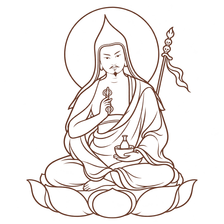
In the tantric practice of visualization, we visualize what is known as the samayasattva. We visualize a deity that is connected with our own unique qualities and our commitment to our life and ourselves.
在密续的观想修持中,我们观想所谓的三昧耶尊。我们所观想的本尊,与我们自身独特的品质,以及我们对自己、对自身生活的承诺相联系。
- We are given a particular deity by our vajra master, who knows us personally and is familiar with our style.
- 金刚上师为我们指定一位特定的本尊,他了解我们本人,也熟悉我们的风格。
- The deity that we visualize or identify with is part of our makeup. We may be outrageously aggressive, passionate, or bewildered. Whatever our makeup is, that complex of emotions is connected with enlightenment.
- 我们所观想或认同的本尊,是我们自身特质的一部分。我们可能嗔怒强烈、贪欲炽盛,或极为迷惑。无论我们的特质如何,这一整组情绪都与觉悟相联系。
果 Fruition
Having visualized the samayasattva, we invite another level of being or wisdom into our visualization, the jnanasattva.
观想三昧耶尊之后,我们邀请另一个层次的存在或智慧进入观想之中,那就是智慧尊。
- Jnana means wisdom. It is a state of wakefulness or openness.
- Jnana 意为智慧。它是一种觉醒或开放的状态。
- Jnana could also be called a fundamentally cynical attitude toward life, which is also a humorous attitude.
- 智慧也可以称为对生活抱持一种根本性的怀疑态度,而这同时也是一种幽默的态度。
结语 Conclusion
The goal of all tantric traditions and practice is to bring together the lofty idea, the jnanasattva of humor and openness, with the samayasattva, the bodily or physical orientation of existence.
一切密续传统和修持的目标,都是把崇高的理念——充满幽默与开放的智慧尊——同三昧耶尊,也就是存在的身体或物质取向,结合起来。
II. 身语意 II. Body, Speech and Mind
An important principle in the tantric tradition is the role of body, speech and mind, which becomes vajra body, vajra speech and vajra mind.
身、语、意所起的作用,是密续传统中的一个重要原则;它们转化为金刚身、金刚语和金刚意。
基 Ground
The sensory world of body includes shapes, colours and sounds, but it has another aspect, because of the phenomenal play between existence and nonexistence.
身的感官世界包括形状、颜色和声音,但由于存在与不存在之间种种现象的游戏,它还有另一个面向。
- Things are there because they are not there. A crescent moon is a crescent moon because it is not a full moon. That kind of back and forth play is always part of the mandala of body.
- 事物之所以在那里,是因为它们不在那里。新月之所以是新月,是因为它不是满月。这种来来往往的游戏,始终是身曼荼罗的一部分。
- Usually we experience body, shape or form as such a hassle that we can’t deal with or solve simple problems of logic like this.
- 通常,我们觉得身体、形状或形态是如此麻烦,以至于无法处理或解决这样简单的逻辑问题。
- In the vajra mandala of body, we can work with and relate to this play of experience.
- 在身的金刚曼荼罗中,我们能够应对这种经验的游戏,并与之建立联系。
道 Path
We approach the role of speech with similar logic, but there is a much more dance-like quality.
我们以类似的逻辑来看待语的作用,但它更具有舞蹈般的特质。
- In the mandala of speech, the world is seen as a world of syllables or letters. Everybody and everything has its own symbol. We can read the world in the same way that we read a book.
- 在语曼荼罗中,世界被看作一个音节或字母的世界。每个人、每件事物都有自己的符号。我们可以像读书一样阅读世界。
- We panic if there is no new reading material. From the tantric perspective, that panic is called neurosis.
- 如果没有新的阅读材料,我们就会恐慌。从密续的角度来看,这种恐慌称为神经质。
- We could have a lighter, more humorous view than this.
- 我们可以抱有比这更轻松、更幽默的看法。
果 Fruition
The level of mind is very simple, almost to the point of simplemindedness. At the tantric level, the positive experience of nonexistence comes about when the mind is completely tuned into the magical possibilities of life.
意的层次非常简单,几乎到了头脑简单的地步。在密续的层次,当心完全契合生活中神奇的种种可能性时,对不存在的正面经验便会出现。
- At the level of the vajra mandala of mind, subconscious gossip is completely cut through. Mind is completely open.
- 在意的金刚曼荼罗层次,潜意识的闲言碎语被彻底斩断。心完全敞开。
- This vajra experience of mind creates a continuous celebration in dealing with life directly and simply.
- 这种心的金刚经验,使我们在直接、简单地面对生活时,持续地欢庆。
听众提出的问题 Questions asked by the audience
1) In the Dhammapada, Buddha said: If it has anything to do with body, it is not what the master meant. Is this correct and how does it relate to our discussion here?
1) 在《法句经》中,佛陀说:如果与身体有任何关系,就不是导师的本意。这句话对吗?它与我们这里的讨论有什么关系?
2) Does the relationship of the samayasattva and the jnanasattva have anything to do with the concept of yab yum?
2) 三昧耶尊与智慧尊的关系,和父母尊这一概念有关系吗?
3) What is involved in reading the world?
3) 阅读世界涉及什么?
4) Is the mandala of speech related to the space of sound? The tape runs out after this.
4) 语曼荼罗与声音的空间有关吗?在这之后,录像带录到了尽头。