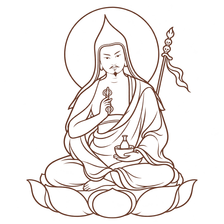
存在与显现 Being and Manifesting
(Please Note: This is Chapter Eleven in the book Journey without Goal.) Body of talk: 43 min. Questions: 17 min. Overall: 61 min. Date: August 7, 1974
(请注意:本讲对应《无目标之旅》第十一章。)讲座正文:43 分钟。提问:17 分钟。总时长:61 分钟。日期:1974 年 8 月 7 日
导言 Introduction
An extraordinary talk about the three kayas and how they relate to our ordinary, everyday experience, as well as to our relationship with the vajra master.
这是一场非凡的讲座,谈论三身如何与我们平凡的日常体验,以及我们与金刚上师的关系相联系。
基 Ground
In the simplest, most ordinary way, we perceive reality in terms of our experience of body, emotions and basic bewilderment or mindlessness. Dharmakaya, sambhogakaya and nirmanakaya are the tantric principles that correspond and transcend those ordinary levels of perception, just as the five buddha family principles relate to our ordinary experiences of personality and the textures of reality.
以最简单、最平常的方式而言,我们通过对身体、情绪和基本的困惑或无觉知状态的体验,来感知现实。法身、报身和化身,是与这些普通的感知层面相对应、又超越它们的密续原则,正如五佛部的原则与我们对性格及现实质地的日常体验相联系一样。
- There is no tension or contradiction between the samsaric and the tantric descriptions. Rather, the principles of the three kayas show us how we can relate to the levels of body, emotions and bewilderment that already exist in our being.
- 轮回与密续这两种描述之间,没有冲突或矛盾。相反,三身的原则向我们表明,可以如何与身体、情绪和困惑这些已存在于我们自身的层面建立关系。
- Body: Our actual physical body. There are many types of bodies, some fat or thin, some that are fully functional, some that can hear but cannot see, etc. In the Sutras, Buddha tells Ananda to take care of his body for the sake of the dharma. Similarly, relating to the body is extremely important in tantra. However, there is a difference between relating directly to body versus making a big trip about our bodies. We are confused about the experience of body and we don’t fully accept our body and our world. But we cannot get away from this world.
- 身体:我们实际的肉身。身体有许多类型,有的胖,有的瘦,有的功能齐全,有的能听见却看不见,等等。佛陀在经典中告诉阿难,为了佛法,要照顾好自己的身体。同样,在密续中,与身体建立关系也极其重要。然而,直接与身体相处,与围绕身体大做文章,是有区别的。我们对身体的体验感到困惑,并未完全接纳我们的身体和世界。但我们无法离开这个世界。
- Emotions: This is not a different world but another perspective. We color our world with our emotional reactions, including depression, resentment, passion, aggression and ignorance.
- 情绪:这并不是另一个世界,而是另一种视角。我们以情绪反应为世界着色,包括沮丧、怨恨、贪欲、嗔怒和愚痴。
- Bewilderment: This is more fundamental than the ignorance of emotions. We are stunned or fixated and determined to hold onto the solidity of our experience. It is as though we had a big, heavy Chinese wok on our head all the time, pushing us down. It makes us feel that we can’t relate to any spaciousness at all.
- 困惑:这比情绪中的愚痴更为根本。我们呆住了,或固着不动,决意抓住体验的坚实性不放。仿佛我们头上一直顶着一口又大又沉的中式炒锅,将我们向下压。它让我们觉得,自己根本无法与任何宽广感建立联系。
道 Path
There is a definite tantric approach to these three levels of experience, which is called the three kayas. Kaya is a Sanskrit word that means “body.” Nirmanakaya, or the body of emanation, corresponds to the experience of body discussed above. Sambhogakaya, or the body of joy, corresponds to the emotions. Dharmakaya, or the body of total space, corresponds to bewilderment.
密续对于这三个体验层面,有一种明确的方式,称为三身。Kaya 是梵语,意为“身体”。化身,即化现之身,对应上文所讨论的身体体验。报身,即喜悦之身,对应情绪。法身,即全然空间之身,对应困惑。
- Dharmakaya: Dharma means “law,” “norm,” or “truth.” The first kaya is called dharmakaya because the dharma speaks in accordance with the language of ignorant people. The starting point for hearing the dharma is confusion. Dharmakaya is the original state of being that transcends our mindlessness. It is a state of complete freedom, almost beyond freedom.
- 法身:“法”意为“法则”“常规”或“真理”。第一身称为法身,因为法按照无明者的语言来说话。听闻佛法的起点是迷惑。法身是超越我们无觉知状态的原初存在状态。它是一种完全自由的状态,几乎超越了自由。
- Sambhogakaya: This kaya looks at the emotions that arise from the complete spaciousness of dharmakaya. In the sambhogakaya, emotions manifest as the five buddha families. There is accommodation for dualism, because at this level, duality is not seen as a problem or a threat. There is a sense of celebration that the emotions are no longer seen as a threat.
- 报身:这一身着眼于从法身的全然宽广中生起的情绪。在报身中,情绪显现为五佛部。这里容得下二元性,因为在这一层面,二元性不被视为问题或威胁。由于情绪不再被视为威胁,便有了一种欢庆感。
- Nirmanakaya: This is the body of existence or manifestation. It is the manifestation of our mind and body, but it is also the manifestation of those who have gone through the other two kayas, represented by the teacher.
- 化身:这是存在或显现之身。它是我们心与身体的显现,也是那些已经历其他二身者的显现,以老师为代表。
果 Fruition
The teacher manifests on the nirmanakaya level in order to teach and communicate with us and with the details of our perception and our experience. In relating to the teacher, we relate to all three kayas simultaneously, as we witness them in the teacher. As we develop ourselves up to the level of the body of the teacher, or the nirmanakaya, then we become able to experience the sambhogakaya, in which our emotions are transmuted and workable. Finally, we begin to tune into the open, all-pervading space of the dharmakaya. All this is possible because the teacher is, in some sense, a magician or conjurer. He has achieved total space, conquered the level of emotions, and he actually exists in an earthly body.
老师在化身层面显现,为的是教导我们,与我们、与我们知觉和体验的细节沟通。在与老师建立关系时,我们同时与三身建立关系,因为我们在老师身上见证了三身。当我们发展到老师的身体,也就是化身这一层面,便能体验报身;在报身中,我们的情绪得到转化,变得可以应对。最后,我们开始与法身开放、遍在的空间相应。这一切之所以可能,是因为老师在某种意义上是一位魔术师或幻术师。他已经成就全然的空间,征服了情绪的层面,并且确实以世间的肉身存在。
听众提出的问题 Questions asked by the audience
1) The first questioner gave a long statement on vegetarianism, which the Vidyadhara seemed to enjoy. There was no question.
1) 第一位提问者就素食主义作了一番长篇陈述,持明上师似乎听得很愉快。其中没有问题。
2) I have a feeling for the transmutation of experience in the dharmakaya and the sambhogakaya, but I don’t understand how this operates in the nirmanakaya. Could you explain further?
2) 我对法身和报身中体验的转化有所感受,但不理解它在化身中如何运作。您能否进一步解释?
3) Would you say more about your statement that the dharma speaks the language of confusion?
3) 您说法讲的是迷惑的语言,能否就此多说一些?
4) Did I understand you correctly that the dharmakaya – which speaks the language of confusion – conquers the neurosis of the emotions and comes into physical manifestation in the body of the vajra master? Students relate to this physical manifestation and then move to the emotional level and then beyond that to the level of space?
4) 我是否正确理解了您的意思:讲迷惑之语言的法身,征服了情绪的神经质,并在金刚上师的身体中作肉身的显现?学员与这一肉身显现建立关系,然后进入情绪层面,再超越它,进入空间层面?