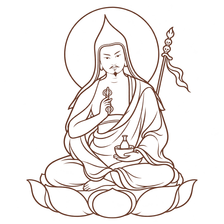
Commentary on the Guhyajnana Sadhana ‘Fulfillment of All Wishes’
原刊阅读条件
Only read if you received the empowerment of the Dakini Guhyajnana from the Treasure Vase of Profound Instructions.
仅限已领受《甚深教授宝瓶》秘密智慧母灌顶者阅读。
During a visit to California in July 2002, Orgyen Tobgyal Rinpoche gave a short teaching on the sadhana of the Dakini Guhyajnana from the Treasure Vase of Profound Instructions. This sadhana, which is a terma revealed by Chokgyur Lingpa, is called Fulfillment of All Wishes. The teaching was translated orally by Erik Pema Kunsang who also translated the sadhana inserted here, and transcribed and edited by Steve Gamble, with help and advices from Michael Tweed.
2002年7月访问加利福尼亚期间,乌金督佳仁波切就《甚深教授宝瓶》中的秘密智慧母仪轨,给予了简短开示。这一仪轨,是秋吉林巴所开显的伏藏,名为《满愿》。开示由 埃里克·贝玛昆桑 现场口译;文中所引仪轨,也由他英译。史蒂夫·甘布尔 整理录音并编辑,迈克尔·特威德 提供协助与建议。
“Dakini” in the Indian languages has the connotation of being someone who's not quite human – not an ordinary girl or woman, but somebody who is a little scary, has fangs, red hair, drinks blood, has long nails, and so forth, and can perform a few miracles now and then. In India, generally speaking, there are quite a few of them, especially in the twenty-four sacred places and valleys, and particularly in Dhumathala, which is really the most eminent among all the sacred places. This is, shall we say, the capital of the dakinis. There is a place in Pakistan, which seems to be the present-day region of Uddiyana, where a lot of the women have something that looks like a mustache, and also they are naturally kind of fierce and have some tricks, or miracles they can play, just by their nature. So the word generally refers to some kind of witch.
When ‘dakini’ is translated into Tibetan it becomes ‘khandro’, which doesn’t have exactly the same meaning. The Tibetan connotation of khandro is “great gals,” but in India if you call somebody a dakini, they will scratch your face and get angry, as it implies somebody who eats flesh, drinks blood, and casts spells. Most of the witches in Uddiyana could fly through the air, and that's why they're called “sky-farers” or khandros, but I hear that these days, there are only a few left.
「Dakini」译成藏语,成为「khandro」,意义却不完全相同。藏语 khandro 的含义,是「了不起的女子」;可在印度,若叫某人 dakini,她会抓你的脸、发怒,因为这意味着吃肉、饮血、施咒的人。乌仗那多数女巫能在空中飞行,所以叫作「行于空中者」,即 khandro。不过,我听说,如今只剩少数了。
There are various types of dakinis such as wisdom dakini, karma dakini, charnel ground dakinis, and something called flesh-eating dakinis. The wisdom dakini, according to the Sarma schools, is Vajravarahi (Tib. Dorje Phagmo). According to the Nyingma school she is Samantabhadri, and so forth. The other primary wisdom dakinis according to the Nyingma tradition are the eight consorts of the eight great herukas and the five consorts of the five male buddhas. Among the five buddha families, the five male buddhas represent the upaya aspect, skillful means, while the five female buddhas represent insight, the prajñā aspect.
There's also a dakini that is not necessarily a wisdom dakini nor a flesh-eating dakini; she is known as the Queen of Dharmadhatu, Ekajati. Also, there are five classes of karma dakinis corresponding to the five aspects: pacifying, increasing, magnetizing, subjugating, and one for the supreme activity. The charnel ground dakinis are the eight sisters and so forth.
还有一位空行母,不一定是智慧空行母,也不是食肉空行母,称为法界之主一髻佛母。此外,有五类事业空行母,对应息、增、怀、诛,以及最胜事业五个方面。尸林空行母,则是八姊妹等等。
Those are the main ones, the chiefs of the one hundred thousand different types. In short, every woman is a dakini. They're more intelligent than men and more sharp-minded. Nevertheless, they seem to think more, in other words they have more plans, but more worries too.
这些是主要的,是十万种不同空行母的首领。简言之,每一位女性都是空行母。她们比男性更聪明,心思更敏锐。不过,她们似乎想得更多,也就是计划更多,忧虑也更多。
For each of the main dakinis there is a sadhana practice. It is said that the guru is the root of blessings, the yidam is the root of accomplishment (siddhi), and the dakini is the root of activity. So you could say that having obtained the blessings and achieved the accomplishment, then you need to make use of it, and employing it is called the activity. In other words, the virtue of blessings and accomplishment is the activity, which is the dakinis. And it is not only Buddhists who say this, but also Hindus, for they say that compared to the male deity, the female deity is swifter in bestowing blessings and accomplishments. For example, as you well know, in the Sarma schools the male aspect is Chakrasamvara, while the female aspect of teaching and practice is Varahi. In other words, one could say that the practice connected to the vase empowerment is the male aspect, while the more profound parts, the secret empowerment and the wisdom-knowledge empowerment, are connected to the female aspect of sadhana, i.e. Vajravarahi. It is taught that although Milarepa and his disciple Gampopa had various yidams they attained accomplishment primarily through the practice of Vajravarahi, particularly the practices connected with the second and third empowerment, i.e. the secret empowerment and the wisdom-knowledge empowerment.
每一位主要空行母,都有相应修法。据说,上师是加持的根本,本尊是成就的根本,空行是事业的根本。因此可以说,得到加持、获得成就之后,需要加以运用;这种运用,就叫事业。换言之,加持与成就所发挥的作用,是事业,也就是空行母。不仅佛教徒这样说,印度教徒也说,相比男尊,女尊赐予加持与成就,更为迅速。例如,你们熟悉的新译诸派,男性面向是胜乐,教法与修持的女性面向,则是亥母。换言之,可以说,与宝瓶灌顶相连的修持,是男性面向;更甚深的部分,即秘密灌顶与智慧灌顶,则与修法的女性面向——金刚亥母——相关。教法说,米拉日巴与弟子冈波巴,虽然有不同本尊,却主要通过金刚亥母修法获得成就,尤其是与第二、第三灌顶,即秘密灌顶和智慧灌顶相连的修法。
In the Sakya tradition, one of the principal yidams is Hevajra, which is the male aspect, and the female aspect is called Khechari (Tib. Kachoma) which is a form of Vajravarahi. One of the great Sakya masters, Sachen, was a great siddha, and it is said that he attained accomplishment through receiving the blessings of this female dakini known as Khechari – for instance, at the time of death, he did not leave a corpse behind but went directly in his body to the celestial realms. This is described as a staircase coming down from above, and then one travels up that. Exactly how that looks like and functions I'm not sure, but it definitely works. Having attained this siddhi, he received a lot of pithy transmissions through Khechari. The Gelugpa also practice a form of Vajrayogini.
According to the Nyingma school, the principle form is a black Vajrayogini called Troma Nagmo, one of the main practices of whom was revealed by the great master of Nyang, Nyangchen; there has been a great number of practitioners who attained accomplishment through his terma of Black Vajrayogini. The biography style of supplication to Jamyang Khyentse Wangpo recounts that when Jamyang Khyentse Wangpo did the retreat of the Black Vajrayogini, his skull cup started to blaze with fire and it became so hot that he couldn't touch it. There are now a large number of sadhanas based on Troma Nagmo.
依宁玛派,主要形相是一位黑色金刚瑜伽母,名为黑忿怒母。她的一项主要修法,由娘氏大上师娘钦开显;有许多修行者,通过他的黑金刚瑜伽母伏藏获得成就。以传记形式写成的蒋扬钦哲旺波祈祷文记载,旺波闭关修黑金刚瑜伽母时,颅器开始燃起火焰,热得无法触碰。如今,已有大量以黑忿怒母为本的修法。
Among the various treasure revealers known as tertöns, overall there aren't that many sadhanas for the dakini. I have heard it said that the reason for this is that the dakini practices are very profound, and also that the dakinis are kind of stingy with their teachings so that they don't really want to let go of them that easily. Some auspicious coincidence has to fall into place perfectly before they're willing to pass such teachings on, and that doesn't happen so easily. So most tertöns have experienced a lot of trouble with trying to land a dakini terma and they are rarely successful.
在称为伏藏师的各位取藏者中,整体而言,空行母修法并没有那么多。我听说,原因是空行母修法非常甚深,而且空行母对自己的教法有点吝惜,并不愿轻易放出。某种吉祥缘起,必须恰好圆满聚合,她们才愿意传出这样的教法,而这并不容易。因此,多数伏藏师在努力取出空行母伏藏时,都遇到许多困难,鲜少成功。
For instance, Chokgyur Lingpa was predicted to go to Bhutan and at the white cliff Karpo Drak he was to reveal a very grand terma called the Khandro Gongdü, ‘The Embodiment of the Realization of All Dakinis.’ If he had succeeded in doing this it would have ensured that all his activity would reach completion, but somebody interfered so he wasn’t able to, and a big obstacle for his life arose because of that. In the prophecy, it also said that there's a connection between the Khandro Gongdü, and his other terma on Dzogchen called the Dzogchen Desum, the ‘Three Sections of Dzogchen’. It says that if he had established the Dzogchen Desum in writing, then it would have become possible to also decode the Khandro Gongdü, and if both of them had been brought into this world at the same time, through that a huge number of people would attain rainbow body.
例如,秋吉林巴曾被授记,要前往不丹,在白崖卡波札,取出一部非常宏大的伏藏《空行密意总集》,即「一切空行母证悟之总集」。若成功,便能确保其一切事业圆满;但有人干扰,未能实现,也因此为他的寿命造成重大障碍。授记又说,《空行密意总集》与他的另一大圆满伏藏《大圆满三部》有关联。若将《大圆满三部》记录成文,就有可能解读《空行密意总集》;若二者同时来到世间,就会有极多人因此证得虹身。
Chokgyur Lingpa's daughter, Mayum Könchok Paldrön, had one of the dakini scripts on a parchment from her father that had never been decoded. After she died, her son Tersey Tulku had it. When Tersey Tulku met with Dilgo Khyentse Rinpoche, he asked Rinpoche to decode it. This turned out to be the sadhana for the eight dakinis who are the consorts of the eight herukas. So it was eventually written down, but then the lineage was broken. Some years ago when I went back to East Tibet I got hold of the text, but the empowerment lineage no longer exists.
秋吉林巴的女儿玛雍贡秋贝准,保存着父亲的一份写在羊皮纸上的空行文字,从未解读。她去世后,由其子德色祖古持有。德色祖古见到顶果钦哲仁波切时,请仁波切解读,结果发现,这是八大嘿鲁嘎的八位空行明妃修法。因此,它终于写成文字,但后来传承中断了。几年前,我回到藏东时,取得了这份法本,可是灌顶传承已不复存在。
So what is the purpose and benefit of dakini practice? When we try to attain supreme and common siddhi, accomplishments, dakini practice speeds it up. But one practices the dakini especially for clearing damages and samayas. As I mentioned before, in addition to receiving the blessings through the guru sadhana, and the yidam as the root of accomplishment, or siddhi, to make use of that is the activity, which is the dakini practice.
那么,修空行母的目的与利益是什么?当我们努力获得殊胜与共同悉地,也就是成就时,空行母修法会加快这一过程。不过,修空行母,尤其为了净除毁损与三昧耶过失。如前所说,通过上师修法领受加持,本尊则是成就、悉地的根本;而加以运用,就是事业,也就是空行母修法。
When Padmasambhava came to Tibet, the king at that time was Trisong Deutsen, who offered one of his queens, Yeshe Tsogyal, to be the consort of Padmasambhava. Through receiving the teachings and practicing, she attained the great transformation, rainbow body, and became indivisible from Padmasambhava himself. In fact, King Trisong Deutsen had previously requested Vajrayana teachings from Padmasambhava, but Padmasambhava refused. He gave his whole country as an offering, but Padmasambhava refused. Then he gave his queen Yeshe Tsogyal as an offering, and finally Guru Rinpoche consented, and offered the vajrayana teachings.
莲花生来到西藏时,当时的国王是赤松德赞;他将自己的王妃之一益西措嘉,供为莲花生的明妃。她领受教法并修持,证得大迁转虹身,与莲花生本身不可分。实际上,赤松德赞王先前曾向莲花生求授金刚乘教法,但莲花生拒绝了;他供养整个国家,莲花生仍拒绝。后来,他将王妃益西措嘉作供养,莲花生大师终于答应,传授金刚乘教法。
In most Nyingma practices, the guru principle and the yidam principle are seen as being indivisible from Padmasambhava himself, while the different types of dakini—Vajravarahi, as found in the Yumka Dechen Gyalmo part of the Longchen Nyingthig, and so forth—are seen as being indivisible from Yeshe Tsogyal.
Now the text before us is the sadhana for the dakini that belongs to a cycle of six dakini practices that are known as the personal practice of the princess of Zur. She was the consort of Prince Damdzin at the time when Padmasambhava was in Tibet. These six practices include Tara, Vajravarahi, Guhyajnana, Mandarava and Yeshe Tsogyal, and the guru sadhana.
现在,我们面前的法本,是一项空行母修法,属于名为「苏尔公主自修法」的六种空行母修法法类。莲花生在西藏时,苏尔公主是丹增王子的妃子。这六种修法,包括度母、金刚亥母、秘密智慧母、曼达拉娃、益西措嘉,以及上师修法。
On page one of the Sadhana of Dakini Guhyajnana it says “from the Treasure Vase of Profound Instructions,” so that is where this sadhana comes from. Before the sadhana proper one should recite the “Cloudbank of Great Bliss: The Supplication to the Lineage of the Dakini Guhyajnana from the Treasure Vase of Profound Instructions,” which was written by the previous Chokling tülku, Neten Chokling Pema Gyurme.
《秘密智慧母仪轨》第一页说:「出自《甚深教授宝瓶》」,这就是本仪轨的出处。正式修仪轨之前,应念诵《大乐云聚:甚深教授宝瓶秘密智慧母传承祈祷文》,由前世秋林祖古、涅顿秋林贝玛久美撰写。
Right after that comes the “Fulfillment of all Wishes: The Sadhana of Dakini Guhyajnana from the Essence Manual Entitled 'Plentiful Vase of Profound Instructions,'” which is a complete cycle of instructions.
随后就是《满愿:〈甚深教授丰盛宝瓶〉精要手册中的秘密智慧母仪轨》,它是一套完整的教授。
After the opening verse, the small writing says that the sadhana has three parts: preparation, main part, and conclusion, as does almost every other sadhana.
开头偈颂之后,小字说明,这一仪轨分前行、正行、结行三部分,几乎其他所有仪轨也都如此。
First, in an auspicious place, on a day such as the tenth day of the waxing moon, if you have an image place it in front of it the dakini torma consisting of fivefold chief and retinue surrounded by pellets and decorated with ornaments and a red silken canopy. Assemble an abundance of excellent foods including fruits, meat and wine. To the right and left of these place the amrita and rakta, while in front arrange the line of outer offerings, the offering tormas, feast articles, and so forth.
首先,于吉祥处所,在阴历上半月初十等日,若有尊像,则在像前安置空行朵玛,由五尊主伴构成,周围环绕丸粒,饰以庄严,并有红绸华盖。备集丰盛上好饮食,包括水果、肉与酒。于其左右,安置甘露与惹达;前方依次陈设外供、供养朵玛、荟供物等。
So, it should be practiced in an auspicious place, and you should begin on an important day like the tenth day of the waxing or waning part of the lunar calendar; the waxing is the tenth day, the waning is the twenty-fifth day. For those who want to specifically do the dakini practice, what is an auspicious place? There are various types of places such as where there is not a forest, but rather a single huge tree; a dome-shaped cave; a place where sindhura-colored (reddish-orange) water flows, such as a river of that color; where there is a cliff that has a shape of a bhaga; etc.
因此,应在吉祥处所修持,并于阴历上半月或下半月的第十日这样的重要日子开始;上半月的第十日是初十,下半月的第十日则是二十五日。对于专门想修空行母的人,什么是吉祥处所?有各种地方:不是一片森林,而是一棵巨大的独树所在之处;穹顶状洞窟;流淌辛都拉色,即橙红色水流的地方,如那种颜色的河流;有形如阴门的山崖之处,等等。
Some of the indispensable ingredients to put on the shrine are a cowry shell and a mirror. On the bottom of the cowry shell you write ha ri ni sa. There is also a chakra, for the life-force of the dakinis, and Mipham Rinpoche described how to design one of those. It is also taught that if you always wear the cowry shell and the mirror without taking them off, then even if you don’t do the dakini practice you’ll still accomplish it.
供坛上一些不可缺少的物品,是一枚宝贝螺与一面镜子。在贝壳底部写上ha ri ni sa。还有空行母命力轮,米滂仁波切曾说明如何绘制。教法也说,如果始终佩戴这贝壳与镜子,不取下来,即使不修空行母法,也仍会获得成就。
When beginning the practice, sit facing west. Why face west? One reason is because Uddiyana is to the west. Another point is that the dakini is for magnetizing activity, which is also connected to the western direction. When the monks chant the sutras, because the Buddha mainly resided at a place called Shravasti they’re supposed to sit facing Shravasti, but here we are trying to accomplish the dakinis so we face west.
Recite once the visualization for the refuge, which is:
将皈依观想文念诵一遍,即:
In the sky before me, indivisible from the Wisdom Dakini, is the guru
Vividly present in the form embodying all objects of refuge.
于我前方虚空,与智慧空行母无别的上师,
以总集一切皈依境的形相,鲜明安住。
Refuge and bodhicitta as a matter of fact only have a single sentence each:
皈依与菩提心,实际上各只有一句:
In the Wisdom Dakini I take refuge!
To swiftly attain buddhahood, I form the bodhicitta resolve!
我皈依智慧空行母!
为速疾成佛,发菩提心誓愿!
Repeat these two lines three times. That means if you bring the meaning to mind, then it’s okay to say it three times. If you say it without bringing the meaning to mind, you can say it a thousand times, but it won’t help much.
这两句重复三遍。意思是,如果将意义带入心中,念三遍就可以。若不思其义,即使念一千遍,也没有太大帮助。
The next four lines, “The three realms, the vessel and contents” and so forth, with the mantra, are for the offerings. And together with that, you bring to mind the visualization for the outer, inner, and innermost way of performing the mandala offering.
接下来的「三界器情」等四句,以及咒语,是供养。同时,应忆念以外、内、最内方式献曼荼罗供养的观想。
The next four lines together with the mantra comprise the guru yoga:
接下来的四句及咒语,构成上师瑜伽:
Pay heed, Guru Dakini, pay heed,
With devotion I supplicate you from my heart!
Grant your blessings and dispel obstacles!
Confer the four empowerments and bestow the siddhis!
om ah hung maha guru dakini svaha
垂念,上师空行母,垂念!
我以虔敬,从心祈祷!
赐予加持,遣除障碍!
授四灌顶,赐予悉地!
om ah hung maha guru dakini svaha
You should accumulate as many repetitions of this as you possibly can, for example when doing this practice on the twenty-fifth day of the month at my monastery we chant the four lines three times, then the mantra a hundred times. While chanting the mantra you imagine that in the sky before you is the Dakini Guhyajnana, indivisible from your root guru. Then while chanting the mantra you imagine that you receive the four empowerments.
应尽可能多地积累念诵。例如,本寺在每月二十五日修此法时,这四句念三遍,咒语念一百遍。持咒时,观想前方虚空中,是与自己根本上师不可分的秘密智慧母;一面持咒,一面观想领受四灌顶。
The next six lines are the visualization for having received the empowerments:
接下来的六句,是领受灌顶的观想:
From the four places of the Guru Dakini
Radiate white, red, blue, and green rays of light.
By their dissolving into my four places,
My four obscurations are purified and I obtain the four empowerments.
The guru, dissolving indivisibly into me,
Becomes the luminous state of great bliss.
从上师空行母四处,
放射白、红、蓝、绿光芒。
融入我的四处,
净除四障,获得四灌顶。
上师无别融入于我,
成为大乐光明之境。
After that, remain briefly in that state of luminosity. So these were the preliminary steps, in other words the ngöndro.
此后,短暂安住于那光明之境。这些就是预备步骤,也就是前行。
Next comes dispelling obstructers. For giving the torma to the obstructers, first you consecrate the torma, then you summon the obstructers and then you hand them the torma. So there’s a mantra for each of these steps. But according to the text it’s fine if you skip doing this. On the other hand, if you feel that there are obstructers and you need to do something to be rid of them, then you’d better do it.
接着是遣除障碍者。施朵玛给障碍者时,先加持朵玛,再召请障碍者,随后将朵玛交给他们。因此,每个步骤都有咒语。但依法本,略去这项也可以。另一方面,如果觉得有障碍者,需要做些什么遣除,那最好还是做。
The text reads:
法本说:
In the utterly pure mind essence
There is not even the term 'deluded obstructers'.
Within the space of the awakened mind of all phenomena
The vajra protection circle is spontaneously perfected.
于极清净心性中,
连「迷乱障碍者」之名亦无。
于一切法觉悟心界,
金刚护轮任运圆满。
So wouldn’t it be sufficient if we just understood the first two sentences – that the nature of my mind is utterly pure? That means that the mind is empty, right? And in the empty mind, how can there be any delusion? And even if there was some obstructer, it’s just the play of this empty mind; it doesn’t exist anywhere, really. If you just bring this to mind and understand it, then how can there be any obstructing demon anywhere?
那么,只要明白前两句,知道自心本性极为清净,不就够了吗?这意味着心是空的,对吧?空心之中,怎会有迷乱?即使有某个障碍者,也只是这空心的游舞,实际上不在任何地方存在。只要忆念、明白这一点,哪里还会有什么障魔?
That is how we understand that all obstructing demons are just the play of our own minds; and within the space of the awakened mind of all phenomena being empty, the vajra protection circle is actually already spontaneously perfected. Isn’t it true that there’s no protection greater than realizing emptiness? Because when you realize emptiness, even if the whole universe rises up as your enemy, it can’t hurt or inflict harm in any way. At the end of the verse we have the mantra, vajra raksha raksha hung.
我们由此了解,一切障魔,都只是自心的游舞;于一切法空的觉悟心界,金刚护轮事实上早已任运圆满。没有比证悟空性更强的保护,不是吗?因为证悟空性后,即使整个宇宙都起来与你为敌,也不能以任何方式伤害你。偈颂末尾,是咒语vajra raksha raksha hung。
The next four lines are a combination of bringing down the resplendence and the consecration of offerings. The first two lines,
接下来的四句,将降加持与加持供品合在一起。前两句:
The entire world is the dakini buddhafield.
All beings are the forms of wisdom dakinis.
整个世界,是空行母佛土,
一切众生,是智慧空行母身相。
comprise bringing down the resplendence. And the next two are the consecration:
属于降加持。后两句,是加持供品:
All the offering articles are the wisdom nectar of great bliss.
Outer, inner and innermost offerings fill the sky.
一切供物,皆为大乐智慧甘露,
外、内、最内供养,遍满虚空。
And from that perspective, you don’t have to consecrate each – like the water, the flowers, the perfume and so forth, because everything is offering. Outer, inner, innermost phenomena – everything is offering. When it says repeat three times it refers to the mantra, om sarva puja megha ah hung. If you have musical instruments to play, then you sound them at this time.
从这个角度,就不必逐一加持水、花、香水等,因为一切都是供养。外、内、最内的一切现象,全是供养。说重复三遍,是指咒语om sarva puja megha ah hung。如果有乐器,这时就奏乐。
The next mantra here, hrih bhrum dhuma ghaye nama svaha, is for manifesting the deity. In the Light of Wisdom (Lamrim Yeshe Nyingpo) there is an anuyoga style of development stage where simply saying the mantra is enough for the complete visualization to unfold.
接下来的咒语,hrih bhrum dhuma ghaye nama svaha,是令本尊显现。在《智慧光》(道次第智慧心髓)中,有一种阿努瑜伽式生起次第,只要念咒,完整观想就足以展开。
At this point comes the visualization of the deity, which is one central figure, with one goddess in each of the four directions.
此处是本尊观想:中央一尊,四方各一位天女。
Arising from the awakened mind,
What appears and exists is a buddhafield, the dakini’s display.
Within the vajra protection circle,
Amidst the blazing triangular source-of-dharmas,
Upon the lotus, sun and corpse,
I am the dakini Guhyajnana.
Brilliant red, with one face and two arms,
I raise the curved knife, cutting through birth and death,
And hold the blood-filled skull cup, emptying samsara.
My three eyes gaze passionately,
In the full bloom of youth, like a sixteen year old,
With swelling breasts and my bhaga fully grown.
Between my eyes spins the red whorl-of-joy,
And my hair, black and shining, is tied up behind.
Adorned with a crown of five dried skulls,
I am decorated with the six bone ornaments.
With one leg bent and one extended, I stand in dancing pose,
Embracing the daka khatvanga,
Ablaze with boundless rays of red light.
In the four directions, upon four-petalled lotus flowers,
Are the four dakinis of the four families, looking like myself.
In the brilliant hues of blue, yellow, white, and green,
They hold curved knives with the attributes of their families.
Surround by a hundred-thousand dakinis of the sacred places and valleys,
With the five wisdoms and Body, Speech, and Mind,
We are equal to all the victorious ones.
从觉悟心中生起,
一切显有皆为佛土,空行母之展现。
于金刚护轮之内,
炽燃三角法源之中,
莲花、日轮与尸身之上,
我为秘密智慧空行母。
鲜明红色,一面二臂,
高举弯刀,斩断生死,
持盛血颅器,空尽轮回。
三眼热切凝视,
青春盛貌,犹如十六岁,
乳房丰满,阴门 发育成熟。
双目之间,红色喜旋旋转,
黑而光亮的头发,束于脑后。
头戴五干颅冠,
身饰六种骨饰。
一腿弯、一腿伸,舞姿站立,
怀抱空行父喀章嘎,
无量红光炽盛。
四方四瓣莲花上,
四部的四位空行母,与我相似,
鲜明蓝、黄、白、绿,
持带有各部标志的弯刀。
十万圣地山谷空行母围绕,
以五智及身、语、意,
我等与一切胜者平等。
That completes the visualization. Unlike other dakini practices where they have red hair kind of blazing up, streaming upwards, here it’s black shining hair tied towards the back. Between the brows, which is in the lower part of the forehead, at the spot where in India they put the tika, there is a design which is called “the whorl of joy”; it is a delicate drawing as if it was painted by a brush with a single hair, and it spins. Here there is no pig’s head as there is with Vajravarahi. The khatvanga that Guhyajnana holds signifies the daka, and the top of the khatvanga is not a trident but a vajra. Otherwise, she has one face, two arms, etc., so there is no need to explain that part as it is quite straightforward.
The visualization ends with a mantra which is said while performing the corresponding mudras.
观想以咒语结束,念时结相应手印。
hrih hung tram om ah, om ah hung
hrih hung tram om ah, om ah hung
When a deity is of the lotus family, then when you arrange the five syllables, the top one is hrih, which is for Amitabha’s family. Then, Akshobhya is at the forehead with his hung. And Ratnasambhava for tram is at the right side. Then in the back is om for Vairocana. And then ah here is for Amoghasiddhi. The om ah hung for body, speech, and mind is the same as usual. And when you do the mudras, they correspond to those places.
本尊属于莲花部时,安置五个种子字,最上方是hrih,属于阿弥陀佛部。然后,额头是阿閦佛的hung;右方是宝生佛的tram;后方是毗卢遮那佛的om;这里的ah,则属于不空成就佛。身、语、意的om ah hung,与平常相同。结手印时,也对应这些位置。
Invoking and dissolving the wisdom beings, and making offerings and praises:
迎请并融入智慧尊,作供养与赞颂:
Just as was mentioned earlier, it’s the chief figure, the samaya being, that we’ve visualized here. It sends out from the heart center rays of light, and at the tips they bend slightly like hooks, for they go to the buddhafields and especially to Dhumathala and the twenty-one other sacred places, to summon and invoke back hundreds and thousands of forms of dakinis. These are the four lines of invocation:
如前所说,这里所观想的主尊,是三昧耶尊。从心间放射光芒,光端微弯如钩,前往诸佛净土,尤其是 杜马塔拉 与其他二十一圣地,召请成百上千种空行母形相前来。这就是四句迎请文:
hrih
From the dharmadhatu beyond arising,
And from the sambhogakaya realm beyond ceasing,
Wisdom Dakini, together with your retinue,
I invite you to this place, please come!
vajra samajah, e ah ralli hring hring
jah hung bam hoh, tishtha lhan, namo purushaya hoh
hrih
从超越生起的法界,
与超越止灭的报身刹土,
智慧空行母及眷属,
我迎请汝等来此,请降临!
vajra samajah, e ah ralli hring hring
jah hung bam hoh, tishtha lhan, namo purushaya hoh
In regard to the mantra the jah is to invite, hung is to make firm or remain, bam is to mingle indivisibly, and hoh is to enjoy. tishtha lhan means please remain, and namo purushaya hoh is paying homage.
咒语中,jah是迎请,hung是令其稳固或安住,bam是无别融合,hoh是享用。tishtha lhan意为请安住,namo purushaya hoh则是礼敬。
This four-line invocation is chanted with a gentle melody while playing the damaru. I asked Dilgo Khyentse Rinpoche whether this melody was from the Chokling Tersar tradition, but he said “No, it isn’t. It comes from Do Khyentse Yeshe Dorje. It’s the invocation tune for the Yumka sadhana, according to Longchen Nyingthig.” Whatever the case, they could in fact be the same tune.
The next eight lines include the outer, inner, innermost and innermost secret offerings of thatness:
接下来的八句,包含外、内、最内,以及最内密的真如供养:
hrih
From the union of the lord and lady, the world and all beings,
Are spontaneously perfected as the five sense-pleasures.
The union of means and knowledge
Fills up the sky with a cloud of innermost offerings.In non-dual equality I present
This unexcelled, innermost offering
Of the one taste of indivisible cognizance and emptiness,
So enjoy it as the adornment of great bliss.
mahasukha puja hoh
hrih
由主尊与明妃双运,世界与一切众生,
任运圆满为五种妙欲。
方便与智慧双运,
最内供养云,遍满虚空。于无二平等中,我奉献,
这无上、最内的供养:
明空无别一味,
请享用为大乐庄严。
mahasukha puja hoh
The next verse comprises the praises:
接着一偈,是赞颂:
hrih
Dharmakaya out of the state of emptiness,
Sambhogakaya, luminous great bliss,
Capacity conveying the variety of magical manifestations,
I respectfully praise the host of dakinis.
hrih
法身出自空性境界,
报身为光明大乐,
力用显现种种幻化,
我恭敬赞颂空行母众。
For the recitation, there are three parts: approach, accomplishment, and activity. First, for the approach-recitation, while possessing vivid presence, steady pride, and recollection of the pure symbolism, say:
Around the syllable hrih which rests upon the sun in the heart center,
Spinning anti-clockwise the mantra garland
Radiates light making offerings to all the victorious ones,
While gathering and absorbing their blessings and siddhis.
It purifies the obscurations of beings throughout space,
And establishes them in the state of a wisdom dakini.
As the rays of light are gathered back
They purify my obscurations, bestow blessings,
And I become a suitable vessel for accomplishment.
om dhuma ghaye nama svahaRecite this until completing either a set number or period, or a sign manifests.
持诵分为三部分:念、修与事业。首先,念诵时,具足明观、稳固佛慢与忆念清净表义,念:
心间日轮上所住的hrih字周围,
咒鬘逆时针旋转,
放光供养一切胜者,
摄集、融入其加持与悉地。
净除遍空众生的障蔽,
安立于智慧空行母之境。
光芒收回时,
净我障蔽,赐予加持,
令我成为成就之法器。
om dhuma ghaye nama svaha持诵此咒,直到圆满规定数量、期限,或征相出现。
The first four lines describe the visualization that one does while chanting. When performing a magnetizing and subjugating activity as is done here, the mantra spins. The syllables are written in clockwise direction but face inwards toward the seed syllable, rather than outward as in a typical yidam sadhana. Also the mantra then spins anti-clockwise rather than clockwise.
前四句,描述持咒时的观想。像这里这样行怀业与诛业时,咒轮会旋转。咒字按顺时针排列,但面向内侧的种子字,不像通常本尊修法那样朝外。此外,咒轮本身逆时针旋转,而非顺时针。
When doing a retreat one should recite this approach mantra until completing either a set number or a set period of time, or until a certain sign manifests. The set number, generally speaking, is 100,000 mantras for each syllable in the mantra. But if the mantra is shorter than twelve syllables, as in this case where the mantra has eight syllables, then the number is larger. If it has many syllables, like the hundred-syllable mantra of Vajrasattva, then one doesn’t need to repeat it that many times. However, it’s also said that since we’re now in the age of strife, one needs to say a higher number than usual.
闭关时,应持诵此念诵咒,直到完成规定数量、期限,或某种征相出现。一般而言,规定数量,是咒语每个字念十万遍。但若咒语少于十二个字,像这里是八个字,数量就更大。如果字数很多,像金刚萨埵百字明,就不必重复那么多遍。不过,也有说法,因为如今是斗诤时代,需要比平常念更多数量。
The set period of time is to do retreat is for three months, six months, or one year. According to the tantras a six-month period is quite a long time for a single sadhana.
规定期限,是闭关三个月、六个月或一年。依续典,对单一修法而言,六个月已经是相当长的时间。
As for signs, there are higher, medium, and lesser signs. The higher sign is to have a vision in actuality of the deity and hear the sound of the mantra. The medium is to have a good “nyam,” or meditation experience—not like the feeling you get after taking a drug; not that kind of experience. The lowest sign is to have excellent dreams.
征相有上、中、下三等。上等征相,是实际亲见本尊,并听到咒音。中等,是有良好的觉受,也就是禅修体验;不是服药之后那种感受,不是那类体验。下等征相,是有极好的梦。
For dakini practices, it is said that if one feels completely mentally upset and almost can’t stay in the retreat the first few days, it’s actually a very good sign for having attained some accomplishment from the practice. Dilgo Khyentse Rinpoche once did a five-month retreat on Khandro Sangdü and he said that the first part of the retreat was almost unbearable. He thought, “I’m going nuts. I’m going insane.” But whatever that meant, later on it turned out quite well. Also when Trulshik Rinpoche was in Tibet in the early days, he did the previously mentioned Nyang terma of dakini practice, and he, too, had severe upheavals during the first part of his retreat. If one feels very serene, and very calm and so forth at the beginning, like a placid surface of a lake undisturbed, that means nothing beneficial is going to happen, and there will be no accomplishment either.
空行母修法中,据说,若最初几天心神完全不宁,几乎无法继续闭关,实际上是修法已有一些成就的好征相。顶果钦哲仁波切曾闭关五个月,修空行总集。他说,闭关前期几乎无法忍受,心想:「我要疯了,我要发狂了。」无论那意味着什么,后来结果却很好。楚西仁波切早年在西藏时,也修过先前提到的娘氏伏藏空行母法,闭关前期同样有剧烈动荡。如果一开始便觉得很安详、很平静,像不受扰动的平静湖面,那就意味着,不会发生什么有益之事,也不会有成就。
Next, for the accomplishment-recitation, say
Amidst the dome of light in my heart center,
Within the unchanging bindu is Gargyi Wangchuk, the Lord of the Dance.
Brilliant red, he holds a lotus and the vase of longevity,
And in union he embraces his consort Dhatvishvari.
From the cloud of bodhichitta of their union
Appears a continuous garland of mantra.
Passing through the body, it emerges through his nose,
And the khatvanga turns into a daka.
Entering the nose, and passing through the throat,
To the tip of the vajra jewel,
It spins like the wheel of a fire-brand.
Passing through the lotus, it dissolves into the heart.
The rays of light of the bodhichitta
Manifest the entire world and all beings as a mandala.
Light rays appear from the three places
Of the deities which fill the expanse of the sky.
Dissolving into myself, they kindle the great bliss
And I obtain the twofold accomplishment.Recite the mantra while visualizing this.
接着,修诵时念:
于我心间光帐之中,
不变明点内,是舞自在主噶吉旺秋。
鲜明红色,持莲花与长寿宝瓶,
拥抱明妃法界自在母双运。
从其双运菩提心云,
显现连续不断的咒鬘。
穿过身体,从其鼻中而出,
喀章嘎转为空行父。
由鼻而入,经过喉间,
直到金刚宝尖,
旋转如火把之轮。
经过莲花,融入心间。
菩提心的光芒,
令整个世界与一切众生显现为坛城。
遍满虚空的诸尊,
从其三处放射光芒。
融入自身,炽燃大乐,
我获得二种成就。如是观想而持咒。
This needs a brief clarification. You yourself are Guhyajnana, and in your heart center there is a dome. This doesn’t look like the dome surrounding Vajrakilaya, but rather it’s a sphere of red light. Inside of that is also a small sphere, ‘the unchanging bindu’, inside of which is the Lord of the Dance, Gargyi Wangchuk. He is a manifestation of Amitayus, and in essence is Avalokiteshvara. He’s brilliant red, and in his two hands he’s holding a lotus and a vase of longevity. He is in union with his consort, Dhatvishvari, and from their union appears a cloud bank of bodhicitta that turns into a continuous mantra garland that passes through your body and then comes out through your nose. Guhyajnana holds a khatvanga in the crook of her arm, right? When the mantra garland enters the khatvanga, that causes it to transform into the daka (male deity), and the mantra garland then passes through his body and comes out through his vajra jewel, in a circle, just like a firebrand. It re-enters you (as Guhyajnana) through the lotus and again dissolves back into the heart center. The light rays that emanate from this illuminate the entire world to be a mandala, meaning that whatever is experienced is a divine form, all sounds are mantra, and all movement of mind is original wakefulness. This being so, deities appear filling all of space, and from their three places rays of light shine forth. These light rays dissolve into you, and through this the great bliss is kindled even further. Having set the great bliss ablaze, you have obtained the twofold siddhi. While visualizing this you recite the same mantra as before: om dhuma ghaye nama svaha.
这需要稍作说明。你自己是秘密智慧母,心间有一座光帐,不像围绕金刚橛的帐幕,而是一颗红色光球。其中还有一个小球,即「不变明点」,内住舞自在主噶吉旺秋。他是无量寿佛的化现,体性为观世音,鲜明红色,双手持莲花与长寿宝瓶。他与明妃法界自在母双运,由双运显现菩提心云聚,转成连续不断的咒鬘,穿过你的身体,再从鼻孔出来。秘密智慧母臂弯中抱着喀章嘎,对吧?咒鬘进入喀章嘎,使其转为空行父,也就是男尊;咒鬘再穿过其身体,由其金刚宝而出,形成圆环,如同旋转的火把。它经过莲花,再次进入作为秘密智慧母的你,重新融入心间。由此放出的光芒,照亮整个世界为坛城,意味着一切所经验的,都是本尊身相,一切声音都是咒语,心的一切活动都是本初觉知。于是,诸尊显现,遍满虚空,从其三处放光。这些光芒融入你,使大乐进一步炽燃。大乐炽盛之后,就获得二种悉地。作此观想时,念与前面相同的咒语:om dhuma ghaye nama svaha。
Third, for the activity-recitation, which comes after having completed the approach and accomplishment, say:
From the heart syllable of the wisdom being
The radiating light makes the retinue devis
Emanate innumerable replicas of themselves,
Fulfilling the four kinds of activity.
hrih ma ha ri ni sa om bhrum hrih hungRecite this one tenth the amount of the approach and accomplishment. The particular activity-recitation should be learned from the root text.
第三,完成念与修之后,作事业持诵,念:
从智慧尊心间种子字,
放射光芒,令眷属天女,
各自化现无数同类身,
圆满四种事业。
hrih ma ha ri ni sa om bhrum hrih hung此咒念诵量,为念修数量的十分之一。特殊事业持诵,应从根本文本中学习。
In this mantra om is for pacifying; bhrum for increasing; hrih for magnetizing; hung for subjugating. You recite it one-tenth the number of times that you recited the main mantra, so if you’ve done 1,000,000 of the approach and accomplishment mantra, then here you would do 100,000 of this mantra. If you are only doing the practice for the twenty-fifth day feast offering, then you just do as many as you see fit.
此咒中,om是息,bhrum是增,hrih是怀,hung是诛。念诵数量,为主咒的十分之一;因此,若已念一百万遍念修咒,这里就念十万遍此咒。如果只是二十五日作荟供,就酌情念诵。
At the break of the session, offer the ‘thousand-verse’ in the general way, or, if you prefer a slightly more elaborate way, arrange the offering torma, amrita and rakta. Sanctify them with ram yam kham, and recite om ah hung hrih three times. Then make this offering by saying this appended to the approach-mantra three times:
maha pancha amrita rakta balingta khakha khahi
下座时,依通用方式献「千偈」;或者,若希望稍广一些,安置供养朵玛、甘露与惹达。以ram yam kham净化,念om ah hung hrih三遍。然后,将以下咒句接在念诵咒后,念三遍,作此供养:
maha pancha amrita rakta balingta khakha khahi
The ‘thousand-verse’ here includes the vowels and consonants (ali-kali), repeating the offerings and praises, and then the hundred-syllable mantra.
这里的「千偈」,包括元音与辅音,再重复供养与赞颂,然后念百字明。
If you prefer to practice in a slightly more elaborate way, then there’s a torma offering. It’s a very important part actually. The torma offering and the torma made of flesh and blood to the dakinis should not be interrupted—don’t miss a single day. The torma has a particular design with a main peak and five smaller peaks. If you don’t have this special flesh and blood torma, then you can offer a small piece of beef and grapes or other red fruits, together with some red flowers and wine. To do this, first sanctify the torma offering with ram yam kham and then om ah hung hrih three times. You then make the offering by saying the approach mantra with the offering mantra added at the end, like so: om dhuma ghaye nama svaha maha pancha amrita rakta balingta khakha khahi. Then offering the torma you say
如果喜欢稍广修,就有朵玛供养。这实际上是非常重要的部分。献给空行母的朵玛供养,以及由血肉制成的朵玛,都不应间断,一天也不要遗漏。朵玛有特定形制:一个主峰,五个较小峰。如果没有这种特殊的血肉朵玛,可以供一小块牛肉,以及葡萄或其他红色水果,再加红花与酒。先用ram yam kham净化朵玛,再念om ah hung hrih三遍。然后念念诵咒,末尾加供养咒,作供养,如:om dhuma ghaye nama svaha maha pancha amrita rakta balingta khakha khahi。随后献朵玛时,念:
hung
Perfect conqueror, Vajra Dakini,
Body Speech and Mind and five wisdoms
Fully perfected, Chief of all dakinis,
Universal sovereign, lady of great strength,
Owner of all siddhis and activity,
Always residing in the celestial realms of Dharmadhatu and Akanishta,
And in the land of Uddiyana.
Each of your many realms and bodily forms
Have a hundred-thousand dakinis.For your manifestation of dances, surpassing thought,
There are a hundred-thousand dakinis beyond change.
With your melodious voice pervading the space
There are a hundred-thousand dakinis singing songs of purity.Out of your thought-free space of the threefold emancipation
There are a hundred-thousand dakinis, of compassionate displays.
From your abundant ornaments and qualities
There are a hundred-thousand dakinis beyond the mind’s grasp.Acting for the welfare of beings through the four activities
There are a hundred thousand dakinis spontaneously fulfilling them.
Of the wisdom types and the ones carrying out activities
There are a hundred million dakinis in your retinue.Proffer this into the sky, accompanied by musical sounds of the small hand-drum and so forth.
hung
圆满胜者,金刚空行母,
身、语、意与五智,
悉皆圆满,一切空行之主,
普遍自在,具大力女尊,
一切悉地与事业之主,
恒住法界与色究竟天界,
以及乌仗那国。
汝之众多刹土与身相,
各有十万空行母。汝之舞蹈显现,超越思维,
有十万不变空行母。
汝之妙音,遍满虚空,
有十万空行母,唱清净歌。从汝无念三解脱之界,
有十万空行母,显现大悲。
从汝丰富庄严与功德,
有十万空行母,超越心之攀缘。以四事业利益众生,
有十万空行母,任运成办。
智慧类与行事业者,
汝之眷属,有一亿空行母。伴以小手鼓等乐声,将此供向虚空。
This is called The Hundred-Thousand Dakini Song, and it is found in many different texts, in both the Nyingma Kama and original terma scriptures. You find the same wording in the Chakrasamvara sadhana.
这称为《十万空行歌》,见于许多不同文本,宁玛教传与原始伏藏典籍中都有。在胜乐仪轨中,也能找到相同词句。
The small hand-drum mentioned in the small writing is not a damaru, but a different kind of a small instrument, like you see in India sometimes. Jigme Lingpa provides a detailed description of how to make one in his explanation of the Gongdü, and if you make that particular type of hand-drum then definitely all the dakinis will arrive as soon as you play it.
小字所提到的小手鼓,并不是达玛茹,而是另一种小乐器,像有时在印度见到的那种。吉美林巴在《密意总集》讲解中,详细说明如何制作。如果做出那种特定小手鼓,那么一奏响,一切空行母一定就会到来。
Accompanied by this music, you offer the torma into the sky. If you place the torma offering for the dakinis in a place where human beings, dogs, and other scavengers can get to it, there will be severe repercussions. So in other words, don't just throw it up in the air and let it fall down on the ground, but place it somewhere out of harm’s way.
伴随这样的音乐,将朵玛供向虚空。如果把空行母朵玛,放在人、狗及其他食腐动物可以接触之处,会有严重后果。换言之,不要只是往空中一抛,任其掉到地上,而应安放在不会受损的地方。
Now for the third part, which is the conclusion. First, for the feast, consecrate the feast articles with:
现在是第三部分,结行。首先,作荟供时,用以下词句加持荟供物:
hrih
The vast bhandha of space
Is filled with the nectar of awareness-wisdom.
The offering clouds of bodhicitta gather,
And become the feast enjoyments of great bliss.Recite om ah hung three times.
hrih
虚空广大班达,
充满觉性智慧甘露。
菩提心供养云聚,
成为大乐荟供受用。念om ah hung三遍。
“The vast bhandha of space” refers to the inner space of the body itself. “Filled with the nectar of awareness-wisdom” is easy to understand. And the expression of awareness (rigpa’i tsal) is called “cloud of bodhichitta.” And whenever the expression of awareness is allowed to be spontaneously liberated within the expanse of emptiness it is called “the feast enjoyments of great bliss.”
「虚空广大班达」,指身体本身的内部空间。「充满觉性智慧甘露」,很容易理解。觉性的展现,称为「菩提心云」。当觉性的展现,被任其在空性广大境界中自解脱时,就称为「大乐荟供受用」。
Then comes the invocation:
然后是迎请:
To invite the field of accumulation, say:
hrih
From the twenty-four sublime places
And from the eight great charnel grounds,
I invite you, hosts of mother dakinis,
Dancing and swaying in the poses of great bliss,
Tinkling and jingling with ornaments and bells,
Sounding the beat of your small hand drums,
Please come immediately
To the gathering of yogis and yoginis!
vajra samajah
迎请资粮田,念:
hrih
从二十四殊胜圣地,
以及八大尸林,
迎请汝等空行母众,
以大乐姿态,舞动摇曳,
庄严与铃,叮当作响,
小手鼓奏出节拍,
请立即降临,
瑜伽士与瑜伽女的聚会!
vajra samajah
“The twenty-four sublime places” have an external location, but there are also corresponding locations within the body. When I looked for the geographical locations of these twenty-four places, I was only able to figure out eight of them and in each of those places there is a Hindu temple with a shrine for Maheshvara. The eight great charnel grounds are the Cool Grove in India and so forth, and if the one in Nepal is counted among them, then that’s also one; otherwise I don’t know the others. But it’s in those places that the dakinis live, and where you invite them from. Uddiyana is also counted among the twenty-four. The inner twenty-four places within our body are exactly as they are explained in the Yumka of the Longchen Nyingthig.
When the dakinis arrive they dance like a belly-dancer, jingling and tinkling, and playing small hand drums, to come to the gathering of yogis and yoginis. It's said that there must be both yogis and yoginis, otherwise the dakinis won’t come. So “come immediately” means right this moment. vajra samajah
空行母到来时,像肚皮舞者一样起舞,叮当作响,敲着小手鼓,来到瑜伽士与瑜伽女的聚会。据说,必须同时有瑜伽士和瑜伽女,否则空行母不会来。因此,「立即降临」就是此时此刻。vajra samajah
Now, what comes after is the offering, the apology, and the deliverance, together in one chant.
接下来,将供养、忏谢与度脱,合在一段唱诵之中。
For the offering, apology, and deliverance offering, say:
hrih
I present the outer offering of sense pleasures
To please the body of the dakinis!
This offering of the union of great bliss
I present to the voice of the dakinis!
This offering of indivisible bliss and emptiness
I present to the mind of the dakinis!
I mend our samaya in the expanse of great bliss,
Apologize within nondual space,
And deliver the three poisons in the state of self-liberation;
So bestow the supreme and common siddhis!
gana chakra puja hoh, samaya shuddhe ah,
matram rudra maraya phatSet ablaze the experience of great bliss while enjoying the five sense-pleasures especially in combination with the secret conduct. As the samaya of eating, enjoy in the manner of inner pouring and burning.
作供养、忏谢及度脱供养,念:
hrih
我献妙欲之外供,
令空行母身欢喜!
此大乐双运供养,
奉献空行母语!
此乐空无别供养,
奉献空行母意!
于大乐界修复三昧耶,
于无二界中忏谢,
于自解脱之境度脱三毒;
请赐殊胜与共同悉地!
gana chakra puja hoh, samaya shuddhe ah,
matram rudra maraya phat受用五种妙欲,尤其结合秘密行,令大乐觉受炽燃。作为饮食三昧耶,以内在浇灌与焚烧的方式受用。
Everybody, except monks, is probably well aware of what “the secret conduct” is. To “enjoy in the manner of inner pouring and burning,” the inner heat is set ablaze so that consuming food and drink ignites the flames even further, and the pure part of the essences are then offered to the deities who are naturally abiding within the channels and the chakras. After that, gather the residual and to consecrate the residuals say:
除了僧人以外,大家大概都很清楚什么是「秘密行」。「以内在浇灌与焚烧的方式受用」,是令内热炽燃,进食饮水,使火焰进一步燃旺,再将精华中的清净部分,供养自然安住于脉与脉轮中的诸尊。此后,收集余供,加持余供时念:
om ah hung ha hoh hrih
These sense pleasures of the vajra samaya become a cloud of nectar filling the sky.Then dedicate it by saying:
hrih
Hosts of dakinis, with unending brilliance,
Out of the play of wisdom space,
Partake of these residual enjoyments
And fulfill the activities according to your promise!
daka daki balingta khahi
om ah hung ha hoh hrih
此等金刚三昧耶妙欲,成为遍满虚空的甘露云。然后这样作施献:
hrih
光辉无尽的空行母众,
从智慧法界的游舞中,
请享用这些余供受用,
依照誓愿,成办事业!
daka daki balingta khahi
The residual offering is not for the wisdom dakini, but for the manifestations of the wisdom dakini – mainly what are called the twenty-eight ishvaris (Tib. wangchukmas).
余供不是献给智慧空行母,而是献给智慧空行母的化现,主要是所谓二十八自在母。
Following this, replenish the offerings, and repeat the offering and praise as above. When combining this with receiving the siddhi, say:
hrih
In the essence mandala of bodhicitta,
Gathering of deities reveling in wisdom magic,
Without departing remember your vajra samaya.
And bestow blessings, empowerments and siddhis!
随后,补充供品,如前重复供养与赞颂。如结合领受悉地,念:
hrih
菩提心精要坛城中,
嬉游于智慧幻化的诸尊众,
请勿离去,忆念金刚三昧耶,
赐予加持、灌顶与悉地!
And then “at the end of the essence mantra,” om ah hung maha guru dakini svaha, add kaya waka chitta siddhi phala hoh.
然后,「在心咒末尾」,也就是om ah hung maha guru dakini svaha之后,加上kaya waka chitta siddhi phala hoh。
To apologize for mistakes say:
hoh
Within the mandala of the Wisdom Dakini,
Among the offerings, samadhis, activities and so forth,
In the innate state of luminosity I apologize for
The mistakes I have committed through incorrectness.
a a aIf you have a shrine object, perform the general tenshuk for the guests of the feast, which is the request for them to remain as shrine objects.
为过失作忏谢,念:
hoh
于智慧空行母坛城中,
供养、三摩地、事业等等,
凡因不如法而犯之过失,
我于本具光明境界中忏谢。
a a a若有供坛所依,为荟供宾客作通用安住所依仪轨,即祈请他们安住为供坛所依。
The general way to do that is to recite the short verse beginning “Dirni tendang lhenchig du.” You'll likely always have a shrine object, but if you don’t then you don’t chant this – but you're sure to have one, right?
通常的做法,是念以「Dirni tendang lhenchig du」开头的短偈。你大概总会有供坛所依;若没有,就不念这一段。但你肯定有,对吧?
Next, for the dissolving and reemerging of the self-visualization together with dedication, aspiration, and the verse of auspiciousness say:
Like a rainbow vanishing into the sky,
The display of spontaneous presence dissolves into space.
The state of primordial pure suchness
Is left free of artifice, hope and fear.
a a a
接着,收摄与重现自生观想,并结合回向、发愿与吉祥偈,念:
如虹消融于虚空,
任运显现融入法界。
本净真如之境,
任其离作、离希惧。
a a a
What this means is that just as a rainbow vanishes into the sky, the spontaneous presence, which is the mandala of the deity that manifested out of primordial purity, is now effortlessly allowed to dissolve back into the state of primordial purity. Just leave it be, without artifice, without hope or fear. This is different than normal dissolution, where you first dissolve the realm into the palace, the palace into the surrounding deities, the deities into the central figure, which then slowly disappears. Here it all happens at once of its own accord. Finally, there is:
这意味着,正如彩虹消融于虚空,由本净显现的任运本尊坛城,如今无须用力,任其重新融入本净之境。就让它如此,无造作、无希望或恐惧。这不同于通常的收摄:先将刹土融入宫殿,宫殿融入周围诸尊,诸尊融入主尊,再由主尊慢慢消失。这里,一切自然而然,同时发生。最后是:
hoh
In the mandala of the Wisdom Dakini
Within unconditioned space I dedicate
All acts of engaging in the secret meaning.
May the two obscurations be purified, may wisdom increase,
May we be victorious in the battle with the four maras,
And may buddhahood swiftly be attained!Uttering this, enter your daily activities.
These are the progressive steps of the path which support development and recitation. If you wish to train in the completion stages with and without marks, you should learn them from the terma root text.
hoh
于智慧空行母坛城,
无为法界中,我回向,
一切趣入秘密义之行。
愿二障清净,智慧增长,
愿与四魔交战获胜,
愿速疾成就佛果!如是念诵后,进入日常活动。
这些是辅助生起与持诵的道次第。若希望训练有相、无相圆满次第,应从伏藏根本文本中学习。
There’s also a verse of auspiciousness from the previous Chokling Rinpoche, which can be included if you feel that you would like to chant more verses of auspiciousness.
还有一篇前世秋林仁波切所作吉祥偈;如果想多念一些吉祥偈,可以加入。
This was the basic framework for the sadhana. However, on the twenty-fifth day it would be excellent if you also include the longevity practice. When you have done the approach, accomplishment and the activity recitation, then at that point insert the recitation for longevity. And also, for the activities there’s a particular fire puja to add in at some point. All the masters say if you want a dakini practice that is simple, effective and easy to apply, then this is it.
以上是仪轨的基本框架。不过,在二十五日,如果也加入长寿修法,会很好。完成念、修与事业持诵之后,就在此处插入长寿持诵。此外,事业部分,还有一种特定火供,可以在某个时候加入。一切上师都说,若想找一种简单、有效、易于实行的空行母修法,就是这个。
Among the six cycles of the Zurza Tukdam there is an arrangement of the Yeshe Tsogyal practice made by the second Chokling incarnation—the same one who wrote the ngöndro text entitled The Great Gate—that is also very good to do on the twenty-fifth day, but sometimes people feel it’s a little too long.
《苏尔妃自修法》六法类中,有一项由第二世秋林化身编排的益西措嘉修法,也很适合在二十五日修;这位上师,也正是名为《大门》的前行法本作者。但有些人有时觉得,它稍微太长。
We'll stop there. Sometimes if you say too much about the dakinis, they get upset.
就到这里。有时候,说太多空行母的事情,她们会不高兴。
Translated by Erik Pema Kunsang.
Transcribed and edited by Steve Gamble, with thanks to Michael Tweed for his advice.
Sadhana published with kind permission from Rangjung Yeshe Publications.
英译:埃里克·贝玛昆桑。
录音整理与编辑:史蒂夫·甘布尔;感谢 迈克尔·特威德 提供建议。
仪轨承蒙 让炯耶喜出版社 惠允刊载。
出处与版本
原刊:ALL-OTR · Commentary on the Guhyajnana Sadhana ‘Fulfillment of All Wishes’。讲授:15th July 2002;California, USA。原刊发布日期:2016-11-21。