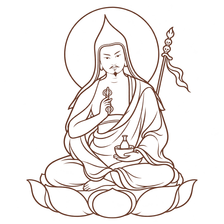
Jamyang Khyentse Chökyi Lodrö
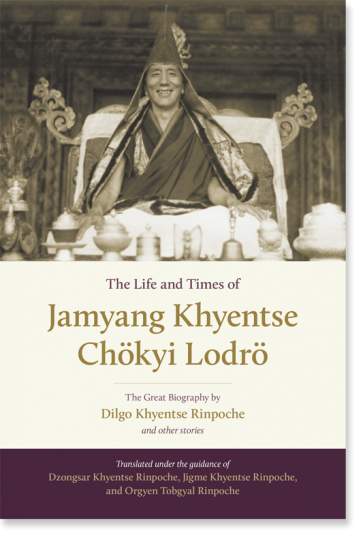
In The Life and Times of Jamyang Khyentse Chökyi Lodrö, Orgyen Tobgyal Rinpoche describes how Dzongsar Khyentse Rinpoche burst into his house in Bir “like a whirlwind” and demanded to be told all the stories that Orgyen Tobgyal Rinpoche knew about Khyentse Chökyi Lodrö that very minute. Orgyen Tobgyal Rinpoche immediately settled himself in his big leather chair by the window and began to talk. In the end, after several such visits, Dzongsar Khyentse Rinpoche had recorded more than twelve hours of stories – many of us will have heard at least some of these stories before, but by no means all of them.
在《蒋扬钦哲确吉罗卓的生平与时代》一书中,乌金督佳仁波切描述宗萨钦哲仁波切如何“像一阵旋风”般冲进他在比尔的家中,要求他立刻讲出自己知道的所有钦哲确吉罗卓的故事。乌金督佳仁波切随即在窗边的大皮椅上坐定,开始讲述。经过几次这样的来访,宗萨钦哲仁波切最终录下了十二个多小时的故事——我们许多人至少听过其中一些,但绝非全部。
Why did Dzongsar Khyentse Rinpoche want all this information? It turned out that he was in the process of making an English translation of Dilgo Khyentse Rinpoche’s majestic spiritual biography of Khyentse Chökyi Lodrö and wanted to add Orgyen Tobgyal Rinpoche’s rather more informal stories to the book. My guess is that Dzongsar Khyentse Rinpoche wanted to present as rounded a picture of Chökyi Lodrö as possible, to pique the interest of modern students. As Dilgo Khyentse Rinpoche’s namthar tells the very inspiring and elevated story of the life and liberation of Khyentse Chökyi Lodrö, the spiritual giant, Orgyen Tobgyal Rinpoche’s stories would be to provide a more accessible foil, focussing as they do, on Chökyi Lodrö the man, as he was remembered by his close friends, attendants and family.
宗萨钦哲仁波切为什么想要这些资料?原来,他当时正在将顶果钦哲仁波切为钦哲确吉罗卓所写的庄严宏伟的修行传记译成英文,希望把乌金督佳仁波切这些较为随意的故事补入书中。我猜,宗萨钦哲仁波切希望尽可能全面地呈现确吉罗卓,以引起现代学人的兴趣。顶果钦哲仁波切的解脱传,以崇高而鼓舞人心的笔触,讲述了钦哲确吉罗卓这位修行巨擘的一生与解脱;乌金督佳仁波切的故事则着重描写亲友、侍者和家人记忆中的确吉罗卓本人,提供较为亲切易懂的映衬。
To whet your appetite, here is the first chapter of Orgyen Tobgyal Rinpoche’s stories describing Chökyi Lodrö’s birthplace in the ‘Badlands’ of Kham, his eccentric father and long-suffering mother – which, of course, is just the beginning of the story…
为了先让大家一睹为快,这里刊出乌金督佳仁波切所讲故事的第一章,描述确吉罗卓在康区“恶地”的出生地、性情古怪的父亲,以及长期忍受艰辛的母亲——当然,这只是故事的开头……
钦哲确吉罗卓的早年生活 Khyentse Chökyi Lodrö’s Early Life
出生地 His Birthplace
Dilgo Khyentse told me that although we know Jamyang Khyentse Chökyi Lodrö was born in the year of the snake, we cannot be certain of the exact date. I was puzzled by this and asked Dilgo Khyentse why Rinpoche’s parents, who were educated people, hadn’t kept a note of their son’s date of birth. His father, said Dilgo Khyentse, was a very great yogi, but unpredictable; he didn’t keep records of any kind. Rinpoche himself mentions in his autobiography in verse that his birthday is unknown:
顶果钦哲告诉我,虽然我们知道蒋扬钦哲确吉罗卓出生于蛇年,却无法确定具体日期。我对此很困惑,便问顶果钦哲:仁波切的父母都有学识,为什么没有记下儿子的出生日期?顶果钦哲说,他父亲是一位非常伟大的瑜伽士,但行事难以预料,什么记录都不做。仁波切自己也在偈颂自传中提到,他的生日已无从知晓:
Since my parents were carefree,
They kept no record
Of planets, stars, ominous dreams, and so on.
由于父母随性自在,
未曾记下
星曜、宿度、不祥之梦等事。
What we do know is that he was born in Rekhe, also known as Sa-ngen, the “Badlands.” To be born in Rekhe was both a good and a bad thing: good because Rekhe is one of four knots of land in eastern Tibet; and bad because it was home to many thieves, dacoits, and liars. Rinpoche always said that the people of Rekhe were unimaginably stubborn.
我们确知的是,他出生于热克,那里又名萨恩,意为“恶地”。出生在热克,有好也有坏:好在热克是藏东四处地势盘结之地之一;坏在当地有许多窃贼、强盗和骗子。仁波切常说,热克人的固执简直难以想象。
The walls of the Rekhe valley were so steep and difficult to negotiate that if a calf was born there, then carried out across the dangerous ravine, once it had grown up it would be unable to find its way back. Strangers, therefore, had absolutely no hope of finding their way in. And from what I’ve heard, it’s an extremely isolated and inhospitable place. Sometimes it’s said to be part of Derge, sometimes not, and many stories are told about the attempted invasions and grizzly murders that happened when the nyerpa of Jagö Tsang was young.
热克山谷的两侧极其陡峭,难以通行;如果一头小牛出生在那里,后来被带着跨过险峻峡谷,等它长大,就再也找不到回去的路。因此,外人根本不可能找到进去的路。就我所听说的而言,那是一个极为偏僻、环境恶劣的地方。有时人们说它属于德格,有时又说不属于。关于嘉果仓的管家年轻时发生的入侵企图和可怕杀戮,流传着许多故事。
Yet it was in Rekhe that Khyentse Chökyi Lodrö was born, and inevitably his habits were influenced by local customs. For example, throughout his life, he loved making tea the way he drank it as a boy and always kept a brick of Rekhe tea by his treasure chest, wrapped in a black, musk deer bag that dated back to the time of Jamyang Khyentse Wangpo. He used to break off a piece of the tea brick, take it to the kitchen, grind it between two stones, mix the fine powder with a little tsampa, butter, and boiling water, churn it into a kind of gruel, then drink it down in one—often three or four cups in quick succession. Sometimes Dilgo Khyentse was invited to join him.
然而,钦哲确吉罗卓就出生在热克,他的习惯难免受到当地风俗的影响。比如,他一生都爱按照儿时的喝法煮茶,总在宝箱旁放着一块热克砖茶,裹在一只从蒋扬钦哲旺波时代传下来的黑色麝皮袋里。他会掰下一块茶砖,拿到厨房,用两块石头磨碎,将细末混入少许糌粑、酥油与开水,搅成一种稀糊,然后一饮而尽——常常一口气接连喝三四杯。有时,他会请顶果钦哲一起喝。
“This is the special tea of Sa-ngen,” Rinpoche would say. “Rekhe tea is so delicious!”
仁波切会说:“这是萨恩的特色茶。热克茶真是好喝!”
From this story, it’s clear that Rinpoche retained at least one Sa-ngen custom.
从这个故事可以看出,仁波切至少保留了一项萨恩的习俗。
钦哲确吉罗卓的父亲 Khyentse Chökyi Lodrö’s Father
According to Gongna Tulku, Rinpoche used to say, “Masters as learnèd as my father and the Second Neten Chokling, Ngedön Drupe Dorje, who also received vast amounts of empowerments and transmissions, have not emerged among the present generation. These two great masters had similarly wild natures. They never stopped to ask, ‘Should I or shouldn’t I?’”
据贡纳祖古说,仁波切曾说:“像我父亲与第二世涅顿秋林——了义成就金刚这样博学,又领受过极其广泛的灌顶与传承的上师,在当代还没有出现。这两位大德的性情同样不羁,从不先停下来想一想:‘我该不该做?’”
I asked Gongna Tulku what Rinpoche had meant by “should I or shouldn’t I?” He explained that Rinpoche’s father would do things like force his wife to offer her dzi necklaces, coral, and other precious stones to the lama (meaning himself), then sell everything off, including his tents, homes, and belongings so he could live as a homeless ascetic. “From now on,” he would say, “I want to be a wanderer without any possessions.” But at other times, he would act like a high lama and acquire many tents, a home, and all the usual trappings of wealth and position. He often appeared to crave and be enormously attached to riches and material possessions, and if thieves from Gonjo and Rekhe stole any of his animals, he wouldn’t hesitate to destroy them with black magic.
我问贡纳祖古,仁波切说“我该不该做”是什么意思。他解释说,仁波切的父亲会做这样的事:强迫妻子把天珠项链、珊瑚等珍宝供养上师——也就是他本人,然后把一切卖掉,包括帐篷、房屋和财物,以便过上无家苦行者的生活。他会说:“从今以后,我要做一个一无所有的云游者。”可在另一些时候,他又表现得像一位大喇嘛,购置许多帐篷、一座房屋,以及通常象征财富与地位的各种排场。他常常显得极其贪求和执著财富与物质财产;如果贡觉和热克的盗贼偷走他的牲畜,他会毫不犹豫地用诛法消灭他们。
Rinpoche said, “The ultimate deity, the actual yidam of our household, Serpa Tsang, was Dudul Dorje’s Vajrakilaya. Our private protector was Zhingkyong. But it was Zhingkyong’s attendants who carried out the activities. The power of my father’s black magic was unassailable! He must have used it to kill a great many people because the inhabitants of Gonjo and Rekhe were known to live in fear of the sorcery practiced by the Serpa household.”
仁波切说:“我们色巴家的究竟尊神,真正的本尊,是敦都多杰的金刚橛。我们私家的护法是刹土主,但执行事业的是刹土主的眷属。我父亲诛法的威力无可抗衡!他一定用这种法杀了很多人,因为众所周知,贡觉和热克的居民都活在对色巴家所行咒术的恐惧中。”
One day, said Rinpoche, his father would wear a long-sleeved robe; the next, a white lower robe and striped shawl; and on the third day, he would wear robes and shawls of the finest cotton. Sometimes he wore his hair long and wrapped it in a blue cloth so his head looked blue; at others, he wore a red cloth and his head looked red. But he always tucked the phurba that had belonged to Dudul Dorje into his waistband in exactly the same way Dudul Dorje had always worn it. Although rituals involving blazing tormas, and so on, are not widely practiced, Rinpoche said his father delighted in performing extremely wrathful rituals and did so repeatedly. He would throw his phurba after each of the blazing tormas he tossed, and if the torma did not turn around he would repeat the ritual the next day.
仁波切说,他父亲有一天会穿长袖袍子,第二天穿白色下裙、披条纹披单,第三天又穿最上等棉布制成的袍子与披单。有时,他蓄着长发,用蓝布包裹,使整个头看起来是蓝色的;有时又包红布,使头看起来是红色的。但他始终把敦都多杰用过的普巴杵插在腰带里,方式与敦都多杰当年佩戴时完全相同。虽然燃烧朵玛等仪轨并不普遍修持,仁波切却说,他父亲特别喜欢修极忿怒仪轨,而且反复地修。每抛出一只燃烧的朵玛,他就随之掷出普巴杵;如果朵玛没有转过来,他第二天就会重修这个仪轨。
This man, Gyurme Tsewang Chokdrup, who appears as Gyurme Tsewang Gyatso in the Great Biography, son of the old Tertön of Ser and a descendant of Dudul Dorje, was Jamyang Khyentse Chökyi Lodrö’s father. Gongna Tulku said he heard all this from Rinpoche’s own lips.
这个人名叫久美才旺秋珠,在《大传》中记作久美才旺嘉措,是色老伏藏师的儿子、敦都多杰的后裔,也就是蒋扬钦哲确吉罗卓的父亲。贡纳祖古说,这一切都是他亲耳听仁波切讲的。
I asked Dilgo Khyentse if it was true that of Gyurme Tsewang Chokdrup’s two sons, it was Tersey Chime who relished wrathful activities, while Rinpoche practiced them less. He said no, it wasn’t true; Rinpoche also engaged in wrathful activity. He was never complacent about any kind of wrongdoing and would always practice a wrathful fire puja to purify even the slightest injury to Buddhadharma or the Khyentse lineage.
我问顶果钦哲:久美才旺秋珠的两个儿子中,是不是德赛赤美喜好忿怒事业,而仁波切修得比较少?他说,不,并非如此;仁波切也修忿怒事业。对于任何过失,他从不掉以轻心;即使只是对佛法或钦哲传承造成最轻微的损伤,他也一定会修忿怒火供来净除。
钦哲确吉罗卓的母亲 Khyentse Chökyi Lodrö’s Mother
I’ve heard it said that Rinpoche’s mother’s family was from Amdo and that she was a descendent of the great master Sergyi Chadral. But women are rarely spoken of in Tibetan culture, and no one I’ve talked to has been able to confirm who her parents were or even the name of her family. Yet she was a reincarnation of the dakini Shaza Khamoche. Rinpoche told Dilgo Khyentse that in the latter part of his life, long after she had passed away, she sometimes appeared to him in visions and made prophecies. But apart from Dilgo Khyentse mentioning in his Great Biography that she was endowed with all the characteristics of a dakini, no one has been able to identify with any certainty into which family she was born.
我听说,仁波切母亲的家族来自安多,她是大德色吉恰扎的后裔。但在西藏文化中,人们很少谈论女性;我询问过的人,没有谁能确定她的父母是谁,甚至连她的家族名称也不知道。然而,她是空行母夏扎卡莫切的转世。仁波切告诉顶果钦哲,在他晚年,也就是母亲去世很久以后,她有时会在净相中出现,为他作预言。但除了顶果钦哲在《大传》中提到她具足空行母的一切相好之外,没有人能确切认定她出生于哪个家族。
After his mother passed away, Khyentse Chökyi Lodrö asked Adzom Drukpa and many other lamas to do divinations about her next rebirth. The lamas said it looked as though she had committed a number of minor samaya transgressions and that as many Vajrasattva practices as possible should be done for her. According to Rinpoche, his mother had been a very noble being, but having endured the extreme hardship of living with a man who never ceased to behave in the most peculiar manner, it had been impossible for her to avoid breaking samaya.
母亲去世后,钦哲确吉罗卓请阿宗竹巴及许多其他上师为她的下一世作占卜。上师们说,看来她曾犯下一些轻微的三昧耶过失,应尽量多为她修金刚萨埵法。仁波切说,他母亲本是一位非常高贵的圣者,但与这样一个始终举止极其古怪的男人一起生活,历经极大的艰苦,实在不可能不违犯三昧耶。
钦哲确吉罗卓的侄子兼秘书 Khyentse Chökyi Lodrö’s Nephew and Secretary
I asked many people about who had fathered Chakdzö Tsewang Paljor. Tashi Namgyal wasn’t sure and said, “Isn’t he the son of Rinpoche’s sister?” But it turns out that he was the son of Chökyi Lodrö’s elder brother Dudul, who was both a layperson and a tantric practitioner. It was Gongna Tulku who gave me a detailed explanation of his family lineage.
我曾向许多人打听总管次旺班觉的父亲是谁。扎西南嘉也不确定,说:“他不是仁波切姐妹的儿子吗?”但原来,他是确吉罗卓兄长敦都的儿子;敦都是一位在家密咒行者。是贡纳祖古向我详细解释了他的家族世系。
From The Life and Times of Jamyang Khyentse Chökyi Lodrö by Dilgo Khyentse Rinpoche.
English translation © 2017 by Dzongsar Jamyang Khyentse.
Reprinted in arrangement with Shambhala Publications, Inc. Boulder, CO www.shambhala.com
节选自顶果钦哲仁波切著《蒋扬钦哲确吉罗卓的生平与时代》。
英文译本 © 2017 宗萨蒋扬钦哲。
经美国科罗拉多州博尔德香巴拉出版公司安排转载。www.shambhala.com
出处与版本
原刊:ALL-OTR · Jamyang Khyentse Chökyi Lodrö。讲授:11th August 2010;Bir, India。原刊发布日期:2017-06-27。