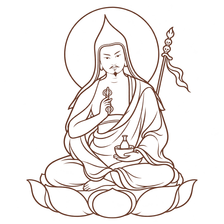
Tendrel Nyesel
原刊阅读条件
Only read if you have received a Tendrel Nyesel empowerment
仅限已领受《缘起除障》灌顶者阅读。
Rinpoche who was in Paris on his way to India, was requested to go the Rigpa centre there to teach on the Tendrel Nyesel. Even though Rinpoche is not particularly familiar with this particular terma, he gave an extremely accessible teaching, essential for anyone who wishes to do this practice, even if for those who at the beginning of their exploration of the Vajrayana teachings.
仁波切赴印度途中停留巴黎,受请前往当地 本觉会 中心,讲授《缘起除障》。虽然仁波切对这一特定伏藏并不特别熟悉,却给予了极为平易易懂的开示。对于希望修持此法的人,哪怕才刚开始接触金刚乘教法,这篇开示都十分重要。
Here, I am going to present the way to direct the practice for the Brief Tendrel Nyesel practice and outline the meaning of the words.
这里,我将介绍如何引导《缘起除障简轨》的修持,并概述词句的意义。
引言 Introduction
In order to train disciples in Tibet, Guru Rinpoche manifested as numerous tertöns, who revealed profound and vast terma cycles of teachings. Among these great beings, the emanation Terchen Lerab Lingpa, who is the reincarnation of Nanam Dorje Dudjom, is unmatched. Within the ocean of termas that he revealed, there is the cycle of teachings called “Tendrel Nyesel”.
为教化西藏弟子,莲花生大师化现为众多伏藏师,开显广大甚深的伏藏法类。在这些大士中,那南多杰敦珠的转世化身——大伏藏师列绕林巴——无与伦比。他所开显的如海伏藏中,有一法类名为「缘起除障」。
The Buddha taught that all phenomena arise interdependently. We can also discover this to be true through investigation and reasoning. When positive interdependent circumstances or tendrel occur, then sentient beings who are caught in the vicious cycle of samsara become enlightened. On the other hand, when interdependent circumstances are negative, then through the power of destructive emotions and conceptual thinking, beings wander endlessly in samsara, and experience oceans of suffering.
佛陀教导,一切现象皆依缘而起。通过观察与推理,我们也能发现这一点确实如此。当善的缘起因缘出现时,困在轮回恶性循环中的有情,便能觉悟。反之,当缘起因缘不善,有情就会在烦恼与分别念的力量下,无尽流转轮回,经历如海痛苦。
In particular, this present period is a time in which the five degenerations are on the rise. It is a time when the merit of all sentient beings—not only humans—is low. When there is a lack of merit, most interdependent circumstances will be negative.
尤其当今这一时期,是五浊日益增盛的时代。这时,一切有情,不只是人类,福德都很薄弱。缺乏福德时,多数缘起因缘都会不善。
The practice of Tendrel Nyesel is a way to eliminate (sel) all negative (nye) interdependent circumstances (tendrel) and to transform them into positive ones through the power of deity, mantra, mudra and samadhi.
《缘起除障》的修法,是通过本尊、咒语、手印与三摩地的力量,遣除(sel)一切不善(nye)缘起(tendrel),并将其转为善缘的方法。
Everything arises through a combination of interdependent circumstances. Therefore, there can be positive tendrel or negative tendrel. Furthermore, because all things arise interdependently, it is possible to eliminate the negativity from interdependent circumstances. The Tendrel Nyesel cycle offers sadhanas for accomplishing the transformation of negative circumstances into positive ones, through the power of deity, mantra, mudra and samadhi—it contains an elaborate, a medium-length and a concise sadhana. The root text in the terma is very elaborate, but the brief Tendrel Nyesel sadhana—which you practise in Rigpa Centres—was written by Lerab Lingpa himself, and contains the entire meaning of the complete cycle of Tendrel Nyesel,
一切都由缘起因缘聚合而生,因此有善缘起,也有不善缘起。而且,正因为一切依缘而起,就可能遣除缘起中的不善。《缘起除障》法类,提供通过本尊、咒语、手印与三摩地的力量,将逆缘转为顺缘的修法,其中有广、中、略三种仪轨。伏藏中的根本文本十分广博,但你们在 本觉会 中心修的《缘起除障简轨》,也是列绕林巴亲自撰写,含摄完整《缘起除障》法类的全部意义。
《缘起除障》讲解 Commentary on Tendrel Nyesel
空行文字 Dakini Script
The text begins with a few syllables in dakini script to indicate that the text is not the teaching of some ordinary intellectual, but is a terma translated from the secret script of the dakinis. Just as water in a mountain stream originates from snow, this sadhana, manifesting as a terma, has burst forth from the secret treasury of the dakinis.
法本开头有几个空行文字,表示它并非某个普通学者的教导,而是从空行母秘密文字译出的伏藏。正如山涧流水源自积雪,这一以伏藏形式显现的仪轨,是从空行母秘密宝藏中涌现的。
Who is able to decipher this secret symbolic script of the dakinis? There are some masters who, by receiving the ‘empowerment into the display of rigpa’, the rigpé tsal wang, come to see all that appears and exists as infinite purity. They become the holders of the secret treasury of the dakinis, and when the dakini script appears in the expanse of their wisdom mind, they can read it. One such master is Guru Rinpoche, Pema Tötreng Tsal.
谁能解读空行母这秘密的象征文字?有些上师,通过领受「觉性力灌顶」,见到一切显有无量清净。他们成为空行母秘密宝藏的持有者;当空行文字显现在其智慧心界时,便能读懂。莲花生大师贝玛脱准扎,就是这样的上师之一。
Besides Guru Rinpoche, there is usually another person who can read these symbolic inscriptions. This is someone who has received the empowerment for the profound terma from Guru Rinpoche. Then, upon learning that these teachings are to be rediscovered in later times as termas (yang ter), he makes the aspiration to be able to reveal and master them in the future. When later he emanates as a tertön, he is able to read this symbolic script of the dakinis, deciphering the symbols without mistake, and understanding the meaning of the words correctly.
除了莲花生大师,通常还有另一人能够读懂这些象征文字。此人已从莲花生大师处,领受甚深伏藏的灌顶;得知这些教法日后会以重掘伏藏的形式再现后,便发愿未来能够开显、掌握它们。当他后来化现为伏藏师时,就能够阅读这些空行象征文字,无误解读符号,正确理解词义。
Other people cannot decipher this script. Not even a great pandita, learned in scriptures, and familiar with the subtlest reasoning, is able to make sense of it. He can make no more use of it than a dog that is fed with grass.
其他人无法解读。即使是精通经论、熟悉最细微推理的大班智达,也无法理解;这些文字对他毫无用处,犹如拿草喂狗。
Each country and culture has its own unique way of marking texts to indicate what kind they are. Since this profound terma of Tendrel Nyesel arose from the treasury of Guru Rinpoche’s wisdom mind and was originally written in dakini script, it is marked at the beginning with dakini script.
每个国家与文化,都有自己独特的文本标记方式,以表明文本种类。既然《缘起除障》这一甚深伏藏,出自莲花生大师的智慧心藏,最初以空行文字书写,所以开头以空行文字作标记。
《缘起除障简轨》修持步骤概要 Summary of the Steps of the Practice of the Brief Tendrel Nyesel Sadhana
The text of the elaborate practice of Tendrel Nyesel provides instructions on the visualization and so on, and explains in detail how to practise the sadhana. But in the brief Tendrel Nyesel, there is less detail given: the deities simply appear vividly and clearly the instant we think of them. As we say the names of the deities, we actualize them, recite the main mantra and then eliminate negativity. In a nutshell, these are the steps of the practice.
《缘起除障》广轨,提供观想等方面的教授,详述如何修持。但简轨的细节较少:我们想到诸尊的那一刹那,他们就清晰鲜明地出现。念诵诸尊名号时,便令其现前,念诵主咒,再遣除不善。简言之,这就是修持步骤。
称名与持咒的次第 The Stages of Invoking the Names and Reciting the Mantras
皈依 Taking Refuge
At the beginning of any Dharma practice, we take refuge. Without taking refuge, our practice will not be a Buddhist practice.
任何佛法修持开始时,都要皈依。不皈依,我们所修的就不是佛法。
Refuge has several aspects:
皈依有几个方面:
- the objects in whom we take refuge,
- the individuals who takes refuge,
- the length of time for which we take refuge,
- the need for taking refuge,
- the shortcomings of not taking refuge,
- the benefits of taking refuge, and so on.
- 所皈依的对象;
- 能皈依的人;
- 皈依的期限;
- 皈依的必要;
- 不皈依的过患;
- 皈依的利益,等等。
There are also the outer, inner and secret approaches to taking refuge.
也有外、内、密的皈依方式。
You really need to learn and to know these various aspects of the practice of taking refuge. The way to do this is to ask your lama about them, then reflect on the teaching he gives, and put it into practice. Additionally, to gain the necessary knowledge, you can refer to The Words of My Perfect Teacher, which explains all the aspects of refuge and has been translated into English, French, German and so on.
对于皈依修持的这些不同方面,你确实需要学习、了解。方法是向上师请问,然后思维所授教法,付诸实践。此外,为获得必要知识,可以参考《普贤上师言教》,其中解释皈依的各个方面,已有英语、法语、德语等译本。
We say that taking refuge determines the difference between a Buddhist and a non-Buddhist. Because of this, a lot of people think that the point of refuge is to convert many people to Buddhism so that Buddhism will grow and flourish. This is nonsense.
我们说,皈依是佛教徒与非佛教徒的分界。因此,许多人认为,皈依的目的,是使许多人改信佛教,让佛教壮大、兴盛。这毫无道理。
Having a large number of Buddhists doesn’t bring anything to Buddhism. How does that benefit the Buddha? How does that benefit the Dharma? How does that benefit the Sangha? The real benefit of taking refuge lies in how it helps the individual beings who suffer in the vicious cycle of samsara.
佛教徒人数众多,并不会给佛教带来什么。这如何利益佛?如何利益法?如何利益僧?皈依的真正利益,在于帮助那些在轮回恶性循环中受苦的个别众生。
So, the text of the Brief Practice of Tendrel Nyesel says:
因此,《缘起除障简轨》说:
Homage!
I take refuge in all true sources of refuge, throughout the whole of space and time!
敬礼!
我皈依遍满一切时空的所有真实皈依处!
With this first line, we take refuge.
通过这第一句,我们皈依。
The Tibetan term translated as the whole of space is “chok” which means “direction”, and refers to the ten directions. “Time” refers to the four times: past, present, future, and the inconceivable time.
这里译为「一切空间」的藏语是「chok」,意思是「方」,指十方。「时间」指四时:过去、现在、未来,以及不可思议时。
So here we take refuge in all the sources of refuge throughout the ten directions and four times. This includes:
所以,这里皈依十方四时的一切皈依处,包括:
- the Lama, Yidam, and Khandro;
- the channels, inner air and tiklés; and
- the empty essence, cognizant nature and unobstructed compassionate energy of Dzogchen.
- 上师、本尊与空行;
- 脉、风与明点;以及
- 大圆满的体性空、本性明与大悲能量无碍。
Those who take refuge are all sentient beings, including ourselves, as countless in number as space is vast, take refuge together.
皈依者,是包括我们自己在内的一切有情,数量如虚空般无量,共同皈依。
The length of time for which we take refuge is from today onwards, right up until we attain the state of complete enlightenment.
皈依的期限,是从今天起,直到证得圆满觉悟。
So as we reflect upon and actualize all of this, we recite the words of refuge in the text.
我们思维并令这一切在心中现前,同时念诵法本中的皈依文。
生起菩提心 Awakening Bodhichitta
By taking refuge, we have made sure our practice is a Buddhist one. Now we need to arouse bodhichitta to set our goal, and once we have generated the intention of bodhichitta, we must accomplish that objective – so bodhichitta has two aspects: bodhichitta in aspiration, and bodhichitta in action.
通过皈依,已确保所修属于佛法。现在,需要发菩提心,以确定目标;生起菩提心的意愿后,必须实现这一目标。因此,菩提心有两个方面:愿菩提心与行菩提心。
Bodhichitta in aspiration is to resolve: “Whatever all the buddhas and bodhisattvas have done for the sake of all sentient beings, I will also do. From today onwards, I will work to bring about the enlightenment of all sentient beings.” After thinking this, we then go on to actually accomplish activity of the six paramitas, which is bodhichitta in action.
愿菩提心,是立志:「一切诸佛菩萨为一切有情做过的事,我也要做。从今天起,我将致力于使一切有情觉悟。」这样想之后,进一步实际行持六波罗蜜多,这就是行菩提心。
These two aspects of bodhichitta are extremely important. Bodhichitta is the true basis for attaining buddhahood. In the Way of the Bodhisattva the great bodhisattva Shantideva explains the benefits of arousing bodhichitta:
这两个方面的菩提心,极其重要。菩提心,是成佛的真正基础。大菩萨寂天在《入菩萨行论》中,解释发菩提心的利益:
To show the benefit of arousing bodhichitta, Shantideva wrote that sentient beings like ourselves are imprisoned in the jail of the three realms of samsara, and bound tightly by the iron chains of negative emotions. But the very instant that bodhichitta, in its two aspects, is born in our mind, we set out on the path of the Buddha’s heirs. We become a bodhisattva, someone to whom all beings, including gods and humans, will pay homage and make offerings.
为说明发菩提心的利益,寂天写道,像我们这样的有情,被囚于三界轮回的牢狱,被烦恼铁链紧紧束缚。但只要愿、行两种菩提心,在心中生起一刹那,我们就踏上佛子之道,成为菩萨,成为包括天、人在内的一切众生,都要礼敬供养的对象。
In the same vein, the great Indian pandita Chandrakirti states in the first verse of the Introduction to the Middle Way:
同样,印度大班智达月称,在《入中论》第一偈中说:
What Chandrakirti expresses here is that the shravakas are followers of the Buddha—their name in Tibetan, nyenthö, means those who ‘listen’ (nyen) to the teachings, and cause others to ’hear’ (thö) them. The pratyekabuddhas are those who attain enlightenment by themselves. Chandrakirti’s verse explains the basis from which these great beings, the shravakas and pratyekabuddhas, originate. They come about through receiving Dharma teachings from a perfect buddha, and then putting his instructions into practise authentically.
月称在这里表达的是,声闻是佛陀的追随者。藏语称他们为nyenthö,意思是「聆听」(nyen)教法,并使他人「听闻」(thö)的人。缘觉,则是独自证得觉悟者。月称此偈,解释声闻与缘觉这些大士从何而生:他们领受圆满佛陀的佛法教导,再真实地实践其教授,由此成就。
So then, where do buddhas come from? Buddhas come into being by cultivating bodhichitta. The qualities of a buddha are inconceivable: the thirty-two major marks, the eighty minor marks, the eighteen unshared qualities, and so on. And the basis for all these inconceivable qualities is the mind of enlightenment, which Chandrakirti describes as having three different aspects: a compassionate mind, an understanding of non-duality, and bodhichitta. It is very good to develop all three of these most excellent qualities. That is why Chandrakirti begins his text by paying homage and making offerings to compassion and bodhichitta.
The great and learned master of the Nyingmapa tradition, Ngari Panchen Pema Wangyal, who is an emanation of King Trisong Detsen’s enlightened qualities, also discusses the benefits of bodhichitta, saying:
宁玛派伟大的博学上师、赤松德赞王功德化身阿里班智达贝玛旺嘉,也谈到菩提心的利益,说:
Someone who has aroused bodhichitta in its two aspects of aspiration and action, and trained in it, generates enormous merit. So much so that the momentum created by the force of bodhichitta will naturally continue to create merit, even when practitioners are not abiding by carefulness, for example when they are sleeping. And when, ultimately, the supreme conduct of a bodhisattva is born in them as a result, they will reach the state of enlightenment.
生起愿、行两种菩提心,并加以训练的人,会产生广大福德。其力量之大,使菩提心带来的势能,会自然持续生起福德,甚至在修行者未安住不放逸时,例如睡眠时,也仍如此。最终,由此生起菩萨的最胜行持时,他们便会到达觉悟之境。
So, how do we give rise to bodhichitta in aspiration, and in action? Once it has been born in our mind, how do we prevent it from degenerating, and cause it to increase further? What causes bodhichitta to decline? And if it does decline, how do we remedy this? There are many texts which answer these questions in detail. You can learn about bodhichitta essentially by reading The Words of My Perfect Teacher by Patrul Rinpoche, who accomplished oceans of bodhisattva activities during the course of a single lifetime.
那么,如何生起愿菩提心与行菩提心?它们在心中生起后,如何令其不退失、进一步增长?什么导致菩提心衰退?如果衰退,如何补救?许多论典,详细回答这些问题。要了解菩提心的要点,可以读巴珠仁波切的《普贤上师言教》;他在一生之中,成办了如海的菩萨行。
Therefore, the practice of Tendrel Nyesel continues:
因此,《缘起除障》修法接着说:
I awaken the compassionate heart of bodhicitta, so that all may realize supreme and unsurpassed enlightenment!
我生起大悲菩提心,愿一切众生证得最胜无上觉悟!
“Unsurpassed” means that arousing bodhichitta, the heart or the mind of enlightenment, is the very best of all positive mental states that can be cultivated. The text says “supreme” because once this heart of the enlightened mind arises, it leads to the supreme state of complete buddhahood. This is how we should understand this line on arousing bodhichitta.
「无上」意指:发菩提心,也就是觉悟之心,是所能培养的一切善心之中,最为殊胜的。法本说「最胜」,因为一旦生起这觉悟心髓,就会导向圆满佛果的最胜境界。关于发菩提心的这一句,应该这样理解。
We must reflect upon refuge and bodhichitta for they are extremely important. To help us realize their meaning, we repeat the lines of refuge and bodhichitta three times.
必须思维皈依与菩提心,因为它们极为重要。为帮助我们领会其意义,将皈依与发心文重复三遍。
A. 经乘修法 A. The Sutrayana Practice
Invoking the buddhas, bodhisattvas and arya sangha
祈请诸佛、菩萨与圣僧
Following this, the text says:
随后,法本说:
Greatest among teachers, Buddha and lord of sages, Śākyamuni,
With the one thousand and two buddhas to attain complete enlightenment in this ‘Fortunate Age’,
You who dwell in pure realms pervading the whole of space and time,
To all the victorious buddhas, I offer the ultimate homage!
导师中最胜,佛陀、能仁之主释迦牟尼,
与此「贤劫」将成正觉的一千零二佛,
住于遍满一切时空的清净刹土,
我向一切胜者诸佛,献上最胜敬礼!
The phrase “Greatest among teachers, Buddha and lord of sages” refers to the Buddha Shakyamuni. We prostrate to him, and to all the buddhas of this ‘Fortunate Age’, which is the present kalpa. The current buddha, Shakyamuni, is only the fourth of one thousand and two buddhas to attain enlightenment in this fortunate age, meaning there are still 998 buddhas yet to come.
「导师中最胜,佛陀、能仁之主」,指释迦牟尼佛。我们顶礼他,以及此「贤劫」,即当前这一劫的所有诸佛。现在的佛——释迦牟尼——仅是贤劫一千零二位成佛者中的第四位,也就是说,未来还有九百九十八位佛出世。
The line “You who dwell in pure realms pervading the whole of space and time” refers to all the buddhas in infinite number. In the ten directions, there are innumerable, infinite pure buddha fields such as the World of Endurance we live in. Emanating as many bodies as all the atoms in all those pure fields, we offer homage and prostrate to all buddhas.
「住于遍满一切时空的清净刹土」,指数量无量的一切诸佛。十方有无数、无量清净佛土,如我们所居的娑婆世界。我们化现与所有这些净土中一切微尘数量相等的身体,向一切诸佛礼敬、顶礼。
The practice continues:
修法接着说:
To Mañjuśrī, Avalokiteśvāra, and Vajrapāṇi, and
To all the bodhisattvas I offer homage!
向文殊师利、观自在与金刚手,
以及一切菩萨,敬礼!
The wisdom, compassion and power of all these perfect and complete buddhas, dwelling in pure realms pervading the whole of space and time, manifest as the Three Protectors :
遍满一切时空、安住净土的一切圆满诸佛,其智慧、悲心与力量,显现为三怙主:
- Manjushri, who embodies all of their wisdom,
- Avalokiteshvara, the embodiment of all their compassion, and
- Vajrapani, the Lord of Secrets, who embodies all the buddhas’ power, strength and ability to benefit sentient beings.
- 文殊,体现诸佛的一切智慧;
- 观世音,体现诸佛的一切悲心;以及
- 秘密之主金刚手,体现诸佛利益有情的一切力量、威力与能力。
We pay homage to these three principal bodhisattvas from among the Eight Close Sons, together with all other bodhisattvas, as countless as the atoms in the universe.
我们礼敬八大近子中的这三位主要菩萨,以及数量如宇宙微尘般无数的一切其他菩萨。
Then:
然后:
To the exalted ones among the śrāvakas and pratyekabuddhas,
And to all you who in this world of ours are worthy of reverence, in devotion I offer homage!
Let your power cleanse and purify all inauspicious, harmful circumstances—every single one!
向声闻与缘觉中的圣者,
以及我等世间一切应受尊敬者,至诚敬礼!
愿以汝等威力,净除一切不祥、损害的因缘,毫无遗漏!
We also prostrate to the shravaka followers of Buddha Shakyamuni, as well as shravakas who follow buddhas in all the pure realms throughout the whole of space and time. Similarly, we prostrate to the pratyekabuddhas. We pay homage to all these aryas, the noble ones who are superior to ordinary worldly beings, as well as to whomever is worthy of prostration, wherever they may dwell.
我们也顶礼释迦牟尼佛的声闻弟子,以及遍满一切时空的所有净土中,追随诸佛的声闻。同样,我们顶礼缘觉。我们礼敬这一切超越凡俗众生的圣者,以及无论住在何处,一切应受顶礼的对象。
The practice continues with the mantra:
修法接着念咒:
om muné muné maha muné dhuru dhuru dzaya mukhé soha, chi nang sangwé tendrel nyé tsok tamché shyi shying lek tsok tamché pel shying gyepar gyur chik
om muné muné maha muné dhuru dhuru dzaya mukhé soha, chi nang sangwé tendrel nyé tsok tamché shyi shying lek tsok tamché pel shying gyepar gyur chik
Generally, because mantras are in Sanskrit, the masters translate them into Tibetan to show the meaning of the words. But according to Jamgön Kongtrül, it is not appropriate to translate mantras found in termas. This is because the Sanskrit found in termas is original Sanskrit, and cannot be matched with present day Sanskrit, which has undergone many changes since the earlier times. So I won’t translate the first part of the mantra, which is in Sanskrit. The rest of the mantra is in Tibetan and says, “outer, inner and secret”, (which means outer, inner and secret obstacles)—pacify all harm and inauspiciousness in interdependent circumstances, and make all goodness abound and multiply. All the activity mantras end in this way: ‘Outer, inner and secret—pacify all harm and inauspiciousness in interdependent circumstances, and make all goodness abound and multiply!’ This mantra is very important, and so the text instructs us to repeat it several times. You should repeat it a minimum of three times. But you could also recite it one hundred, one thousand, or even 100,000 times.
一般而言,因为咒语是梵语,上师们会将其译为藏语,以显示词义。但依蒋贡康楚所说,伏藏中的咒语,不宜翻译。因为伏藏里的梵语,是原初梵语,不能与从古代以来经历许多变化的现今梵语相对应。因此,我不翻译咒语前面梵语的部分。后面是藏语,说的是:「外、内、密」——也就是外、内、密的障碍——遣除缘起中一切损害与不祥,令一切善妙丰盛、增长。所有事业咒,都这样结尾:「外、内、密——遣除缘起中一切损害与不祥,令一切善妙丰盛、增长!」此咒非常重要,所以法本指示,要重复数次。至少应念三遍,也可以念一百、一千,甚至十万遍。
B. 密乘修法 B. The Mantrayana Practice
Rigpa Rising as Guru Rinpoche, the Chief of the Mandala
觉性显现为坛城主尊莲花生大师
Next we recite the three syllables:
接着,我们念诵三个字:
Hung Hung Hrih
Hung Hung Hrih
With the first Hung, we focus our mind on the naturally reverberating sound of Hung. As we say the second Hung, all that appears and exists, which is the naturally arising display of Hung, transforms into the pure field of the wrathful deities. Thirdly, as we say Hrih, we invoke Guru Rinpoche, who presides among the wrathful deities. Hrih is the seed syllable of Guru Rinpoche, since he is from the Lotus and Magnetizing family.
第一个Hung,将心专注于自然回响的Hung声。念第二个Hung时,一切显有,也就是Hung自然生起的展现,转成忿怒诸尊的净土。第三,念Hrih时,祈请主领忿怒诸尊的莲花生大师。Hrih是莲花生大师的种子字,因为他属于莲花部与怀摄部。
In this wisdom mandala, all that appears and exists is perfectly pure.
于此智慧坛城,一切显有圆满清净。
On the ultimate level, all sentient beings are pervaded by the primordially pure ‘ground continuum’ or buddha nature. When we realize this, we recognize that both externally appearing objects and all objects appearing in the mind are completely pure as the mandala of wisdom. There is nothing other than this.
在究竟层面,一切有情,都遍具本初清净的「基相续」,也就是佛性。证悟这一点时,就会认出:外在显现的对境,以及心中显现的一切对象,都完全清净,是智慧坛城。除此之外,别无其他。
Since all that appears and exists is fundamentally pure, it is possible to completely purify ourselves through meditation. If there was no fundamental purity in the first place, then no matter how much we meditated, we could never realize it. For example, if a glass becomes dirty, it is possible to clean it because it is originally clean. But if a glass was naturally dirty from the beginning, then there would be no way you can clean it, right?
由于一切显有根本清净,通过禅修,便有可能完全净化自己。如果最初根本就没有清净,无论如何禅修,也永远不可能证得。例如,玻璃杯弄脏后,可以清洗,因为它本来干净。但如果玻璃杯从一开始,本性就是脏的,那就没有办法洗干净,对不对?
The practice continues:
修法接着说:
Not even the names of ‘negativity’ or ‘obstacle’ arise,
「不善」与「障碍」,连名字也不生起,
So, since all that appears and exists is primordially pure, even the names of ‘impurity’, ‘negativity’, or ‘obstacle’ do not exist.
因此,既然一切显有本初清净,连「不净」「不善」或「障碍」这些名称,也不存在。
Since my true nature, rigpa, manifests as Padmākara,
因为我的真实本性——觉性——显现为莲花生,
Therefore rigpa’s cognizant nature, its natural radiance, manifests as Guru Padmakara: the dynamic energy of rigpa arise as Guru Rinpoche.
因此,觉性的明知本性、自然光辉,显现为莲花生上师;觉性的力用,生起为莲花生大师。
Guru Rinpoche embodying the three kāyas and 'Prevailing Over All Appearance and Existence'.
莲花生大师总集三身,「威压一切显有」。
You visualize Guru Rinpoche as the embodiment the three kayas, Nangsi Zilnön, whose name means 'Prevailing Over All Appearance and Existence’. Then you recite the mantra:
观想莲花生大师为三身的总集,名为 威伏显有,意为「威压一切显有」。然后念咒:
om ah hung benza guru pema siddhi hung
om ah hung benza guru pema siddhi hung
Next the text says,
接着,法本说:
om ah hung
All offerings and tormas are transformed into the display of wisdom.
Here is an unsurpassable array, of everything that can be offered—outer, inner and secret—
Offerings of every variety and kind I offer, in a sumptuous feast to delight the senses!
Now, pacify all harm and inauspiciousness, and let all goodness increase and spread!
om ah hung benza guru pema tötreng tsal benza samaya dza siddhi pala hung ah, tendrel nyé tsok sarva shanting kuru soha
om ah hung
一切供品与朵玛,转为智慧之展现。
外、内、密一切可供之物,陈设为无上供养,
种种类别、形形色色之供品,献作悦意丰盛之宴!
今请息灭一切损害与不祥,令一切善妙增长广大!
om ah hung benza guru pema tötreng tsal benza samaya dza siddhi pala hung ah, tendrel nyé tsok sarva shanting kuru soha
This is the blessing of the offerings.
这是加持供品。
教传传统 The Kama Tradition
一、摩诃瑜伽:寂静与忿怒诸尊 i. Mahayoga—the Peaceful and Wrathful Deities
寂静诸尊 The Peaceful Deities
The peaceful sugatas, deities of the vajradhātu,
寂静善逝,金刚界诸尊,
“Peaceful” refers to the peaceful deities, and “sugatas” are buddhas. “Vajradhatu” is the empty expanse. So this line means that the peaceful buddhas arise from the empty expanse of basic space. This empty aspect is indicated by the word ‘vajra’, because it is endowed with the seven qualities of a vajra—it is uncuttable, indestructible, true, solid, stable, completely unobstructible and completely invincible.
「寂静」指寂静诸尊,「善逝」是佛。「金刚界」是空性的广阔法界。因此,这一句意指,寂静诸佛从空性法界中生起。空性这一面,以「金刚」一词表示,因为它具足金刚七德:不可断、不可坏、真实、坚固、稳定、完全不可阻碍,以及完全不可战胜。
Mandalas of the forty-two victorious buddhas,
All shine out as Guru Rinpoche’s self-appearing display of wisdom.
四十二位胜者诸佛的坛城,
皆显耀为莲花生大师智慧的自现。
The forty-two peaceful deities, who arise from this space or dhatu, are:
从这法界中生起的四十二寂静尊,是:
- Samantabhadra and Samantabhadri,
- the buddhas of the five families,
- the five female buddhas,
- the eight male and eight female bodhisattvas,
- the four male and four female gatekeepers, and
- the six nirmanakayas.
- 普贤王如来与普贤佛母;
- 五部佛;
- 五佛母;
- 八位男菩萨与八位女菩萨;
- 四位男守门尊与四位女守门尊;以及
- 六化身。
When we meditate upon the peaceful and wrathful deities in an elaborate way, each of the deities has three heads and six hands. When we meditate in a less elaborate way, only the buddhas of the five families and the five wrathful ones are visualized with three heads and six hands. All the other deities have just one head and two hands. When we meditate simply, we visualize all the deities with one head and two hands. These different ways of practising are explained in the Secret Essence Tantra.
广修寂静与忿怒诸尊时,每尊都有三面六臂。修中等广度时,只有五部佛与五忿怒尊,观为三面六臂,其余诸尊都只有一面二臂。简修时,则观想所有诸尊一面二臂。这些不同修法,在《秘密藏续》中都有解释。
You can either visualize this mandala of deities as a self-visualization or as a front visualization. Whichever you choose, you invoke and visualize them at the same time as you say the line, “Mandalas of the forty-two victorious buddhas”.
可以自生观想这一诸尊坛城,也可以作对生观想。不论选择哪一种,念「四十二位胜者诸佛的坛城」时,都同时祈请、观想诸尊。
By recognizing their indivisibility and oneness, I offer homage!
Here is an unsurpassable array, of everything that can be offered—outer, inner and secret—
Offerings of every variety and kind I offer, in a sumptuous feast to delight the senses!
Now, pacify all harm and inauspiciousness, and let all goodness increase and spread!
Grant me blessings and empowerments, and the siddhis—ordinary and supreme!
om bodhitsitta maha sukha jñana dhatu ah
了知彼等无别一体,我敬礼!
外、内、密一切可供之物,陈设为无上供养,
种种类别、形形色色之供品,献作悦意丰盛之宴!
今请息灭一切损害与不祥,令一切善妙增长广大!
赐我加持、灌顶,以及共同、殊胜悉地!
om bodhitsitta maha sukha jñana dhatu ah
With these lines, we pay homage, make outer, inner, and secret offerings and offer the tsok. As we confess all our negativity, it is pacified, and all goodness increases. We request this kind of blessing, and we actualize that we actually receive all the blessings, empowerments and siddhis.
通过这些句子,我们礼敬,奉献外、内、密供养,并供荟供。忏悔一切不善时,不善即得息灭,一切善妙增长。我们祈求这样的加持,并令实际领受一切加持、灌顶与悉地,在心中现前。
忿怒诸尊 The Wrathful Deities
Then, either the peaceful deities transform into the wrathful deities, or from out of the basic space of the peaceful deities, you immediately visualize the fifty-eight blazing wrathful deities.
然后,寂静诸尊转为忿怒诸尊;或者,从寂静诸尊的法界中,立即观想五十八位炽燃忿怒尊。
Deities are the natural expression of primordial wisdom. So the way to offer homage is to we offer homage recognize their indivisibility and oneness as they arise. Just as with the peaceful deities, we offer the outer, inner and secret offerings, and so on.
诸尊是本初智慧的自然显露。因此,礼敬的方式,就是在其生起时,认出彼等无别一体而礼敬。如同对寂静诸尊一样,我们献上外、内、密供养等等。
二、阿努瑜伽:大集会 ii. Anuyoga—Tsokchen Düpa
The peaceful and wrathful deities together form the mandala of Tsokchen Düpa. Also included are the vidyadhara deities, principally the eight vidyadharas.
寂静与忿怒诸尊,共同构成大荟供总集坛城。其中也包括持明诸尊,主要是八大持明。
As before, all the deities “shine out as Guru Rinpoche’s self-appearing display of wisdom.” Again, we offer homage “by recognizing their indivisibility and oneness”; we offer “an unsurpassable array of everything that can be offered—outer, inner and secret”; and we offer the tsok. The deities “pacify all harm and inauspiciousness, and let all goodness increase and spread;” and they grant us blessings, empowerments, and the siddhis—ordinary and supreme!
如前所述,一切诸尊「皆显耀为莲花生大师智慧的自现」。再次,我们「了知彼等无别一体」而礼敬,奉献「外、内、密一切可供之物,陈设为无上供养」,并供荟供。诸尊「息灭一切损害与不祥,令一切善妙增长广大」,并赐予加持、灌顶,以及共同、殊胜悉地!
二、伏藏传统 2. The Terma Tradition
一、上师密意总集:上师修法 i. Lama Gongdü—the Practice of the Lama
After this, we visualize the mandala of Lama Gongdü, with its two-hundred and twenty-five deities. Within this mandala, there are also the male, female and neuter (maning) guardians who protect the teachings, and guardians who protect the world.
此后,观想上师密意总集坛城,其中有二百二十五尊。这一坛城内,也有守护教法的男、女及中性护法,以及守护世间的护法。
二、八大法行:本尊修法 ii. Kagyé—the Yidam Practice
Next are the seven-hundred and twenty-five deities of the Kagyé mandala. They include both worldly deities and enlightened deities, and they are surrounded by the eight classes of gods and demons, as immeasurable in number as the atoms in the universe.
接着是八大法行坛城的七百二十五尊,其中既有世间诸尊,也有觉悟诸尊,周围环绕神魔八部,数量如宇宙微尘般无量。
三、上师秘密总集:空行母修法 iii. Guru Sangdü—the Dakini Practice
Purifying the Environment and Beings
净化器情
Next is the practice of Guru Sangdü, the King of Space. The text says:
接着,是虚空之王——上师秘密总集——的修法。法本说:
I am the secret embodiment of the Guru, the King of Space,
In union, inseparable, with the white Vajravarāhī,
And around me the four classes of ḍākinīs,
Sending out streams of light that purify environment and beings into their true nature, space and wisdom.
om maha guru bam harinisa hung droom soha
我为上师秘密总集、虚空之王,
与白色金刚亥母无别双运,
四类空行母围绕于我,
放射光流,将器情净化为其真实本性——法界与智慧。
om maha guru bam harinisa hung droom soha
The four classes of dakinis are the pacifying, enriching, magnetizing and subjugating dakinis.
四类空行母,是息、增、怀、诛的空行母。
At present, the universe—the environment and beings contained within it—appears to be separate from the basic space of primordial wisdom. The benefit of the Guru Sangdü practice is to purify the entire universe into the basic space of primordial wisdom.
目前,宇宙——环境与其中的众生——似乎与本初智慧的法界分离。修持上师秘密总集的利益,是将整个宇宙净化为本初智慧的法界。
This is a very profound point. We talk about ‘basic space’ and the ‘display of basic space’; about ‘appearances’ and the mind’s ‘perceiving quality’—to us at the moment, they all seem to come in those pairs, when in fact it is the single basic space that arises as delusion. With this practice, we bind the pairs together, so they become one. Dharmadhatu is basic space, and since appearances arise from basic space, they are the display of basic space. Appearances are delusion, so they need to be ‘bound together’ with basic space.
这是十分甚深的一点。我们谈「法界」与「法界的展现」,谈「显现」与心的「能知特质」;目前在我们看来,这些都似乎成双成对。实际上,却是同一法界,显现为迷乱。通过这一修法,将这成对的两面系合,成为一体。法界就是基本空间;显现从法界生起,因此是法界的展现。显现是迷乱,所以需要与法界「系合」。
三、上师忿怒尊:极忿怒莲花生大师 iii. Guru Drakpo—the Very Wrathful Guru Rinpoche
Creating the Protective Sphere
建立护轮
The ferocious, wrathful Guru, dark blue, terrifying, and majestic,
Grips a vajra and a scorpion of iron; and from his heart
Burst out countless wrathful deities, with their weapons, shooting in every direction, like a hurricane of fire,
All forming a seamless vajra dome of protection, utterly impenetrable...
威猛忿怒上师,深蓝色,怖畏而威严,
手执金刚杵与铁蝎;从其心间,
涌出无数持武器的忿怒尊,如烈火飓风,射向四方,
全都形成无缝的金刚护帐,完全不可穿透……
Finally we need to create the protective tent. Generally speaking, Guru Rinpoche has two aspects, peaceful and wrathful. There are two wrathful forms—red and dark blue. Here the form of Guru Drakpo is “dark blue, terrifying and majestic.” Like all forms of Guru Drakpo, “he grips a vajra and a scorpion.” From all the pores of his body, wrathful deities, weapons, and masses of fire stream out in all ten directions. These countless wrathful deities, weapons and hurricanes of fire form an utterly impenetrable, seamless vajra dome of protection.
最后,需要建立护帐。一般而言,莲花生大师有寂静与忿怒两种形相。忿怒形相有两种:红色与深蓝色。这里的上师忿怒尊,是「深蓝色,怖畏而威严」。如同上师忿怒尊的一切形相,他「手执金刚杵与蝎子」。从其全身毛孔,涌出忿怒诸尊、武器与火焰团,遍向十方。这些无数忿怒尊、武器与火焰飓风,形成完全不可穿透、毫无缝隙的金刚护帐。
总结 Summary
To summarize, because using too many words is not so helpful, the way to practise the brief Tendrel Nyesel is as follows. Of those with sharp faculties, average faculties, and lesser acumen, this practice is for those with the sharpest faculties.
因为说得太多未必有帮助,现将《缘起除障简轨》的修法总结如下。在利根、中根与较钝根的人之中,这一修法适合最利根者。
上等修法 Superior Way to Practice
How should those of superior capacity practise? During the Tendrel Nyesel, we invoke the peaceful deities, the wrathful deities, those in the mandalas of Tsokchen Düpa, Lama Gongdü, Kagye, Guru Sangdü, and Guru Drakpo, one after another by calling their names. As a practionner of superior acumen invokes the deities actualizing the words of the Tendrel Nyesel, they all appear in an instant, clearly and distinctly, in the mind of the practitioner.
上根者应如何修?修《缘起除障》时,我们依次称念名号,祈请寂静诸尊、忿怒诸尊,以及大集会、上师密意总集、八大法行、上师秘密总集、上师忿怒尊各坛城中的诸尊。上根修行者依《缘起除障》词句令其现前而祈请时,所有诸尊都会刹那间,清楚分明地出现在其心中。
However, unless you have thoroughly trained in this, and thereby accumulated the necessary karma, it is difficult to be able to practise in this way.
不过,除非已经充分训练,因而积聚必要的业缘,否则,很难这样修持。
中等修法 Middling Way to Practice
So if you cannot visualize all the deities of each mandala, you visualize just the main deities. Then, for the retinues, you practise on an aspirational level, by simply considering that all the other deities mentioned in the practice text are present.
如果不能观想各坛城的一切诸尊,就只观想主尊。至于眷属,则在愿想的层面修持,只认为法本中提到的其余诸尊,也全都在场。
简要修法 Essential Way to Practice
If you cannot visualize even the main deity in each mandala, then simply think, “They are there.”
如果连每个坛城的主尊都无法观想,就只想:「他们在那里。」
In Rigpa centres, there are a lot of Tendrel Nyesel thangkas on display. The only reason we hang them is to support our kyerim practice of visualization. Otherwise, just to print them on paper doesn’t bring any benefit—it doesn’t purify any habitual tendency. Paper is mere matter, and matter doesn’t purify habitual tendency. But for supporting the practice of visualization, these thangkas are very helpful.
本觉会 中心悬挂着许多《缘起除障》唐卡。悬挂它们的唯一理由,是辅助生起次第的观想修持。否则,只是印在纸上,并不带来什么利益,也不会净化任何习气。纸只是物质,而物质不能净化习气。但作为观想修持的辅助,这些唐卡非常有帮助。
So as you visualize the deities, you offer homage to the great purity and equality, in which the deities and ourselves are one.
因此,观想诸尊时,礼敬诸尊与自己一体的大清净、大平等性。
In elaborate practices, you need to invite the deities, and request them to be seated. But here this is not required.
广修时,需要迎请诸尊,并请其安坐。但这里不需要。
供养 Offerings
We offer outer, inner, secret, and innermost secret offerings to all the deities. The outer offerings are water for drinking, water for cleansing the hands and feet, flowers, incense, light offerings, scented water, food, and music. In the manner of Samantabhadra, we visualize an infinite number of these offerings, all of which are presented to the deities by offering goddesses. The inner offerings are the offerings of physical forms, sounds, scents, tastes, and tactile sensations; and of torma, rakta and amrita. The secret offerings are the offerings of union, and tsok. Suchness is the innermost secret offering, which we offer through samadhi meditation.
我们向一切诸尊,献上外、内、密与最内密供养。外供是饮水、洗手足水、花、香、灯、涂香、食物与音乐。依普贤的方式,观想无量这些供品,由供养天女献给诸尊。内供,是色、声、香、味、触,以及朵玛、惹达与甘露。密供,是双运与荟供。真如,是最内密供养,通过三摩地禅修而奉献。
So we make all these different kinds of offerings, and offer praises. Then through the deities’ power and blessing, and through the power of meditating on the various deities, and the different stages of the practice just mentioned, all negativity and obscurations are purified, and we receive all the empowerments and siddhis, both ordinary and – most importantly – supreme. To put it simply, we actualize the words of the text.
如此,作各种供养与赞颂。然后,通过诸尊的力量与加持,通过禅修各尊,以及刚才所说修法各阶段的力量,一切不善与障蔽得以清净,我们领受一切灌顶与悉地,包括共同悉地,以及最重要的殊胜悉地。简单说,就是令法本中的词句在心中现前。
持咒时的观想 Visualization during the Mantra Recitation
During the mantra recitation for each mandala, the visualization (mikpa) is as follows:
念诵每一坛城的咒语时,观想如下:
The rotation and radiance of the mantra invoke the wisdom mind of all the deities. The deities emanate rays of light from their bodies. If you practise elaborately, the rays of light transform into deities. Alternatively, it is fine just to visualize the rays of light transforming into the hand implements of the deities. And if you are practising very essentially, you can simply visualize rays of light. These light rays stream out to the whole universe, touching the entire world and all the beings within it, pacifying all inauspicious circumstances and making all positive ones increase further and further. We recite the mantra while visualizing all of this.
咒轮旋转、放光,劝请一切诸尊的智慧心。诸尊从身中放射光芒。若广修,光芒转为诸尊;也可以只观想光芒转为诸尊的手持法器,同样可以。如果修得非常简要,只观想光芒即可。这些光芒遍射整个宇宙,触及整个世界与其中一切众生,息灭所有不祥因缘,使一切善缘不断增长。我们一面观想这一切,一面持咒。
事业咒 The Activity Mantra
In ‘summoning’ (gukpa) practices, we invoke “the power of the truth of the buddhas, and the truth of the Dharma, and the truth of the sangha.” Similarly here, we invoke the power and truth of the peaceful deities, the wrathful deities and so on.
「召请」修法中,我们祈请「佛之谛实力、法之谛实力、僧之谛实力」。这里也同样,祈请寂静诸尊、忿怒诸尊等的力量与谛实。
The Tendrel Nyesel text says:
《缘起除障》法本说:
Pacify all outer, inner and secret inauspicious circumstances:
息灭一切外、内、密的不祥因缘:
What are outer inauspicious circumstances? These are the eight or sixteen fears. When they arise, circumstances are inauspicious. When they don’t arise, this is a better situation, right? Inner inauspicious circumstances are the destructive emotions: desire, aversion, ignorance, pride, and jealousy. When the mind is coloured by these five poisons, this is negative interdependent situation. But when instead the five poisons are purified in the expanse of basic space, this is a more positive situation. The inauspicious circumstances have been eliminated. Secret inauspicious circumstances are disturbances in the channels, inner air and tiklés. When these are not disturbed, all goodness abounds and multiplies.
When the power and clarity of rigpa’s energy becomes dull, obscure, deluded and distracted, this means the interdependence has become inauspicious. But when dullness, distraction and so on are not present, the primordial purity of rigpa, the natural clarity of the five wisdoms, becomes more vivid and powerful. When this happens, then negative circumstances are eliminated.
当觉性力用的力量与明晰,变得昏钝、晦暗、迷乱、散乱时,意味着缘起已经不善。但没有昏沉、散乱等时,觉性的本初清净、五智的自然明晰,就会更加鲜明、有力。如此,不善因缘便被遣除。
This is how the outer, inner and secret inauspiciousness in circumstances is pacified.
外、内、密因缘中的不祥,就是这样息灭的。
Then we say:
然后说:
Let past ones cease to exist! Let future ones not arise! Let present ones never harm us!
愿过去者不复存在!愿未来者永不生起!愿现在者绝不损害我等!
Here we are praying that past inauspicious circumstances no longer arise, that future ones never arise, that those which have arisen cease to exist, and that, no matter how much arises, negativity may never harm us. We pray that all goodness and wisdom may increase further. Then we recite the mantra.
这里,我们祈愿过去的不祥因缘不再生起,未来者永不生起,已生起者归于消失;无论生起多少,不善都绝不损害我们。祈愿一切善妙与智慧,进一步增长。然后念咒。
This section is the same for each mandala.
每个坛城的这一段,都相同。
给初学者的建议 Advice for Beginners
People who don’t know much about practice should simply pray to these deities. Feeling their presence, and thinking, “They are in front of me,” pray that they may pacify all harm and inauspiciousness in interdependent circumstances, and make all goodness abound and multiply. The practice will be complete if you simply practise in this way.
不太了解修法的人,只要向这些诸尊祈祷。感受他们的存在,想着「他们就在我面前」,祈请他们息灭缘起中一切损害与不祥,令一切善妙丰盛、增长。只这样修持,修法就完整了。
结语忠告 Concluding Advice
Sogyal Rinpoche asked me to give some advice. I have only one word to say. So I’ll share it with you by telling a story. There was once a great master called Trengpo Tertön Sherab Özer. For seven years, he stayed in Palri monastery without ever going out, focussing one-pointedly on Guru Rinpoche. After the seven years had passed, he met Guru Rinpoche face to face. But Padmasambhava only said, “O Son of noble family, practise the Dharma at all times.” That is all he told him. Even though he met Guru Rinpoche in person, the Guru had nothing more to say than “Practise the Dharma at all times.” The tertön then asked him, “What Dharma practice should I do?” Guru Rinpoche replied: “Sentient beings have all kinds of dispositions, and accordingly they practise different things. So practice in accordance with your disposition.”
To think, “I need to practise! Let’s practise!” doesn’t accomplish anything. The only way is actually to practise. The point of practice is to remove the destructive emotions.
只是想「我要修行!来修行吧!」,不会成办任何事。唯一的方法,是真正去修。修持的目的,是去除烦恼。
So, my advice is that people like you who come to Dharma centres should actually practise the Dharma, even if only on a very ordinary level. Two comes after one, and based on two, we can get three. Similarly, from something small, your Dharma practice will slowly grow bigger. And since Dharma practice depends on the mind, abandon negative emotions, according to your capacity. When a virtuous frame of mind arises, even for an instant, rejoice, and try to generate it again, as often as you can. If you do that, you’ll become a Dharma practitioner.
因此,我的忠告是:像你们这样来到佛法中心的人,应该实际修持佛法,即使只在十分普通的层面。一之后有二,以二为基础,便能得到三。同样,从微小处开始,佛法修持就会慢慢增长。既然佛法修持依赖于心,就应量力舍弃烦恼。善心生起时,哪怕仅一瞬,也应随喜,并尽可能一再令其生起。如此,你就会成为佛法修行者。
Translated by Gyurmé Avertin
Edited by Rigpa Writing Team
英译:久美·阿韦尔坦
编辑:本觉会写作团队
原注 Notes
出处与版本
原刊:ALL-OTR · Tendrel Nyesel。讲授:30th May 2009;Paris, France。原刊发布日期:2017-08-20。