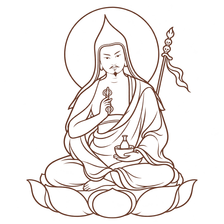
Wangdu: The Prayer which Magnetizes All that Appears and All that Exists
One evening during a Padma Khandro drupchen in Lerab Ling, Rinpoche gave this rare and exceptional explanation of the Wangdu prayer, which, he told us, he had received from Dilgo Khyentse Rinpoche more than fifty years before, but had never shared. Although he wasn’t feeling well, he said, “… I offered this explanation the moment I thought of giving it, because who knows how I’ll feel tomorrow? By then, I might not fancy the idea of sharing these very special instructions with anyone”
在 列绕林 莲花空行母大修期间的一个晚上,仁波切给予了这次罕见而殊胜的《大自在祈祷文》讲解。他告诉我们,五十多年前从顶果钦哲仁波切处领受这份教授后,自己从未与人分享。虽然身体不适,他仍说:「……想到要讲的那一刻,我就作了这个解释,因为谁知道明天我会怎样?到时候,也许就不想把这些非常特别的教授分享给任何人了。」
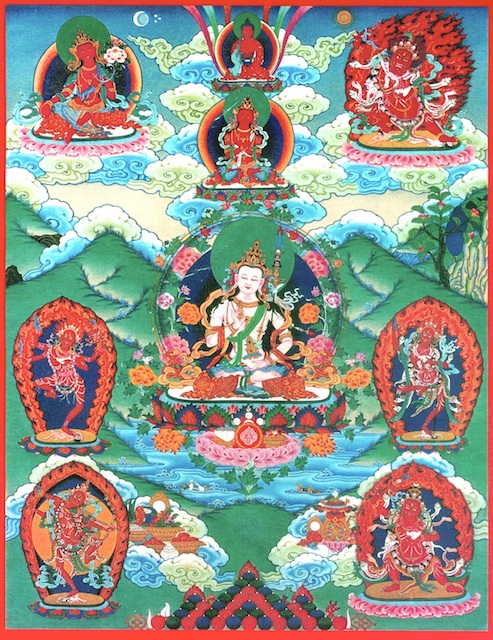
A recent divination said that the Rigpa Sangha must accumulate 10 million recitations of the Wangdu prayer – I’m sure you are already doing it. And actually, everyone here, the Rigpa students as well as the Chokling lamas and monks, has been contributing towards this accumulation, because I told the chant master at the beginning of this drupchen to make sure we recite it ten times every day.
最近一次占卜说,本觉会 僧团必须积累一千万遍《大自在祈祷文》。我相信,你们已经开始念了。实际上,在座每个人,无论 本觉会 学生,还是秋林的上师、僧人,都在为这个念诵数出力,因为这次大修开始时,我就告诉领诵师,确保每天念十遍。
Yesterday, however, I noticed that many of you seemed unable to recite this prayer. I was under the impression that, after Khenpo Jikmé Phuntsok told you to practise the Wangdu in 1993, that it was part of Rigpa's Daily Sadhana Practice book. Yet, most of you didn't even have the text – you had to look instead at the television screens where the prayer was being displayed. Westerners have good eyes so maybe you really were able to read it from the screen, but I wasn't. At first I thought you were looking at the screens because, as you didn't know we were going to do this prayer, you hadn’t brought it with you – after all, yesterday was the first time we recited it. But as the same thing happened again today, there must be another reason.
可是,昨天我注意到,你们许多人似乎不会念这篇祈祷文。我原以为,1993年堪布晋美彭措让你们修《大自在祈祷文》之后,它就已经收入 本觉会 的日修仪轨本。但多数人连文本都没有,只能看播放祈祷文的电视屏幕。西方人眼睛好,也许真能从屏幕读,我却读不了。起初,我以为,你们不知道会念这篇祈祷文,因此没有带来,才看屏幕。毕竟,昨天是第一次念。但今天又是同样情形,一定还有别的原因。
Today, once again, many of you, including the western monks didn't recite the prayer, and as if to follow your example, the Tibetan monks stopped reciting altogether. Some of the tulkus even fell asleep! To be frank, that seems a bit odd to me. If you want to follow the advice of a divination and accomplish the practice it recommends, you should at the very least have a copy of the prayer in front of you, then make the effort to recite the words!
今天,你们许多人,包括西方僧人,再次没有念祈祷文;藏人僧众仿佛照你们的样子,也完全停下来。有些转世者甚至睡着了!坦白说,我觉得有点奇怪。如果想遵循占卜的建议,完成它所推荐的修法,至少应把祈祷文放在面前,再努力念出词句!
释题 Explanation of the Title
The Great Cloud of Blessings: The Prayer which Magnetizes All that Appears and All that Exists
加持大云:摄受一切显有祈祷文
The Wangdu prayer is a mind terma which arose in the wisdom mind of Jamgön Mipham Rinpoche.
There is only one way that it’s possible for people like us “to magnetize all that appears and exists”: by bringing the outer world that appears and the sentient beings who exist within the outer world under control by invoking the magnetizing deities and receiving their blessings.
像我们这样的人,只有一种方法能够「摄受一切显有」:祈请怀业诸尊,获得其加持,由此将显现的外在世界,以及在其中存在的众生,摄于掌握之中。
By bringing all that appears and exists under your control, you will automatically be able to direct your mind and wind energy. Once you are in control of your mind and wind energy, you can actualize the wisdom of Dzogpachenpo and so reach the state of enlightenment. One of the side effects of this practice is that you will also be able to influence ordinary adverse circumstances and transform them into positive ones. For example, by bringing all suffering under control, you will then be able to transform it and bring about happiness.
将一切显有摄于掌握,就会自然能够驾驭自己的心与风。一旦掌握心与风,就能现证大圆满智慧,从而达到觉悟之境。此修法附带的作用之一,是也能影响平常的逆缘,将之转为顺缘。例如,掌握一切痛苦,就能够转化痛苦,带来幸福。
词句的含义 The Meaning of the Words
om ah hung hrih
om ah hung hrih
The text begins with om ah hung hrih, which represent, respectively, the enlightened body, speech, mind and wisdom of all the victorious ones, to whom we offer praise. Although it appears last, hrih is the main syllable and represents the natural radiance of the wisdom of discernment, which is the core seed syllable of the Three Root magnetizing deities.
The ‘support’ of the dwelling place of the magnetizing deities is described as a ‘palace’,
怀业诸尊住处的「所依」,被描述为一座「宫殿」:
Blazing great bliss is the palace of magnetizing activity,
炽然大乐即怀业宫殿,
Here, ‘great bliss’ is to do with the five wisdoms, specifically the wisdom of discernment; and ‘blazing’ indicates that great bliss is not small and that it burns with the intensity of a raging inferno at end of time.
This palace – which is actually the union of great bliss and emptiness and the natural radiance of the wisdom of discernment – is the home of the magnetizing deities. Within the palace, the dynamic energy of the union of bliss and emptiness and the wisdom of discernment arises as various manifestations of wisdom – the ‘wisdom kayas’. “Blazing great bliss, the palace of magnetizing activity,” is therefore the authentic dharmakaya of the Buddha and the ground from which all phenomena arise.
这座宫殿,实际就是大乐与空性的双运,以及妙观察智的自然光辉,是怀业诸尊的住处。宫殿之内,乐空双运与妙观察智的活力,显现为种种智慧形态,即「智慧身」。因此,「炽然大乐即怀业宫殿」,就是真实的佛法身,也是一切法生起的根基。
Where the embodiments of the wisdom of discernment, the union of bliss and emptiness, reside.
乐空双运的妙观察智化身安住其中。
“The embodiments of the wisdom of discernment” are sambhogakaya manifestations of the Buddha – “the union of bliss and emptiness”. Sambhogakayas manifest without ever moving from the dharmakaya, yet arise as sambhogakayas – ‘displaying movement without moving’. In the basic space of Akanishtha, sambhogakayas fully experience and delight in all the ‘great enjoyments’ that can be found throughout the ten directions and four times without exception; ‘great’ indicates that the amount of enjoyment is so vast that it’s inconceivable.
The text has more to say about the sambhogakayas:
接下来,原文进一步说明报身:
Lotuses, blissful yet free from attachment, shine...
具乐而无贪的莲花放光……
Here, there is not even the suggestion of ordinary attachment. Yet, although there is not the slightest attachment, the natural radiance of the energy of great bliss manifests as ‘lotuses’ – which in this case means the deities of the Lotus family whose main activity is magnetizing.
这里,连一丝普通贪著的意味也没有。然而,虽无丝毫贪著,大乐活力的自然光辉,却显现为「莲花」;此处指主要行持怀业的莲花部诸尊。
In our world, everything that appears is revealed quite naturally by the sun and the moon. Taking this as the example, the text goes on to say,
在我们的世界,一切显现自然由日月照明。以此为例,原文接着说:
Like glorious rays of the vajra sun:
犹如金刚日轮的赫奕光芒:
Emptiness, which is like a vajra, is compared to the gloriously radiant sun, which emanates infinite rays of light that eliminate all trace of darkness. In the same way, the sambhogakayas continuously manifest many forms of nirmanakaya throughout time and space, to accomplish the well-being of sentient beings.
如金刚般的空性,被比作赫奕光辉的太阳,放出无量光芒,消除一切黑暗痕迹。同样,报身在一切时空中,不断显现多种化身,成办众生的利益。
Amitabha and Vajradharma – the dharmakayas,
法身阿弥陀佛与金刚法,
Who is it that appears? The deities to whom we are praying. The first is Dharmakaya Amitabha and the consort of the dharmakaya, Vajradharma. Of the five buddha families, we are concerned with the magnetizing lotus family, and so in this case the dharmakaya is Buddha Amitabha of 'Infinite Light'. If you prefer, you can think of Dharmakaya Amitayus – that’s also fine.
谁显现出来?就是我们所祈祷的诸尊。首先是法身阿弥陀佛,以及法身之伴金刚法。五佛部中,我们这里涉及怀摄的莲花部,因此,这里的法身是名为「无量光」的阿弥陀佛。如果愿意,也可以想成法身无量寿佛,这同样可以。
From his own perspective, the Buddha taught in the buddhafield of Akanishtha, and these teachings were then compiled and collected by Vajradharma, who appears with one face and two hands, holding a vajra and bell.
从佛自身的角度,佛在色究竟佛土说法,然后由金刚法汇集、结集这些教法。金刚法显为一面二臂,持金刚杵与铃。
Avalokiteshvara, Lord of the World, the very embodiment of compassion,
慈悲的化身、世间怙主观世音,
Next, the creator of the world. All Hindus believe that the world was brought into being by a creator. For Buddhists, this world came into being as a result of Noble Avalokiteshvara’s compassion, so to us, Avalokiteshvara is known as the ‘Lord of the World’. The Lord of the World can take many different forms, but here we are concerned with the sambhogakaya form of a deity whose manifestation was precipitated by deep solicitude for sentient beings: Avalokiteshvara. He can take many forms, but he is red on the thangka. So, as you recite this prayer, you should visualize the red form of Avalokiteshvara.
接下来,是世界的创造者。所有印度教徒都相信,世界由创造者使之存在。对佛教徒而言,此世界因圣观世音菩萨的悲心而出现,因此我们称观世音为「世间怙主」。世间怙主可以显现许多不同形相;但这里,我们所说的是一位因深切关怀众生而显现的报身本尊——观世音。他可以有许多形相,而唐卡上是红色。因此,念这篇祈祷文时,应观想红色观世音。
Padma Gyalpo, the Lotus King, who rules over samsara and nirvana,
驾驭轮回涅槃的莲花王贝玛嘉波,
The Noble Lord of the World, Avalokiteshvara, emerged from the syllable hrih that appeared in Amitabha’s heart. Guru Rinpoche also emerged from Amitabha’s heart as a syllable hrih, then descended onto a lotus on Lake Dhanakosha, to take the form of Guru Rinpoche.
圣世间怙主观世音,从阿弥陀佛心间出现的 hrih 字生起。莲花生大师也以 hrih 字,从阿弥陀佛心间生起,随后降在达那郭夏湖的莲花上,现为莲花生大师。
Padma Gyalpo is one of Guru Rinpoche’s eight manifestations. He takes the form of the king who has brought all that appears (the universe) and exists (sentient beings) under his control. He is the leader of all the dakinis who dwell in the three planes of existence – those above live in space, those in the middle live on earth, and those below live under the earth. He rules over all beings in samsara and all the buddhas of nirvana – he is intrinsic to all the perfectly enlightened ones. I could say a great deal about Padma Gyalpo[1] ...
贝玛嘉波是莲花生大师八变之一,显为摄受一切显现——宇宙——与一切存在——众生——的国王。他是住于三层处所的一切空行母之首:上方住在虚空,中间住在大地,下方住在地下。他统领轮回中的一切众生,以及涅槃中的一切诸佛,与一切圆满正觉者本来相即。关于贝玛嘉波,我可以讲很多[1]……
Powerful Heruka, subjugator of all that appears and exists,
降伏一切显有的大力嘿噜嘎,
The “Powerful Heruka” is Hayagriva. Every being that lives (existence) in this world (appearance) has no choice but to follow Hayagriva’s command. He is more powerful than any other being; there is no one to equal or even compete with him. Hayagriva is the universal ruler of all that appears and exists. His wisdom intent is enriched by the ‘three neighs’ – which is too vast a subject to explain right now. What you need to understand about Hayagriva as you say this prayer is that there is no one greater or more powerful than “the Powerful Heruka.”
「大力嘿噜嘎」就是马头明王。住在这个世界——显——之中的每一个众生——有——都只能听从马头明王的命令。他比任何其他众生都有力量,没有谁能与之相等,甚至竞争。马头明王是一切显有的转轮王。他的智慧密意由「三次嘶鸣」而增盛,这个主题太广大,现在无法解释。念祈祷文时,对马头明王应有的认识是:没有谁比「大力嘿噜嘎」更高、更有威力。
Guhyajnana and Vajravarahi,
秘密智慧母与金刚亥母,
First, all the victorious ones came together to produce Hayagriva (the male deity) and Vajravarahi (the female deity). These two deities then overpowered Rudra Black Liberation – who ruled over the world at that time – liberating all the chief dakas and dakinis of the twenty-four sacred places, thirty-two sacred lands and eight great charnel grounds. Hayagriva and Vajravarahi then brought into being the buddhafield where the Secret Mantra Vajrayana teachings were first taught.
Supreme Bliss, King of Desire, Wellspring of Great Bliss, and
胜乐、欲王、大乐源泉,以及
Chakrasamvara means “Supreme Bliss” and is the natural expression of the wisdom of great bliss of all the victorious ones. This deity, Chakrasamvara, is practised to some extent in the Nyingma tradition, but chiefly by the Sarma schools.
胜乐,即 胜乐金刚,意为「殊胜安乐」,是一切胜者大乐智慧的自然展现。宁玛传统也在一定程度上修持胜乐,但主要由新译派修持。
Kurukulla, who captivates the mind of every living being without exception,
摄受一切众生心、无一遗漏的作明佛母,
Mighty ones, supreme and ordinary mudras, who exhibit bliss and emptiness as a dance, and
Hosts of vajra dakas and dakinis, who attract and magnetize.
示现乐空妙舞的胜共手印自在众,
以及招引摄受的金刚勇父空行众。
All the lamas, yidams and dakinis gathered before you, appear in the form of “supreme and ordinary mudras”, meaning as deities; and the nature of their “dance” is “bliss and emptiness”. They are the “hosts of vajra dakas and dakinis who attract and magnetize.”
聚集在你面前的一切上师、本尊、空行母,显现为「殊胜与共同的手印」,意思就是诸尊;他们的「舞」的本性,是「乐空」。他们就是「招引摄受的金刚勇父空行众」。
There is something very profound to be understood here. According to the Nyingmapas, all the victorious ones produced Glorious Hayagriva and Vajravarahi, who then relied on the skilful method of union free from attachment, and annihilated and liberated Matam Rudra. They scattered the remains of Rudra’s body throughout the world’s sixty-four power places – twenty-four sacred places, thirty-two sacred lands and eight great charnel grounds – all of which are sacred to Hayagriva and Vajravarahi. Each place is guarded by a chief daka and dakini, who were emanated by Hayagriva and Vajravarahi. As their mandalas have yet to be dissolved, each place continues to be guarded and preserved as sacred fields of the profound Dharma. The qualities of these profound Dharma fields are such that, through the power and blessings of the dakas and dakinis, by visiting just one of them, males will be blessed and become members of the daka family, and females will be blessed and become members of the dakini family. So, “Hosts of vajra dakas and dakinis who attract and magnetize” means not only all these dakas and dakinis, but also all those mentioned in the Chakrasamvara teachings.
这里有一个十分甚深的要点要理解。依宁玛派而言,一切胜者显出吉祥马头明王与金刚亥母,二尊以离贪双运的善巧方法,诛灭并解脱玛当鲁扎。他们将鲁扎的遗体散布到世间六十四处威力之地,即二十四圣境、三十二圣地与八大尸陀林。这些都是马头明王与金刚亥母的圣地,每处都有一位由二尊化现的主勇父与主空行母守护。由于其坛城至今未曾收摄,各处仍被守护,作为甚深佛法的圣境而保存。这些甚深法境的功德是,依勇父空行母的力量与加持,只要参访其中一处,男性就会蒙加持而成为勇父部的一员,女性则蒙加持而成为空行母部的一员。因此,「招引摄受的金刚勇父空行众」,不只指这些勇父空行母,也包括胜乐教法中提及的一切尊众。
According to the Sarma Chakrasamvara teachings, the great god Ishvara and Avalokiteshvara are one and the same. Avalokiteshvara’s great ‘desire free from desire’ took the form of Chakrasamvara, who is by nature great bliss. Chakrasamvara then united with his consort and they made manifest the sixty-four sacred places that appear in this world, which were already present in their bodies. As I’ve said, the dakas and dakinis live in and guard the sixty-four sacred places, their chiefs are the sixty-four deities in Chakrasamvara’s retinue, and this mandala is still intact. This is why its blessings are said to be so swift and powerful.
依新译派胜乐教法,大自在天与观世音是同一位。观世音广大「离欲之欲」,显为本性大乐的胜乐。胜乐随后与佛母双运,使本已存在于二尊身体中的六十四圣地,显现在这个世界。正如我所说,勇父空行母居住并守护六十四圣地,其首领就是胜乐眷属的六十四尊,此坛城至今完整。因此,才说其加持如此迅速而强大。
In the Sarma tradition, the Bhagawan Buddha Shakyamuni, is said to have manifested as Chakrasamvara.
新译传统说,世尊释迦牟尼佛显现为胜乐。
All these deities are born ‘naturally’ or ‘spontaneously’, meaning they are not a wandering consciousness that is reborn in samsara again and again, like you and I. They arise from the dynamic energy of emptiness to benefit sentient beings. Although they ‘appear’, they do not exist objectively in the way sentient beings exist, which is why the text says:
这些尊众都「自然」或「任运」生起,意思是,他们不是像你我一样,在轮回中一再投生、漂泊的心识,而是从空性的活力生起,以利益众生。虽然「显现」,却不像众生那样客观实有,因此原文说:
In the great equality of appearance and emptiness...
于显空大平等之中……
How do all these deities benefit sentient beings?
这些诸尊如何利益众生?
As you move, your vajra bodies reveal the dance that stirs the three realms of existence,
你们的金刚身起舞,舞动三有,
When the deities move their vajra bodies in all sorts of dance movements, all the worlds in the three realms of existence are stirred into motion. In our physical world, all movement and change is actually brought about solely by mind: mind is constantly moving and observes all manner of perceptible arisings. When the gods perform a specific dance, that dance initiates movement and change throughout all the worlds in the three realms of existence. This is what is meant by “...your vajra bodies reveal the dance”. For Indians, the great and mighty lord of this world is called Nataraja, ‘the Lord of the Dance’, who is a dancing god. They say that as long as Shiva Nataraja continues to dance, our world will endure, but if he stops dancing the three realms of existence will cease to exist immediately. The same idea appears here in the Wangdu prayer, with the words: “your vajra bodies reveal the dance that stirs the three realms of existence.”
诸尊以金刚身作种种舞姿时,三界中的一切世界,都被带动起来。在我们的物质世界,一切运动与变化,实际上完全由心带来:心不断移动,观察种种可知觉的生起。当诸神作某种特定舞蹈时,这舞蹈便引发三界一切世界中的运动与变化。这就是「你们的金刚身起舞」的意思。在印度人看来,这个世界伟大而有力的主宰,称为「舞王」,是一位舞蹈之神。他们说,只要湿婆舞王继续跳舞,我们的世界就持续;若他停止舞蹈,三界就立刻不复存在。《大自在祈祷文》的「你们的金刚身起舞,舞动三有」一句,也表达了同样的观念。
Your resounding laughter is the ceaseless enlightened speech that summons the three realms,
嘹亮笑声即无间佛语,召引三界,
“Your resounding laughter” means absolutely all sounds: those produced by nature – the winds in the five elements on the environmental level; and those produced by the sentient beings who live within that environment. The nature of all sounds is the natural sound of enlightened speech, which resounds continuously and unceasingly throughout the three worlds, and “summons the three realms”.
「嘹亮笑声」指一切声音,毫无遗漏:既包括自然所生的声音,也就是器世间五大中的风声,也包括住在其中的众生所发的声音。一切声音的本性,是觉悟语的自然声,不断、无间地遍响三界,「召引三界」。
As rays of red light burst from you, filling samsara and nirvana,
红光从你们身上迸发,遍满轮涅,
Visualize the enlightened mind of all the deities of the mandala in the form of rays of red light that pervade all samsara and nirvana. This red light is wisdom light, and is often said to be like space – a detail that doesn’t appear in this text. All that is said here is that the light is red because of the wisdom of discernment, and that it pervades all samsara and nirvana, penetrating every single nook and cranny. Space has the ability to accommodate the contents of the entire universe – including all the Mount Merus and continents that make up millions of world systems – as well as all the beings who live within that universe. Space is everywhere and like space, the expanse of primordial wisdom is also everywhere and can also accommodate all of samsara and nirvana.
观想坛城一切诸尊的觉悟心,现为红色光芒,遍满轮回涅槃。这红光是智慧光,常被说成如同虚空,不过这一细节没有出现在此文。这里仅说,由妙观察智之故,光为红色;它遍满轮回涅槃,透入每一角落。虚空能够容纳整个宇宙的内容,包括构成数百万世界的一切须弥山与洲,也容纳住于宇宙中的全部众生。虚空无处不在;同样,本初智慧之界也无处不在,能容纳全部轮回涅槃。
The vital essence of existence and peace is quickened and collected –
令有寂精华振发聚集——
When the blessings of the enlightened body, speech and mind are conferred in this way, the result is a sort of miracle: all the pure vital essences of “existence” (the sentient beings who live in the three realms of existence) and “peace” (the buddhas who abide in nirvana) are stirred and quickened. When milk is churned, butter is produced and can then be collected; similarly, by churning samsara and nirvana, the pure vital essence of all that appears and exists can be collected.
觉悟身语意的加持如此赐予时,会产生一种奇迹:「有」,即住于三界的众生,与「寂」,即住于涅槃的诸佛,其一切清净精华,都被搅动、振发。搅动牛奶,会产生酥油,然后可将其收集;同样,搅动轮回与涅槃,就能摄集一切显有的清净精华。
The supreme vajra passion, the enlightened mind,
殊胜金刚大欲,即觉悟之心,
The vital essence of samsara and nirvana that has been gathered is the enlightened mind, the supreme vajra passion for sentient beings. The enlightened mind arises from the dynamic energy of emptiness and is passionate about wanting to help sentient beings.
所摄集的轮涅精华,就是觉悟心,是对众生的殊胜金刚大欲。觉悟心从空性的活力生起,热切希望帮助众生。
Grants the paramount desire of sentient beings: the two kinds of siddhi.
赐予众生至极所愿:二种悉地。
The enlightened mind then benefits sentient beings by giving them everything they have ever wished for, mostly importantly the supreme and ordinary siddhis.
觉悟心由此将众生历来所愿的一切给予他们,以此利益众生,其中最重要的是殊胜与共同悉地。
With your formidable vajra-hooks and lassoes,
You bind the world of appearance and existence in great bliss.
以威猛金刚钩与绢索,
将显有世界系于大乐。
The deities wield vajra-hooks and lassoes – but these hand-held implements are just symbolic. Hooks are used to ensnare and reel things in, and lassoes are used to tie things up, aren’t they? So, thanks to these symbolic hooks and lassos, the whole universe – all the different fields that appear and which contain an inconceivable number of the six types of sentient beings who exist and live in the three realms of samsara, as well as every karma, destructive emotion, delusion and suffering they experience – can be reeled in by the deities’ hooks and bound within the expanse of great bliss by their nooses.
诸尊持金刚钩与绢索,但这些手持法器只是象征。钩用于钩取、牵引,索用于系缚,对不对?因此,依这些象征性的钩索,整个宇宙,一切显现的不同世界,其中住于轮回三界、数量不可思议的六道有情,以及他们所经历的每一种业、烦恼、迷乱与痛苦,都能被诸尊之钩牵引,并以绢索系于大乐界中。
All that appears and exists must be bound in great bliss. We accomplish that binding by using the vajra hooks and lassoes that symbolize emptiness. Only the natural play of the Buddha’s wisdom has the ability to bind appearance and existence in great bliss; nothing else can do it. Once that has been done, limitless manifestations unfurl in a magical display.
一切显有都必须系于大乐。我们以象征空性的金刚钩与绢索,成办这种系缚。唯有佛智的自然游戏,能把显有系于大乐,除此之外,别无其他。一旦如此,无量显现便展开为幻化庄严。
A filigree of limitless magical manifestations
无边幻化交织成网,
“Limitless” means the quantity is not small, it’s boundless – the infinite display of the inseparable union of skilful means and wisdom. These limitless magical manifestations are made up of beings to be tamed, the great beings who tame them, and infinite aspects of kyerim and dzogrim, and so on. When all sorts of things are brought together like this, they form an interconnected net, or “filigree”. In that sense, the “limitless” or immeasurable “magical manifestations” that appear are like a “filigree”.
「无边」表示数量不小,而是没有边际,是方便与智慧不可分离双运的无尽展现。这些无边幻化,由所化众生、能化大士,以及无尽的生起次第、圆满次第等不同方面构成。当种种事物如此聚合,就形成彼此交织的网,也就是「网饰」。就这一意义而言,所显现的「无边」或无量「幻化」,如同「网饰」。
“Manifestations” means that the multitude of deities are extrinsic and therefore appear externally. Some manifestations arise to liberate one being, others to liberate many. In some situations, an incalculable number of magical displays might arise just for the sake of a single being. So here, the deities don’t manifest one or two at a time, there are so many of them that they are like seeds in a sesame pod.
「显现」表示众多诸尊显于外,因此向外呈现。有些显现为了解脱一个众生,有些为了解脱许多众生。有时,仅为一个众生,就可能出现不可计数的幻化。因此,这里不是一次只显现一两位本尊,而是多如芝麻荚中的籽实。
Fill the whole of space like seeds in an open sesame pod.
如开启芝麻荚中的籽实般遍满虚空。
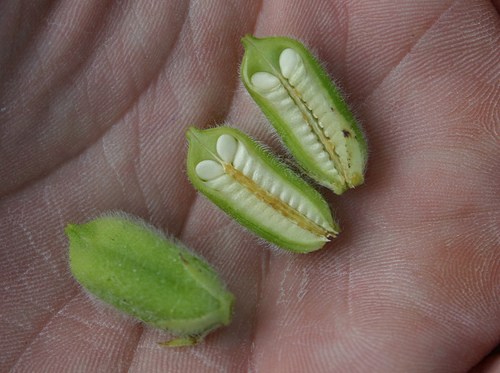
If you have never opened a sesame pod you won’t know this, but what you see is that the pod is completely packed with seeds[4] . In the same way that sesame seeds fill a sesame pod, these multitudinous deities, who have the ability to effortlessly and spontaneously give us everything we have ever wished for, fill all three realms of existence.
如果从未打开过芝麻荚,你就不知道;打开会看到,里面密密麻麻全是籽实[4]。正如芝麻籽充满芝麻荚,这些能够无勤任运给予我们历来一切所愿的无数诸尊,也遍满整个三界。
To this vast array of the Three Roots, hosts of magnetizing deities,
向此浩瀚三根本、怀业尊众,
“Vast array” brings the sense of a great many, so we pray to all the magnetizing deities – the main ones are the deities of the Three Roots (lama, yidam and khandro).
「浩瀚」含有数量极多之义,因此,我们向一切怀业诸尊祈祷,其中主要是三根本尊众,即上师、本尊与空行母。
In devotion we pray. Inspire us with your blessings,
我们虔诚祈请:请赐加持,
When we invoke that many deities, what should we ask for? We should pray that they grant us every one of the infinite ordinary and supreme attainments. We should also pray that they grant us the ability, or siddhi, to magnetize whatever we desire without any difficulty whatsoever.
祈请这么多诸尊时,应请求什么?应祈祷赐予无量共同与殊胜成就中的每一种,也应祈祷赐予毫无困难地摄受一切所欲的能力,或悉地。
Grant us attainments, ordinary and supreme, and the siddhi
Of magnetizing whatever we desire, without obstruction.
赐予共同与殊胜成就,
以及无碍摄受一切所欲之悉地。
To accomplish the supreme siddhi, which is the attainment of complete and perfect buddhahood, we must realize the view. Once we have realized the view of Dzogpachenpo or Mahamudra, we will attain supreme accomplishment.
要成就殊胜悉地,也就是圆满正等觉佛果,必须证悟见地。一旦证悟大圆满或大手印的见地,就会获得殊胜成就。
At the same time, we also pray for ordinary accomplishments, including the four activities of pacifying, enriching, magnetizing and subjugating, and the eight accomplishments – which are lesser accomplishments – like the ability to see through solid matter, fleet-footedness, to become invisible, to fly, and so on. So, with the words, “please grant us the siddhi of magnetizing!” we pray that the deities grant us everything we need, wish for and desire, without any difficulties arising. We couldn’t wish or pray for anything more than the supreme and ordinary accomplishments – there is nothing better.
同时,我们也祈求共同成就,包括息灾、增益、怀摄、降伏四事业,以及较低的八种成就,例如透视坚实物体、神足、隐身、飞行等等。因此,以「请赐怀摄悉地」之语,祈祷诸尊毫无困难地赐予我们所需、所愿、所欲的一切。我们不可能祈愿比殊胜与共同成就更多的东西,没有比这更好的了。
Among the siddhis we pray for are all the minor accomplishments, like having a long life, becoming rich, being physically beautiful, having a beautiful voice, enjoying good health free from illness, and so on.
我们所祈求的悉地,也包括一切较小的成就,如长寿、富有、容貌美好、声音悦耳、健康无病等等。
This concludes a very brief explanation of the words of the Wangdu prayer.
以上,就是对《大自在祈祷文》词句极简要的解释。
念诵《大自在祈祷文》时应如何做 What to Do while Reciting the Wangdu Prayer
Imagine in the sky before you, the palace of magnetizing activity – a conflagration of blazing red light. Meditate on that image and visualize all the deities I have mentioned inside the palace, like people in a market place. To learn what these deities look like – their faces, hands, ornaments, clothing and so on – look at the thangka and do your best to visualize them based on how they are presented there.
观想自己前方虚空,现出怀业宫殿,一片炽燃的红光。观修这一形象,将我所提及的一切诸尊,观想在宫殿内,如同集市上的人群。要了解他们的面、手、饰物、衣服等形相,就看唐卡,尽力依其所绘观想。
The most important aspects of this visualization are: the dance of the vajra bodies of the deities, which stirs the three planes of existence; the deities’ enlightened speech, which is graced with the melodious qualities of Brahma’s voice; and the blazing red light.
这一观想最重要的方面是:诸尊金刚身之舞,舞动三有;诸尊的觉悟语,具足梵音妙韵的功德;以及炽燃的红光。
As you meditate, don’t just think about the deities named in the prayer, imagine a vast throng of countless deities filling the palace “like seeds in a sesame pod” – an uncountably vast number of deities, like the rays of the sun, beyond imagining; and for example, in every pore of each deity’s skin is a ‘World of Endurance’, a ‘trichiliocosm’ of buddha fields. The deities should be vividly present, joyfully happy and laughing as they rejoice at all the benefit they bring to sentient beings.
观修时,不要只想祈祷文中点名的诸尊,应观想无数诸尊聚成广大尊海,「如芝麻荚中的籽实」般充满宫殿。数量不可计量,如太阳光芒,不可想象。例如,每位本尊皮肤的每个毛孔中,都有一个「娑婆世界」,一个「三千大千世界」的佛土。诸尊应鲜明现前,欢喜快乐,以笑声随喜自己为众生带来的一切利益。
As we recite this prayer, we are repeating Mipham Rinpoche’s original vajra words.
念诵这篇祈祷文时,我们是在重复米滂仁波切原有的金刚语。
结语 Conclusion
You now have some understanding of what this prayer means. At this point, the instruction usually given is that you should practise “remembering the meaning after the words”. So, you must now actualize the meaning of the words as you say them.
现在,你们对这篇祈祷文的含义,已有一些理解。此时通常给予的教授,是「随文忆义」。所以,现在念出词句时,必须令其含义现前。
When you pray using words like these, you invoke the wisdom mind and sacred pledges of all these deities whose minds, from beginningless time, have been focused on helping sentient beings. As these deities are invoked, they express their joy by laughing; their wisdom minds are filled with a great love from which rays of red light stream out to all the corners of space, where they gather the vital essence of conditioned existence and ultimate peace. This is how you bring the three realms of existence and the sentient beings of the six realms under your control. And you should feel complete confidence when you say, “I have now gained these accomplishments!”
以这样的词句祈祷,就会唤起这些诸尊的智慧心与神圣誓愿。他们的心,自无始以来始终专注于帮助众生。诸尊被祈请时,以笑声表示欢喜;智慧心充满广大慈爱,从中流出红色光芒,遍至虚空每个角落,摄集有为三有与究竟寂静的精华。这样,就能将三界及六道众生摄于掌握。当你说「我现在已经获得这些成就」时,应生起完全的确信。
This is what you should think as your recite the prayer.
念诵祈祷文时,就应这样想。
Prayers are for ordinary people like myself, who have no qualities or realization. Those of you with great realization will be able to remain within the expanse of the view.
祈祷适合像我这样,没有功德、没有证悟的普通人。你们之中证悟高的人,则能够安住于见地之界。
We pray to receive the blessings of great beings’ compassion. But if even the likes of Jamyang Khyentse Wangpo said, “I, Kunga Tenpe Gyaltsen[5] , place my hopes in prayers for the path of liberation,” it’s clear that for someone like me, there is no hope but prayer because it’s the only method I can actually practice. Just to pretend to remain in samadhi doesn’t do any good at all. This is why I mentioned at the beginning of this talk noticing how many of you seem to be trying to dwell in samadhi while the rest of us recite the Wangdu. You really shouldn’t just ‘sit’ through a prayer recitation.
我们祈祷,是为了获得大德悲心的加持。但就连蒋扬钦哲旺波这样的人都说:「我贡嘎丹贝嘉参[5],将解脱道的希望寄于祈祷。」显然,像我这样的人,除了祈祷别无希望,因为这是我唯一真正能修的方法。只是假装安住三摩地,一点好处也没有。因此,我在开头才提到,注意到我们其他人念《大自在祈祷文》时,你们许多人似乎在尝试安住三摩地。大家念祈祷文时,你实在不应该只在那里「坐着」。
When I was sixteen, Dilgo Khyentse Rinpoche came to Bir. One day, he took a short text – red printed on white paper – from his prayer collection and gave it to me, saying, “It’s good to recite this from time to time.” I asked him for the reading transmission and instructions on how to meditate on it, and he said something similar to what I have just told you – maybe in fewer words. He then said that I should now recite this prayer. So since then, I make sure I recite this prayer every now and again.
我十六岁时,顶果钦哲仁波切来到比尔。一天,他从自己的祈祷文集中,取出一篇白纸红字的短文给我,说:「时不时念一念这个,很好。」我向他请求口传与如何观修的教授。他讲的与我刚才所说相似,也许用词更少。然后,他说,我现在应该念这篇祈祷文。因此,从那时起,我就确保时不时念一念。
These days the Wangdu is quite widely known. I have bumped into a number of people over the years who have asked me to explain it. Until now, I have pretended not to know anything about it, to avoid spelling out what it actually means. However, as you will be accumulating a great many recitations of this prayer, if there were ever a time for this teaching to be useful, it’s now.
如今,《大自在祈祷文》已经相当广为人知。这些年,我遇到过不少人,请我解释。直到现在,我都假装对此一无所知,以免把它的实际含义说出来。不过,你们即将积累大量念诵;若这教言有一个能发挥作用的时机,那就是现在。
I offered this explanation the moment I thought of giving it, because who knows how I’ll feel tomorrow. By then, I might not fancy the idea of sharing these very special instructions with anyone.
想到要讲的那一刻,我就作了这个解释,因为谁知道明天我会怎样。到那时,也许就不想把这些非常特别的教授分享给任何人了。
Translated by Gyurmé Avertin
Edited by Janine Schulz
英译:久美·阿韦尔坦
编辑:雅尼娜·舒尔茨
原注 Notes
出处与版本
原刊:ALL-OTR · Wangdu: The Prayer which Magnetizes All that Appears and All that Exists。讲授:13th November 2013;Lerab Ling, France。原刊发布日期:2017-07-08。