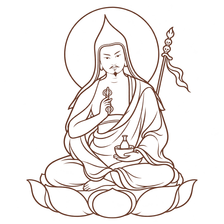
Buddha Amitābha and the Pure Land of Sukhāvatī
1. 阿弥陀佛与极乐净土 1. Buddha Amitābha
and the Pure Land of Sukhāvatī
FIRSTLY, I’D LIKE to offer you all my greetings by saying, Tashi Delek,
according to our custom in Tibet.
首先,依照西藏的习俗,我向大家说一声“扎西德勒”,以致问候。
I’ve been here to Sukhāvatī once before, just after you bought the
land, to perform a consecration ritual. And now on this occasion,
I’ve been invited to return to talk to you about phowa and a few
other related topics.
我以前曾来过这里极乐中心一次,就在你们买下这块地之后,来作开光仪式。这次我又受邀回来,向你们讲讲颇瓦法及一些相关主题。
In the Tibetan Buddhist tradition, firstly you receive teachings
from a qualified master and then you put them into practice, with
the intention of freeing yourself from the cycle of birth and death
that is our conditioned existence. That’s the proper way to follow the
path of dharma.
在藏传佛教传统中,首先从具格上师处领受教法,随后付诸修持,目的是使自己从我们所处的有为生存——生死轮回——中解脱出来。这才是行持佛法之道的正确方式。
According to the tradition of India and Tibet, when a teaching
is given, the teacher is seated on a high throne as a mark of respect.
Actually it should be a throne that is mounted on lions, if you
follow the tradition exactly. The students sit lower on the floor, offer
prostrations and fold their hands together to show their respect. Both
the teacher who gives the teaching and the students who receive it
should call to mind the proper motivation. This is explained in great
detail in the Bud<dhist teachings—the appropriate motivation that
you should cultivate, how you can avoid negative frames of mind,
and the proper conduct that you need to follow. This tradition goes
back thousands of years.
按照印度与西藏的传统,传法时,上师坐在高高的法座上,以示尊敬。其实,若完全依传统,应当坐在狮子承托的法座上。弟子坐在较低的地上,顶礼、合掌以表敬意。传法的上师与闻法的弟子,都应忆念正确的发心。佛教教法对此有极为详尽的说明:应当培养怎样的适当发心,如何避免不善的心态,以及应该遵循怎样的正确行为。这一传统已有数千年的历史。
Today, however, I’m not going to follow this tradition. Nowadays,
when someone expounds the Dharma we call that a ‘teaching’. The
word ‘teaching’ in English has a connotation of study, rather like
the study you do at school. Basically, the teacher explains something
to you that you didn’t know before, so that you can acquire that
knowledge. These days, we don’t particularly follow those old
customs where the teacher sits on a high throne and the students
prostrate before him, sitting with their hands folded at their heart
while they receive the teaching. I’ll sit on the throne just for today,
since you’ve already placed it here for me, but from tomorrow I won’t
do that.
不过,今天我不打算遵循这个传统。如今,有人讲解佛法,我们就称之为“teaching(教学)”。英语中的 teaching 带有学习的意味,有点像在学校里学习。基本上,就是老师向你解释一件你原先不知道的事,让你获得那份知识。现在,我们并不特别遵循那些旧习俗:老师坐在高高的法座上,弟子向他顶礼,坐着在胸前合掌听法。今天我就坐在法座上,因为你们已经替我摆在这里了;不过从明天起,我就不这样做了。
Even though, normally, it’s quite important that you have the
thought in your mind, “I’m receiving a teaching from a lama”, I’m
asking you here not to think like that. Instead, I want you to simply
think, “I’m here to gain some knowledge and learn about things that
I didn’t know before.” That’s all.
通常,心中怀有“我正在从一位上师处领受教法”这样的想法,确实很重要;但在这里,我请你们不要这样想。我只希望你们想:“我是来获得一些知识、了解一些从前不知道的事。”仅此而已。
When you receive a teaching, your intention should be to put
it into practice, to apply it single-mindedly. Furthermore, your
motivation for doing this should be based on the wish to liberate all
sentient beings who pervade the expanse of space from the ocean-like
suffering of saṃsāra. If you truly hold that attitude in your heart and
mind, it is said to generate an infinite amount of merit—both for
the teacher who expounds the teaching and the student who listens.
This merit should in turn be dedicated towards the enlightenment of
all sentient beings. These are the ‘three noble principles’: good in the
beginning, good in the middle and good in the end.
领受教法时,应当立意付诸实践,专一运用。进一步说,这样做的发心,应是希望将遍满虚空的一切众生,从轮回如海的痛苦中解脱出来。据说,若真正在心中持有这种态度,无论讲法的上师还是听法的弟子,都能生起无量功德。这些功德又应回向一切众生成就正觉。这就是“三殊胜”:初善、中善、后善。
The topic that we will be discussing today is not so easy to explain
or understand, but let’s continue.
今天要谈的主题,并不那么容易解释或理解,但我们还是继续吧。
Normally when you study something, if you find the information
to be useful, you will retain it and use it later. If it’s not useful, you’ll
simply forget about it. That’s the kind of attitude I want you to have
here today.
通常,学习某件事时,若发现这些知识有用,你会记住,以后加以运用;若没有用,就把它忘了。我希望你们今天在这里抱持的,就是这样的态度。
You should know that we lamas will never force you to do
anything. You receive teachings in order to learn about something
and to then apply it in practice. You’re completely free to choose
whether you want to do this or not, it’s your choice. You’re all adults
here in this room, so each one of you needs to think personally
whether or not you want to follow this teaching. Please don’t come
to me afterwards saying that I forced you to be here, that I misled
you, or anything like that! It’s your decision to be here.
你们要知道,我们这些喇嘛绝不会强迫你们做任何事。你们领受教法,是为了了解某件事,然后付诸修持。要不要这样做,完全由你们自由选择,是你们自己的决定。在座都是成年人,所以每个人都需要自己想一想,要不要遵循这个教法。请不要事后跑来对我说,是我强迫你来这里、我误导了你,诸如此类!来这里是你自己的决定。
Now let’s begin with the actual topic of today, which is phowa.
Phowa is a Tibetan word which means ‘transference’; transference
from one place to another. When you say, for example, that you’re
moving house from one location to another the same word (phowa)
is used in Tibetan. The phowa that we are speaking of here, however,
refers to the transference of our consciousness from the realm of
saṃsāra (conditioned existence), which is likened to an ocean of
suffering, to a ‘pure field’ where we only experience well-being and
bliss. We transfer our mind from an impure field, somewhere in
saṃsāra, to a pure field that brings us much closer to enlightenment,
a place where we can follow the path to the omniscient state of
liberation.
现在开始今天真正的主题:颇瓦法。Phowa 是藏语,意为“迁移”,即从一个地方迁到另一个地方。例如,你说从一个地方搬家到另一个地方,藏语也用同一个词 phowa。不过,我们在这里所说的颇瓦,是将心识从譬喻为苦海的轮回境界——有为的生存——迁往唯有安乐与大乐的“清净刹土”。我们把心从轮回某处的不净刹土,迁往一个让我们更接近正觉的清净刹土,在那里可以行于通向遍智解脱之境的道路。
So we transfer ourselves from the condition in which we find
ourselves now, to somewhere else. That ‘somewhere else’ needs to be
clearly identified. For example, if you want to travel somewhere, you
need to know where your destination is, otherwise you’ll never reach
there. In this case, since we are explaining the practice according to
the tradition of Longchen Nyingtik, the place that we are aiming
for, that we wish to transfer ourselves to, is the pure land of Buddha
Amitābha, which is called ‘Sukhāvatī’.
所以,我们是从当前所处的状态,迁往另一个地方。这个“另一个地方”必须明确。例如,若想去某处旅行,就需要知道目的地在哪里,否则永远到不了。在这里,我们依龙钦心髓传统讲解修法,因此所向往、希望迁往的地方,就是阿弥陀佛的净土,名为“极乐世界”。
Who first spoke about the protector Amitābha and his pure land?
Who discovered it? And where is it? I’m a hundred per cent sure you
will ask questions like this! In all likelihood, a Tibetan, Chinese or
Japanese person would never ask such questions, but you—almost
certainly, you will. So let’s clarify these points.
是谁最先谈到怙主阿弥陀佛及其净土?是谁发现的?它在哪里?我百分之百肯定,你们会问这样的问题!藏族、中国人或日本人很可能从来不会问这种问题,但你们——几乎肯定会问。所以,我们先把这些事情说清楚。
The person who first spoke about this pure land is known as, ‘The
One who Dispels the Darkness of Sentient Beings’—the completely
enlightened Buddha Śākyamuni, the fourth Buddha of our era. The
word ‘buddha’ in Tibetan is ‘sangye’ which comprises two syllables
which mean ‘purified’ and ‘fully blossomed’. A fuller explanation
of the term is: ‘purified of the veil of obscurations so that all the
qualities of wisdom fully blossom’. This is what we call a buddha. To
put it simply, a buddha is someone who knows everything and has
reached their full potential.
最先讲述这一净土的人,称为“遣除众生黑暗者”——圆满正觉的释迦牟尼佛,我们这一时代的第四尊佛。藏语称佛为“sangye”,由两个音节组成,意思是“清净”与“完全开展”。更完整地说,就是“清净障垢之幕,使智慧的一切功德完全开展”。这就是我们所说的佛。简言之,佛就是了知一切,并使自身潜能完全开展的人。
When we come to speak about the different practices for the
moment of death, such as phowa and purification, we need to go a
little more deeply into what we mean by a buddha. In particular, we
need to look into the explanations found in the Nyingma tradition
which describes the buddha as being endowed with the three
kāyas. These three kāyas are the dharmakāya, saṃbhogakāya and
nirmāṇakāya. We don’t need to go into the history or background of
these three kāyas but some explanation is needed.
讲到死亡时刻的各种修法,例如颇瓦法与净障时,就需要更深入一点地说明“佛”的含义。尤其需要看看宁玛传统的解释,其中说佛具足三身,即法身、报身与化身。我们不必追溯三身的历史或背景,但仍需作一些解释。
The dharmakāya pervades all sentient beings, which is why it can
be of benefit to them. If it didn’t, it would have no power or ability
to be of any help. The problem is, we just don’t see it. Next there’s
the saṃbhogakāya which is like the unfolding of the dharmakāya, in
a more manifest form. These two buddha manifestations, however,
still need to come to the level of sentient beings in order to be of actual
benefit to them. Therefore we have the nirmāṇakāya manifestations,
which are the ones that can benefit sentient beings.
法身遍于一切众生,因此能利益他们。若非如此,就没有力量或能力给予任何帮助。问题在于,我们就是看不见。接着是报身,仿佛法身以更明显的形态开展出来。然而,这两种佛的显现,仍须来到众生的层面,才能真正利益他们。因此有了化身的显现,也就是能利益众生的身相。
When we refer to the Buddha Śākyamuni, we speak of him as
a nirmāṇakāya manifestation who has the power to help human
beings. The nirmāṇakāya Buddha Śākyamuni is spoken of in
different ways according to the different levels of Buddhist teaching.
To put it simply, when we speak of the Buddha Śākyamuni, we are
referring to the one who reached full enlightenment at the Vajra Seat
in Bodhgayā, and who turned the wheel of dharma at Vārāṇasī. I’m
sure you all know about the life story of the Buddha.
说到释迦牟尼佛时,我们说他是一位有能力帮助人类的化身显现。不同层次的佛教教法,对化身释迦牟尼佛有不同的说法。简单来说,我们提到释迦牟尼佛,指的是那位在菩提伽耶金刚座上圆满成佛、在瓦拉纳西转法轮的佛。我相信大家都知道佛陀的生平。
《阿弥陀佛经》 The Amitābha Sūtra
IN GENERAL, BUDDHAS benefit beings through their ‘twelve deeds’.
According to the perception of sentient beings, these twelve deeds
encompass the entirety of the Buddha’s life and actions. The Buddha
himself has never been deluded, as he said, “Even though I have
never been born, yet I appear in the perception of sentient beings”.[1]
一般而言,诸佛通过“十二相成道”利益众生。依众生的所见,这十二种事业涵盖佛陀一生及其全部行迹。佛陀自身从未迷乱;正如他所说:“虽然我从未出生,却显现在众生的知觉之中。”[1]
Amongst all the different activities of the Buddha, the one that
is of greatest benefit to sentient beings is the ‘inexhaustible wheel
of enlightened speech’, i.e. giving teachings. This is described as
‘turning the wheel of the dharma’ and we speak sometimes of the
three yānas or vehicles, or nine yānas, and so on. What we will focus
on here today is the sūtra level of teachings and within that category,
the sūtras of the Mahayāna vehicle. Specifically, we will be looking
into the Amitābha Sūtra which was taught by the Bhagavān Buddha
Śākyamuni.[2]
在佛陀种种事业中,最能利益众生的是“无尽佛语轮”,即传授教法。这称为“转法轮”;有时我们说三乘,有时说九乘,等等。今天我们关注的是经乘教法,其中又特别关注大乘经典。具体来说,我们要探讨世尊释迦牟尼佛宣说的《阿弥陀佛经》。[2]
In this Sūtra we find the following verse. Firstly, the Buddha
addresses himself to Ānanda who stood at the head of a vast assembly
of monks who had gathered for the teaching:
这部经中有如下经文。首先,佛陀向阿难说话;阿难站在为听法而聚集的广大比丘众之首:
Ānanda, every sentient being who repeatedly brings to mind the
appearance of this thus-gone one, cultivates countless roots of virtue,
fully dedicates them towards the attainment of enlightenment by
giving rise to bodhicitta, and prays to be reborn in that world, will
see the thus-gone one, the foe-destroyer, the completely enlightened buddha Amitābha, surrounded by many assemblies of monks,
appear in front of them when the time of death gets close; as their
minds are filled with sincere faith during death and transference
upon meeting the bhagavān Amitābha, they will be reborn in
Sukhāvatī, ‘the realm of bliss’.
阿难,凡有众生,反复忆念这位如来的身相,培植无量善根,发起菩提心,将这些善根悉皆回向成就正觉,并祈愿往生彼世界;当死亡临近时,他们便会见到如来、应供、圆满正觉的阿弥陀佛,在众多比丘众围绕下,现于面前。临终迁识之际,因见到世尊阿弥陀佛,心中充满真诚信心,他们便会往生极乐——“安乐之刹”。
These are the words spoken by the Buddha himself and as
Buddhists, we regard anything that he says as being utterly true and
flawless. This is how we relate to the Buddha’s teachings, we don’t
consider there’s the slightest trace of fault or error in anything that he
said. Of course, if you don’t have that kind of faith in the Buddha’s
words, there’s nothing I can do! It’s quite possible you might doubt
what he said, since these days there seem to be many people who
don’t trust what the Buddha taught.
这是佛陀亲口所说。作为佛教徒,我们认为他所说的一切都完全真实、毫无瑕疵。我们是这样看待佛陀教法的:不认为他所说的任何话有丝毫过失或错误。当然,若你对佛语没有这种信心,我也无能为力!你完全可能怀疑他所说的话,因为如今似乎有很多人不相信佛陀的教导。
It is said of all the teachings that the Bhagavān Buddha Śākyamuni
gave, the Amitābha Sūtra and the Sūtra on the Array of the Tathāgata
Akṣobhya are of greatest benefit to sentient beings. The sūtra that
presents the names of Amitābha, the pure field of Sukhāvatī that
he manifests, and his mantra, and the sūtra that presents the pure
fields that Akṣobhya manifests, the benefits of hearing his name, and
his mantra, are said to be of greatest benefit to people living in this
current age.
据说,在世尊释迦牟尼佛宣说的一切教法中,《阿弥陀佛经》与《不动如来庄严经》对众生的利益最大。前一部经宣说阿弥陀佛的名号、他所显现的极乐净土及其咒语;后一部经宣说不动佛所显现的净土、听闻其名号的利益及其咒语。据说这两部经,对生活在当今时代的人利益最大。
To put it simply, the Bhagavān Buddha Śākyamuni taught the
Amitābha Sūtra since he knew it would be of great benefit to those
beings fortunate enough to hear it.
简言之,世尊释迦牟尼佛宣说《阿弥陀佛经》,是因为他知道,这将极大地利益那些有缘听闻它的众生。
The teaching was given whilst the Buddha was staying at a place
called Śrāvastī. In this teaching, he explained that far beyond the
western horizon, slightly elevated above, beyond countless buddha
fields, lay the pure realm of Buddha Amitābha, known as Sukhāvatī.
佛陀住在一个名叫舍卫城的地方时,宣说了这一教法。他在教法中解释:远在西方天际之外、位置略高之处,越过无量佛土,有阿弥陀佛的清净国土,名为极乐世界。
In this buddha field, there’s not the slightest trace of any kind of
impurity. Right now, we live in the buddha field of Buddha Śākyamuni
where both pure and impure appearances exist. In Sukhāvatī, the
Pure Land of Great Bliss, there’s no impurity whatsoever, everything
that appears is utterly pure. If you want to know what pure and
impure appearances are, a lot of explanation would be needed—but
I don’t think there’s any point to go into that now. I heard that many
years ago, when a lama was giving a teaching about Sukhāvatī here
in Germany, he stated that there were no women in Amitābha’s pure
land. The translator, who was a nun, instead of translating what
he said, turned on the lama and asked him angrily, “Why are you
saying this?”. She then started to argue with him.
这个佛土中,丝毫没有任何不净的痕迹。现在,我们住在释迦牟尼佛的佛土,清净与不净的显现都有。在极乐大乐净土中,没有任何不净,一切显现都全然清净。若要了解什么是清净与不净的显现,就需要作许多解释——不过,我觉得现在没有必要展开。听说多年前,一位喇嘛在德国这里讲极乐世界,说阿弥陀佛净土中没有女人。担任翻译的是一位尼师,她没有翻译这句话,反而转身生气地问那位喇嘛:“你为什么这样说?”随后便开始跟他争论。
There’s a lot to explain and understand about the purity of this
buddha field. If you want an idea of what Buddha Amitābha’s pure
realm is actually like, you should read the Aspiration for Birth in
the Pure Realm of Sukhāvatī composed by Karma Chakmé.[3] The
buddha field is described in great length and detail there. To give
you just some examples, it is said that when you walk in Sukhāvatī,
the ground is exceptionally soft and rises to support your feet with
each new step that you take. The land is full of jewel mountains and
wish-fulfilling trees, and the sound of the dharma can constantly
be heard. Even though there are no women to be found, there are
hosts of beautiful goddesses constantly making offerings there. This
is how the buddha field is described.
这个佛土的清净,有许多需要解释和理解之处。若想知道阿弥陀佛净土究竟是什么样子,可以读噶玛恰美所作的《往生极乐净土愿文》。[3]其中对这一佛土有极为广泛、详细的描述。这里只举几个例子:据说,在极乐世界行走时,地面极其柔软,每迈一步,地面都会升起承托双足。国土遍满宝山与如意树,恒常能听到法音。虽然那里没有女人,却有无数美丽的天女不断作供养。这就是对这一佛土的描述。
The buddha of this pure realm is Amitābha. Why did Amitābha
choose to stay in this particular buddha field and to take care of it?
The reason is that while he was still a bodhisattva, before he became
a fully-enlightened buddha, he made forty-eight great vows, which
are explained in The Array of Amitābha Sūtra.[4] Amongst them was
the repeated, magnanimous wish to manifest this pure realm in
order to free all sentient beings from their suffering. Once he became
enlightened, he then took care of this buddha field. The buddha
field arose as a direct result of all the merit he had accumulated over
countless kalpas while accomplishing those forty-eight great vows.
Amitābha has remained in Sukhāvatī ever since, for a length of
time equivalent to fifteen days of the Buddha’s life. According to
how we measure time, the Buddha appeared in our world 2,500
years ago, but the equivalent span of time in Sukhāvatī measures
just fifteen days. This is the explanation that I heard from Dilgo
Khyentse Rinpoche.
这一净土的佛是阿弥陀佛。为什么阿弥陀佛选择住在这个佛土,并摄持它?原因是,他尚为菩萨、未圆满成佛之前,发了四十八大愿,《阿弥陀庄严经》中对此有解释。[4]其中包括,他一再广大地发愿,要显现这一净土,使一切众生离苦。成佛之后,他便摄持这个佛土。此佛土直接源于他在无数劫中成办四十八大愿时积集的一切功德。此后,阿弥陀佛一直住在极乐世界;若以佛陀一生的时间相较,那段时间相当于十五天。按我们的时间计算,佛陀在二千五百年前出现于世;相应的时间跨度,在极乐世界却只有十五天。这是我从顶果钦哲仁波切那里听到的解释。
Amongst all those forty-eight great vows, the most important was
the one in which Amitābha prayed that whoever hears his name at
the moment of death, and supplicates him with a pure heart and
mind, would immediately be reborn in the pure land of Sukhāvatī.
He made the firm pledge, “If, when I attain buddhahood, sentient
beings who think of me, who cultivate roots of virtue, and who
sincerely dedicate their merit towards rebirth in my pure land,
should not have their wish fulfilled, may I not attain that perfect
enlightenment.” The result of that aspiration, which he made whilst
still a bodhisattva, is that whoever hears his name and prays to him
with pure faith and longing at the moment of death, will be reborn
in the pure realm of Sukhāvatī. This is all due to the power of his
prayer and the vast way in which he generated bodhicitta.
四十八大愿中,最重要的一愿是:凡在临终时听闻阿弥陀佛名号,并以清净的心祈请他的人,都能立即往生极乐净土。他坚定地发愿:“若我成佛时,忆念我、培植善根,并真诚回向功德以求往生我净土的众生,不能满愿,愿我不成圆满正觉。”他尚为菩萨时所发此愿的结果,就是任何人在临终时听闻其名号,以清净信心与渴慕向他祈祷,都能往生极乐净土。这完全是他的愿力与广大发菩提心所致。
From our limited human perspective, perhaps even greater still was
the aspiration that he made that simply by hearing his name whispered
into its ears, even an animal would be reborn in Sukhāvatī when it
died. They would go directly to Sukhāvatī, without taking any other
rebirth along the way. I can distinctly remember times when we were
driving through the countryside with Dilgo Khyentse Rinpoche, he
would suddenly shout out, “Gonpo Öpame!” (Protector Amitābha!)
whenever we passed by an animal in the fields, such as a cow.
从我们有限的人类视角来看,也许更为伟大的,是他所发的另一愿:即使是动物,只要耳边有人轻声念诵他的名号,它在死后也会往生极乐世界,直接到达,不在途中投生别处。我清楚记得,有时陪顶果钦哲仁波切乘车经过乡间,一遇到田野里的动物,例如一头牛,他便会突然大声喊:“怙主无量光佛!”
If you want to know more about these forty-eight vows, you
should look into the commentary written by Lama Mipham
Rinpoche.[5] You will find more explanation there.
The next question you’ll probably ask is, “Does Amitābha live
all alone in the buddha field of Sukhāvatī?” The answer is no, he
does not. He has two main companions, who remain by his side—
Avalokiteśvara and Vajrapāṇi—but there are millions upon millions
of other bodhisattvas who also gather around him.
若想进一步了解四十八愿,应当阅读米滂仁波切上师所写的注释。[5]那里有更多解释。你们接下来大概会问:“阿弥陀佛独自住在极乐佛土吗?”答案是否定的。他有两位主要随侍,常住其侧——观世音与金刚手;但他周围也聚集着千千万万其他菩萨。
You might well ask, “If there are no women in Sukhāvatī, how
is it possible to be reborn there?” The answer is that when you are
reborn in Sukhāvatī, you are miraculously born in the heart of a
lotus flower. This is an important point to clarify, right? This is one
of the special qualities of this buddha field. Just to think about this
buddhafield brings immense benefit.
你们很可能会问:“如果极乐世界没有女人,人怎么能在那里出生?”答案是:往生极乐世界时,你会在莲花中央化生。这一点很重要,应当说清楚,对吧?这是此佛土的一项殊胜功德。仅仅忆念这个佛土,就有极大利益。
往生极乐世界的四因 The Four Causes that Lead to Rebirth in Sukhāvatī
THE ArrAy of Amitābha Sūtra is quite extensive but the few lines
you have been given here summarize its essence. They mention four
causes which can lead to rebirth in the pure land of Sukhāvatī.
《阿弥陀庄严经》相当广博,但给你们的这几句经文,概括了它的精髓。其中说到四种能令我们往生极乐净土的因。
所依 The Support
The first cause is what we call ‘the support’, the field of accumulation,
which here means Buddha Amitābha and the pure land of
Sukhāvatī. You need to make the following wish: “When I die, may
I immediately be reborn in Sukhāvatī without taking any other
rebirth along the way.” Then you need to contemplate Amitābha’s
pure land in the manner that I just described. Somewhere towards
the west, lies the pure land of Sukhāvatī where Buddha Amitābha
resides. He is ruby red in colour and sits beneath a fully-blossoming
bodhi tree. On his left and right hand side are the bodhisattvas
Avalokiteśvara and Vajrapāṇi, and a vast throng of fully ordained
monks and bodhisattvas surround him. You need to hold this
picture in your mind and have full confidence that this is how it
really is, in actuality. It says in the text that you need to visualise
them very clearly—as Karma Chakmé wrote, “wearing the three
dharma robes, they fill the realm in yellow[6] and bear the thirty-two
major and eighty minor marks of a buddha”.
第一因称为“所依”,即资粮田,在这里指阿弥陀佛与极乐净土。你需要发这样的愿:“愿我死后立即往生极乐世界,不在途中投生别处。”然后,依我刚才所说的方式,思惟阿弥陀佛净土。在西方某处,有极乐净土,阿弥陀佛住于其中。他身如红宝石色,坐在盛开的菩提树下。左右是观世音与金刚手菩萨,广大比丘与菩萨众围绕着他。心中要保持这幅景象,并深信真实情况确实如此。文中说,要观想得非常清楚——正如噶玛恰美所写:“身披三法衣,黄色遍满刹土”[6],并具足佛的三十二相、八十随好。
According to the lamas of old, the way you would train in this
visualization is by placing an image of Sukhāvatī near to your pillow
so that when you go to sleep at night, you can easily recall Amitābha
and his pure land, and keep that in your mind. But also during the
day, as many times as you can, you should try to remember and
picture the pure land of Sukhāvatī, until you go to sleep.
按照古代上师的说法,训练这一观想的方法,是在枕边放一幅极乐世界的画像。这样,晚上入睡时,便容易忆念阿弥陀佛及其净土,并将其保持在心中。白天也应尽量多次忆念、观想极乐净土,直到入睡。
In the prayer to the pure land of Sukhāvatī composed by Jigme
Lingpa, he says that the Buddha told Ānanda that if he rose to his
feet and stood above the sugar cane, facing the west, and offered
flowers, incense and water, whilst thinking of the pure land of the
protector Amitābha, he would be reborn there through the power of
his aspiration.[7]
吉美林巴所作的极乐净土祈愿文中说,佛陀告诉阿难:若他起身而立,高过甘蔗,面向西方,供养鲜花、香与水,同时忆念怙主阿弥陀佛的净土,便会依愿力往生彼处。[7]
This is the first of the four causes.
这就是四因中的第一因。
积集福德与净除恶业 Accumulation of Merit and Purification of Negativity
The second cause is the accumulation of merit and purification of
negativity. A concise way to accomplish this is through the ‘seven
branch offering’. All the different methods of accumulating merit
and purifying negativity are included within this practice, in a
complete way.
第二因是积集福德与净除恶业。简要成办此事的方法是“七支供”。积福净罪的各种方法,都完整摄于这一修法之中。
I’m sure you know about the seven branch offering.
— The first branch is prostration. Most Tibetans, at least in the past, would sleep with their head pointing towards the west. They’d
ask “Which direction is west?” and would lie down so that their
head faced that way. They’d also offer prostrations while facing the west at least three times a day, thinking this was where
Amitābha and his pure land lay. Most of them would also recite
the Short Amitābha Mönlam from the terma of Tertön Mingyur
Dorje[8] while they did this. There are a lot of elderly people in
this room today and perhaps some of you are not able to offer
prostrations, in which case you can simply think of Amitābha
and the pure land of Sukhāvatī and that will be sufficient.
我相信你们都知道七支供。
——第一支是顶礼。大多数藏人,至少在过去,睡觉时会把头朝向西方。他们会问:“哪边是西方?”然后头朝那个方向躺下。他们也会面向西方,想着阿弥陀佛及其净土就在彼方,每天至少顶礼三次。大多数人顶礼时,还会念诵伏藏师明珠多杰伏藏中的《阿弥陀佛略愿文》。[8]今天这里有许多长者,也许有些人不能顶礼;如果这样,只要忆念阿弥陀佛与极乐净土就足够了。
It is said that merely bringing your hands together at your heart
whilst you think of Amitābha and the pure land of Sukhāvatī brings
inconceivable merit.
据说,只要忆念阿弥陀佛与极乐净土,在胸前合掌,就有不可思议的功德。
— The second branch is making offerings. These are the traditional offerings of drinking water, cleansing water, flowers, incense,
light, scented water, food and music. This is easy to do—you
can make actual offerings or simply imagine them. When Jowo
Jé Palden Atisha went to Tibet he said that a simple offering of
water was all that one needed in order to accumulate merit. But
nowadays even water is becoming scarce! After water comes the
offering of flowers. It doesn’t matter what kind of flower it is,
or whether someone actually accepts it or not, it is an offering
to anyone who sees it. The Karmapa remarked that the Tibetan
custom of plucking flowers from the ground to use as offerings
to the buddhas wasn’t the best approach. He said that just to see
the flower and to offer it mentally was enough, you don’t actually
have to pull it from the earth, and it’s better that you don’t. If you think about it, he makes a really good point. If you don’t
uproot the flower, it will remain there longer. Better still, says
the Karmapa, is to plant flowers—that’s an even greater way to
accumulate merit. Of course, it’s not just about planting a flower,
you have to think of it as an offering in order to accumulate merit.
——第二支是供养,即传统所供的饮水、洗足水、花、香、灯、涂香、食物与音乐。这很容易做到:既可以作实际供养,也可以仅在心中观想。觉沃杰吉祥阿底峡来到西藏时说,只需简单供水,就能积集福德。然而如今,连水也开始稀缺了!水之后是供花。无论什么花,也无论是否真的有人接受,只要有人看见它,就成为对那个人的供养。噶玛巴曾说,藏人把地上的花摘下来供佛,这种习惯并不是最好的做法。他说,只要看见花,在心中作供养就足够了,不一定要把它从土里拔出来;不拔更好。想一想,他说得确实很有道理。不拔掉花,它就能在那里多留一段时间。噶玛巴说,更好的是种花,那是积集福德的更好方式。当然,并不是只要种一株花就行;必须把它视为供养,才能积集福德。
Then comes the offering of incense which contains all kinds
of fragrances and perfumes. After that is the offering of light.
Traditionally we offer a butter lamp but it needn’t be restricted just
to that—anything that produces light can be offered, such as the
sun, the moon, electric lights… any kind of light. When Jamyang
Khyentse Chökyi Lodrö went to Calcutta he wrote a poem in which
he marvelled at how there was a constant offering of light, day and
night, throughout the city.[10] These are equally worthy offerings. The
point is that the light eliminates darkness; it doesn’t matter what
kind of light it is.
接着是供香,其中包含各种香气与香料。然后是供灯。传统上供酥油灯,但不必局限于此——任何发光之物都可以供养,例如太阳、月亮、电灯……任何光都可以。蒋扬钦哲确吉罗卓去加尔各答时写过一首诗,赞叹整座城市日夜不断地作光明供养。[10]这些同样都是值得献上的供养。要点是光能驱除黑暗,至于是哪一种光,并不重要。
Then we make an offering of food and it’s best here to offer the
food that you eat. That’s followed by the offering of music which
can be the sounds of nature or any kind of music that we human
beings compose. Even the sound of clapping your hands or shouting
can be considered as an offering of music. Once Patrul Rinpoche
and Nyoshul Lungtok were staying together in the wilderness. They
wanted to practice tsok every tenth and twenty-fifth day but only
had one ḍāmaru between them to play the ritual music. They didn’t
even have a vajra and bell. So Patrul Rinpoche told Nyoshul Lungtok
just to bang two stones together, as a replacement for the bell, and
that would suffice.
然后供养食物,最好供自己所吃的食物。接着供音乐,可以是自然界的声音,也可以是人类创作的任何音乐。甚至拍手声或呼喊声,也可以作为音乐供养。有一次,巴珠仁波切与纽舒隆多一同住在荒野。他们想每逢初十与二十五修荟供,却只有一面达玛茹鼓可供奏乐,连金刚杵与铃都没有。于是,巴珠仁波切告诉纽舒隆多,只需拿两块石头相敲来代替铃,就足够了。
As you can see, it’s very easy to make these offerings but you
need to dedicate them mentally—the crucial point is to consider that
you are offering them to the deities. In the context of this practice,
we should think that we are making our offerings to the Tathāgata
Amitābha and his retinue.
可见,作这些供养很容易,但需要在心中把它们献上——关键是想着自己正在供养诸尊。在此修法中,应当想着,我们是向阿弥陀如来及其眷属献供。
— The third branch is confession which is to purify your negativity.
——第三支是忏悔,即净除恶业。
— After that comes rejoicing. I’ll tell you a story here. Once, a Chinese lady came to see me and said that because of a problem
with her legs, she was unable to do so much as one prostration,
let alone the 100,000 sometimes required. She asked me, “What
can I do?” So I suggested that she sponsor someone else to do
the prostrations for her, in her name; the act of sponsoring the
prostrations would connect her to the merit of the practice.
But she said that she didn’t have any money, so that wouldn’t
work either. She asked me again, “What can I do?” So I said,
as a last resort, that she should go to Bodhgaya and rejoice at
the hundreds of people who were offering prostrations there each
day to the seat of Buddha’s enlightenment. She should rejoice in
the millions of prostrations that they were accumulating. But she
doubted that advice and asked me, “Would that really work?” So
I insisted and said yes, according to the Buddha, whose words are
undeceiving, it most definitely would.
——接着是随喜。这里给你们讲个故事。有一次,一位中国女士来见我,说她腿有问题,连一次顶礼都做不了,更不用说有时要求的十万次了。她问:“我能怎么办?”于是我建议,她可以出资请别人以她的名义替她顶礼;资助顶礼这一行为,会让她与修法功德结上缘。但她说,自己没钱,所以这条路也不行。她又问:“我能怎么办?”于是,作为最后的办法,我说,她应当去菩提伽耶,随喜那里每天在佛陀成道座前顶礼的成百上千的人,随喜他们积集的数百万次顶礼。但她对这个建议心存怀疑,问我:“这真的有效吗?”我便坚持说:有,依佛陀不欺诳的话语,肯定有效。
Rejoicing is very easy, isn’t it? You don’t need to make any
great effort, do you? You just need to think of it in your mind.
You just need to rejoice.
随喜很容易,不是吗?不需要费很大力气,对吧?只要在心中想着,只要随喜就行。
— Then comes the branch of requesting to the turn the wheel of the dharma and here you need to remember and keep in mind that
dharma teachings are the greatest possible source of benefit for
sentient beings.
—The next is requesting the buddhas to remain: you pray that the
buddhas do not pass into parinirvāṇa, but remain here amongst us.
——然后是请转法轮这一支。这里要牢记,佛法教导是能给予众生最大利益的源泉。
——接着是请佛住世:祈请诸佛不要入般涅槃,而是留在我们中间。
—The final branch is dedication.
——最后一支是回向。
In order to accumulate merit and purify obscurations we have
many different kinds of practice in our tradition, such as the seven
branch offering that I have just explained, but also the maṇḍala
offering and various other types of meditation.
为了积集福德、净除障垢,我们的传统中有许多修法,例如刚才解释的七支供,还有曼荼罗供养及其他各种禅修。
Let’s recap a little. The first cause to be reborn in Sukhāvatī is
contemplation of ‘the support’, in other words, calling to mind the
pure land of Buddha Amitābha. The second cause is accumulating
merit and purifying obscurations. The more merit you accumulate,
the more obscurations you purify.
我们稍作回顾。往生极乐世界的第一因,是观想“所依”,也就是忆念阿弥陀佛的净土。第二因是积福净障。积集的福德越多,净除的障垢也就越多。
发菩提心 Generating Bodhicitta
The third cause is generating bodhicitta, the precious mind of
enlightenment. It’s very important that the first two causes are held
by this third cause, bodhicitta. If you can truly keep this motivation
in your mind, there won’t be any mistake in what you do, and you
will realize your goal. If, on the other hand, you only think of yourself
when you pray to Amitābha, saying “May I (alone) be reborn in the
pure land of Sukhāvatī”, we cannot say this is incorrect, but it’s a
limited kind of motivation. Whereas if you pray thinking, “May I
and all sentient beings, infinite in number, be reborn all together in
the pure land of Sukhāvatī”, that motivation is far vaster and will
go a lot further. It’s purely a matter of how you think, the kind of
motivation that you have.
第三因是发菩提心,即珍贵的觉悟之心。前两因必须由第三因——菩提心——摄持,这非常重要。若能真正把这样的发心保持在心中,所做的一切就不会有错,也会达到目标。反过来,若向阿弥陀佛祈祷时只想到自己,说“愿我(独自)往生极乐净土”,不能说这样不对,但这种发心很有限。若想着“愿我与数量无边的一切众生,都共同往生极乐净土”而祈祷,这种发心就广大得多,也会走得更远。这完全取决于你怎么想、抱持怎样的发心。
Concerning bodhicitta, there are two types: bodhicitta in
aspiration and bodhicitta in action. Both need to be present when
you accumulate merit, pray to be reborn in Sukhāvatī, and so on.
菩提心分为两种:愿菩提心与行菩提心。积集福德、祈愿往生极乐世界等等时,两者都必须具足。
In summary, to be reborn in Sukhāvatī, we need to have faith in
Amitābha and to contemplate his pure land, holding a clear picture
of it in our minds. We also need to accumulate merit and purify our
obscurations by reciting the seven branch offering. But even more
importantly, we need to arouse bodhicitta in our hearts and minds.
总之,为往生极乐世界,我们需要对阿弥陀佛有信心,思惟他的净土,在心中保持清晰的景象。也需要通过念诵七支供来积福净障。但更重要的是,在内心生起菩提心。
回向与发愿 Dedication and Aspiration
The fourth cause is dedication and aspiration. Aspiration prayers are
very important since every single quality of the Buddha—the thirty-
two major marks, eighty minor marks, eighteen unshared qualities,
and so on—arose solely as a result of aspiration. This topic already
came up when I spoke about Amitābha’s incredible ability to bring
anyone who hears his name directly to the pure field of Sukhāvatī.
This power and ability, and all the others that he possesses, arose as a
direct consequence of the forty-eight vows that he made.
第四因是回向与发愿。祈愿非常重要,因为佛的每一项功德——三十二相、八十随好、十八不共法等等——无一不是发愿的结果。此前说到阿弥陀佛具有不可思议的能力,能使任何闻其名者直接往生极乐净土时,已经谈到了这一点。这种力量与能力,以及他所具有的其他一切能力,都直接源于他所发的四十八愿。
In the same way, our teacher, the Bhagavān Buddha Śākyamuni,
acquired the inconceivable qualities of a fully enlightened Buddha
as a result of having made innumerable prayers of aspiration during
his many lifetimes. The foremost power that all the buddhas and
bodhisattvas rely upon in order to benefit sentient beings is that of
aspiration.
同样,我们的导师世尊释迦牟尼佛,因为在许多世中作了无数祈愿,才获得圆满正觉佛不可思议的功德。一切佛菩萨为利益众生而倚重的首要力量,就是愿力。
If you make aspiration prayers in the presence of a representation
of the buddha’s body, speech or mind, it is said to greatly increase
their power and to speed up their accomplishment. The purity of
your prayer is also important. What does purity mean here? To put
it very simply, when you think only of yourself and your own benefit,
that’s impurity. If you think of others and generate the intention to
truly be of benefit to them, that’s what we call pure.
据说,在佛身、语、意所依之前发愿,能大大增强愿力,加速满愿。祈愿是否清净也很重要。这里的清净是什么意思?很简单,只想到自己与自身利益,就是不清净。想到他人,生起真心利益他人的意愿,就是我们所说的清净。
These four causes were mentioned by the Buddha in the first few
lines of the quote you have been given from the Array of Amitābha
Sūtra:
佛陀在给你们的《阿弥陀庄严经》引文开头几句中,提到了这四因:
Ānanda, every sentient being who repeatedly brings to mind the
appearance of this thus-gone one, cultivates countless roots of virtue, fully dedicates them towards the attainment of enlightenment by
giving rise to bodhicitta, and prays to be reborn in that world…
阿难,凡有众生,反复忆念这位如来的身相,培植无量善根,发起菩提心,将这些善根悉皆回向成就正觉,并祈愿往生彼世界……
These statements are true, they’re not some sort of tall story that’s
been made up just to make you feel better. They are the undeceiving
words of the Buddha, which if you’re a Buddhist, you can rely upon
completely. That’s why I shared this quote with you today—to be on
the safe side! I extracted the quote from the Kangyur, the collected
words of the Buddha that have been translated into Tibetan. If you
don’t trust these words, then it means you’re not a Buddhist, in
which case, I’ve nothing more to say to you!
这些话是真实的,不是为了让你们感觉好一点而编出来的荒诞故事。这是佛陀不欺诳的话;若你是佛教徒,便能完全依靠它。所以今天我才与你们分享这段引文——这样比较稳妥!我从《甘珠尔》中摘录了这段话;《甘珠尔》是译成藏文的佛语集。如果你不相信这些话,就表示你不是佛教徒;那么,我也没有什么可对你多说的了!
What benefit does all this have? To put it simply, it’s so that we
can leave this impure world that we now live in, to be reborn in a pure
land. What we call the ‘impure world’ is basically the three realms
of saṃsāra, the nature of which is likened to an ocean of suffering.
But when we start talking about the ocean of suffering in the three
realms of saṃsāra, people don’t seem to like it very much and become
depressed. I’ve already received some such complaints before. People
have come to me and said, “I’ve quite enough problems already in
my life and when I went to listen to Kalu Rinpoche, all he did was
talk about the endless suffering of saṃsāra. It nearly drove me crazy.
I felt like committing suicide!” Somebody came to me some years
ago to tell me that and I thought probably he was telling the truth. I
think it’s right in a way—if you only dwell upon suffering, that’s how
you’ll end up. But although in the teachings we firstly talk about the
suffering of saṃsāra, we then go on to talk about the way we can free
ourselves from that suffering. If you don’t know the methods to free
yourself from suffering, and only dwell upon the suffering itself, then
for sure you’ll feel like that.
这些究竟有什么利益?简单来说,就是让我们离开如今居住的不净世界,往生清净国土。我们所说的“不净世界”,基本上就是轮回三界,其本性譬喻为苦海。然而,一开始谈轮回三界的苦海,人们似乎就不太喜欢,反而沮丧起来。我以前就收到过这样的抱怨。有人来对我说:“我生活中的问题已经够多了,去听卡卢仁波切讲法,他却一直讲轮回无尽的痛苦,差点把我逼疯。我都想自杀了!”几年前有人这样告诉我,我想他大概说的是真话。我觉得,从某种角度说,这是对的:若只是一味思惟痛苦,最后就会变成这样。但教法虽然先讲轮回之苦,随后也会讲如何从苦中解脱。若不知道离苦的方法,只是一味想着痛苦本身,当然会有那样的感受。
Therefore, suffering is a topic to avoid. Chagdud Tulku also
told me this. He said people in the West have so many problems
already, they’re so unwell, if you start talking to them about suffering
when they come to you, they’ll end up crazy. That’s not the way. Of
course, there are many people in Europe and America who are quite
well and content with their lives, but they tend not to be the ones
who come to see us! We only get to see the people with problems.
The teachings firstly talk about the shortcomings of saṃsāra, but
then about the benefits of liberation. What we should talk about
therefore is the benefits of liberation. That’s the advice I received
from Chagdud Tulku when I saw him in America some years ago,
when I accompanied Dilgo Khyentse Rinpoche to the enthronement
of Surmang Trungpa Rinpoche. This is what he said to me then and
I have checked it and found it to be true.
因此,苦是一个要避免的话题。恰杜仁波切也曾这样告诉我。他说,西方人的问题已经那么多,状态已经那么不好;他们来见你,若你一开口就讲痛苦,他们会发疯的。那样不对。当然,欧美也有许多人状态很好,对生活很满意,但他们往往不是来见我们的那些人!我们见到的只是有问题的人。教法先讲轮回的过患,随后讲解脱的利益。因此,我们应该谈的是解脱的利益。这是多年前我在美国见到恰杜仁波切时,他给我的建议;那时我陪同顶果钦哲仁波切,前去参加苏曼创巴仁波切的坐床典礼。他当时这样告诉我,我后来加以观察,发现确实如此。
Having said all that, you should at least have some understanding
about the suffering of saṃsāra, otherwise why would you seek
liberation? There’s a minimum that you need to know and be aware of.
话虽如此,对于轮回的痛苦,至少仍应有所了解;否则,为什么要寻求解脱?有一些最基本的事情,你必须知道、有所觉察。
It’s the same with phowa, in which you transfer your consciousness
from the three impure realms of saṃsāric existence to a pure buddha
field. If you like saṃsāra and are having a good time there, why
would you want to leave? If we’re honest with ourselves, many of us
do have that kind of attachment to saṃsāra.
颇瓦法也是如此:把心识从轮回生存的不净三界,迁往清净佛土。若你喜欢轮回,在其中过得很愉快,又何必想离开?诚实面对自己,我们许多人确实对轮回有这样的贪恋。
Within the phowa teachings, there are clear instructions on how
you should orient your mind at the moment of death. You are told
to abandon all attachment and grasping onto saṃsāra, so that “not
even the thin skin of a tiny sesame seed of attachment remains”.
You should abandon even the slightest attachment that you have
to your family and friends, home and possessions, wealth and so
on. You need to abandon all grasping. The greatest obstacle to your
successful transference is your attachment. If you have a really nice
house and feel very comfortable there, you don’t want to leave it,
right? Why would you? Or if you’re living in a country that you feel
really happy in, you’re not going to think about moving abroad, are
you? This is an important point that you need to think about.
颇瓦法教言中,对于临终时应如何引导自心,有清楚的指导:舍弃对轮回的一切贪著与执取,做到“连一粒微小芝麻的薄皮那么一点贪著都不留下”。对于家人、朋友、住处、财物、财富等等,哪怕最微细的贪著,也应舍弃。需要舍弃一切执取。使你不能成功迁识的最大障碍,就是贪著。如果有一所漂亮房子,住得非常舒适,你就不想离开,对吧?为什么要离开呢?或者,住在一个令你感到非常幸福的国家,你也不会想着移居国外,对不对?这一点很重要,需要好好思考。
Later, I will speak about the practice of phowa, but before that,
you need to ask yourself whether this is something that you really
want or need? Please reflect on this.
If you want to leave this impure world and transfer yourself to
a pure buddha field, then the first thing you need to know is that
this is not possible while you’re still alive—it can only be done at the
moment of death. But if you don’t train in this practice now while
you’re still alive, it’s not going to be easy for you to do all of a sudden
once you die. Many of you here travel to America and know that
before you go there, you need to apply for a visa first. You apply for a
visa, then you can go. In a similar way, before you go to Sukhāvatī,
you need to prepare yourself by training in the practice of phowa,
while you’re still alive. When you die, at the very moment of death,
is when you need to apply this practice, and it will be easier for you
to do if you have trained beforehand. Then you’ll be able to do it. So
bear this in mind.
稍后我会讲颇瓦法的修持,但在此之前,你必须问问自己:这真的是自己想要或需要的吗?请反思这一点。若想离开这个不净世界,迁往清净佛土,首先必须知道,这件事在你还活着时是做不到的,只能在临终那一刻成办。然而,如果活着时不先训练这项修法,死时突然要做,就不会容易。在座很多人去过美国,知道前往之前需要先申请签证。先申请签证,然后才能去。同样,前往极乐世界之前,需要在活着时训练颇瓦法,作好准备。死亡时,就在临终那一刻,才是运用此法的时候;若事先受过训练,届时就容易得多,也就能做得到。请记住这一点。
原注 Notes
1
Quote from the Diamond Cutter Sutra.
1 引自《金刚经》。
2
This sūtra is known as The Array of Amitābha, or ‘longer’ Sukhāvatī sūtra. The shorter one is
called The Display of the Pure Land of Sukhāvatī and has been translated by 84000 (see https://
read.84000.co/translation/UT22084-051-003.html). There are three sūtras that discuss the
pure realm of Amitābha (Sukhāvatī). The Kangyur includes Tibetan translations of the two
texts just mentioned. The third, The Amitāyus Meditation Sūtra, is only extant in Chinese.
All three have been translated into English from Chinese: see Inagaki, Hsiao, trans. The
Three Pure Land Sūtras. Revised Second Edition. Vol. 12. BDK English Tripiṭaka. Berkeley,
Ca.: Numata Center for Buddhist Translation and Research, 2003. https://www.bdk.or.jp/
document/dgtl-dl/dBET_ThreePureLandSūtras_2003.pdf)
2 此经名为《阿弥陀庄严经》,亦即“长本”极乐世界经。短本名为《极乐净土庄严经》,已由84000译出(见 https://read.84000.co/translation/UT22084-051-003.html)。谈论阿弥陀佛净土(极乐世界)的经典有三部。《甘珠尔》收有上述两部的藏译。第三部《观无量寿佛经》仅存汉文。这三部均已由汉文译为英文:参见稻垣久雄译,净土三经,修订第二版,佛教传道协会英译大藏经第12卷,加利福尼亚州伯克利:沼田佛教翻译研究中心,2003年。https://www.bdk.or.jp/document/dgtl-dl/dBET_ThreePureLandSūtras_2003.pdf)
3
See Appendix IV
3 见附录IV。
4
See Inagaki, Hsiao, trans. The Three Pure Land Sūtras, pages 12-18.
4 见稻垣久雄译,净土三经,第12—18页。
5
To our knowledge, this text has yet to be translated, however The Amitāyus Meditation Sūtra
referred to earlier, which has been translated from Chinese into English, can be consulted.
5 据我们所知,此文尚未译出。不过,可参考前文提到、已由汉文译为英文的《观无量寿佛经》。
6
op.cit., page 99.
6 同前引书,第99页。
7
To our knowledge, no English translation of this prayer has yet been made.
7 据我们所知,此祈愿文尚无英文译本。
8
See Appendix V
8 见附录V。
9
Karma Chakmé’s Aspiration for Birth in the Realm of Sukhāvatī, Appendix IV
9 噶玛恰美《往生极乐净土愿文》,见附录IV。
10 For a translation of this poem, see: https://www.lotsawahouse.org/tibetan-masters/jamyang- khyentse-chokyi-lodro/praise-kolkata
10 此诗译文见:https://www.lotsawahouse.org/tibetan-masters/jamyang-khyentse-chokyi-lodro/praise-kolkata
11See Patrul Rinpoche, Words of My Perfect Teacher, page 265-267.
11 见巴珠仁波切《普贤上师言教》,第265—267页。
出处与版本
原刊:ALL-OTR · Buddha Amitābha and the Pure Land of Sukhāvatī。原书 PDF 第11—28页。