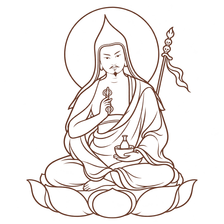
The Grilling—A Q&A with Orgyen Tobgyal Rinpoche | The Subject: Dzongsar Khyentse Rinpoche
Would you tell us a bit about Dzongsar Jamyang Khyentse?
能否为我们谈一谈宗萨蒋扬钦哲?
‘Dzongsar’ is the name of a Sakyapa monastery in Kham, and ‘Khyentse’ was a monk at this monastery who became a lama. For generations, members of his family had been monks and they all lived in the monks’ quarters at Dzongsar Monastery.
“宗萨”是康区一座萨迦派寺院的名字,“钦哲”则是寺中一位后来成为上师的僧人。他的家族世代有人出家,都住在宗萨寺的僧舍。
Dzongsar belongs to the Ngorpa branch of the Sakyapa school, but as far as Sakyapa hierarchy was concerned, it wasn’t an important monastery. Yet the qualities of this Khyentse lama were so remarkable that never before had Tibet seen such a great lama.
宗萨属于萨迦派的鄂尔支派,但在萨迦派的体系中,并非重要寺院。然而,这位钦哲上师的功德如此卓越,西藏过去从未出现过如此伟大的上师。
The name ‘Chime Drupe Gatsel’ was given to the house at Dzongsar where this monk lived. Later it became known as ‘Khyentse Labrang’. Throughout his lifetime, the respect and reverence people felt for this monk grew and grew, yet in spite of his increasing fame, in the latter part of his life he didn’t moved one inch from Chime Drupe Gatsel. He remained there like a mountain, unmoveable, and always very humble and completely free of worldly activities. The history of this monk and his Dharma teachings are now known and practised all over the world. His name was Jamyang Khyentse Wangpo.
这位僧人在宗萨所住的房屋,名叫“赤美珠贝噶蔡”,后来称为“钦哲拉章”。他一生中,人们对他的敬重与崇敬不断增长;但尽管声名日盛,晚年却一步也未离开 赤美珠贝噶蔡。他如山一般住在那里,岿然不动,始终非常谦逊,完全远离世间事务。如今,世界各地都知道他的事迹、修持他的教法。他就是蒋扬钦哲旺波。
His aunt—his father’s sister—also lived at Dzongsar. She was a nun, and people used to say that her realization was even higher than that of Khyentse Wangpo.
他的姑母,也就是父亲的姊妹,也住在宗萨。她是一位尼师,人们过去说,她的证悟甚至高于钦哲旺波。
Khyentse Wangpo passed away at the age of 73. His incarnation was Jamyang Khyentse Chökyi Lodrö, whose story is very similar[1] to that of his predecessor, except that towards the end of his life Khyentse Chökyi Lodrö became a ngakpa. His incarnation, Yangsi Rinpoche, is the Dzongsar Khyentse Rinpoche we all know today.
钦哲旺波七十三岁圆寂,转世为蒋扬钦哲确吉罗卓。他的经历与前世非常相似[1],只是钦哲确吉罗卓在晚年成为密咒士。他的转世、扬希仁波切,就是今天大家认识的宗萨钦哲仁波切。
您与扬希仁波切,也就是当今宗萨钦哲仁波切,有什么联系? What connection do you have with Yangsi Rinpoche, the present Dzongsar Khyentse Rinpoche?
The qualities of the two previous Khyentse Rinpoches, the first and second emanations, are probably the same as those of Buddha and Guru Rinpoche. But for me, they are both even greater and more important than either the Buddha or Guru Rinpoche, because… I was going to say because their kindness is much greater, but actually maybe it’s just that I like them more. This is why I know their Yangsi Rinpoche so well. I first met him when he was seven years old, so I’ve know him for forty-eight years and have spent a lot of time with him. We have a very strong connection.
前两位钦哲仁波切,第一、第二世化身,其功德大概与佛陀、莲花生大师相同。但对我而言,他们甚至比佛陀、莲花生大师更伟大、更重要,因为……本来想说,因为他们的恩德更大,但其实,也许只是我更喜欢他们。所以,我很熟悉他们的扬希仁波切。第一次见他,他才七岁,因此相识已有四十八年,也一起度过很多时光。我们的联系非常深。
宗萨钦哲仁波切真正的根本上师是谁? Who is Dzongsar Khyentse Rinpoche’s true root teacher?
He has had many different teachers, so I can’t be sure. It’s not really for me to say, but I think that probably for him, the most important of all his lamas, his root teacher, is His Holiness Sakya Trizin. Then Kyabje Dudjom Rinpoche, his paternal grandfather. The master he spent the most time with and received the most transmissions from was Kyabje Dilgo Khyentse Rinpoche, with whom he had an incredible connection. And the master he has the greatest devotion for is Karmapa Rigpe Dorje—the 16th Karmapa. He has also had many other teachers from the Nyingma, Kagyu and Sakya schools, and has received Gelugpa teachings. In fact, he made a big effort to track down a root teacher from the Gelugpa school, but couldn’t find anyone without a connection to Phabongka Dechen Nyingpo. Actually he’s never stopped searching, but still can’t find one. It’s one of his greatest difficulties and regrets.
他有许多不同的老师,所以我不能确定。这其实不是我该说的,但我想,对他而言,所有上师中最重要的、他的根本上师,大概是萨迦法王。其次是他的祖父,怙主敦珠仁波切。与他相处时间最长、给予传承最多的,是怙主顶果钦哲仁波切,两人有不可思议的联系。他最为虔敬的上师,则是第十六世噶玛巴 日佩多杰。他还从宁玛、噶举、萨迦诸派的许多其他老师学法,也领受过格鲁派教法。事实上,他曾非常努力地寻找格鲁派根本上师,却找不到一位与 帕绷喀德钦宁波 没有联系的人。其实,他从未停止寻找,仍然找不到。这是他最大的困难与遗憾之一。
My point is, he has received many empowerments, reading transmissions and practice instructions from the various Tibetan traditions. Who knows whether or not he’s received more than his previous incarnations, but after Khyentse Wangpo and Khyentse Chökyi Lodrö, he’s probably the lama who, in the true Rimé spirit of his predecessors, has received the most teachings and transmissions from all schools of Tibetan Buddhism.
我要说的是,他从西藏各传统领受了许多灌顶、读诵传承与修持教授。是否比前世更多,谁知道呢?但在钦哲旺波与钦哲确吉罗卓之后,他大概是最能体现前世真正利美精神、从西藏佛教一切教派领受最多教法传承的上师。
From Dezhung Rinpoche he received many teachings, empowerments and reading transmissions from the Sakya tradition, and at that time he really thought of himself as a Sakyapa. I met up with him then, and saw for myself that the way he spoke was entirely Sakyapa. So I was very happy.
他从 德雄 仁波切领受许多萨迦传统的教法、灌顶与读诵传承,那时真把自己当作萨迦派。我当时见过他,亲眼看到他说话完全是萨迦派的方式,所以非常高兴。
From his maternal grandfather, Lama Sonam Zangpo, he received a great many teachings and transmissions from the Kagyupa tradition, for example the Six Yogas of Naropa and Mahamudra. He also thoroughly applied himself to the tsa-lung yogic practices. Again, I met up with him as he was receiving these transmissions and saw for myself that at that time he genuinely thought of himself a Kagyupa. He used to say that the protector Düsol Lhamo was a very important protector, which I thought was very good.
从外祖父 喇嘛索南桑波,他领受了大量噶举传统教法与传承,例如那若六法、大手印,也非常用功地修习脉气瑜伽。他领受这些传承时,我也见过他,亲眼看到他那时确实将自己视为噶举派。他常说,都索拉莫 护法是极其重要的护法,我觉得很好。
Then from Nyoshul Khenpo he received Dzogpachenpo teachings, such as Yeshe Lama and the Nyengyü teachings. I met him afterwards and he told me how incredible the Dzogchen teachings are—which didn’t surprise me. I never doubted that he would eventually become a Nyingmapa. However he only started teaching Dzogchen later in life because Dilgo Khyentse Rinpoche had said he wasn’t allowed to teach it before the age of 50.
然后,他从纽修堪布领受大圆满教法,如《智慧上师》与耳传教法。之后见到他,他告诉我大圆满教法多么不可思议,这并不令我惊讶。我从未怀疑,他最终会成为宁玛派。不过,他到后来才开始传大圆满,因为顶果钦哲仁波切说过,五十岁以前不许传。
If he could only find a teacher from the Gelugpa tradition with no link to Phabongka Dechen Nyingpo, there are many teachings and transmissions he’d like to receive, for example the Guhyasamaja, Chakrasamvara and Yamantaka. But so far he hasn’t found anyone.
只要能找到一位与 帕绷喀德钦宁波 没有联系的格鲁派老师,他就有许多教法传承想领受,例如密集、胜乐、阎曼德迦。但至今尚未找到。
He’d also like to receive, the ‘Three Tantric Teachings for Inner Investigation’ from the Kagyupa tradition, ‘Profound Inner Meaning’, (Wyl. zab mo nang don,); the Two Sections of the Hevajra Root Tantra (Wyl. rtsa rgyud brtags gnyis); and Sublime Continuum (Wyl. rgyud bla ma), but so far hasn’t had the opportunity. So in all these ways, he is very like the other Khyentse incarnations.
他也希望领受噶举传统的“三种内在探究的密续教法”:《甚深内义》、《喜金刚根本续二品》及《宝性论》,但至今没有机会。因此,从这些方面看,他都很像其他钦哲转世。
His previous incarnation had an important relationship with some Bönpo teachers. But for Yangsi Rinpoche, there’s been no mention of the Bönpos until now; nothing’s happened there. And Jamyang Khyentse Wangpo used to be one of the main holders of the Jonangpa tradition.
他的前世与一些苯教老师关系重要。但扬希仁波切至今尚未提及苯教,那方面还没有发生什么。蒋扬钦哲旺波过去也是觉囊传统的主要传承持有者之一。
Therefore, Dzongsar Khyentse Rinpoche is clearly an upholder of the Rimé tradition and as such looks just like a Khyentse incarnation. Yet the Nyingmapas say he looks like a Sakyapa and didn’t want him to take part in the big meeting of Nyingmapas we had in Bodhgaya. It had been suggested that we put Dzongsar Khyentse on the board of the Nyingma group, but there were some objections. The problem with Dzongsar Khyentse, they said, is that he is like the god Brahma who has four heads, and therefore he won’t represent the Nyingmapas at all well.
所以,宗萨钦哲仁波切显然是利美传统的持有者,因此也确实像一位钦哲转世。但宁玛派的人说,他看起来像萨迦派,不想让他参加我们在菩提伽耶举行的宁玛派大会。有人建议让宗萨钦哲进入宁玛团体的理事会,但也有一些反对意见。他们说,宗萨钦哲的问题,在于像四头梵天,因此无法很好地代表宁玛派。
Amongst the Sakyapas, although everyone has the greatest respect for His Holiness Sakya Trizin, none of the other Sakya lamas are really valued. The Kagyupas used to recognize Jamyang Khyentse Wangpo as one of the ‘Golden Rosary of Lives’ lineage masters—he was one of the greatest masters of the Kagyu tradition—but now they’ve taken him out. By and large the Gelugpas no longer afford any respect for the Jamyang Khyentses.
萨迦派中,虽然人人都极尊敬萨迦法王,但其他萨迦上师并不真正受重视。噶举派过去将蒋扬钦哲旺波视为“金鬘传承”祖师之一,他是噶举传统最伟大的上师之一,但如今却将他移除了。总的来说,格鲁派也不再敬重蒋扬钦哲诸世。
宗萨钦哲是许多重要上师的转世,但他的行为,例如穿着,常常很奇怪,也以做各种古怪事而闻名。为什么会这样? Dzongsar Khyentse is the incarnation of many important lamas, but his behaviour and, for example, the way he dresses, is often strange. He’s also been known to do all sorts of odd things. Why is that?
In the Tibetan tradition of Buddhism there are three approaches: the teachings of the Shravakas, the teachings of the Bodhisattvas and the teachings of the Secret Mantra. In India these three approaches were most probably practised separately, but the Tibetan tradition has made it possible for an individual to practise all three together. We must, therefore, keep the Shravaka precepts as a matter of course. And so, as many of Yangsi Rinpoche’s teachers instructed him to take ordination, and his close attendants and friends also requested that he do so, at the age of twenty, he went to receive ordination from Kyabjé Trulshik Rinpoche. I was also there at that time. But as things turned out, he didn’t really ‘receive’ the ordination vows.
西藏佛教传统有三种途径:声闻教法、菩萨教法与秘密真言教法。在印度,这三种很可能分别修持,但西藏传统使一个人能够同时修持三者。因此,自然必须守持声闻戒。扬希仁波切的许多老师都吩咐他受戒,近侍与朋友也如此请求,所以二十岁时,他去怙主楚西仁波切处受戒。当时我也在。但结果,他其实并未“得到”戒体。
The ceremony was performed very elaborately and although the Vinaya only requires five ordained monks to be present, Trulshik Rinpoche invited ten. But two of them had already broken their vows. We knew they had, but I don’t think Trulshik Rinpoche did—about a year later they disrobed and went abroad. Which means that at that time, all the requirements for full ordination according to the Vinaya tradition were not fulfilled, and therefore Yangsi Rinpoche didn’t ‘receive’ the Vinaya vows. And as he wasn’t ever bound by the Vinaya vows, he has nothing to keep! He may feel as though he’s maintaining the vows on an aspirational level, who knows? But from the Vinaya point of view, such an approach does not exist. As he’s not bound by these vows, why should he behave as though he is? Dzongsar Khyentse Rinpoche would never pretend he had ‘received’ the Vinaya vows when he hasn’t—it’s not something he would ever do.
仪式举行得非常隆重。虽然律藏只要求五位受戒僧人在场,楚西仁波切却邀请了十位;但其中两人已破戒。我们知道,我想楚西仁波切并不知道。约一年后,两人还俗出国了。这意味着,当时未具足律制中受具足戒的一切条件,因此扬希仁波切没有“得到”律仪戒。既然从未受这些戒约束,也就无戒可持!也许他觉得自己在愿望层面守戒,谁知道呢?但依律藏观点,并无这种方式。既然不受这些戒约束,为何要表现得仿佛受约束一样?没有“得到”律仪戒,宗萨钦哲仁波切绝不会假装得到过,这不是他会做的事。
It’s not true to say that Dzongsar Khyentse does many strange things. On the odd occasion he might wear unusual clothes or a funny hat or wig in public, in plain sight of everyone. And he might, of course, hug and kiss girls. But this kind of behaviour is commonplace in the western world—it’s part of western tradition, right? On television you even see people kissing His Holiness the Dalai Lama[2] !
说宗萨钦哲做了很多奇怪事,并不真实。偶尔,他也许会在众目睽睽之下,公开穿上特别的衣服,或戴一顶有趣的帽子、假发。当然,也可能拥抱、亲吻女孩子。但这种行为在西方世界很常见,是西方传统的一部分,对吧?电视上,甚至能看到人们亲吻达赖喇嘛尊者[2]!
Dzongsar Khyentse doesn’t wear a Heruka’s ornaments and clothing or walk around like a yogi. And he certainly never pretends to have a level of realization that he’s never achieved. If you are not a Mahasiddha, to wear such things publicly is considered very bad because you are breaking samaya. Yet, there are some who complain because he doesn’t do that! Personally, I think it’s probably better that he doesn’t. You must have attained a very high level of realization and great powers before you can wear ngakpa ornaments. And even Kyabje Dudjom Rinpoche, for example, didn’t ever wear the robes of a ngakpa; he always dressed as a householder.
宗萨钦哲不穿戴赫鲁嘎的衣饰,也不以瑜伽士模样四处行走。他当然更不会假装具有未曾证得的境界。若不是大成就者,却公开穿戴这些,被认为非常不好,因为这会破三昧耶。可是,有些人竟因他不这样做而抱怨!就我个人看,不这么做大概更好。必须证悟极高、具大威力,才能佩戴密咒士饰物。例如,连怙主敦珠仁波切也从未穿密咒士服装,始终作在家人打扮。
I’ve rarely seen Khyentse Rinpoche walk around in strange outfits. But once you’ve landed in this world and have to interact with other people, you have no choice but to wear some kind of clothing, don’t you? These days lamas seem to wear all manner of regalia and ornaments—they look like the Emperor of China, even though they’re neither kings nor emperors!
我很少看到钦哲仁波切穿着古怪服饰到处走。但既然来到这个世界,必须与人交往,就不得不穿某种衣服,对吧?如今的上师似乎穿戴各种盛装饰物,看起来像中国皇帝,尽管既非国王,也非皇帝!
One of the weirdest things Khyentse Rinpoche does is walk around in his underwear. For someone like me, to see him in just his underpants is uncomfortable, to say the least! If you walk into his presence and find him half-naked, even though you know you’re supposed to prostrate, you’re usually so shocked you just don’t know what to do! For someone who prays to him every day in Guru Yoga, to then see him in his underwear is a bit disturbing. But it’s just mind that creates these thoughts, these ‘risings’. When we practise and pray to the lama, isn’t he almost always half-naked in our visualization? And isn’t he wearing bone ornaments and in union with a consort? This is how we visualize him when we invoke him! So it’s just our own thoughts that confuse us.
钦哲仁波切最古怪的事情之一,是穿着内衣走来走去。对我这样的人而言,看到他只穿内裤,至少会觉得不自在!走到他面前,发现他半裸着,虽然知道应该顶礼,通常还是惊得不知如何是好。对于每天在上师瑜伽中向他祈请的人,再看到他穿内衣,会有些困扰。但这些念头、这些“生起”,都只是心创造的。我们修法、祈请上师时,观想中他不也几乎总是半裸吗?不也佩戴骨饰、与佛母双运吗?祈请时,就是如此观想他的!所以,迷惑我们的,只是自己的念头。
Everyone knows that Dzongsar Khyentse is famous for occasionally walking around half-naked in his swimming trunks, or wearing trousers. There’s really nothing extraordinary about it. If, though, you were to tell me that he is selling Buddha statues, I would find that very odd indeed. Or that he was now the owner or manager of a big restaurant, and therefore responsible for the deaths of thousands of animals, in order to put meat on the menu. Or that he had stolen something, or became a member of the mafia, or smuggled contraband. But we don’t hear anything like that, do we?
大家都知道,宗萨钦哲以偶尔只穿泳裤、半裸走动,或穿长裤而出名。其实没有什么特别。不过,若有人告诉我,他在卖佛像,我倒会觉得非常奇怪。或者说,他现在是一家大餐馆的老板、经理,为了菜单上有肉,要对数千动物的死亡负责;或者说,他偷了东西,加入黑手党,走私违禁品。但我们没有听到这样的事,对吧?
No one in this world is able to act 100% in accordance with the Dharma. It’s just not possible. But if Dzongsar Khyentse was ‘giving’ monks Vinaya vows having not kept them himself, that would be bad. Or if he lied, or was said to be fooling people, or did things that have nothing to do with the Dharma. But the main criticism against Dzongsar Khyentse seems to be that he has girlfriends. What’s so very surprising or unique or special about that? Why is it so extraordinary for Dzongsar Khyentse to have a girlfriend? How many billions of men are there in the world, and how many of them have a girlfriend or a wife—or several of each! In our Nyingma lineage alone, thousands of masters had far more girlfriends and partners than Dzongsar Khyentse.
世上没有人能百分之百依法行事,这不可能。但若宗萨钦哲自己未守律仪戒,却“授予”僧人这些戒,就不好。或者他撒谎,被说成欺骗人,或做与佛法毫无关系的事,也不好。但对他的主要批评,似乎只是有女朋友。这有多么惊人、独特、特别?宗萨钦哲有女朋友,为何如此不同寻常?世上有几十亿男人,其中多少有女朋友或妻子,甚至各有好几位!仅在宁玛传承中,就有数千位上师,女朋友与伴侣远比宗萨钦哲多。
您认为宗萨钦哲作为上师如何?是好上师、坏上师,还是普通上师?您怎么看? What do you think of Dzongsar Khyentse as a lama? Is he a good lama? A bad lama? Or just an ordinary lama? What do you think?
The first quality we look for in a lama is that he is a good Dharma practitioner, someone who really applies the Dharma. To be a good Dharma practitioner you must necessarily be knowledgeable about the Dharma, right? And as the Dharma is quite vast, you need to know all the different teachings and be able to apply each approach, without mixing them up. That’s what we call being ‘learnèd’.
我们在上师身上寻找的第一个品质,是一位好修行者,一个真正运用佛法的人。要成为好修行者,必然须通晓佛法,对吧?而佛法非常广大,所以须了解各种教法,能够运用每种途径,又不混淆。这就叫“博学”。
But being learnèd doesn’t bring you anything at all if you don’t practise what you’ve learnt. So whatever you are knowledgeable about, you must first apply to yourself through practice. If you do, there’s absolutely no doubt that you will achieve a result. But not the kind of result that can be seen with your eyes. What practice does is change your mind. And when that happens, we say you are ‘kind-hearted’. The benefit of achieving kindheartedness is that you then have a positive impact on sentient beings. And as being kind-hearted brings benefit to sentient beings, kindheartedness is the second quality a lama must have.
但若不修所学,博学也毫无益处。所以,无论通晓什么,都必须先通过修持用于自身。如此,毫无疑问会得到结果。但这不是肉眼可见的结果。修持改变的是心,发生这种转变时,我们说此人“心地善良”。成就善心的利益,在于会对众生产生正面影响。既然善心利益众生,这就是上师必须具备的第二个品质。
To benefit sentient beings you need to hold, preserve and expand the teachings, and I think Dzongsar Khyentse has all these qualities. First of all, he has followed 55 different teachers and studied the teachings. Whether or not his attendants requested that he study and then made it possible, or he organized it all himself, the fact is that he has studied for many years. Khyentse Labrang biggest expenditures were always made in support of his studies. In fact, most of Khyentse Labrang’s money was spent on his education—which was necessarily Rimé in spirit—because it was always considered more important than anything else. Therefore he is learnèd. He is also quite intelligent, although he doesn’t have the same kind of intelligence as that of his two previous incarnations, because he had to develop his intelligence himself through hard work and study. And he has spent many, many years studying and receiving teachings.
为了利益众生,需要住持、保存并弘扬教法。我想,宗萨钦哲具备所有这些品质。首先,他依止过五十五位不同老师,研习教法。无论是近侍请求他学习并提供条件,还是他自己安排,事实是,他学了很多年。钦哲拉章最大的支出,始终用于支持他的学习。实际上,拉章大部分金钱都花在他的教育上,而且必然具有利美精神,因为这一直被视为比任何事情都重要。因此,他博学。他也相当聪明,虽然不是前两世那样的智慧,因为他必须通过勤奋努力与学习,自己培养才智。他花了许许多多年学习、领受教法。
He has also done a great deal of practice. Year after year he has been practising continuously, and every day he still spends a great deal of time on his practice.
他也修持了很多,一年又一年,持续不断;即使现在,每天仍花大量时间修法。
Others labrangs—a lama’s home in a monastery and his household—put their effort and money into constructing large buildings and labrang compounds, or enlarging monasteries, or establishing investment funds to make more money. But at Khyentse Labrang, not one of the students of the previous incarnation even thought about that kind of thing. Most of the Labrang’s money and time and effort and planning were all directed towards Yangsi Rinpoche's education—which sometimes made things difficult financially. The Labrang even borrowed to make sure his education was complete. In the end, though, none of the students of the previous incarnation, Khyentse Chökyi Lodrö, felt they’d made a mistake by focusing so keenly on his education. They all felt they’d done the right thing and are satisfied with how he’s turned out. Even someone like me—prone as I am to wrong views and thinking too much, and who has great difficulty with faith—I don’t think we could have made a better job of it.
其他拉章,也就是上师在寺中的住处及其家务机构,将精力、钱财投入兴建大楼、拉章院落,扩建寺院,或设投资基金以赚更多钱。但钦哲拉章里,前世的弟子没有一个想到这种事。拉章的大部分钱、时间、精力与规划,都用于扬希仁波切的教育,有时也因此财务困难。为保证他的教育完备,拉章甚至借钱。不过,最终,前世钦哲确吉罗卓的弟子,没有一个认为如此重视教育是错的。大家都觉得做对了,也满意他成长的结果。连我这样容易起邪见、想太多、极难生信的人,也不认为我们还能做得更好了。
And there’s still more to come in terms of enlightened activity. Right now his activity shines as brightly as the sun at noon, and he’ll do a lot more over the next twenty or thirty years, you’ll see!
而觉悟事业方面,还会有更多。目前他的事业如正午太阳般明亮,未来二三十年还会做得更多,等着看吧!
宗萨钦哲为什么做许多其他上师从不做的事,例如拍电影? Why does Dzongsar Khyentse do so many things that other lamas never do? For example, he makes movies.
The activities of the Buddha can’t be measured, they are limitless. It’s said that sentient beings pervade the whole of space and that for all these beings, it’s the activities of the Buddha that truly benefit. Dzongsar Khyentse is now able to do things that no Tibetan lama has even thought of doing before, including unusual things like making movies. What he has in mind is that eventually, through a movie, the whole world will be able to see exactly what the Buddha did and how he was. The Dzogchen approach to guiding a student towards seeing the Dharmakaya Buddha is to introduce the student to the nature of mind, which then leads them to enlightenment. But if the student doesn’t achieve that recognition, the benefit they gain from at least being able to relate to a Nirmanakaya form of the Buddha is so immense, it’s beyond expression. So Dzongsar Khyentse’s reason for making movies is probably to do with wanting the whole world to see the Buddha.
佛陀的事业无法衡量,无有限量。据说,众生遍满整个虚空,真正利益这一切众生的,是佛陀事业。宗萨钦哲如今能够做过去西藏上师连想都没想过的事,包括拍电影这样的特殊事情。他想的是,最终通过一部电影,让全世界准确看见佛陀做了什么、是怎样的人。大圆满引导弟子见法身佛的方法,是直指心性,继而令其觉悟。但若弟子未能认出,即使至少能与佛的化身产生联系,其利益也大到无法言说。所以,宗萨钦哲拍电影的原因,大概与希望全世界见到佛陀有关。
Study is said to be very important throughout the Mahayana, including the Tantras. Which is why a Tibetan lama, a refugee, has been giving so much money to create Chairs of Buddhism at various Western universities. When I heard just how much Dzongsar Khyentse was giving, even I felt a bit stingy—why should a poor refugee give vast sums to rich western institutions! But when I thought about it more carefully I realized how incredibly far-reaching his vision is. Noone else would have thought of it. He also gives money to support many people in poorer countries. And although he never tells me any of this, I always hear about it, though, one way or another.
整个大乘,包括密续,都说学习极为重要。因此,一位西藏上师、一位难民,才会捐出这么多钱,在西方各大学设佛学讲座教授席位。听到宗萨钦哲捐了多少,连我都有点舍不得:一个贫穷难民,为什么要给富有的西方机构巨款!但仔细想过,便认识到他的眼光多么深远。别人不会想到。他也出钱支持较贫穷国家的许多人。虽然从不告诉我这些,我总还是会以某种方式听到。
Basically he’s doing everything a lama should do.
基本上,上师应该做的事,他都在做。
The previous incarnation, Jamyang Khyentse Wangpo, followed the Ngorpa rule of not giving anyone ordination, whereas his next incarnation, Khyentse Chökyi Lodrö ordained many thousands of monks in the early part of his life. Although the present incarnation, Dzongsar Khyentse Rinpoche, doesn’t engage in any of the Vinaya activities, he still has a great deal of respect for those teachings—when he sees Thai monks he immediately folds his hands and prostrates. But he does all the other activities of lama, like giving empowerments, reading transmissions, explanations of the practices, etc. And everything he has received, he transmits.
过去的化身蒋扬钦哲旺波,遵循鄂尔派不为任何人授戒的规矩;下一世钦哲确吉罗卓,则在早年为成千上万僧人授戒。虽然今世宗萨钦哲仁波切不从事任何律仪活动,却仍极尊重那些教法,见到泰国僧人,立即合掌顶礼。但他从事上师其余一切事业,如灌顶、读诵传承、修法讲解等等。凡领受过的,都传授出去。
In particular, his kindness to golden-haired westerners is quite incredible! To tell you the truth, I often wonder why he’s so generous to them. I think it must have something to do with the kind of compassion that doesn’t distinguish between those who are close to you and those who are not so close—we call it ‘equanimity’. If you divide people up based on their racial origins and then allow yourself to be bound by that kind of limitation, how can you work to help and enlighten all sentient beings, as numerous as space is vast? This expression of equanimity is a truly extraordinary quality of his.
尤其,他对金发西方人的恩德,实在不可思议!说实话,我常想,为什么对他们如此慷慨。我想,这一定与那种不分亲疏的悲心有关,我们称为“平等心”。若依族裔将人划分,再受这类限制束缚,如何帮助、令尽虚空般无量的一切众生觉悟?如此展现平等心,是他真正非凡的品质。
Some people can see Yangsi Rinpoche’s special qualities, others can not. If you think about it, you will see his qualities; if you don’t think about it, you won’t. For those who have the kind of mind that wants to hold on to the old, traditional way of doing things, it’s especially difficult to see his unique qualities. That’s my biggest problem. If you think that tradition is very important, you will become like me…
有人看得出扬希仁波切的特殊品质,有人看不出。若去思考,就会看见;若不思考,就看不见。那些一心想守住旧有传统做法的人,尤其难以看见他的独特品质。这正是我最大的问题。若认为传统非常重要,就会变成我这样……
宗萨钦哲仁波切的老师有哪些?我想多了解他们。 Who are the teachers of Dzongsar Khyentse Rinpoche? I’d like to know more about them.
The ‘lamas’ of Dzongsar Khyentse are different from his ‘teachers’. Lama Chöden was from Nangchen in Kham and a follower of the Drukpa Kagyu tradition who had been a monk at Tsechu Monastery, which is one of the major monasteries in Nangchen. He was one of the best monks in Dzongsar for a number of years, and while he was there he became Khyentse Chökyi Lodrö’s chöpen. Once he had become a close attendant of Jamyang Khyentse Chökyi Lodrö, he received many empowerments, reading transmissions, and so on. If you look into the life story of Jamyang Khyentse Chökyi Lodrö, you will see that when Jamyang Khyentse Chökyi Lodrö gave the Vima Nyingtik to a few of his close students, like Lama Chöden, they all saw Vimalamitra himself in the middle of the mandala.
宗萨钦哲的“上师”与他的“老师”有所不同。喇嘛确丹 来自康区囊谦,依止竹巴噶举传统,曾是囊谦主要寺院之一 才秋 寺的僧人。有几年,他是宗萨最优秀的僧人之一,并在那里成为钦哲确吉罗卓的供养侍者。成为蒋扬钦哲确吉罗卓的近侍后,领受许多灌顶、读诵传承等。查阅蒋扬钦哲确吉罗卓传记,会看到,他向 喇嘛确丹 等少数亲近弟子传《毗玛心髓》时,大家都在坛城中央亲见毗玛拉米扎。
Anyway, Lama Chöden became Yangsi Rinpoche’s tutor. He was very knowledgeable about the different sciences and also very good at all the rituals. The basis for his dharma practice was the vow of a fully ordained monk. What he accomplished in terms of retreat—the approach and accomplishment practices—was really incredible. He was learnèd as well as accomplished, and extremely diligent and disciplined; he achieved a very high level of practice. And while he was still tutor to Rinpoche, he went to sleep one night, but never woke up again. That’s how he passed away. He didn’t have any sickness, or anything.
总之,喇嘛确丹 成为扬希仁波切的老师。他通晓各种学问,也精通一切仪轨。修法以比丘具足戒为基础,闭关中所完成的念修与成就,实在不可思议。他博学且有成就,极为勤奋、自律,修持达到很高程度。他仍担任仁波切老师时,某晚睡下,便没有醒来,就这样圆寂了。没有疾病,也没有其他什么。
After him, the second tutor was Lama Orgyen. He was also from Nangchen and also an expert at the ritual practices, as well as in writing—poetry and composition, etc. I don’t know how good his practice was, but as he passed away from cancer at Surmang Trungpa’s place in Boulder, he displayed signs of realization.
其后,第二位老师是 喇嘛乌金,也来自囊谦,精通仪轨,也擅长诗歌、文章等写作。我不知道他的修持有多好,但他在博尔德、苏莽创巴的住处因癌症圆寂时,显现了证悟征相。
The third tutor was Lama Putse. He was the chant master in our monastery, very well-read, and a highly-skilled writer. He was learnèd in the scriptures, and extremely learnèd in terms of ritual practice. He was Yangsi Rinpoche’s tutor for three years. I don’t know how his practice was, but when he passed away in Nepal it is said he stayed sitting in meditation (tukdam) for 16 days and that thousands of people went to meet his remains (kudung). Tulku Chökyi Nyima showed him to the doctors and asked “Is he dead or not”. The doctors examined him but concluded that they couldn’t answer the question because although he looked pretty much dead, in other ways he didn’t appear to be dead at all. He was from Riwoche and followed the Nyingma tradition.
第三位是 喇嘛普泽。他是我们寺院的领诵师,博览群书,文笔高超。他精通经论,更极精通仪轨,担任扬希仁波切的老师三年。我不知道他的修持如何,但据说在尼泊尔圆寂时,坐于禅定十六天,数千人前来瞻礼其法体。确吉尼玛祖古请医生看,问:“他死了,还是没死?”医生检查后表示,无法回答,因为虽然看起来几乎已死,但从其他方面看,又完全不像死了。他来自类乌齐,遵循宁玛传统。
The fourth was Rakong Sotra who was from Derge. At first he served the King of Derge and became an important member of his court, then later he became a monk. He had been a student of the previous incarnation, Jamyang Khyentse Chökyi Lodrö and was very proficient in the sciences. The tradition he came from was Sakya, but he wasn’t at all biased. He remained with Yangsi Rinpoche a little longer than the others, as one of his attendants.
第四位是德格人 惹贡索扎。最初侍奉德格王,成为朝廷重要成员,后来出家。他曾是前世蒋扬钦哲确吉罗卓的弟子,精通各种学问。出身萨迦传统,却毫无偏见。他作为侍者,与扬希仁波切相处的时间,比其他几位稍长。
After him the fifth tutor was called Shangtok Kunga. After Khyentse Chökyi Lodrö passed away, Shangtok Kunga remained in Sikkim and I've heard that Khyentse Chökyi Lodrö appeared to him in visions more than once. He was very learnèd and also an incredible ‘chöpa’—someone who really takes the teachings to heart and applies them to himself. Amongst the ordinary monks who were students of Jamyang Khyentse Chökyi Lodrö, he was held in the highest regard. When he passed away he displayed really great signs of realization. He was Yangsi Rinpoche’s tutor for just a short time and chiefly taught him the sacred texts.
之后,第五位老师名叫 香托贡嘎。钦哲确吉罗卓圆寂后,他留在锡金;我听说,钦哲确吉罗卓不止一次在净相中向他显现。他非常博学,也是一位了不起的“修行人”,即真正将教法放在心上、用于自身的人。在蒋扬钦哲确吉罗卓的普通僧人弟子中,他最受尊重。圆寂时,显现极殊胜的证悟征相。他担任扬希仁波切老师的时间不长,主要教授经典。
And sometimes Khandro Tsering Chödrön helped Yangsi Rinpoche with his reading and showed him how to recite some of the prayers.
有时,康卓慈仁确珍也帮助扬希仁波切读书,教他如何念诵一些祈请文。
This is what I know about Yangsi Rinpoche’s teachers. They were all very learnèd and extraordinarily accomplished, which is why I think they had such an incredibly positive impact on Rinpoche’s practice, and why he became so learnèd himself, and so realized.
关于扬希仁波切的老师,我知道这些。他们都非常博学、成就非凡;所以我认为,他们对仁波切的修持产生了极其良好的影响,使他自己也如此博学、如此有证悟。
A tutor stays with his charge and trains him 24 hours a day. So for the few years Yangsi Rinpoche’s tutors were responsible for him, they were with him for 24 hours a day. Tutors teach all the dharma subjects, but also about worldly things. Tutor and student eat together and go about together, and in this way the tutor teaches the student how to eat, how to talk and how to relate to others, as well as how to practise the Dharma. Everything!
老师与所教的孩子住在一起,每天二十四小时培养他。因此,负责扬希仁波切的那几年,老师们全天二十四小时与他在一起。他们教授一切佛法科目,也教世间事务。师生一起吃饭、一起行动,由此教学生如何吃饭、说话、与人相处,以及如何修法。什么都教!
That Dzongsar Khyentse Rinpoche was given the opportunity to study with such great tutors is an expression of his great merit. And all his tutors were students of his previous incarnation, which is why they also had the greatest respect, devotion and pure perception of him. They were all people who wanted Yangsi Rinpoche to be well educated in worldly matters, as well as a good dharma practitioner—they all had the noblest of intentions.
宗萨钦哲仁波切有机会跟随如此伟大的老师学习,体现了极大福德。而且,所有老师都是他前世的弟子,因此对他也怀有极大尊敬、虔诚与清净观。他们既希望扬希仁波切通晓世间事务,也希望他成为好修行者,人人发心都极为高尚。
At Sakya College, he studied most of the great sacred texts—pechas—with Khenpo Apé and Khenpo Rinchen. He received many teachings from them.
在萨迦佛学院,他跟随堪布阿贝、堪布仁钦,学习了大部分伟大经典,即藏文经书,领受许多教法。
When Dilgo Khyentse Rinpoche gave the Rinchen Terdzö in Sikkim, his mind was directed solely towards Dzongsar Khyentse Rinpoche. He said several times that he was focusing exclusively on transmitting everything to Dzongsar Khyentse Rinpoche.
顶果钦哲仁波切在锡金传《大宝伏藏》时,心中所向唯独宗萨钦哲仁波切。他多次说,自己专注于将一切传给宗萨钦哲仁波切。
And so everyone came together and put such an enormous effort into Rinpoche's training—including Rinpoche himself—that the result could never have been anything other than very, very good indeed.
因此,所有人都聚在一起,为培养仁波切付出如此巨大努力,包括仁波切自己;结果当然只可能非常、非常好。
Translated by Gyurmé Avertin
Edited by Janine Schulz
英文口译:久美·阿韦尔坦
英文编辑:雅尼娜·舒尔茨
原注 Notes
出处与版本
原刊:ALL-OTR · The Grilling—A Q&A with Orgyen Tobgyal Rinpoche | The Subject: Dzongsar Khyentse Rinpoche。讲授:5th July 2015;Paris, France。原刊发布日期:2015-07-26。