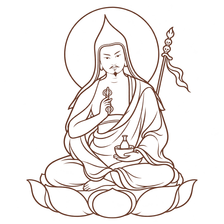
Vajrakilaya
原刊阅读条件
Only read if you have received a Vajrakilaya empowerment
仅限已领受金刚橛灌顶者阅读。
One hot summer’s evening during a Vajrakilaya drupchen at Lerab Ling, Orgyen Tobgyal Rinpoche spoke about both Vajrakilaya and how to apply the basic principles of kyerim to Vajrakilaya practice. Sogyal Rinpoche was present and Chokyi Nyima (Richard Baron) provided an excellent on-the-spot live translation. This was the teaching that went on to become an integral part of how kyerim is now taught to all Rigpa's Vajrayana students.
列绕林一次金刚橛大修期间,在炎热的夏日晚间,乌金督佳仁波切讲解了金刚橛,以及如何把生起次第的基本原则运用于金刚橛修持。索甲仁波切在场,确吉尼玛(理查德·巴伦)作了出色的现场口译。这次开示,后来成为如今向本觉会所有金刚乘学员教授生起次第时的重要内容。
As usual, Orgyen Tobgyal Rinpoche was careful to include all the key aspects of Vajrakilaya practice and everything that students need to understand in order to practise kyerim, as well as an essential guide to kyerim’s deeper meaning. And he managed to do all this even though he had been allocated a rather limited amount of teaching time that very busy summer, which included Khenpo Petse’s presentation of the Secret Essence Tantra.
一如既往,乌金督佳仁波切周密地涵盖了金刚橛修法的所有关键方面,以及学员为了修持生起次第而须理解的一切,并对其深义作出必要指引。那个夏季非常忙碌,还包括堪布贝策讲解《秘密藏续》;尽管分配给他的开示时间颇为有限,他仍完成了这一切。
So, as the Secret Essence Tantra includes the supreme presentation of kyerim and dzogrim practice, and as it was being taught by Khenpo Petse, who was one of the greatest teachers alive at that time, Orgyen Tobgyal Rinpoche said that he would concentrate on providing a starter kit for beginners – a kit that includes a ‘to do’ check-list and a treasure-trove of practical instructions based on the experiences of great practitioners.
《秘密藏续》包含对生起次第与圆满次第修持最殊胜的阐述,而传讲者堪布贝策又是当时在世最伟大的上师之一,因此,乌金督佳仁波切说,他会着重为初学者提供一套入门工具,其中既有一份应做事项清单,也有依据大修行人经验而来的丰富实修教言。
发心 Motivation
Make sure that, before I begin, you generate the motivation of supreme bodhichitta, the precious mind of enlightenment. Think to yourself, I will now listen to the profound holy Dharma and put it into practice as instructed, for the sake of the enlightenment of all sentient beings, who are as numerous as space is vast. This is what all the teachers always say before they teach the Dharma, so it’s probably worth thinking about.
在我开始之前,请务必发起殊胜菩提心,也就是珍贵的觉悟之心。心中想:为了广如虚空的一切众生觉悟,我现在要听闻甚深正法,并依教奉行。所有上师在传法前,总是这样说,所以大概值得认真想一想。
We’ve come together this evening because I’m supposed to say something to you all and it seems to me that it’s time I said something a bit more substantial than I have so far.
今晚我们聚集在这里,是因为我应该对大家讲些什么;我想,是时候说一点比此前更有实质内容的话了。
Right now, you are enjoying an incredible opportunity: you are receiving teachings from Khenpo Petsé, who is widely considered by the Nyingmapas to be the greatest of all living khenpos. Khenpo Petsé is teaching the most profound of profound Dharma texts, the The Secret Essence Tantra, which is the root of the eighteen Mahayoga Tantras. And this great tantra is being taught with reference to the Essence of Clear Light, which is Jamgön Mipham Rinpoche’s synthesis of three commentaries on this tantra written by omniscient Longchenpa. Yet, even though this teaching is taking place right now, several people, led by Philip, have repeatedly insisted that I say something about kyerim (the development or generation stage, Skt. utpattikrama). He says that I should explain it simply and in a way that is easy to understand.
一、导论 I. Introduction
玛哈瑜伽教法 The Mahayoga Teachings
起源 Origin
After our teacher, Lord Buddha Shakyamuni, demonstrated passing into nirvana, the five sublimely noble ones assembled at the summit of Blazing Meteoritic Mount Malaya – today it’s known as Mount Shripada in present day Sri Lanka. All five were aware that Buddha had passed into nirvana and expressed their anguish and grief in the twenty-five verses of lamentation that begin:
Alas! When the light from lamp that is the teacher
Is gone from the whole universe,
Who will dispel the darkness of the world...
呜呼!导师这盏明灯的光明,
已从整个宇宙消失,
谁将遣除世间的黑暗……
Their lamentations invoked Vajrasattva, then who came from the pure realm of Akanishtha and appeared to them in the form of Vajrapani to teach all Buddha Shakyamuni’s Mahayoga teachings once again. These Mahayoga teachings are divided into two sections: tantra and sadhana.
他们的悲叹感动了金刚萨埵,他从色究竟天净土降临,以金刚手的身相现于他们面前,再次宣说释迦牟尼佛的全部玛哈瑜伽教法。这些教法分为续部与成就法部两部分。
续部 Tantra Section
The five students then mastered the meaning of all these teachings, and the rakshasa Matyaupayika wrote them down in gold ink on lapis lazuli paper and collected them in several books. He then sealed these books in space with seven powerful intentions for benefiting the future generations of beings these teachings will tame.
Later, a king called ‘Indrabhuti’ reigned over the land of Oddiyana, which was said to be in the west of India on the present-day border between Afghanistan and Pakistan. Actually there are two kings named Indrabhuti in the Buddhist tradition but the one that I’m telling you about is known by many names, including Indrabhuti the Elder and King Ja.
后来,有一位名为“因陀罗部底”的国王统治邬金国。据说,邬金位于印度以西、今日阿富汗与巴基斯坦交界处。实际上,佛教传统中有两位名为因陀罗部底的国王;我现在讲的这一位有许多名字,包括老因陀罗部底王和扎王。
When the Lord of Secrets turned the wheel of the Dharma of secret mantra for the five sublimely noble ones on Mount Malaya, King Ja of Zahor, who practised the outer tantras of the way of secret mantra, had, at the very same time, seven wonderful indications in dreams...[1]
当秘密主在玛拉雅山为五位殊胜圣者转秘密真言法轮时,萨霍尔的扎王正在修持秘密真言道的外续;就在同一时刻,他在梦中得到七种奇妙征兆……[1]
After receiving the teachings, King Indrabhuti had several dreams, then actually experienced what he’d dreamed in real life, when the books that make up the tantra section of the Mahayoga rained down on the roof of his palace.
领受教法之后,因陀罗部底王作了几个梦,随后梦境在现实中发生:组成玛哈瑜伽续部的经卷,如雨般降落在他的宫殿屋顶上。
... while the king was sitting absorbed in the meditative cultivation of the yoga of the lower tantras, a volume containing the great pitaka of secret mantra, including the Buddhasamayoga, and a one-cubit-tall image of the Lord of Secrets actually fell upon the royal palace, just as it had in his dream. Then, having performed prayers, he realized the meaning of the chapter entitled the “Vision of Vajrasattva”. Relying on that understanding and on the image of Vajrapani, he practised for seven months. As a result he had a vision of Vajrasattva who empowered him with wisdom, and this was how he could instantly memorize the words and understand the meaning of the entire volume.[2]
……国王安坐、专心修习下续瑜伽时,一函包含《佛平等相应续》在内的秘密真言大法藏,以及一尊高一肘的秘密主像,果真如梦中一般降落在王宫。之后,他作祈请,悟入了名为“金刚萨埵现见”一章的意义。依此理解及金刚手像,他修持了七个月。因此,亲见金刚萨埵,并由其以智慧灌顶;他就是这样顿时记住整函文字、通达其意义的。[2]
Then King Indrabhuti taught this text [...] to master Kukkuraja, who then realized the meaning of the chapter on the “Vision of Vajrasattva” from the Tantra of the Magical Net of Vajrasattva (the Secret Essence Tantra), and practised it, whereupon Vajrasattva revealed himself and predicted that the Lord of Secrets would reveal the meanings of this tantra thereafter.[3]
随后,因陀罗部底王将此文[…]传给古古惹杂大师,后者于是通达了《金刚萨埵幻化网续》(即《秘密藏续》)中“金刚萨埵现见”一章的意义,并加以修持。之后,金刚萨埵现身,授记秘密主此后将开示这一续典的意义。[3]
成就法部 Sadhana Section
The other part of the Mahayoga teachings are known as the ‘sadhana section.’ These sadhanas are the quintessence of the teachings that make up the tantra section and provide specific, practical methods for putting the tantra teachings into practice. The dakinis responsible for guarding these teachings wrote them down in their magical script, then concealed them in the Shankarakuta Stupa at the Cool Grove Charnel Ground in central India. Collectively known as the Kagyé, the ‘eight categories of sadhanas’ were sealed into eight caskets made of precious metals and stones – gold, silver, copper, lapis and so on – which the dakinis then hid in the eight directions of the stupa. In the centre of the eight Kagyé caskets, another casket made of different precious substances was also concealed. Later, as predicted by the dakinis, the eight great vidyadhara masters of India – Nagarjuna, Hungkara, Vimalamitra, Shantigarbha and the others – gathered in the Cool Grove Charnel Ground. After seven days of practice, each master was offered one of the caskets. By practising the teachings they found in the caskets, each one then attained the accomplishments.
The ninth casket, the one in the very centre of the stupa, was not given to the eight vidyadharas, but was kept hidden by the dakinis until the master Padmakara, Dorje Tötreng Tsal, appeared in this world. It contained the cycle of practice that combines all the eight Kagyé sadhanas into one, known as the Ocean of Dharma that Combines all the Kagyé (Kadü Chökyi Gyatso). In addition to receiving this transmission from the dakinis, Guru Rinpoche, Padmakara, received from each of the eight great vidyadharas the specific transmission he held, plus all the associated empowerments, pith instructions and so on. These teachings were poured into him like filling one vase from another, until it was full to overflowing.
第九个宝匣位于佛塔正中央,没有交给八大持明,而由空行母继续密藏,直到莲花生大师(金刚颅鬘力)出现于世。里面的法系,将八大法行的所有成就法合为一修,名为《总集教法之法海》。除从空行母领受这一传承外,莲花生大师还从八大持明每一位那里,领受各自所持的特定传承,以及相关的一切灌顶、口诀等等。这些教法倾注于他,如同一瓶倒入另一瓶,直到满溢。
口诀部 Pith Instructions Section
In addition to the tantra and sadhana sections, the Vajrayana also includes the extremely profound direct instruction transmissions known as the ‘pith instructions section’, which contain the quintessence of the most profound practice of the tantra and sadhana teachings. This lineage is known as ‘Dzogchen’ or ‘Great Perfection.’
除了续部与成就法部,金刚乘还包含极甚深的直接教言传承,称为“口诀部”,其中含有续部与成就法部最甚深修持的精髓。这个传承称为“大圆满”。
The Dzogchen teachings originated in the pure realm of Akanishtha where they were hidden in the wisdom mind of Vajrasattva. During the direct encounter Vidyadhara Garab Dorje had with Vajrasattva, Garab Dorje received the Dzogchen teachings. He then passed them on to Manjushrimitra, who transmitted them to Shri Singha, who taught them to Jñanasutra, who gave them to Vimalamitra and Guru Rinpoche. The Dzogchen teachings were then brought to Tibet through three lineages: the lineages of Guru Rinpoche, Vimalamitra and the Tibetan master Vairotsana. This is the lineage of Dzogpachenpo.
To recite the alphabet, you have to start at the beginning and say A and B before C, D and E, right? To be able to discuss the teachings of the tantra and sadhana sections, what I’ve just said is the very minimum that must first be presented. If this is not done, those receiving the teachings will not trust them, not knowing where they come from.
If I were to teach using very few words that nevertheless carry immense meaning, the chances are that you would understand very little, right? On the other hand, if I were to give an extensive exposition of these teachings, it would probably mean spending an entire day on a single point – which we can’t do because we don’t have much time. So if you want to know more about the origins of the Nyingma teachings, look at His Holiness Dudjom Rinpoche’s History of the Nyingma School[4] ; or read more general books like Guru Tashi’s History of the Dharma[5] . A more concise, yet complete, presentation of how the Nyingma teachings unfolded can be found in Shechen Gyaltsap Rinpoche’s commentary[6] based on Mipham Rinpoche’s prayer for the spread of the Nyingma teachings, The Oral Transmission that Gladdens the Hearts of Dharma Kings – which we have been reciting here in Lerab Ling. This commentary will give you an idea of how the Nyingma teachings unfolded.
念字母表,必须从头开始,先念A、B,才能念C、D、E,对吧?要谈论续部和成就法部的教法,刚才那些,已是首先必须介绍的最少内容。若不这样做,领受教法的人不知道它们从何而来,便无法信赖。
若我用极少文字讲述极深广的意义,你们恐怕理解不了多少,对不对?另一方面,若详细阐释这些教法,可能一个要点就要花上一整天;我们时间不多,做不到。因此,若想进一步了解宁玛教法的源流,可以看敦珠仁波切尊者的《宁玛派教法史》[4],或阅读更广泛的著作,例如古如扎西的《佛法史》[5]。若要更简明而完整地了解宁玛教法如何展开,可读雪谦嘉察仁波切的注释[6],它依米滂仁波切祈愿宁玛教法弘盛的《令法王心欢喜之口传》而作,我们在列绕林一直念诵这篇祈愿文。该注释会让你们对宁玛教法的发展有所认识。
金刚橛事业法系 The Activity Cycle of Vajrakilaya
However, right now we must sweep aside the tantra section, seven of the eight Kagyé of the sadhana section, the Ocean of Dharma that Combines all of the Kagyé, and the Dzogchen teachings, because what we are going to look at this evening is the Display of the Twelve Kilas Tantra.
不过,眼下必须暂且放下续部、成就法部八大法行中的七类、《总集教法之法海》以及大圆满教法,因为今晚要看的是《十二橛庄严续》。
The first master to receive the Vajrakilaya Tantra – which had been concealed in a turquoise casket – was Prabhahasti. The next was Guru Rinpoche who, having received the tantra, put it into practice and thereby became inseparable from Vajrakilaya[7] – his biographies go into great detail about how he progressed through the four vidyadhara levels. This evening we are concerned with the attainment of the Mahamudra level of a vidyadhara – or to put it in another way, ‘buddhahood’.
In order to attain buddhahood, Guru Rinpoche travelled to a place in present-day Nepal that we now call Pharping. As he meditated many obstacles arose and, although Guru Rinpoche himself remained unaffected, the people of India, Nepal and even Tibet were threatened by devastating drought, famine, disease and other calamities. To avert these obstacles, Guru Rinpoche sent envoys to India with instructions to find the very powerful teachings that are extremely effective at dispelling obstacles. They returned with many volumes of texts from the Vajrakilaya cycle, principally the Vidyottama Tantra that contains one hundred thousand tantric teachings on Vajrakilaya[8] . The moment the texts arrived in Pharping, before they had even been opened let alone read, all the obstacles vanished. Then, after six months of Vajrakilaya and six months of Yangdak practice, “Guru Rinpoche manifested the supreme accomplishment of a vidyadhara of Mahamudra” – meaning he attained enlightenment.
Although Guru Rinpoche practised Yangdak Heruka (Vishuddha Heruka) to manifest the supreme accomplishment of buddhahood – the vidyadhara of Mahamudra – he first had to accomplish the requisite practice of Vajrakilaya to dispel all obstacles. He then wrote various practices that unite these two deities – for example, the Combined Practice of Vishuddha and Vajrakilaya (one of Jamyang Khyentse Wangpo’s termas). In fact, it’s said that Guru Rinpoche wrote as many as 108 sadhanas that unite Yangdak Heruka with Vajrakilaya.
莲花生大师虽然修持扬达嘿噜嘎(清净嘿噜嘎),以示现佛果、大手印持明的殊胜成就,却必须先完成必要的金刚橛修持,遣除一切障碍。他随后撰写了多种将这两尊合修的仪轨,例如《扬达与金刚橛合修》,这是蒋扬钦哲旺波的一项伏藏。事实上,据说莲花生大师所写的扬达嘿噜嘎与金刚橛合修成就法,多达一百零八种。
As everyone knows, Guru Rinpoche then travelled to Tibet, the Land of Snows, where he revealed the mandala of Vajrakilaya to his main disciples and many others, granting them the empowerment, explaining the tantra and bestowing the reading transmissions. Basically, while Guru Rinpoche was in Tibet he transmitted the Vajrakilaya teachings to many of his students, including his main disciples – known as the ‘nine heart children, lord and subjects’ – who had a special karmic connection with him. This cycle comes from the Supreme Awareness Tantra (Vidyottama), but it can also be found in many other tantric texts, such as Black One: Hundred Thousand Word Commentary on the Kila, the Boiling Lake of Blood Tantra and so on – there is an almost inconceivable number of Vajrakilaya tantras and tantric teachings.
众所周知,莲花生大师随后来到雪域西藏,向主要弟子及许多其他人显示金刚橛坛城,赐予灌顶、讲解续典并给予读诵口传。基本上,他住藏期间,把金刚橛教法传给许多弟子,包括与他具有特殊业缘的主要弟子,也就是所谓“君臣九心子”。这一法系源于《最胜明续》,也可见于许多其他密续典籍,如《金刚橛十万言黑注释》、《沸腾血海续》等等。金刚橛续典与密续教法之多,几乎不可思议。
教传传统中的金刚橛 Vajrakilaya in the Kama Tradition
The practice of Vajrakilaya is found in both the Kama and Terma traditions. One of the main Kama lineages of Vajrakilaya is held by the Sakyapas. Guru Rinpoche transmitted the teachings to Khön Lü’i Wangpo, and others, who then passed them on until they eventually reached Khön Könchok Gyalpo. Since that time, the teachings have been transmitted through generation after generation of Sakya lineage holders. The Sakyas call these Vajrakilaya and Vishuddha teachings the ‘two buddhadharmas of the fathers’ because they have always been received from a Sakya lineage throne holder – the ‘father.’ All the tantras and sadhanas associated with these teachings still exist today as part of the Kama teachings. Many other Vajrakilaya teachings can also be found in the Nyingma Kama.
Frankly speaking, the first thirteen generations of the Sakya throne holders, from Khön Lü’i Wangpo to Khön Könchok Gyalpo, were effectively Nyingmapas. It was Khön Könchok Gyalpo who started practising the Sarma teachings, particularly the cycle of Hevajra. Some say that, at that point, the fathers’ dharmas almost died out after the texts were buried in stupas. But fortunately the Vishuddha and Vajrakilaya texts were preserved.
坦白地说,从昆·鲁益旺波到昆·贡却嘉波的前十三代萨迦法座持有者,实际上都是宁玛派。是昆·贡却嘉波开始修持新译派教法,尤其是喜金刚法系。有些人说,当时祖传法的典籍被埋入佛塔后,这些教法几乎失传。幸而扬达与金刚橛典籍得以保存。
伏藏传统中的金刚橛 Vajrakilaya in the Terma Tradition
I think it’s fair to say that in the Nyingma terma tradition, there were hardly any tertöns who did not reveal a practice of Vajrakilaya. Some tertöns revealed four, five or six different Vajrakilaya cycles, while others revealed just one essential practice. But almost all of them revealed some form of Vajrakilaya practice.
我想,可以说在宁玛伏藏传统中,几乎没有哪一位伏藏师不曾取出金刚橛修法。有些取出四、五或六套不同的金刚橛法系,另一些只取出一种精要修法。但几乎所有人都取出过某种金刚橛修法。
Amidst this great wealth of sadhanas, the exegetical tradition speaks of the three profound ‘razor cycles’ that were revealed by Guru Chöwang, Rigdzin Gödem (in the Northern Treasure cycle), and Sangyé Lingpa. The Vajrakilaya cycle revealed by the great tertön Ratna Lingpa is enormously popular in both the Kagyu and the Nyingma schools. The widespread practice of Ratna Lingpa’s Vajrakilaya has brought a great deal of benefit to many practitioners and is an important yidam practice for the Kagyupas; every year, many Kagyu and Nyingma monasteries practise drupchens or drupchös based on Ratna Lingpa’s Vajrakilaya. Another cycle that has spread widely and been adopted by many different Dharma centres, is the Vajrakilaya revealed by Pema Lingpa.
伏藏师索甲的金刚橛 Terton Sogyal’s Vajrakilaya
Just a few generations ago, great 19th century masters like Jamyang Khyentse Wangpo, Jamgön Kongtrül Lodrö Taye, Chokgyur Dechen Lingpa, Tertön Sogyal Lerab Lingpa and others, revealed many very profound and vast Vajrakilaya terma cycles. These termas continue to be practised to this very day.
就在几代以前,十九世纪的蒋扬钦哲旺波、蒋贡康楚·罗卓泰耶、秋吉德钦林巴、伏藏师索甲列绕林巴等大上师,取出了许多极其甚深、广大的金刚橛伏藏法系。这些伏藏直到今天仍在修持。
Tertön Sogyal’s Vajrakilaya was revealed as a yellow scroll and received from the dakinis by Jamgön Kongtrül Lodrö Taye, who gave it to Tertön Sogyal to decipher. This is the very extensive Vajrakilaya cycle that we know today. I have just been given the text of the short daily practice, but it’s so big that it looks more like an elaborate sadhana!
伏藏师索甲的金刚橛,以黄卷形式出现,由蒋贡康楚·罗卓泰耶从空行母处领受,再交给伏藏师索甲解读。这就是今天我们所知的那套非常广大的金刚橛法系。刚才有人给我它的简略日修文本,可它篇幅这么大,看起来更像一部广轨!
取伏藏的一个例子 Example of Terma Revelation
To give you an idea of how Tertön Sogyal used to reveal hidden treasures, I will tell you a well-known story. Tertön Sogyal was living in Lhasa. His Holiness the Thirteenth Dalai Lama, Thubten Gyatso looked on him as one of his root gurus and received many empowerments from him. At the same time as giving His Holiness empowerments, Tertön Sogyal was also doing a number of practices for him. One day, the great tertön experienced a prophetic insight: it was the perfect time to reveal a Vajrakilaya terma and the life-stone of Hayagriva and Vajravarahi Wish-fulfilling Jewel that were hidden in the Jokhang. He quickly informed His Holiness the Dalai Lama of this prophecy.
为让大家了解伏藏师索甲过去如何取出伏藏,我讲一个著名故事。当时他住在拉萨。第十三世达赖喇嘛尊者土登嘉措,视他为自己的根本上师之一,并从他处领受许多灌顶。给予尊者灌顶的同时,伏藏师索甲也为他修持若干法门。一天,这位大伏藏师生起授记性的洞见:此时正是取出藏于大昭寺的一套金刚橛伏藏,以及《马头明王与金刚亥母如意宝》命石的最佳时机。他很快将这一授记禀告达赖喇嘛尊者。
“That’s wonderful!” exclaimed His Holiness, “let’s make all the necessary preparations. And I want to be with you when you reveal this terma”.
“太好了!”尊者说道,“让我们做好所有必要准备。你取出这一伏藏时,我也要在场。”
As you might imagine, there followed a tremendous flurry of excitement. An enormous amount of organization and planning was required before the terma was revealed, because His Holiness was determined to be at the Jokhang in person to witness it, and that meant everyone else in Lhasa would want to be there too.
可以想象,接着是一阵兴奋的忙乱。取伏藏之前,需要大量组织与筹划,因为尊者决意亲赴大昭寺见证,而这意味着拉萨所有其他人也都会想去。
Ceremonies in the Jokhang usually take place at the ‘mandala midpoint’ (kyilkhor ding), and Tertön Sogyal said that this was also exactly where the terma would be discovered. Everyone gathered and began to practise. As the tsok was offered, Tertön Sogyal indicated that the moment the terma should be revealed was fast approaching.
大昭寺的仪式通常在“坛城中心”举行,伏藏师索甲说,伏藏也正会在那里被发现。众人集会,开始修法。献荟供时,他示意,取伏藏的时刻即将来临。
“Do all the necessary preparations,” said His Holiness, “but let me be the one to actually take the terma out. I want to reveal this terma!”
“做好一切必要准备,”尊者说,“但真正把伏藏取出来的,让我来。我想亲自取出这一伏藏!”
“That’s as it should be!” said Tertön Sogyal.
“理应如此!”伏藏师索甲说。
They continued to practise. As the tsok offerings were distributed, the participants recited the Prayer to Guru Rinpoche That Spontaneously Fulfils All Wishes and Tertön Sogyal approached His Holiness the Dalai Lama.
他们继续修法。分发荟供品时,与会者念诵《愿望任运成就祈请文》,伏藏师索甲走近达赖喇嘛尊者。
“Your Holiness should come now. It’s time to reveal the terma.”
“请尊者现在过来,取伏藏的时间到了。”
His Holiness rose, accompanied by his head secretary, various high Tibetan government officials and his tutor, Purchok Rinpoche – an important Gelugpa master. They all circumambulated the temple in procession, then re-entered it through the western door near ‘the Image of Avalokiteshvara of the Five naturally arisen miracles.’[9] There is an empty wall and no buildings by that door, and all the aristocrats and great lamas present had to sit staring at it.
尊者起身,由首席秘书、西藏政府的几位高官,以及他的经师、格鲁派重要上师普觉仁波切陪同。他们列队绕寺,再从靠近“五种自然奇迹观世音像”的西门进入。[9]那扇门旁没有建筑,只有一面空白墙壁;在场的贵族和大喇嘛,都只得坐着望向那面墙。
The moment Tertön Sogyal threw some blessed barley grains at the blank wall it instantly cracked opened. Everyone peered into the crack and saw a pillar around which wound two snakes, each going up the opposite way and their heads facing each other with their mouths open and tongues flickering. Between the two venom-toothed, hissing mouths stood a casket.
伏藏师索甲向白墙抛出加持过的青稞,墙壁当即裂开。众人往裂缝里看,见到一根柱子,两条蛇缠绕其上,分别从相反方向向上盘旋。蛇头相对,张口吐信。在两张露着毒牙、嘶嘶作响的蛇口之间,放着一个匣子。
“There it is!” cried Tertön Sogyal. “Please, put your hand in to retrieve it.”
“就在那儿!”伏藏师索甲叫道,“请把手伸进去取出来吧。”
“Not likely!” exclaimed His Holiness. “I’m not doing that! The tertön himself should take it out.”
“那可不行!”尊者说道,“我不干!应该由伏藏师自己取出来。”
Without a moment’s hesitation Tertön Sogyal reached in, retrieved the casket – which was extremely hot – and offered it to His Holiness. The very same casket is still in the possession of the present Dalai Lama, Tenzin Gyatso.
伏藏师索甲毫不犹豫地伸手进去,取出烫得厉害的匣子,供给尊者。这个匣子,至今仍由当今达赖喇嘛丹增嘉措持有。
This is an example of how termas are revealed.
这就是取伏藏的一个例子。
修持金刚橛的利益 The Benefits of Practising Vajrakilaya
What specific benefit can we gain by practising Vajrakilaya? The primary function of Vajrakilaya is to remove obstacles. Once all your obstacles have been removed, that’s buddhahood. Guru Rinpoche attained all the siddhis, including the supreme accomplishment of buddhahood, the moment he removed all his obstacles.
修持金刚橛,具体能获得什么利益?金刚橛的主要作用是遣除障碍。一切障碍遣除之后,就是佛果。莲花生大师在遣除一切障碍的刹那,获得了所有悉地,包括成佛的殊胜成就。
Followers of the Secret Mantra Vajrayana tradition should understand that we don’t ‘get’ siddhis or accomplishments from outside ourselves; spiritual accomplishments must come from within.
秘密真言金刚乘传统的追随者,应当理解:我们并不从自身之外“取得”悉地或成就;修行成就必须从内而生。
The prayer to Guru Rinpoche known as the Prayer that Removes All Obstacles from the Path says there are outer, inner and secret obstacles. Basically there are many forms and kinds of what we collectively call ‘obstacles’, but if I were to attempt anything like a thorough explanation of these outer, inner and secret obstacles, we would have to forget the teaching on Vajrakilaya and instead devote our time exclusively to the Prayer that Removes All Obstacles from the Path! So for now, let’s simply say that it’s necessary for you to know that there are many kinds of obstacles: some are outer obstacles, some are inner obstacles and some are secret obstacles.
祈请莲花生大师的《遣除道障祈请文》说,有外、内、密障碍。我们统称为“障碍”的,基本上有许多形态与种类。如果我要尝试详尽解释这些外、内、密障碍,就得放下金刚橛教法,改为把时间全部用来讲《遣除道障祈请文》了!所以,目前只说:你们有必要知道,障碍有许多种,有些是外障,有些是内障,有些是密障。
金刚橛是谁? Who is Vajrakilaya?
The yidam we know as Glorious Vajrakumara, or Vajrakilaya, is the extremely wrathful form of Vajrasattva. This means that Vajrasattva is Vajrakilaya’s peaceful manifestation. Other manifestations of Vajrasattva are the semi-wrathful form known as Dorje Namjom (Vajra Vidharana) and the wrathful form known as Vajrapani.
我们称为吉祥金刚童子或金刚橛的本尊,是金刚萨埵的极忿怒身。这也就是说,金刚萨埵是金刚橛的寂静化现。金刚萨埵的其他化现,包括名为多杰南炯(摧破金刚)的半忿怒身,以及名为金刚手的忿怒身。
Vajrakilaya is the physical manifestation of the power of the enlightened activity of all the sugatas of the three times. All enlightened activity gathered into one form is the deity Vajrakilaya. Therefore enlightened activity is the essence of Vajrakilaya.
金刚橛,是三世一切善逝觉悟事业威力的身相显现。一切觉悟事业汇集为一个身相,就是本尊金刚橛。因此,觉悟事业是金刚橛的本质。
列绕林的金刚橛大修 Vajrakilaya Drupchen Practice at Lerab Ling
Before my monks and I left India to come to Europe we didn’t know that we would be doing a drupchen here. Had we known, as Lerab Ling is Sogyal Rinpoche’s seat, we would have prepared ourselves to do a Sogyal Phurba drupchen – obviously! But as we didn’t, we are only able, on this occasion, to do the briefest practice from this cycle – which we will do for the sake of auspicious connection.
我和僧众离开印度、前来欧洲之前,并不知道要在这里举行大修。如果知道,既然列绕林是索甲仁波切的驻锡地,我们当然会准备修索甲金刚橛大修!但由于事先不知,这次只能修这一法系中最简短的修法,以结吉祥法缘。
娘译师金刚橛的历史 The History of Vajrakilaya of Nyak Lotsawa
We will also do the primary ritual Vajrakilaya of Nyak Lotsawa. ‘Nyak’ is part of the name of one of the greatest lotsawas in Tibet, Nyak Jñanakumara, who was a student of both Guru Rinpoche and Vimalamitra.
Once Guru Rinpoche left Tibet for the realm of the rakshasa demons on the subcontinent of Chamara, and after the Dharma King Trison Deutsen had passed away, Mune Tsenpo, the king’s eldest son, assumed the throne of Tibet. But he only ruled for three years and six months because he was murdered – poisoned – by Lady Margyen of Tsepang, one of Trison Deutsen’s queens who was Mune Tsenpo’s own mother! Vimalamitra then miraculously returned to Samye from the Five-peaked Mountain in China for the funeral ceremonies and Nyak Jñanakumara seized the opportunity to visit him. In the folds of his robes, Nyak Jñanakumara carried three measures of gold, all of which he offered to Vimalamitra.
“Well, translator,” said Vimalamitra, “Are you happy?”
“译师,你过得好吗?”无垢友问。
“There are too many obstacles to Dharma practice,” replied Nyak Jñanakumara, “Too many people are creating too many problems. So no, I’m not happy.”
“修法的障碍太多了,”娘·智童答道,“太多人制造太多麻烦。所以,我过得并不好。”
This was very bad news.
这是个很坏的消息。
“Anyone who harms a lotsawa is also injuring the teachings in general,” said Vimalamitra. He then transmitted to Nyak Jñanakumara the Nyak Luk Phurba, gave him the empowerment and explained the tantras and pith instructions. The teachings were then concealed as a terma and later revealed by wisdom dakinis, who presented themselves to Dilgo Khyentse Rinpoche and gave him the yellow scroll containing these teachings. With the help of Jamyang Khyentse Chökyi Lodrö, Dilgo Khyentse Rinpoche deciphered the scroll and wrote down the treasure teachings. They are now known as the Vajrakilaya of Nyak Jñanakumara. We will do one of the sadhanas contained in that cycle during this drupchen.
“任何伤害译师的人,也是在损害整个教法。”无垢友说。随后,他把《娘传金刚橛》传给娘·智童,给予灌顶,解释续典与口诀。后来,这些教法被埋藏为伏藏,再由智慧空行母取出。她们现于顶果钦哲仁波切面前,赐予载有这些教法的黄卷。在蒋扬钦哲确吉罗卓帮助下,顶果钦哲仁波切解读黄卷,写下伏藏教法,如今称为《娘·智童金刚橛》。这次大修中,我们将修这一法系所含的一部成就法。
耳传金刚橛心髓 The Heart Essence of Vajrakilaya, from the Oral Transmission Lineage
One of the other practices we’ll be doing is a ritual from the teaching cycle known as The Oral Transmission Lineage: Heart Essence of Vajrakilaya. It was received by Jamyang Khyentse Wangpo as part of the seven authoritative transmissions. One of these seven methods is known in Tibetan as ‘nyen gyü’, literally the ‘earing’ lineage, or oral lineage – sometimes translated as ‘whispered lineage’. Khyentse Wangpo received the transmission of this particular teaching from the master Shakya Senge, Guru Rinpoche.
For those of us who follow the Khyentse tradition, The Oral Transmission Lineage: Vajrakilaya is considered to be one of the most powerful of all practices. The sadhana we will do during the drupchen follows the order stipulated by Jamyang Khyentse Chökyi Lodrö and is based on the original terma. Khyentse Chökyi Lodrö wrote it at the request of Tsewang Paljor, Sogyal Rinpoche’s stepfather, for his personal practice.
对我们这些追随钦哲传统的人而言,《耳传金刚橛》被视为一切修法中威力最强大的几种之一。大修期间所修的成就法,依蒋扬钦哲确吉罗卓制定的次第,以原伏藏为基础。他应索甲仁波切继父次旺班觉的请求而作,供其个人修持。
To my mind, when it comes to attending a drupchen, it’s really not good enough to just to enter a shrine room, sit down and shout the mantra om benza kili kilaya without having a clue about the practice. So...
在我看来,参加大修,如果只是走进佛堂坐下,对修法一无所知,就大声念om benza kili kilaya,那实在不够。所以……
四橛 The Four Phurbas
When Vajrakilaya is taught, the first things to explain are the four phurbas (kilayas), which are Vajrakilaya’s four special qualities.
传授金刚橛时,首先要解释四橛,也就是金刚橛的四种特殊功德。
- The phurba of existence: the teaching on kyerim.
- The material object is the ritual phurba, which annihilates the ten fields of liberation: in this teaching, the master explains the many key points of wrathful practice, for example the three crucial points of ‘fortress, ravine and life-force’.
- The tiglé phurba of supreme bliss: this phurba is planted in the secret space of the feminine consort and is, by and large, connected with the path of skilful means and the practice that requires a little effort, dzogrim.
- The primordial wisdom awareness phurba is planted amidst the five poisons of destructive emotion: this is Dzogchen.
- 显有橛:生起次第的教法。
- 实物就是事业橛,用于诛度十类应度之境。讲授此法时,上师会解释忿怒修法的许多要点,例如“城堡、峡谷与命力”三个关键。
- 明点的胜乐橛:此橛插入明妃的秘密界,主要与方便道及需要稍加功用的修法——圆满次第——有关。
- 本智觉性橛安立于烦恼五毒之中,这就是大圆满。
In an extensive presentation of the complete teaching on Vajrakilaya, each aspect of this term ‘kilaya’ (phurba) is explained within the context of the four empowerments.
完整广讲金刚橛教法时,“kilaya”(phurba,橛)的每一层意义,都会放在四种灌顶的脉络中解释。
- The kyerim phurba of existence is explained during the vase empowerment.
- The tiglé phurba of great bliss, the ‘bodhichitta phurba’, is explained during the secret empowerment.
- The material or ritual phurba that annihilates the ten fields of liberation is explained during the third empowerment, the wisdom empowerment.
- The primordial wisdom awareness phurba is explained during the fourth empowerment.
- 生起次第的显有橛,于宝瓶灌顶中解释。
- 明点的大乐橛,即“菩提心橛”,于秘密灌顶中解释。
- 诛度十类应度之境的实物事业橛,于第三灌顶、智慧灌顶中解释。
- 本智觉性橛,于第四灌顶中解释。
The master will conclude his presentation with specific instructions about Vajrakilaya. Vajrakilaya is a very sharp, powerful wrathful mantra practice and in order to practise this yidam, a practitioner must undergo an extensive training that requires 100% commitment.
上师会以金刚橛的具体教言结束讲解。金刚橛是极其锐利、有力的忿怒真言修法。为了修持这一本尊,行者必须接受广泛训练,投入百分之百的心力。
The Nyingma tradition contains special instructions, the ‘sharp pith instructions’, which relate to the three deities Mamo, Yamantaka and Kilaya, and include all the teaching and guidance on wrathful mantra practice. These instructions explain, for example, Vajrakilaya’s six hidden mantras, six hidden deities, six hidden substances, six hidden states of samadhi, six hidden mudras, and six hidden ways of chanting. There are many stages to Vajrakilaya practice. If you are truly determined to become a genuine yogi or yogini of Vajrakilaya, you must endeavour to receive the many oral lineage pith instructions that have been passed down and preserved solely by word of mouth.
宁玛传统有一类特殊教言,称为“锐利口诀”,与玛莫、大威德、金刚橛三尊相关,涵盖忿怒真言修法的一切教导与指引。例如,这些教言解释金刚橛的六隐密咒、六隐密尊、六隐密物、六隐密三摩地、六隐密手印,以及六隐密唱诵方式。金刚橛修持有许多阶段。如果真正决意成为金刚橛的瑜伽士或瑜伽女,就必须努力领受许多仅靠口耳相传而保存至今的耳传口诀。
The extent of the blessings and power of Vajrakilaya practice are truly inconceivable. The lineage of the vidyadharas of Vajrakilaya began with dharmakaya Samantabhadra and was passed down through Guru Rinpoche and the other lineage masters to our own gurus. Stories abound about the kinds of mastery these lineage holders manifested through Vajrakilaya – you can read about how they practised and became fully accomplished in their biographies. Karmé Khenpo Rinchen Dargyé wrote about fifty or more vidyadharas who were also masters in the Vajrakilaya lineage, from the Primordial Buddha to his own master who lived in the 19th century, Jamyang Khyentse Wangpo. He also describes how each vidyadhara practised to attain obvious and miraculous signs of accomplishment and great realization.
金刚橛修法的加持与威力,确实不可思议。金刚橛持明传承始于法身普贤王如来,经由莲花生大师及其他传承上师,传至我们自己的上师。关于这些传承持有者通过金刚橛所显现自在力的故事很多;阅读其传记,便能了解他们如何修行、圆满成就。噶美堪布仁钦达杰记述了约五十位或更多的持明,他们也是金刚橛传承上师,从本初佛一直到他自己的上师、十九世纪的蒋扬钦哲旺波。他也描述了每位持明如何修持,获得明显而神奇的成就征兆与广大证悟。
If you can read Tibetan and wish to study detailed instructions about how to practise Vajrakilaya, look at Shechen Gyaltsap’s commentary to Jamyang Khyentse Wangpo’s terma, the Combined Practice of Vishuddha and Vajrakilaya. In it, Shechen Gyaltsap describes the special practice instructions he received from both Jamgön Kongtrül Lodrö Taye and Jamyang Khyentse Wangpo. This text contains incredibly profound instructions – at least, I think it does. You could also look at Mipham Rinpoche’s General Explanation of All the Kagyé; the section on Vajrakilaya includes some very clear and profound pith instructions. The Dudjom Rinpoches – Dudjom Lingpa and his immediate incarnation Dudjom Jikdral Yeshe Dorje – revealed and transmitted two major cycles of Vajrakilaya: the Razor of Meteoric Iron (Namchak Pudri) and the Razor that Destroys at a Touch (Pudri Regpung). Dudjom Rinpoche’s collected works contain very clear, detailed instruction manuals about both these cycles.
二、生起次第实修教言 II. Kyerim Practice Instructions
引言 Introduction
The principles of the ‘generation phase’ (Tib. kyerim, Skt. utpattikrama) apply to all Vajrayana generation stage practices. There is no specific kyerim for Vajrakilaya, another for Yamantaka, and another for some peaceful deity; generation stage practice remains the same for all sadhanas – with a couple of possible exceptions.
“生起次第”的原则,适用于金刚乘的一切生起次第修法。不是金刚橛有一套特别的生起次第,大威德另有一套,某个寂静尊又有另一套;所有成就法的生起次第修持都是一样的,可能只有一两个例外。
To generate a visualization, or to put it another way, to meditate – visualizing and meditating are the same thing – you must first read the words of the sadhana you are practising so you can bring to mind the right images. That makes sense, no? Of course the words of different sadhanas will describe a particular deity and retinue – Vajrakilaya, for example – but the meaning underlying the words remains the same.
要生起观想,或者换句话说,要禅修——观想与禅修是一回事——首先必须阅读所修成就法的文字,才能在心中呈现正确的形象。这很合理,对不对?当然,不同成就法的文字描述特定本尊与眷属,例如金刚橛,但词句背后的意义仍然相同。
If you think about the meaning of each word individually, then pretend to actualize the profound insight this meticulous scrutiny brought you while failing to bring to mind the general underlying meaning, you are like ‘a strutting crow who does not cover much ground’ – the crow’s ostentatious strut effectively hobbles it, so it doesn’t get very far.
如果逐字思索其义,然后装作已令这种细究所得的甚深领悟现前,却没有把握其根本的整体意义,那就像“一只大摇大摆,却走不了多少路的乌鸦”:乌鸦那炫耀的步态实际上束缚了自己,使它走不远。
What I often see lamas doing these days is, rather than clarifying the deeper meaning of the central points of a teaching, they explain each individual word then summarize the meaning. Students are left with the impression that the emphasis should always be on the words and are unable to delve into the deeper meaning that lies behind those words.
Basically, having received a thorough explanation of the Secret Essence Tantra, if you listened attentively and have a good understanding of what this tantra means, you will already have grasped the deeper meaning of the key points of kyerim and dzogrim practice. If that’s the case, it is no longer necessary for you to seek instruction on individual sadhanas.
如今我常见上师做的,是逐字解释、再总结其义,却没有阐明教法要点的深层意义。学员由此留下印象,以为重点始终在文字,无法深入文字背后的深义。
基本上,如果已经领受《秘密藏续》的详尽讲解,听得专心,对续典的意义有良好理解,就已经掌握了生起、圆满次第修持要点的深义。若是如此,便不再需要为个别成就法寻求教导。
Having said all that, it seems that even though Khenpo Petse is currently teaching the Secret Essence Tantra here in Lerab Ling, I am still expected to say something about kyerim.
话虽如此,即使堪布贝策目前正在列绕林传讲《秘密藏续》,看来大家仍期望我说一点生起次第。
When kyerim practice is explained, lamas always begin with the three samadhis.
讲解生起次第修持时,上师总从三种三摩地开始。
觉悟身 Enlightened Body
三种三摩地 The Three Samadhis
Most sadhanas begin with seven preliminary practices, which include refuge, bodhichitta, the seven-branch offering, gektor, the visualization of the protective sphere, the descent of blessings, and blessing the offering substances. On this occasion I will put these practices aside because even if you are familiar with them, if you are unable to ‘pitch the tent of kyerim on the poles of the three samadhis’[10] you are little better than a headless man – meaning, you have nothing.
Were I to go into great detail about the three samadhis, I would have to use a lot of words and invoke many quotations, most of which you would not understand. So instead, let me see if I can explain very simply how to put the three samadhis into practice.
若详细讲述三种三摩地,就得用许多文字,引用许多教证,而其中大部分你们都不会理解。所以,让我试试看,能否非常简单地说明,如何把三种三摩地付诸修持。
What I have just said is an introduction to kyerim and should be classified as a ‘teaching’. Teachings are different to conversations – yesterday was more like a conversation.[11] A teaching is different to a conversation because once you have heard a teaching you must think about it and try to apply it to whatever practice you do – from reciting your daily practice, to the tenth and twenty-fifth days tsok practices, etc. A teaching requires that you reflect on what you have heard and try to apply it.
刚才所说的是生起次第的介绍,应归类为“教法”。教法与聊天不同,昨天更像是聊天。[11]二者的区别在于:听闻教法后,必须思惟,并尝试运用于所修的一切法门,从每日念诵的功课,到初十与二十五的荟供等等。教法要求你反思所闻,并努力运用。
真如三摩地 The Samadhi of Suchness
The first of the three samadhis is called the ‘samadhi of suchness.’ The conclusion we reach having reflected on the samadhi of suchness is that “all phenomena that appear and exist throughout samsara and nirvana are emptiness.” This means that your reflections have led you to the unequivocal understanding that all phenomena are empty. Only your mind can reach this conclusion, no one else can do it for you. All the Buddhist schools from the Land of Snows clearly establish the view of emptiness in their teachings.
三种三摩地的第一种,称为“真如三摩地”。思惟真如三摩地后所得的定解是:“轮回、涅槃的一切显有诸法,皆是空性。”这意味着,通过思惟,已经毫不含糊地理解一切法皆空。只有自己的心能够得到这一定解,别人无法代劳。雪域的一切佛教宗派,都在各自教法中清楚确立空性见。
Although the first samadhi leads us to conclude that everything is emptiness, the words that accompany this stage of kyerim practice tend to be very few – may be one or two lines, or a four-line stanza at the most – for example: when vajra wrath is aroused, aggression is cut right through[12] . However few the words, as you recite them, you must also meditate on the samadhi of suchness. This means that you must first reach the conclusion that all phenomena are empty, then meditate on that emptiness.
虽然第一种三摩地引导我们了知一切皆空,但生起次第这一阶段所念的文字往往很少,也许只有一两句,最多四句偈。例如:金刚忿怒生起时,嗔心彻底断除[12]。无论文字多么简短,念诵时都必须同时修真如三摩地。这意味着,先要获得一切法皆空的定解,然后修习该空性。
At this point in the practice, you will not have time to bring to mind the Madhyamika view of freedom from the four or eight extremes; and I’m fairly sure that neither will you be able to instantly conclude that samsara and nirvana are inseparable or negate existence.
So how do you genuinely come to the conclusion that all phenomena are emptiness?
那么,如何真正获得一切法皆空的定解呢?
- If you have been introduced to the wisdom of rigpa by your lama through the pith instructions, and if you are able to maintain that recognition, resting in that state is the ideal method of practising kyerim. In this case, you should try to rest in the unaltered state as you recite the lines of the text.
- What can somebody who has not recognized the nature of mind do? If you have not been introduced the nature of mind and recognized it, you have nothing to maintain in meditation practice and so you cannot practise at this level. So what should you do during kyerim practice? Not a lot! As you cannot rest in the samadhi of suchness, all you can do is recite the words of the practice.
You must try, at this point, to maintain an awareness of your true nature, free of thoughts, meaning beyond all concept of past, present and future. Therefore, as this state does not arise instantly, you should gaze into space and imagine your body merging with that space, while your mind remains in the present moment without manipulating any arising thought. By doing so, you might, for a split second, experience a rough approximation of the samadhi of suchness. - If you haven’t trained yourself to rest in the nature of mind, at the very least think about the words of the practice – actually it’s the only thing you can do – and is known as ‘remembering the meaning after the words’. That means, when you do Vajrayana practices, you should bring to mind the meaning of the words you recite as you recite them, and not let mind think about all sorts of other things.
- 若上师已通过口诀,为你直指觉性智慧,而你能够保持这一认知,那么安住于此,就是修持生起次第的理想方式。这时,应在念诵仪轨词句的同时,尽量安住于不改造的状态。
- 未认出心性的人能做什么?如果没有得到心性直指并认出心性,禅修时就无所保持,因此无法在这一层次修持。那么,生起次第时该做什么?能做的不多!既然不能安住真如三摩地,就只能念诵仪轨词句。
此时,应试着保持对真实本性的觉知,离于念头,也就是超越过去、现在、未来的一切概念。由于这一状态不会顿时生起,应凝视虚空,观想身体融入虚空,心则安住当下,不操纵任何生起的念头。这样做,也许有一刹那,能体验到与真如三摩地粗略相似的状态。 - 若未训练自己安住心性,至少也应思索仪轨词句;事实上,这是唯一能做的,称为“随文忆义”。意思是,修金刚乘法时,应一边念诵,一边忆念所诵词句的意义,不让心去想其他种种事情。
With the samadhi of suchness – the first of the three samadhis – the practitioner establishes a framework and lays the foundations of kyerim practice. Usually this stage of the teaching requires the teacher to give very detailed explanations and to have a vast understanding. For example, it is because space is empty that it can pervade billions of universes without interfering with any of them. The essence of mind is likewise empty; it is ‘suchness’, the unaltered ground. Having reached this conclusion, the space that such a realization creates can accommodate whatever needs to be generated during kyerim practice, no matter how vast and complex those creations might be.
通过三种三摩地的第一种——真如三摩地——行者建立了生起次第的框架,奠定其基础。通常,讲授这一阶段,要求上师有广博的理解,并作极其详细的说明。譬如,正因为虚空是空的,才能遍及数十亿个宇宙,而不妨碍任何一个宇宙。心的体性同样是空的,即“真如”,不改造的本基。获得这一定解后,如此证悟所开启的空间,便能容纳生起次第中需要生起的一切,无论其显现多么广大复杂。
That is my attempt at making the first samadhi intelligible.
以上,是我尝试让大家理解第一种三摩地的解释。
普现三摩地 The Samadhi of Universal Manifestation
The second samadhi is the ‘samadhi of universal manifestation.’ Having rested in the recognition of the nature of mind, or at least having rested in meditation, sooner or later a thought is bound to arise. It’s inevitable, no? So what do you do with that thought? You immediately transform it. So the ‘samadhi of universal manifestation’ is not an ordinary thought. What we do is, we transform the ordinary thought that arises into an expression of compassion.
第二种三摩地是“普现三摩地”。安住于对心性的认知之后,或者至少安住于禅修之后,迟早一定会生起念头。这不可避免,对不对?那么,如何对待这个念头?立刻转化它。因此,“普现三摩地”不是普通念头。我们所做的,是将生起的普通念头,转为慈悲的表现。
You actualize the samadhi of universal manifestation by thinking:
以如下思惟,令普现三摩地现前:
- All phenomena are ‘emptiness’: this is the view you reach in the first samadhi.
- But as none of the six classes of beings have recognized that view, they circle endlessly in the three realms, deluded by dualistic clinging. We therefore feel a compassion for them so great that it pervades the whole of space and transforms what would otherwise have been a very ordinary discursive thought into a genuine feeling of compassion. This compassion is not directed at just one or two beings, but to all beings who pervade the whole of space. Just as the tremendous rays of light emanated by the sun pervade all of space, dispelling darkness completely, we need to generate intense compassion for all beings. The only way a beginner will experience this feeling of intense compassion is by making a deliberate effort to cultivate it. Eventually, as compassion is the natural energy of emptiness, by training your mind again and again, the samadhi of universal manifestation will eventually arise naturally, like light naturally shines from the sun. So the character of the samadhi of universal manifestation is compassion.
- 一切法皆“空”,这是第一种三摩地所得的见解。
- 但六道众生都未认出这一见地,被二元执著迷惑,无尽流转于三界。因此,我们对他们生起遍满整个虚空的广大悲心,将原本非常普通的分别念,转化为真切的慈悲感受。这一悲心,不是仅对一两个众生,而是对遍满整个虚空的一切众生。如同太阳强烈的光芒遍满虚空、彻底驱除黑暗,我们也须对一切众生生起强烈悲心。初学者要体验这种强烈悲心,唯一方法是有意识地努力培养。由于慈悲是空性的自然力用,通过反复训练自心,普现三摩地最终便会自然生起,如同光明自然从太阳照出。因此,普现三摩地的特性就是慈悲。
In a way, it’s extremely difficult to engineer a truly uncontrived, stable experience of the samadhi of universal manifestation. However, this second samadhi involves doing something. What do we do? We transform a thought, and that transformation gives rise to all-embracing compassion. Basically, the second samadhi gives us something to meditate on. For me, at least, having something to do makes trying to approximate the second samadhi a little easier than the first samadhi.
从某个角度说,要造就真正无造作、稳定的普现三摩地体验,极其困难。不过,这第二种三摩地包含有所作为。做什么呢?转化一个念头,由此生起遍及一切的悲心。基本上,第二种三摩地给了我们可修的对象。至少对我而言,有事情可做,使试着接近第二种三摩地,比第一种稍容易一些。
因三摩地 The Causal Samadhi
The third samadhi is called the ‘causal samadhi’ and is the display of the unity of emptiness and compassion. Although it’s sometimes said that the mandala doesn’t arise as a result of causes and conditions, we’re discussing a different point here. In this case, the third samadhi arises from the circumstance of the ‘mantra’; so the causes and conditions provided by the display of emptiness and compassion, the ‘causal samadhi’, are mantra – specifically a syllable, such as hung or hrih and so on. The syllable is visualized in the space before you and looks something like a rainbow in the sky: bright, clear, and constant.
第三种三摩地称为“因三摩地”,是空性与慈悲双运的显现。虽然有时说坛城并非由因缘而生,但这里讨论的是另一要点。在此,第三种三摩地由“真言”这一缘而起;因此,空性与慈悲显现所提供的因缘,也就是“因三摩地”,是真言,具体而言是hung、hrih等种子字。观想该字在面前虚空,如天空中的彩虹一般:明亮、清晰、恒常。
This samadhi is even easier than the previous samadhi because you now have something else to think about. Whether you are able to think about it properly or not is another thing altogether! But at least you have something to think about. You could try closing your eyes and imagining the syllable.
这一三摩地,比前一种还容易,因为现在又有一个可想的对象。能否正确地想,是另一回事!但至少有东西可想了。可以试着闭上眼睛,观想这个种子字。
When meditating on the three samadhis, most people still retain a sense of their own existence – this is an important point. They feel they are somehow separated from the practice; the practice doesn’t seem to happen inside themselves, but ‘out there’ in front of them. Don’t do that!
修三种三摩地时,大多数人仍保留自己存在的感觉,这一点很重要。他们觉得自己似乎与修法分开;修持仿佛不是发生在自己之内,而是在前面“那里”。不要这样!
As a follower of the tantric path of Mahayoga, the most important aspect of your practice is that you meditate on yourself as the deity. In the first samadhi, you need to realize that your flesh, blood, bones – basically all your aggregates, physical and mental elements – are empty, so that you can rest in emptiness. Similarly, in the samadhi of universal manifestation you need to use your mind to meditate. When you meditate on the third samadhi, you must believe that the causal samadhi is inseparable from your own consciousness, and that’s what you must actualize.
作为玛哈瑜伽密乘道的修行人,最重要的是把自己观为本尊。在第一种三摩地中,需要了知自己的肉、血、骨,基本上一切蕴、身心诸界,皆是空性,从而安住空性。同样,普现三摩地也需要用自己的心来修。修第三种三摩地时,必须确信因三摩地与自己的识不可分离,这正是需要令其现前的。
此外…… Also...
I’ve run out of time so I can’t explain everything, but I should at least mention the other crucial points you need to know in order to practise kyerim.
时间已经用尽,不能解释所有内容,但至少应提及,为修持生起次第,你们还需要了解的其他关键。
明晰观想、稳固佛慢与忆念清净 Clear Visualization, Stable Pride, and Remembering the Purity
When these teachings are given, if there is time – which there isn’t tonight – three elements of kyerim practice should be explained: clear visualization, stable vajra pride and remembering the purity.
传授这些教法时,若有时间——今晚没有——应解释生起次第的三个要素:明晰观想、稳固的金刚佛慢,以及忆念清净。
四钉 The Four Nails
The ‘four nails that bind the life-force of the practice’ should be explained next – they too are extremely important.
接着,应解释“系住修法命力的四钉”,它们也极为重要。
- The nail of appearance as deity;
- The nail of sound as mantra;
- The nail of activity through emanation and absorption;
- The nail of the unchanging wisdom mind.
- 显现为本尊之钉;
- 声音为真言之钉;
- 放射与收摄事业之钉;
- 不变智慧心之钉。
The most important elements for establishing the framework of kyerim practice are the three samadhis, clear visualization, stable pride, remembering the purity and the four nails – in fact, they are all indispensable. Once you understand these general principles, the secondary aspects of each sadhana will be easier to apply.
建立生起次第框架最重要的要素,是三种三摩地、明晰观想、稳固佛慢、忆念清净与四钉;事实上,它们全都不可或缺。一旦了解这些总原则,每一成就法的次要部分就会更容易运用。
觉悟语 Enlightened Speech
持咒四观想 The Four Visualizations of Mantra Repetition
There are ‘four visualizations of mantra repetition’. Each visualization is based on a different image: the Moon and the Garland of Stars, Bees Swarming around a Broken Hive, a Whirling Firebrand, and the King’s Emissaries. These four visualizations are related to the aspect of speech that when we practise, is mantra recitation. It would be good to have the opportunity and the time to explain them to you, albeit briefly.
持咒有“四种观想”,每一种依据不同意象:月轮与星鬘、破巢周围蜂群飞集、旋转火炬,以及国王的使者。这四种观想与语的部分有关,也就是修法时的持咒。若有机会、有时间,即使简略地为你们解释,也会很好。
如何学习、理解这些教法 How to Learn About and Understand These Teachings
- The first line is, “When ‘vajra wrath’ is aroused, aggression is cut right through.” We recite this line as we actualize the samadhi of suchness.
- The second line is, “The great weapon of compassion, the blazing blue (syllable hūṃ)”, which is when we actualize the samadhi of universal manifestation.
- The third line is, “Arises and hangs, like a drop, in space”, and this is where we bring to mind the causal samadhi.
- 第一句是:“‘金刚忿怒’生起时,嗔心彻底断除。”念此句时,令真如三摩地现前。
- 第二句是:“慈悲大兵器,炽燃蓝色(hūṃ字)。”此时令普现三摩地现前。
- 第三句是:“生起,如一滴悬于虚空。”在这里,忆念因三摩地。
Now, a lot could be said about these three lines. For example, what is being purified? What is effecting the purification? And so on. But the answers to these questions will only confuse most of the people I can see sitting in front of me.
这三句有许多可说。譬如,净化的是什么?能起净化作用的是什么?等等。但回答这些问题,只会让眼前在座的大多数人感到困惑。
觉悟意 Enlightened Mind
生起次第与圆满次第双运 Union of Kyerim and Dzogrim
The most important of the more practical practice instructions is: bring kyerim and dzogrim together. This is known as the union of the development (kyerim) and completion stages (dzogrim). If you learn how to practise the development stage well – meaning, once you have trained yourself, at least to some extent, in the path of kyerim – when you approach dzogrim, the completion stage, your practical experience of kyerim will be enormously beneficial. This is what all the lamas of this tradition say.
在更偏于实际操作的修持教言中,最重要的是:把生起次第与圆满次第结合起来。这称为生起与圆满次第双运。若学会善修生起次第,也就是至少在生起次第之道上有所训练,那么进入圆满次第时,生起次第的实际体验便会极有助益。这个传统的所有上师都这样说。
It makes sense if you think about it, doesn’t it? When you train your mind in development stage meditation, you make it more pliable, adaptable, workable and receptive. Once your mind is flexible and receptive, it stands to reason that it will at least be a little easier to approach dzogrim and emptiness.
想一想,这很合理,不是吗?以生起次第禅修训练心,会使心更柔软、适应、堪能,也更易于接受。心一旦柔软而开放,进入圆满次第与空性,当然至少会稍微容易一些。
本尊的重要性 Importance of a Yidam
If you were to examine how all the realized masters of India and Tibet attained their realization, you would find that it was through the practice of a yidam deity and steeped in the meditation that’s known as the union of kyerim and dzogrim. These great realized masters cherished their individual yidams as tenderly as they cherished their own lives, and therefore they practised the path of the union of development and completion. This was how they finally attained realization.
若考察印度、西藏所有证悟上师是怎样证悟的,就会发现,他们通过本尊修持,深入所谓生起次第与圆满次第双运的禅修而证悟。这些大成就者珍爱各自本尊,如同珍爱自己的生命,因此修持生圆双运之道,最终由此获得证悟。
But nowadays, people say, “Oh, what a lot of bother. Deity meditation, mantra recitation, bah! I hate all that stuff.” They toss it all out before they’ve even tried, then just sit on their round meditation cushions, close their eyes and make sure their backs are straight. You can forget about trying to elicit signs of attainment with such people. As far as I can see, they don’t develop even the tiniest smidgen of realization. That’s what happened at the retreat centre in Chanteloube – years ago now. People would remonstrate with Dilgo Khyentse Khyentse: “I don’t want to meditate on kyerim, visualize deities, or recite mantras, I just want to focus on effortless samadhi!”
但现在,人们说:“哎呀,真麻烦!观本尊、念咒,呸!我讨厌那些东西。”尚未尝试,就把一切丢开,只坐在圆形禅垫上,闭着眼睛,确保背挺直。想从这类人身上寻求成就征兆,就别想了。在我看来,他们连极微小的一点证悟都没有生起。多年前,尚特卢布闭关中心就发生过这种事。人们对顶果钦哲仁波切抗议:“我不想修生起次第、观本尊或持咒,我只想专注于无勤三摩地!”
“Does a person really need a yidam?” she asked.
她问:“一个人真的需要本尊吗?”
“If you have no yidam, you won’t receive any siddhis because without a yidam there’s no one to grant you the accomplishments. And without accomplishment, you can’t attain realization,” replied Guru Rinpoche.
莲花生大师答:“若没有本尊,就不会领受任何悉地,因为没有本尊,就没有谁赐予成就。没有成就,就无法获得证悟。”
Every one of the realized masters from India and Tibet had a yidam deity.
印度与西藏每一位证悟上师,都有本尊。
The yidam of most of the vidyadharas and accomplished lineage masters of the Nyingmapa school was, and is, the peaceful form of Vajrasattva and its wrathful manifestation, Vajrakilaya. For some it might also have been Hayagriva or Yangdak or Chemchok, as was the case for the Zurpa ‘father and son’[15] , but both Guru Rinpoche, Padmasambhava, and Vimalamitra said that Vajrakilaya was their yidam.
Nowadays, the Nyingmapas are rather worse than they used to be, both in terms of relying on their yidam and how often they do their daily yidam practice and meditate on it. When Khyentse Rinpoche Chökyi Lodrö gave the Treasury of Precious Termas empowerments he scolded Nyingma practitioners: “You Nyingmapas, you don’t do any kind of regular daily practice. You don’t even do the Prayer that Spontaneously Fulfils all Wishes, or the Prayer that Removes All Obstacles from the Path. You just lie around doing nothing. All Sakyapas do the Lamdü (the path empowerment practice of Hevajra) every single day without fail, which takes a minimum of two or three hours yidam meditation and kyerim practice. I don’t think there’s even one Sakyapa who does not do the long Eka mantra at least twenty-one times every day.” I think that’s true.
如今,宁玛派无论依止本尊,还是每日作本尊功课与禅修的频率,都比过去差了不少。钦哲确吉罗卓仁波切传授《大宝伏藏》灌顶时,曾责备宁玛行者:“你们宁玛派,什么固定日修都不做,连《愿望任运成就祈请文》或《遣除道障祈请文》都不念,只是躺着,无所事事。萨迦派人人每天都修喜金刚道灌顶修法,从不间断,至少要花两三小时观本尊、修生起次第。我想,没有哪个萨迦派每天不至少念二十一遍诶迦长咒。”我想这是真的。
“If you want yidams,” he added, “the Nyingmas have more than any other tradition. The Treasury of Precious Termas is full of three root sadhanas – guru, yidam and dakini – yet none of you practise any of them!” I think that’s true too – the jaws of awestruck Nyingma practitioners tend drop in the face of the effortless practice of Dzogchen.
他又说:“若想要本尊,宁玛派比任何其他传统都多。《大宝伏藏》充满上师、本尊、空行三根本成就法,可你们一个也不修!”我想这也是真的;宁玛行者一面对大圆满无勤修法,往往就惊叹得目瞪口呆。
Many vidyadharas and masters have actualized the wisdom of Dzogchen and have realized its view. This is a fact. And knowing this fact, many of today’s practitioners feel they only need to do the effortless practice. They think that any kind of practice that involves effort isn’t really necessary. What they don’t seem to realize is that even though the great Dzogchenpas are masters of effortless practice, they also spend an enormous amount of time doing recitation practice. Look at Dilgo Khyentse Rinpoche! He recited an entire volume of practices every day of his life, from morning to evening. I think he had very high realisation and he was inseparable from Vimalamitra. But there are many others who don’t do any recitation practice at all. So the point here is that these days, Nyingmapas don’t tend to do much recitation practice.
许多持明与上师确已现前大圆满智慧,证悟其见地,这是事实。知道这一事实后,今天许多修行人就认为,自己只需要做无勤修持,任何需要用力的修法都不真正必要。他们似乎没有认识到:伟大的大圆满行者,虽然精通无勤修持,也会花极多时间念诵。看看顶果钦哲仁波切!他一生每天从早到晚,都要念诵整整一函修法。我想,他的证悟极高,并且与无垢友无二。但还有许多人,完全不作任何念诵功课。因此,这里要说的是,如今宁玛派往往不怎么念诵。
I once asked Dilgo Khyentse Rinpoche, “Is it necessary for someone with high realisation to recite prayers?”
我曾问顶果钦哲仁波切:“证悟很高的人,还有必要念祈请文吗?”
“Someone who has that kind of realisation is a ‘space-like yogi’, right? So, what harm could recitation possibly do to space?” he replied. “Guru Rinpoche stated that while ‘my view is as high as the sky, my observance of cause and effect is as fine as grains of flour’, didn’t he? So, to recite just one om mani padme hung mantra or a few Vajra Guru Mantras can only help – it’s certainly not going to hurt!”
他回答:“有那种证悟的人,是‘如虚空的瑜伽士’,对吧?那么,念诵能对虚空有什么损害?莲花生大师不是说过,‘我的见解高如虚空,取舍因果却细如面粉’吗?所以,只念一遍om mani padme hung,或几遍金刚上师心咒,也只会有帮助,肯定不会有害!”
Jamyang Khyentse Chökyi Lodrö kept up his daily practices until two days before he passed into nirvana, at which point he handed his prayer book to his attendant and said, “Put this volume up on the shelf.”
蒋扬钦哲确吉罗卓直到入涅槃前两天,仍持续每日功课。那时,他把祈请文法本交给侍者,说:“把这函书放到架子上。”
Everything I’ve mentioned tonight has been said in the hope that it will inspire you to do a little recitation practice. Having said that, here in Lerab Ling, you’re not doing too badly, comparatively speaking. As far as I can tell, you do a bit more recitation practice than many other Dharma centres; you also recite many different kinds of prayers and practices. I think that’s very good. You should not overlook these practices. Even a short, four-line practice shouldn’t be disregarded or despised, because its merit is inexhaustible and can never be lost. As far as recitation practice is concerned, no effort you make is ever wasted, neither is any kind of recitation ever so insignificant that it can be shrugged off or too short to bother with.
今晚所说的一切,都是希望鼓励你们做一点念诵修持。话虽如此,相比之下,你们在列绕林做得还不算差。据我所见,你们念诵的功课比许多其他佛法中心稍多,也念许多种不同的祈请文与修法,我认为很好。不应忽略这些修持。即使仅有四句的短修法,也不应轻视、鄙弃,因为它的福德无穷无尽,永不失坏。就念诵而言,所作的任何努力都不会白费,也没有哪种念诵微不足道到可以置之不理,或短到不值得费心。
Any and all the effort you put into recitation practices – a single verse of something, or one repetition of the Seven Line Prayer, etc. – will ultimately contribute to the attainment of buddhahood. Buddhahood is attained once realisation unfolds from within, and so recitation practice is very beneficial in that process.
投入念诵修持的一切努力,无论一首偈、一遍《七句祈请文》等等,最终都会助成佛果。当证悟从内展开,便能成佛;念诵修持对这一过程非常有益。
If you need quotations from the scriptures and so on, to authenticate each of the points I’ve presented, you will find them in the Secret Essence Tantra which you are currently receiving from Khenpo Petsé – there is no greater teaching. As far as I can tell, though, most of us ordinary people really can’t understand that teaching. I, myself, had the opportunity to study the Secret Essence Tantra with Nyoshul Khen Rinpoche for six months. Khen Rinpoche had received more than forty different commentaries on it and explained everything in great detail, but I wasn’t able to understand much at all.
若需要经教引文等,来证实我所讲的各个要点,可以在你们目前从堪布贝策处领受的《秘密藏续》中找到,没有比它更殊胜的教法。不过,依我所见,我们这些凡夫大多实在无法理解。我自己曾有机会,随纽修堪仁波切学习《秘密藏续》六个月。堪仁波切领受过四十多种不同注释,解释得极其详尽,但我也没能理解多少。
Another point I’d like to make, based on my own experience, is that once you have received some very long explanations, you might well imagine you know a great deal of information. But I think you’ll find that when it comes to putting that information into practice, more often than not, your intellectual knowledge and how your mind practices rarely come together. A person might be able to talk about emptiness all day long and might even be able to talk very effectively about emptiness as freedom from the four conceptual extremes, the eight conceptual elaborations, and so on. But does that mean they have meditated on emptiness? Not necessarily, and quite often they haven’t – not even for a second.
依据自己的经验,我还想说一点:听过非常冗长的解释后,你可能觉得自己掌握了许多知识。但我想,到了实际运用时,往往会发现,理智上的知识与心的实际修持,很少合在一起。一个人可以整天谈空性,甚至十分善于讲述空性如何远离四种概念边际、八种戏论等等。但这就意味着他修过空性吗?未必,而且往往没有,连一秒都没有。
This is why for me and for the lamas and yogis of my lineage, genuine Dharma practice is always said to be born from the lama’s special practical instructions and from practice. To receive those instructions and put them into practice is said to be the most beneficial approach as it ‘strikes the vital point’. And you know, that’s absolutely true!
If you want to practise the Secret Mantra Vajrayana path, the practice of Dzogchen without effort is crucial. However, it only happens – at least to a certain degree – for practitioners with the right karma, who have made the right aspiration prayers, perfected the accumulations and purified obscurations. What I’m saying is that it doesn’t happen easily!
因此,对我,以及我这一传承的上师与瑜伽士而言,总是说,真正的佛法修持,生于上师特殊的实修教言以及实际修行。领受这些教言并付诸修持,被认为最有利益,因为它“击中了要害”。你们知道,这绝对是真的!
若想修秘密真言金刚乘道,大圆满的无勤修持至关重要。然而,至少要使它在一定程度上发生,行者必须具有相应的业缘,发过相应愿,圆满资粮、净除障碍。我的意思是,这并不容易!
If you make a big effort to practise kyerim, if you really try to make it happen, you will have something to work at because you have something you can do. Whereas when you meditate on emptiness, or practise Dzogchen meditation, you have nothing whatsoever to do; it either happens or it doesn’t, and there’s not much you can do about it. Kyerim is different because you have something to do, like generate the development stage practice. By doing so, slowly, day by day, month by month, year by year, your practice will improve. You will begin to see your own progress for yourself, and thoughts like, “yesterday didn’t work out so well, but today it is better” will come to you. Of that I’m quite sure.
如果努力修生起次第,真正尽力使其现前,就有可以用功的地方,因为有事可做。反之,修空性或大圆满禅修时,根本没有什么可做;它要么发生,要么不发生,能为此做的并不多。生起次第则不同,你有事可做,例如生起相应观修。这样,慢慢地,一天天、一月月、一年年,修持便会进步。你会开始亲眼看见自己的进步,生起“昨天不太好,但今天更好了”这样的想法。对此,我相当确定。
Actually, I don’t like to teach. You know why? Because so many of you have already received many teachings from His Holiness Dilgo Khyentse Rinpoche, His Holiness Dudjom Rinpoche, the great Khenpo Petsé, and Nyoshul Khen Rinpoche. I don’t have one percent of their qualities – this is the truth. So what’s the point of me talking to people who have already received the Dharma from such incredible masters? We have a saying in Tibet “If you’ve been wounded at least you can apply some dog fat”, so just in case there might be the tiniest benefit, I have said a few words. Even though there may not be a lot of Dharma in what I’ve been talking about, at least I haven’t recommended that you engage in negative activities, so it probably won’t do you any harm.
其实,我不喜欢讲法。知道为什么吗?因为你们许多人,早已从顶果钦哲仁波切尊者、敦珠仁波切尊者、大堪布贝策和纽修堪仁波切处,领受许多教法。我连他们百分之一的功德都没有,这是实话。那么,对已经从如此非凡大师处领受佛法的人讲话,有什么意义呢?西藏有句俗话:“受了伤,至少还能涂一点狗油。”因此,想着也许会有最微小的一点利益,我还是说了几句。虽然这些话里未必有多少佛法,至少没有劝你们造恶业,所以大概不会有害。
That’s it for tonight.
今晚就到这里。
Translated by Gyurmé Avertin
Edited by Janine Schultz
英译:久美·阿韦尔坦
编辑:雅尼娜·舒尔茨
原注 Notes
出处与版本
原刊:ALL-OTR · Vajrakilaya。讲授:20th August 1997;Lerab Ling, France。原刊发布日期:2017-10-10。