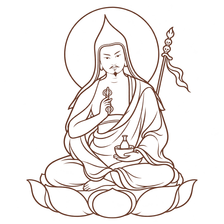
How to Practice for Someone who has Just Died
3. 如何为刚刚去世的人 3. How to Practice for Someone
修持 who has Just Died
YESTERDAY, I EXPLAINED how to practice phowa according to
the original terma text from the Longchen Nyingtik cycle:
“Enlightenment Without Meditation”. There is also a text written
by Jigme Lingpa that I shall refer to today which explains how to
guide and practice phowa for someone who has just died.[19]
昨天,我依《龙钦心髓》法集的根本伏藏文本《不修成佛》,讲解了如何修持颇瓦法。吉美林巴还写过一篇文章,说明如何引导刚去世的人,以及如何为他们修颇瓦法,今天我也会参照这篇文章。[19]
Whenever we talk about death, it immediately provokes a lot of
fear and anxiety in us, even though it is something that we will all
have to face. Jigme Lingpa begins his text by saying that whoever is
born, will one day die—there is absolutely no doubt about this. It is
extremely important that we are aware of what is happening when
we are about to die. If we are a dharma practitioner, we can rest in
the nature of mind, and even if we don’t know how to do that, we
can at least supplicate the lama and make aspiration prayers.
每当谈到死亡,我们立刻就生起许多恐惧与焦虑,尽管这是人人都必须面对的事。吉美林巴在文首先说,凡是出生的人,总有一天都会死——对此绝无疑问。临终时,明白正在发生什么,极为重要。如果是佛法行者,就能安住心性;即使不懂得如何安住,至少也能祈请上师、发愿。
I have a friend in India who was sick a few years ago and I asked
him, “What will you do if you die?” He replied, “Well, there’s not
much I can do. I will pray and make some positive aspirations.” I
thought this was quite an amazing answer. Even if we’re not very
good at saying prayers, at least this is something we can all try to do
when we are about to die.
我在印度有一位朋友,几年前生病时,我问他:“如果你死了,你会怎么办?”他回答:“嗯,我也做不了多少。我会祈祷,发一些善愿。”我觉得这个回答很了不起。即使我们不太善于念祈祷文,至少临终时,人人都可以尝试这样做。
It is equally important for people who are not dharma practitioners
to be aware that they are dying—it will certainly benefit them. This
is why Jigme Lingpa begins his text by telling the person that they
are dying.
Phowa should be practiced when the outer breath has ceased but
the inner breath is still flowing, before the different stages of the
mind’s dissolution have reached their conclusion. When the outer
breath ceases, our mind becomes very clear—even clearer than
normal—since all our undercurrent thoughts momentarily cease,
as the small channels in our body become blocked. There is still,
however, a movement of air and consciousness in the main channels
of our body, such as the central channel. This is the time that phowa
should be effected.
对于不修佛法的人,明白自己正在死去,同样重要——这一定会对他们有益。因此,吉美林巴在开头就告诉那个人,他正在死去。
颇瓦法应在外呼吸已停止、内呼吸仍在运行,而心识消融的各个阶段尚未结束时修持。外呼吸停止时,身体的细脉闭塞,潜流般的念头暂时全部止息,因此心会变得非常清明,甚至比平时更清明。然而,在中脉等身体主要脉道内,风与识仍有活动。此时便是施行颇瓦法的时候。
There is a difference in how you practice phowa for someone who
is still alive compared to someone who has just died. If you don’t
know this difference, there’s a danger that you might cut short a
person’s life, if they are still living.
为仍然活着的人修颇瓦法,与为刚去世的人修颇瓦法,方法有所不同。若不了解其中区别,当那个人尚在人世时,就有缩短他寿命的危险。
Before you begin the phowa practice, you need to summon
the dead person by calling out his or her name. You don’t need to
shout the name, but it does need to be audible. The dead person’s
consciousness will still feel connected to their name, so they will pay
attention when you call it. Imagine there’s a crowd of a thousand
people—if you call out the name of just one person in that crowd,
they will immediately hear you; their mind will focus on wherever
the sound came from. It’s exactly like that.
开始修颇瓦法之前,需要呼唤亡者姓名,将他召来。不必大喊,但须发出能够听见的声音。亡者的心识仍会觉得与自己的名字有联系,所以呼唤名字时,他就会注意。设想在人群中有一千个人:只要叫出其中一人的名字,他立即就会听见,心便会注意声音传来的地方。就是这样。
So you need to say the dead person’s name—in some phowa
practices, you do this three times. In this text, Jigme Lingpa doesn’t
give a precise number, so you can say it once, three times, or as many
times as you wish.
因此,需要念出亡者姓名——某些颇瓦法要求念三遍。这篇文本中,吉美林巴没有规定确切次数,所以可以念一遍、三遍,或随意念多少遍。
When you call the dead person’s name, they will pay attention
and listen to what you have to say. Firstly, you need to tell them that
they have in fact died and what they are experiencing now is what
we call death:
呼唤亡者姓名时,他就会注意,听你接下来所说的话。首先,需要告诉他,他事实上已经死了,现在所经历的,就是我们所说的死亡:
[Name of the deceased], having experienced impermanence
you are now dead.
You repeat this to them three times.
[亡者姓名],你已经历无常,如今已经死亡。
对他说三遍。
If the deceased person was a practitioner, their mind will immediately
turn to the practice. This is because practitioners, while they were
alive, reflected a great deal on impermanence and death. They came
to realize that apart from practice, there’s nothing else that can really
be of benefit to you at the moment of death. Since they reflected so
much about this, their mind will naturally turn to practice when
death arrives.
如果亡者是一位行者,他的心立即就会转向修持。因为行者生前曾大量思惟无常与死亡,已经明白,临终时除了修持,再没有别的东西能真正利益自己。由于对此反复思惟,死亡到来时,心就会自然转向修持。
There are several different kinds of practice that we can turn to
at the moment of death. If the person who just died was a Dzogchen
practitioner, they would rest in the state of primordial purity. But
if they have never practiced during their lifetime, they will have
nothing to turn to. When we die, we will only practice and rest in
the state of meditation if we practiced this while we were alive. That
moment will then be like space merging with space; we will then be
liberated. As Jetsun Milarepa said, “There’s no such thing as death,
death is buddhahood”. Even if you’re not able to practice Dzogchen
in this way, there are many other practices that you can train in while
you are alive which can then be applied at the moment of death.
临终时,我们可以依靠几种不同的修法。如果刚去世的人修持大圆满,就会安住本初清净的境界。但若生前从未修持,届时就无所依靠。只有活着时修习过,死时才会修持并安住禅定。那一刻便如虚空融入虚空,我们由此解脱。至尊密勒日巴说:“所谓死亡并不存在,死亡即是成佛。”即使不能这样修大圆满,也还有许多其他法门,可以生前训练、临终运用。
Having repeated this message to the dead person three times,
you then tell them that they are not the only ones to experience
death. This is important for them to hear, particularly if they haven’t
practiced much during their life:
把这个讯息向亡者重复三遍后,接着告诉他,经历死亡的,并非只有他一人。让他听见这一点很重要,尤其当他生前没有多作修持时:
You are not the only person to have experienced what we call
‘death’; it is the path every one of the five kinds of sentient
being (gods, humans, animals, pretas, and hell beings) must
follow.
经历所谓“死亡”的,并非只有你一人;五类众生——天、人、畜生、饿鬼、地狱众生——无一不须走过这条路。
Death comes to every single sentient being of every type—whether
gods, humans, animals, and so on.
Once birth has taken place, life or living can only end in death—
such is the nature of things.
无论天、人、畜生等等,任何一类众生,每一个都要死亡。
一旦出生,生命或生存就只能以死亡告终——这就是事物的本性。
As soon as a sentient being is born, their life can only end in
death. Such is the nature of things, this cannot be changed. The
point of saying this to the dead person is to alleviate their suffering.
If you have a problem and are the only one to experience it, you will
get worked up and agitated. If you tell the dead person, however, that
everyone without exception will experience exactly the same thing, it
will make it easier for them to accept.
众生只要出生,生命就只能以死亡告终。事物本性如此,无法改变。对亡者这样说,是为了减轻他的痛苦。如果你遇到一个问题,而只有你一人经历,就会变得激动不安。可是,若告诉亡者,人人都会经历完全相同的事,无一例外,他就会更容易接受。
There is not a single sentient being in this world—from the rich
and powerful universal monarch to the starving beggar unable even
to feed himself—who can free themselves from life and death, so
don’t despair.
这世上没有一个众生——从富有而权势显赫的转轮王,到连自己都养不活的饥饿乞丐——能够摆脱生死,所以不要绝望。
The next point needs to be explained a little more elaborately:
接下来这一点,需要讲得稍微详细一些:
Be aware that nothing you are attached to—your family, your
friends, your house, your wealth, your possessions and so on—
can go with you. Understand that your time with them is now
over. As it is said:
要明白,你所执著的一切——家人、朋友、房屋、财富、财物等等——没有一样能随你而去。要理解,你与他们相处的时光,如今已经结束。正如所说:
Now that you are personally experiencing the ripening of the truth
of suffering described in this verse, which is the very nature of
things, the danger is that your attachment to your relatives, wealth
and possessions will lead you to a lower realm. This is why, in the
Sūtra Requested by the Girl called Precious,[21] the Buddha said:
如今,你正亲身经历此偈所说的苦谛成熟,这就是事物的本性。危险在于,对亲人、财富和财物的执著,会把你引向恶趣。因此,佛陀在《宝女所问经》[21]中说:
In that moment, your father, mother, relatives,
Friends or people you are close to, cannot afford you any
protection.
Sons, daughters are no refuge.
Only those endowed with great qualities can protect you,
Which no worldly protector can give you.
彼时父母与亲属,
朋友以及亲近者,皆不能为你提供保护。
儿女亦非归依处。
唯具大功德者能护佑,
此非世间救护者所能给予。
I have made this point to you several times before—the greater your
attachment, the greater the obstacle this will be to your reaching
buddhahood. It will also make it more difficult for the phowa
practice to be successful. Attachment is the greatest cause for our
continued cycling in saṃsāra.
这一点,我以前已向你们讲过数次:执著越强,成佛的障碍就越大,也越难使颇瓦法成功。执著是我们不断流转轮回的最大原因。
Someone who doesn’t have too many attachments will be much
more relaxed when they die. Great changes do not cause them too
much suffering, so death will be somewhat easier for them.
没有太多执著的人,死亡时会轻松得多。巨大的变化不会令他太过痛苦,因此死亡也会稍微容易一些。
Some people are very attached to their wealth and possessions.
If you give them a hundred euros, it only increases their attachment
and they end up accumulating even more negative karma. A monk
or nun can just as equally be attached to their possessions. The
attachment that saṅgha members have to the offerings they receive
is known as ‘the obscuration related to the possessions of the saṅgha’
and is said to accumulate great negativity. A practitioner who isn’t
too attached to the offerings they receive will accumulate far less of
this obscuration. Here, the size of the offering doesn’t really matter,
the problem is how strongly we are attached to it—this is the root
cause of the negative karma that we accumulate.
There are a lot of spirits in our world that only have a mental
body and the reason they still roam around is because of their
attachment, which creates a lot of fear. In The Words of My Perfect
Teacher examples are given of the different types of rebirth that result
from different types of attachment. For example, if you are attached
to money and keep piling up your wealth, it will result in a lower
rebirth.
有些人非常执著自己的财富和财物。如果给他们一百欧元,只会增加他们的执著,结果造下更多恶业。僧尼同样可能执著自己的财物。僧众对所受供养的执著,称为“与僧众财物有关的障垢”(僧财障),据说会积累极大的恶业。行者若不太执著所得供养,这一障垢就会少得多。这里,供养的多少其实并不重要,问题在于执著有多强——这是所积恶业的根本原因。
世间有许多仅具意生身的鬼神,他们仍然游荡,原因就是执著,而执著会造成许多恐惧。《普贤上师言教》中,举例说明了不同执著所导致的不同投生。例如,若执著金钱,不断累积财富,就会导致投生恶趣。
There was an old lady who died recently in Bylakuppe, South
India. One of her relatives who lived in Kham went to see Khenpo
Achö to ask what had become of her after she had died. Khenpo Achö
rested in meditation for a while and then told the relative, “There’s
something under her bed that she is very attached to. Unless you
get rid of it and accumulate a lot of merit on her behalf, things will
be quite difficult for her.” Nobody knew that she had some money
tucked away, they couldn’t imagine she had anything of value. So the
relative, who had great faith in Khenpo Achö, traveled all the way
from Kham to South India to investigate further. When he went to
the old lady’s room he saw the old bed on which she had slept, but
couldn’t find anything underneath it. Still, he was convinced that
Khenpo Achö must have seen something, so he started to dig into
the earth under the bed. Sure enough, after a while, he discovered a
bag that had been buried there—it contained 700,000 rupees. This
is what can happen to you if you are too attached to something;
attachment is the biggest obstacle on our path to enlightenment.
最近,南印度拜拉库比有一位老太太去世。她在康区的一位亲属,去见堪布阿琼,询问她死后去了哪里。堪布阿琼安住禅定片刻,随后告诉那位亲属:“她床下有个东西,她非常执著。除非把它处理掉,并为她积累许多福德,否则她会很困难。”没有人知道她藏了钱,大家无法想象她还有什么值钱的东西。那位亲属对堪布阿琼深具信心,便从康区一路赶到南印度,进一步查探。他走进老太太的房间,看见她睡过的旧床,可床下什么也找不到。不过,他坚信堪布阿琼一定看见了什么,于是开始挖床下的泥土。果然,挖了一会儿,就发现一个埋在地下的袋子,里面装有七十万卢比。太执著某样东西,就可能发生这种情况;执著是我们觉悟之道上最大的障碍。
Before we begin the phowa practice, therefore, we need to tell the
dead person to let go of all their attachments. A powerful master may
have the ability to send a consciousness to a pure buddha field, but if
the person they are practicing for still has strong attachments, it can
block that possibility. This is an extremely important point.
因此,开始修颇瓦法之前,需要告诉亡者,放下所有执著。一位有力量的上师,或许有能力把心识送往清净佛土;但若所度之人仍有强烈执著,这种可能性就会被阻断。这一点极为重要。
You should therefore rejoice at being able to experience death and
transference at a time when the teachings of the Buddha exist in
this world.
This tells us why we should let go of our attachments. Right now, we
are attached to our father, our mother, our possessions, our money,
and so on—when we die, we will need to give all of them up. But
that’s not going to be easy. It will be very difficult for us to abandon
them, our attachment will still be strong. So it is important to inspire
joy and enthusiasm in the dying person. Hence Jigme Lingpa’s next
point, which is to remind the dead person of their immense good
fortune to pass away during a time when the teachings of the Buddha
are still present in the world. This, he says, is the cause for great
rejoicing. We should dwell on this fact, rather than our suffering of
loss.
因此,你能在佛陀教法住世之时经历死亡与迁识,应当为此欢喜。
这里告诉我们,为何应当放下执著。现在,我们执著父亲、母亲、财物、金钱等等;死亡时,就必须舍弃这一切。可是,这并不容易。我们会很难放弃,执著仍会强烈。因此,激发临终者的欢喜与热忱,很重要。所以,吉美林巴接下来提醒亡者,在佛陀教法仍住世时去世,是何等巨大的幸运。他说,这是极应欢喜的理由。我们应把心放在这一点上,而非失去一切的痛苦上。
During this fortunate time, just to hear the names of the
bhagavān buddhas—no matter who recites them—is very
powerful. If a dead person with a joyful mind really trusts in the
Buddha, hearing the names of the buddhas during the process of
transference will liberate them from a lower rebirth and they will
instead be reborn as a human or a god. As the Buddha said in The
Hundred Deeds:[22]
在这幸运的时代,仅仅听到诸佛薄伽梵的名号——无论谁来念诵——都极具力量。如果亡者心怀欢喜,真正信赖佛陀,在迁识过程中听见诸佛名号,就能免于投生恶趣,转而投生人道或天道。如佛在《百业经》[22]中所说:
“O monks, if a bird descends from the sky and lands in front
of me, will it see me?”, he asked. “O Noble Bhagavān, it will
see you”, they replied. “O monks, if the bird comes to like
me, it will not leave but will stay and follow me. So if you
have appreciation for me in mind at the moment of death and
transference, you will have a rebirth much better than being
reborn here in Rājagṛha in the family of rich merchants, and
will become a monk who follows my teachings. In only seven
years after having taken ordination, you will overcome all
negative emotions and become a foe destroyer, an arhat.”
The Buddha cites one hundred such accounts in this sūtra—a
few of them are mentioned in The Words of My Perfect Teacher.
他问:“诸比丘,若有一只鸟从空中飞下,落在我面前,它会看见我吗?”他们答:“尊贵的薄伽梵,它会看见您。”“诸比丘,若这只鸟喜欢我,便不会离开,而会留下跟随我。因此,若你在死亡与迁识之际,心中对我生起欣慕,就会获得远胜于在此王舍城富商家中出生的来世,成为奉行我教法的比丘。受戒后仅七年,你便会克服一切烦恼,成为灭敌者——阿罗汉。”
佛陀在此经中讲述了一百个这样的事例;《普贤上师言教》中也提到其中几个。
Just one moment of faith in the Buddha brings about these
benefits. As you are born in a world where the teachings of
the Victorious One are present, you have heard the name of
the Buddha, and you also have the good fortune to be able to
appreciate his teachings. So, sincerely arouse an even greater faith
in our teacher, the Tathāgata, take refuge in the dharma, his
perfect teachings and aspire to respect the saṅgha of bodhisattvas.
Buddha promised that all fear in the bardos and all the causes of
lower rebirth will be completely eliminated the moment anyone
remembers his name and words, and abides by the view.
对佛陀生起一刹那信心,就能带来这些利益。你生于胜者教法住世的世界,听过佛陀名号,又有幸欣慕他的教法。因此,要对我们的导师如来,至诚生起更加深厚的信心;归依正法——他的圆满教法;发愿恭敬菩萨僧众。佛陀曾应许,任何人只要忆念他的名号与言教,并依见地安住,刹那间,中阴中的一切恐惧及投生恶趣的一切因,便会完全消除。
Do not forget to rely on the protector Amitābha and the
bodhisattvas Avalokiteśvara and Vajrapāṇi, or their buddha-field
called Sukhāvatī. Since you are now free of your physical body of
flesh and blood, go straight to this supreme buddha field.
Think of and meditate on the lama for whom you have devotion.
Remember your yidam and the view. Meditate on the Mahayāna’s
bodhicitta in aspiration and action.
Having created auspicious circumstances by following these key
instructions, apply the instructions on transference that lead
to the attainment of enlightenment without meditation. Since
you are reincarnating lifetime after lifetime, meditate on a white
syllable A in your heart. As I repeat A, bring into your experience
what I have just said. Consider that A (in some particular cases
you can also change it to Hrīḥ) goes straight to the buddha-field of
Sukhāvatī, like an arrow shot by a strong man.
A is emptiness, the supreme syllable. “A is the supreme syllable […]
Arising from within, it is without arising.”[23] It is the unborn source
of everything and since it is unborn, it cannot die. When there is
neither birth nor death, that’s emptiness, right?
勿忘依靠怙主阿弥陀佛,以及观世音、金刚手菩萨,勿忘名为极乐的佛土。你如今已经脱离血肉之躯,便直接前往这一殊胜佛土。
忆念并观修你所虔敬的上师。忆念本尊与见地。修习大乘愿菩提心与行菩提心。
依照这些要诀营造吉祥因缘之后,运用引导你不修成佛的迁识教授。由于你一生接着一生转世,应观想心间有一个白色 A 字。我念 A 时,把刚才所说的融入你的体验。观想 A 字(在某些特殊情况下,也可以改为 Hrīḥ)如壮士射出的箭一般,直达极乐佛土。
A 是空性,是最胜字。“A 为最胜字……从内生起而无生。”[23]它是一切的无生之源,既然无生,也就不能死。没有生,也没有死,就是空性,对吧?
It says in the text that you can replace the syllable A with Hrīḥ.
Whether you recite A or Hrīḥ, “Consider that the syllable goes
straight to the buddha-field of Sukhāvatī, like an arrow shot by a
strong man.” What is it that you transfer to Sukhāvatī? It is the
syllable Hrīḥ which is the embodiment of the mind and wind energy
of the dead person.
文中说,可以用 Hrīḥ 字替换 A 字。无论念 A 还是 Hrīḥ,都要“观想此字如壮士射出的箭一般,直达极乐佛土”。迁往极乐的,究竟是什么?就是 Hrīḥ 字,它是亡者心与风的体现。
Say this to inspire the dead person and actualize it yourself.
以此话激励亡者,自己也要实际做到。
The main person who needs to actualise these instructions is you, the
one who is practicing phowa for the dying person.
最需要实际做到这些教言的人,是你,也就是为临终者修颇瓦法的人。
Then, repeat the same number of A as the number of years the
person lived, in a gentle tone of voice.
随后,以柔和的声音念诵 A,遍数与此人生前的岁数相同。
You should repeat A the same number of times as the dead person’s
age. If the dying person is 100 years old, for example, you need to
repeat A one hundred times.
念 A 的遍数,应与亡者年龄相同。例如,临终者一百岁,就需要念一百遍 A。
To send the dead person to a higher rebirth, pull the hair on
the crown of their head and repeat A twenty-one times.
为令亡者投生善趣,牵拉其头顶的头发,念 A 二十一遍。
You may have seen a lama pulling the hair at the crown of the head
of a dead person, just before they begin the phowa practice. While
some lamas do follow this instruction, others are reluctant to because
they are afraid of touching a corpse. Jigme Lingpa instructs us to pull
the hair at the crown of the dead person’s head before we repeat the
A twenty-one times, since this can help bring about a higher rebirth.
Some lamas also pull the corpse’s hair after they’ve completed the
phowa practice, to check whether the transference was successful.
你们或许见过,上师开始为亡者修颇瓦法之前,会拉其头顶的头发。有些上师确实照此教授行持,另一些则因害怕接触尸体而不愿这样做。吉美林巴教导,在念二十一遍 A 之前,先拉亡者头顶的头发,因为这有助于往生善趣。有些上师也会在颇瓦法修完之后拉尸体的头发,以检查迁识是否成功。
For worldly beings such as ourselves, the path that we follow is
extremely important. For example, if we are driving and take the
wrong road, we will fail to reach our destination. In order for us to
take a higher rebirth, the route that we need to follow is upwards,
through the aperture of brahma. The pathway downwards, through
the feet, secret place, etc, only results in lower rebirths. This is a
crucial point.
对于我们这样的凡夫,所走的路径极为重要。例如,开车时走错了路,就无法到达目的地。若要投生善趣,就需要向上走,经由梵穴而出。向下经由脚底、密处等处的通道,只会导致投生恶趣。这一点至关重要。
Once the great mahāsiddha of the Kagyüpa tradition, Götsampa,
wondered whether it made any difference if the dead person’s
consciousness was ejected upwards or downwards through the
body. Since he was a highly realized master, he decided to check
this for himself and sent his consciousness out through his feet to
see what would happen. What he experienced afterwards was the
manifestation of the hell realms, both hot and cold. When he ejected
his consciousness through the aperture of brahma on the crown of
his head, however, he experienced the higher realms. He later wrote
in his instruction manual that based on his own experience, he could
see that this was an extremely important point.
噶举派大成就者果仓巴,曾想知道,亡者的心识从身体向上射出或向下射出,究竟有无差别。他是证悟极高的上师,于是决定亲自验证,将心识从脚底送出,看看会发生什么。之后,他经历了寒热地狱的显现。可是,当他从头顶梵穴射出心识时,所经历的却是善趣。后来,他在教授手册中写道,根据自身体验,可以看出,这一点极为重要。
The point about attachment is also very important and needs to
be re-stated. Because of the attachments that we have, it is important
that the people close to the dead person—the husband/wife, children,
relatives, etc—do not stand near the feet of the corpse, but behind
the head. If they stand near the top of the head, it will encourage the
consciousness to move upwards. Some people will also pull the dead
person’s hair (at the aperture of brahma) when they do this. In any
case, the important point here is that the aperture of brahma is the
doorway to a higher rebirth.
关于执著的问题,同样非常重要,需要再说一次。由于我们有所执著,与亡者亲近的人——丈夫或妻子、子女、亲属等等——不应站在尸体脚边,而应站在头部后方。站在头顶附近,就会促使心识向上移动。有些人这样做时,也会拉亡者梵穴处的头发。无论如何,这里的重点是,梵穴是通往善趣的门。
In some phowa practices, you meditate on closing the apertures
of the body that lead to a lower rebirth, leaving only the aperture
of brahma open, however this does not feature in the Longchen
Nyingtik practice. There are nine such apertures in the body—
you block eight and leave one open. This is another crucial point.
This closing of the eight apertures and leaving one open appears in
the phowa practice found in the treasure revelations of Chokgyur
Lingpa. Chokgyur Lingpa himself particularly emphasised the
importance of this point.
有些颇瓦法要求观想封闭身体中通往恶趣的孔窍,只让梵穴开放;但龙钦心髓修法中没有这一项。身体共有九个这样的孔窍,封闭八个,留下一个开放。这是另一个要点。秋吉林巴所取出的伏藏颇瓦法中,就有封闭八窍、留一窍开放的修法。秋吉林巴本人尤其强调其重要性。
Jigme Lingpa then states the source from which he extracted these
pith instructions. He does this to show that he didn’t just make them
up, they are not his own invention. The instructions are extracted
from the Tantra of the Union of Sun and Moon, which is one of the
seventeen Dzogchen tantras taught by the Buddha Samantabhadra.
These Seventeen Tantras of the Great Secret, as they are known, are
the highest teachings in the Nyingma tradition.
接着,吉美林巴说明这些窍诀取自何处,借此表明,这些并非他随意编造,也并非自己的发明。这些教授取自《日月和合续》,此续是普贤王如来所说的大圆满十七续之一。所谓“大秘密十七续”,是宁玛传统中最高的教法。
Whenever a learned master gives pith instructions, they will
always quote the source from which they are derived. If you don’t do
this, as happens a lot nowadays, people end up saying whatever pops
up in their mind, and then afterwards calling that a teaching. If you
asked a question to Nyoshul Khenpo, even a minor one, he would
always quote extensively from the Seventeen Tantras to validate his
answers, especially from the Reverberation of Sound Tantra which
is the root of all the others. This is an extremely important point.
Longchen Rabjam would always teach in this way.
有学问的上师传授窍诀时,总会引用其来源。如果不这样做——如今这类事情很多——人们便会心里冒出什么就说什么,然后称之为教法。若向纽舒堪布提问,即使问题很小,他也总会广引十七续,尤其是作为其余诸续根本的《声应成续》,来印证自己的回答。这一点极为重要。龙钦绕降一直就是这样传法的。
The Tantra of the Union of the Sun and the Moon says:
《日月和合续》中说:
If, having applied the syllable A
To the breath and the number of years the person lived,
They do not die at that very moment,
Gather the consciousness of the air from the brahma aperture
Into the middle of the body
Focusing on the syllable A.
若已将 A 字用于呼吸,
遍数与彼寿岁相同,
而彼当时尚未死去,
则从梵穴将风之识,
摄集于身体中央,
专注于 A 字。
And,
又说:
If the dying person is still breathing as you do this practice,
By applying the letter to the breath
Their consciousness will be transferred from this world –
Of this there is no doubt.
修此法时,若临终者尚有呼吸,
将此字用于呼吸,
其识必从此世迁移,
对此毫无疑问。
This is what Jigme Lingpa just explained in the text.
这就是吉美林巴刚才在文中所解释的。
Associating the unborn syllable A with the expelled air once
the process of dissolution has begun to manifest, is an extremely
profound instruction.
消融过程开始显现时,将无生 A 字与呼出的气息相结合,是极其甚深的教言。
In the meditation manual called Yeshe Lama, in the instructions “for
those of middling capacity who will be liberated in the bardo of
dharmatā”, it explains that at the moment of the bardo of death, one
should repeat A when all movement has ceased at the level of the throat.
When Khandro Tsering Chödron passed away, both Sogyal Rinpoche
and I were present with her. I told Sogyal Rinpoche to stand behind
Khandro’s head and I said “A A” twenty-one times. The first time I
did this, Khandro gave a slight nod of her head. I repeated it a second
time, even more strongly, and she shook her head again as if to say,
“Okay, I’ve got it.” Then I did it a third time, and she didn’t move,
she had passed away and was resting in meditation.
禅修手册《智慧上师》中,“中根者于法性中阴解脱”的教授解释,在临终中阴,当喉部的一切活动止息时,应念 A。空行母次仁确珍圆寂时,索甲仁波切和我都在她身边。我请索甲仁波切站在空行母头部后方,自己念了二十一遍“A A”。第一次这样做时,空行母微微点头。我第二次念得更有力,她又摇了一下头,仿佛在说:“好了,我知道了。”随后第三次念时,她不动了,已经圆寂,安住禅定。
More explanation follows:
接着有进一步的解释:
Emphasize merging the mind of the person you practice for with
the wisdom of space-like expanse, using the skilful means of great
compassion. Alternatively, you could practise more elaborately
at this point by doing one of the many phowa as it appears
elsewhere.[24] In any case, block the entrance to the lower realms
with the names of the buddhas, and with the mantras, dhāraṇīs and special aspirations made by the buddhas. Bear in mind
that it is difficult to guide those who are completely unfamiliar
with spiritual practice through kyerim, and to introduce them
to appearance, increase and attainment, and so on, because it is
very hard to communicate with those who are in the blank state
of ālaya.
运用大悲方便,着重将所修之人的心,融入如虚空广大之智慧。或者,也可以在此处采用其他地方所见的众多颇瓦法之一,作较广的修持。[24]无论如何,都应以诸佛名号、真言、陀罗尼及诸佛所发的殊胜愿,封闭恶趣之门。须记住,对于完全不熟悉修行的人,很难以生起次第引导,也很难向他们指示显、增、得等阶段,因为对于处在阿赖耶空白状态中的人,沟通极其困难。
This is quite difficult to understand. What it means is that whoever
practices phowa for the dead person, must have a mind filled with
great compassion. They need to hold the dead person in the embrace
of this great compassion. As you know, compassion alone is not
enough—they must also meditate on the space-like wisdom which
is the view of emptiness. For a Dzogchen practitioner, this is the
dharmakāya buddha that has been introduced to them by their
lama, and which they have familiarised themselves with through
meditation practice. If someone practices phowa in this way,
motivated by compassion while abiding in the view of emptiness,
that will be enough. As they practice and merge their mind with
the space-like expanse of wisdom, the dead person will be liberated.
There’s absolutely no doubt about this. The text says, ‘emphasize’
indicating that this is the best approach. However, Jigme Lingpa
adds that “alternatively, you could practise more elaborately at this
point by doing one of the many phowa as appear elsewhere.”
这一段颇难理解。其意思是,凡为亡者修颇瓦法的人,心中都必须充满大悲,以此大悲摄持亡者。你们知道,只有悲心还不够,还必须修习如虚空的智慧,也就是空性见。对大圆满行者来说,这就是上师已经向他们指示、并经禅修而熟悉的法身佛。若有人这样修颇瓦法,以悲心为发心,同时安住空性见,就足够了。当他这样修持,将自心融入如虚空广大的智慧中时,亡者就会解脱,对此绝无疑问。文中说“着重”,说明这是最好的方法。不过,吉美林巴又补充说:“或者,也可以在此处采用其他地方所见的众多颇瓦法之一,作较广的修持。”
Some people say that when we die, phowa practice is all that is
needed, we don’t need anything else in order to reach liberation.
Others say that in the case of a great practitioner, all they need to
do is remain in meditation and that is enough. It’s not necessary
in their case to recite the names of the buddhas (for example, the
confession practice of The Three Heaps), nor to recite any mantras,
such as the hundred-syllable mantra. What Jigme Lingpa says here
is that all such statements are false. However realized you might be,
what harm can there be in reciting the names of the buddhas, or in
reciting mantras? What’s the problem with that? There are many
people nowadays who make all kinds of statements like this but they
don’t know what they’re talking about and are largely ignorant of the
scriptures and the tantra teachings.
有些人说,死亡时只需要修颇瓦法,要解脱便不再需要别的。另一些人说,对于大修行人,只要安住禅定就够了,不必再念诸佛名号,例如《三聚经》的忏悔修法,也不必念任何咒语,例如百字明。吉美林巴这里说,这些说法全都不对。无论你的证悟有多高,念诸佛名号或念咒,有什么害处?有什么问题?如今有许多人作出这类种种断言,却不明白自己在说什么,对经教和密续教法大多一无所知。
Jigme Lingpa also clarifies that it is very difficult to introduce
someone to the three phases[25] that arise at the moment of death if
they have never received any dharma teachings and haven’t practiced
kyerim and so forth. These three phases relate to the experiences
that we go through within the bardos. Jigme Lingpa says that it
is very difficult to introduce someone to those states if they have
no experience of practice, because there’s no basis upon which to
communicate with them. Instead, we should practice phowa for
them. Some people say there’s no point even to do that, but here
Jigme Lingpa states clearly that we can practice phowa for someone
who has no experience of dharma practice.
吉美林巴也明确说明,如果一个人从未领受佛法教授,也没有修过生起次第等法,就很难向他指示临终时出现的三个阶段。[25]这三个阶段,与我们在中阴中经历的体验有关。吉美林巴说,如果一个人没有修持经验,就很难向他指示这些状态,因为没有与他沟通的基础。因此,应改为替他修颇瓦法。有些人说,连这样做也没有意义,但吉美林巴在此明确说,可以为没有佛法修持经验的人修颇瓦法。
Some time ago, I practised phowa for a Chinese Buddhist teacher
who had passed away in Taiwan. As I was about to begin the phowa
practice, some of his students came to me and said, “You don’t really
need to practice phowa for him—Tulku Urgyen said he was a yogi
who had reached the highest level of Dzogchen where everything
appears as space. Are you sure you really need to do this?” In spite
of what they said, I practiced phowa for him several times. When I
checked his body afterwards, I could see a small lump on the crown
of his head, as well as blood seeping from of his nostrils. So I said
to his students, “Well, what do you think, was the phowa necessary
or not?” There was a doctor there who was a student of that teacher.
He said that the teacher had cancer and that the phowa practice was
probably needed to help him with that. People say all kinds of things
these days!
前些时候,我曾为一位在台湾去世的汉人佛教老师修颇瓦法。正要开始时,他的一些弟子来对我说:“其实不必为他修颇瓦法。祖古乌金说过,他是一位达到大圆满最高层次的瑜伽士,一切显现皆为虚空。您确定真需要这样做吗?”尽管他们这样说,我还是为他修了数次颇瓦法。之后查看他的身体,可以看见头顶有一个小肿块,鼻孔也有血渗出。于是,我问他的弟子:“那么,你们看,颇瓦法到底有没有必要?”在场有一位医生,也是那位老师的弟子。他说,老师患有癌症,可能需要颇瓦法来帮助。如今,人们真是什么话都说!
What Jigme Lingpa says here is that whether or not the deceased
person was a dharma practitioner, you need to practice phowa for
them.
Finally,
吉美林巴这里说,无论亡者生前是否修持佛法,都需要为他修颇瓦法。
最后:
This text was written by Rangjung Dorje, in the presence of
Losal.
此文由让炯多杰于洛萨面前撰写。
Jigme Lingpa ends the text by saying that it was written by Rangjung
Dorje (one of his dharma names) “in the presence of Losal”, who was
probably the person who requested the advice.
吉美林巴在文末说,这是由让炯多杰——他的一个法名——“于洛萨面前”所写。洛萨大概就是请求此教言的人。
答疑 Clarifications
Q. Is the notch in the central channel a widening of the channel or
an indentation? I ask because the Hrīḥ syllable is supposed to rest
on top of it.
A. It’s like the knots that you find on a stick of bamboo. It prevents
the bindu from falling any further down the channel. Above the
notch is the green sphere of light and on top of that is the Hrīḥ
syllable. It is said that the bindu is like the horse and the Hrīḥ
syllable like the rider.
问:中脉的脉节,是脉道变宽,还是向内凹陷?我这样问,是因为 Hrīḥ 字应安住在它上面。
答:它像竹竿上的竹节,阻止明点沿脉道继续下落。脉节上方是绿色光球,其上为 Hrīḥ 字。据说,明点如马,Hrīḥ 字如骑者。
Q. Can you clarify how you produce the sound of the Hrīḥ syllable,
about the movement of the tongue against the palate? And how
does the syllable get from there to the central channel?
A. The text simply instructs you to recite the Hrīḥ syllable from the
upper palate of your mouth. There is no visualisation involved. The
point of reciting Hrīḥ is to help you focus on the syllable that is in
the central channel at the level of your heart. It is this Hrīḥ that you
need to visualize and focus on.
问:能否再解释一下 Hrīḥ 字如何发音,舌头怎样抵住上腭活动?这个字又如何从那里进入中脉?
答:文本只是教你从口腔上腭念出 Hrīḥ 字,并没有涉及观想。念 Hrīḥ 的用意,是帮助你专注于心间中脉中的那个字。需要观想和专注的,是这个 Hrīḥ。
Q. How am I to relate to Sukhāvatī if there are no women there?
A. Don’t ask me, you need to ask Amitābha! Actually it’s Buddha
Śākyamuni who said this. Since there are no women in Sukhāvatī,
there can be no birth—in Sukhāvatī, there is no birth from the
womb. There are four types of birth that are said to exist: birth
from the womb, birth from heat and moisture, miraculous birth,
and birth from an egg. We consider the best type to be miraculous
birth. We say, for example, that Guru Rinpoche was miraculously
born from a lotus. Likewise in Sukhāvatī, there is only miraculous
birth, the best kind. Even though it is said that there are no women
in Sukhāvatī, there are countless offering goddesses there. It is also
said that all the flowers, trees, birds and so on, produce the sound
of the dharma. No one has any aversion to the sounds they hear in
Sukhāvatī, everything is pleasing to the ear—otherwise it would not
be a pure realm. Sukhāvatī has many other qualities like this.
问:如果极乐世界没有女人,我该怎样理解自己与它的关系?
答:别问我,你要问阿弥陀佛!其实,这话是释迦牟尼佛说的。极乐世界没有女人,所以不会有这样的出生——在极乐世界,没有从母胎出生。通常说有四生:胎生、湿生、化生、卵生。其中,化生被视为最好。例如,我们说莲花生大师是从莲花中化生的。同样,极乐世界也只有最好的化生。虽然说极乐世界没有女人,却有无数供养天女。又说,所有的花、树、鸟等,都发出法音。在极乐世界,没有人会厌恶所听到的声音,一切都悦耳,否则就不是净土了。极乐世界还有许多这样的功德。
When we speak about the pure buddha fields, our limited
conceptual minds cannot grasp how they really are, they are beyond
what we can conceive. Sukhāvatī was probably described in this
way so as to fit what the people of those times could understand
and accommodate in their minds, just to give them an indication
of what it is really like. Its real nature is beyond what we can see
or conceive. But in order to help those people, to give them some
idea, Sukhāvatī was explained in terms that fit their thinking and
perception, according to the times in which they lived.
谈到清净佛土,我们有限的分别心无法把握其真实情形,那是超越我们所能想象的。极乐世界大概是为了适应当时人们所能理解和接受的范围,才被如此描述,让他们对它的真实情形略有所知。它的真实本性,超越我们能见、能想的范围。但为了帮助那些人,给他们一些概念,就按照他们生活的时代,以适应其思惟和感知的方式,来说明极乐世界。
Q. It is said that when you practice phowa you should hold the
upper part of your body tight. Could you explain why this is
important?
A. You need to sit straight, not to slouch. The head needs to be
slightly raised also. The point is that if the body is straight, the
channels will be straight; if the channels are straight, the inner winds
will be straight; and if the inner winds are straight, the mind will be
clear.
Q. Do we need to be physically present with the person who has
just died to practice phowa, or can we do it from distance?
A. Yes, it works even if you are not next to the person. The father of
someone I know in Taiwan passed away recently and I was requested
to practice phowa for him. I was in Sikkim at the time, in one of the
caves of Guru Rinpoche called Khandro Sangpuk. It was nighttime
in Sikkim and I was connected to the father’s son by telephone. After
I finished the phowa practice, I asked the son to check his father’s
body to see if there were any signs, and he confirmed that there were.
I have practiced phowa like this many times in the past and it seems
to work.
问:据说修颇瓦法时,上半身应绷紧。能否解释,为何这很重要?
答:需要端身正坐,不要弯腰垂背,头也要稍微抬起。要点是:身正则脉正,脉正则内风正,内风正则心清明。
问:为刚去世的人修颇瓦法,是否必须亲自在他身边,还是可以远距离修?
答:可以,不在那个人身边也有效。我认识的一位台湾人的父亲最近去世,他们请我为他修颇瓦法。当时,我在锡金莲花生大师的一处山洞,名叫空行桑普。锡金已是夜晚,我通过电话与亡者的儿子连线。修完颇瓦法后,我请儿子检查父亲的身体,看看有无征相,他确认有。过去,我这样修过许多次颇瓦法,似乎有效。
Q. How do we close the eight apertures of the body?
A. This instruction does not appear in the Longchen Nyingtik phowa.
I’ve received teachings on the Longchen Nyingtik phowa from Dilgo
Khyentse Rinpoche many times, and he never mentioned anything
about blocking the eight doors. The instructions that he gave are the
same as I shared with you yesterday. I also received the Chokling
Tersar from him and in this practice you do block the apertures.
Firstly, you need to visualize a blazing Hrīḥ syllable in the central
channel. Then you say Hūm and visualize that it emanates many
other Hūms, red in colour, that descend down to your feet, blocking
the aperture that leads to the lower realms. You keep repeating Hūm
and visualize that further Hūm syllables stream out to close the
doors of the secret place, the navel, the ears, the nostrils and the
eyes. Finally, an infinite number of tiny Hūm syllables manifest and
close all the pores of your skin, leaving only the aperture of brahma
open. Phowa can be practiced in many different ways, depending
on the specific tradition that you follow. Another difference in the
Chokling Tersar Phowa is that you transfer your consciousness to the
pure realm of Yangdak, instead of Amitābha.
Q. Where should we visualize A when we recite it?
A. You should visualize A in the heart. The text says that you can
meditate on either Hrīḥ or A, it’s the same. In the Tantra of the
Union of the Sun and Moon, the syllable A is mentioned. In the
Longchen Nyingtik practice, however, the syllable Hrīḥ is used as it
is the seed syllable of Protector Amitābha. Since we meditate a great
deal on Guru Rinpoche, we end up visualizing the Hrīḥ syllable all
the time. Guru Rinpoche is a deity of the magnetizing, lotus family,
an emanation of Protector Amitābha. In the text of Jigme Lingpa, it
says that it makes no difference whether you meditate on A or Hrīḥ.
问:如何封闭身体的八个孔窍?
答:龙钦心髓颇瓦法中没有这项教授。我曾多次从顶果钦哲仁波切领受龙钦心髓颇瓦法,他从未提到封闭八门。他所传的教授,与我昨天给你们讲的一样。我也从他那里领受过秋林新伏藏;那套修法中,确实要封闭孔窍。首先,观想中脉中有一个炽燃的 Hrīḥ 字。接着念 Hūm,观想它放射出许多红色 Hūm 字,向下到达脚底,封闭通往恶趣的孔窍。继续念 Hūm,并观想更多 Hūm 字流出,封闭密处、肚脐、耳、鼻、眼各门。最后,显现无量细小的 Hūm 字,封闭皮肤所有毛孔,只让梵穴开放。颇瓦法有许多不同修法,要依所遵循的具体传承而定。秋林新伏藏颇瓦法还有一点不同:心识迁往的是真实尊的净土,而非阿弥陀佛净土。
问:念 A 时,应把 A 观想在哪里?
答:应观想 A 在心间。文中说,观想 Hrīḥ 或 A 都可以,两者一样。《日月和合续》提到的是 A 字,而龙钦心髓修法用 Hrīḥ 字,因为这是怙主阿弥陀佛的种子字。由于我们经常观修莲花生大师,结果总是在观想 Hrīḥ 字。莲花生大师是怀摄莲花部的本尊,是怙主阿弥陀佛的化身。吉美林巴的文中说,观修 A 或 Hrīḥ,并无差别。
Q. I’m not so clear about the visualization of Amitābha and his
pure land, so I feel a bit insecure to eject the Hrīḥ syllable since
it will be like sending it into space. Would it be better that I wait
until I am clearer in the visualization before I do this?
A. This question shows that you are not used to this kind of
meditation. If you train yourself in the practice as I explained to
you yesterday, you will be able to master the visualization after
some time. You need to meditate on all the different steps, one by
one. Firstly, visualize yourself as Vajrayoginī. Then meditate on
the central channel, and so forth. Once this visualization has been
stabilized, meditate on the Hrīḥ syllable. You don’t actually send
the Hrīḥ syllable into empty space, you send it into the pure land
of Amitābha—I spent the whole first day only speaking about that!
Firstly, you need to establish where you are going to transfer your
consciousness to. Then you send your consciousness, in the form
of the Hrīḥ syllable, into the heart of Amitābha. The pure field of
Sukhāvatī was manifested from the heart of Buddha Amitābha; if
you arrive in the heart of Amitābha, you are of course in Sukhāvatī.
Q. I didn’t understand how I should practice for someone who
isn’t dead yet?
A. You practice phowa for someone who has just died. Someone who
is still alive, should train in the practice of phowa. This has already
been explained to you yesterday. The benefit of training in the
practice, while you are still alive, is so that you will be ready to apply
it when you die. If someone dies, you should practice in the way
that I have just sexplained to you, sending their consciousness into
the heart of Amitābha. Once the consciousness is there, it doesn’t
come back. When we practiced phowa yesterday, we brought our
consciousness back into our body, and then did long life practice by
reciting the mantra of Amitāyus.
问:我对阿弥陀佛及其净土的观想还不太清楚,所以射出 Hrīḥ 字时有点不踏实,仿佛把它送到空中。是否等观想更清楚之后再做,会好一些?
答:这个问题表明,你还不习惯这样的禅修。若依我昨天解释的方法训练,过一段时间就能掌握观想。你需要逐一观修各个步骤。首先,观想自己是金刚瑜伽母,再观修中脉,等等。等这些观想稳定之后,再观修 Hrīḥ 字。你并不是把 Hrīḥ 字送往虚空,而是送往阿弥陀佛净土——我第一天整天就只讲了这一点!首先,需要确立心识将迁往何处。随后,将显为 Hrīḥ 字的心识,送入阿弥陀佛心间。极乐净土从阿弥陀佛的心中显现;抵达阿弥陀佛心间,当然就在极乐世界。
问:对于尚未死亡的人,应如何修持,我还没弄明白。
答:颇瓦法是为刚去世的人修的。仍然活着的人,应当训练颇瓦法。昨天已经给你们解释了。活着时训练的利益,是为了死时能准备好运用。若有人去世,就依我刚才讲解的方法修,将他的心识送入阿弥陀佛心间。心识一旦到了那里,就不再回来。昨天我们修颇瓦法时,是把心识带回自己的身体,然后念无量寿佛心咒,修长寿法。
Before you practice phowa for someone, you need to determine
whether they have actually died. You can do this by checking the
channels in the neck, whether there is still a pulse there. When there
is no more warmth in the body, it means the consciousness has left.
The time to practice phowa is when the outer breath has ceased
(which you can check by feeling if there is still a pulse in the neck),
but while there is still warmth at the heart. In the teachings it says
that the outer breathing has ceased but the inner air is still present.
At that moment, the dead person still has gross sensations but the
smaller ones have ceased. The doctors can observe this, but it’s
difficult for us to. When lamas pass away and remain in meditation
(tukdam), their breathing stops but their body remains warm. There
was warmth at the heart of Khandro for three days after she passed
away.
为人修颇瓦法之前,需要确定他是否真的已经死亡。可以检查颈部脉道,看看那里是否还有脉搏。身体不再有暖相时,意味着心识已经离去。修颇瓦法的时机,是外呼吸已经停止——可触摸颈部是否仍有脉搏来检查——而心间仍有暖相之时。教法中说,外呼吸已止,但内气仍在。此时,亡者仍有粗大的感受,细小的感受却已止息。医生能够观察到这些,我们则很难观察。上师圆寂后安住禅定时,呼吸停止,身体却仍有温度。空行母圆寂后三天,心间一直有暖相。
原注 Notes
19
See Appendix II
19 见附录二。
20 Rājāvavādaka Sūtra
20 《教诫国王经》(教王经)。
21 Putriratnaparipriccha Sūtra, bu mo rin chen gyis zhus pa’i mdo.
21 宝女所问经,bu mo rin chen gyis zhus pa’i mdo。
22 The sutra called, Karmaśataka (las brgya pa). Toh 340.
22 经名为《百业经》,藏文题名:las brgya pa。德格目录编号 Toh 340。
23 From Chanting the Names of Mañjushri, verses 28-29.
23 出自《文殊真实名经》第 28—29 偈。
24 For example, the Longchen Nyingtik phowa.
24 例如龙钦心髓颇瓦法。
25 The phases of appearance, spreading and attainment.
25 显、增、得三个阶段。
出处与版本
原刊:ALL-OTR · How to Practice for Someone who has Just Died。原书 PDF 第53—72页。